- Published on
Neura Robotics and Qualcomm Partner to Standardize "Brain and Nervous System" for Physical AI
One tap, and our reporting appears more often in your Google Top Stories. It makes a real difference to a small newsroom.


Your guide
Rich Robinson
Jee Chee Ren · Executive tour
See China’s AI and robotics ecosystem first-hand.
Six days exploring AI, robotics and advanced manufacturing.
With Rich Robinson, Clinical Professor of Entrepreneurship at Peking University
Beijing · Guangzhou · Shenzhen
29 November–4 December 2026
Referral partnership · We earn a commission on referred bookings.
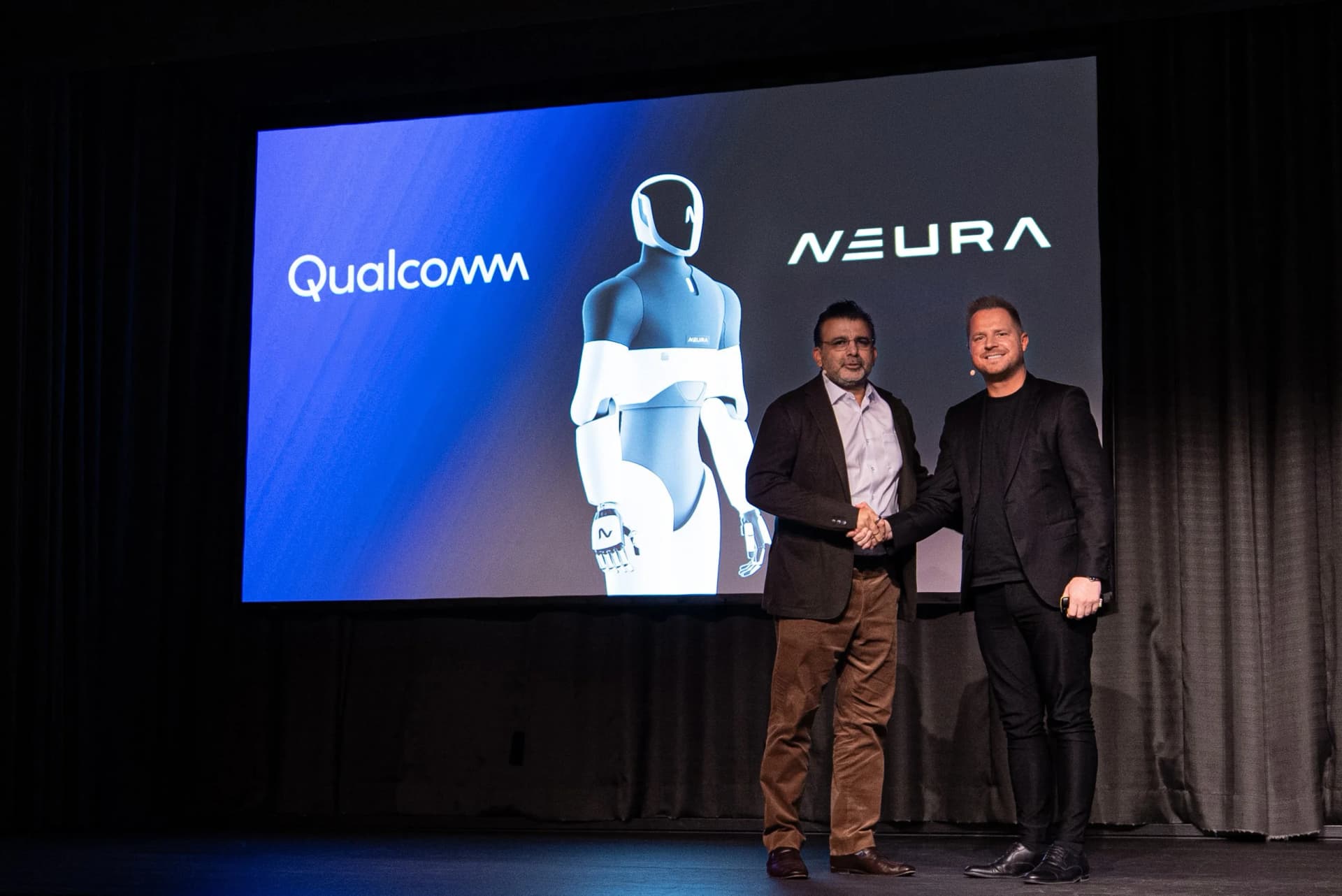
The race to develop truly cognitive humanoid robots has gained a powerful new architectural alliance. NEURA Robotics and Qualcomm Technologies announced a long-term strategic collaboration today to develop standardized "Brain + Nervous System" reference architectures for physical AI, aiming to bridge the gap between experimental robotics and mass-market industrial and domestic deployment.
The partnership, announced on March 9, 2026, pairs Qualcomm’s new Dragonwing™ Robotics processors—specifically the Dragonwing IQ10 Series—with Neura’s full-stack hardware and Neuraverse cognitive ecosystem.
Constructing a Universal Robotic Architecture
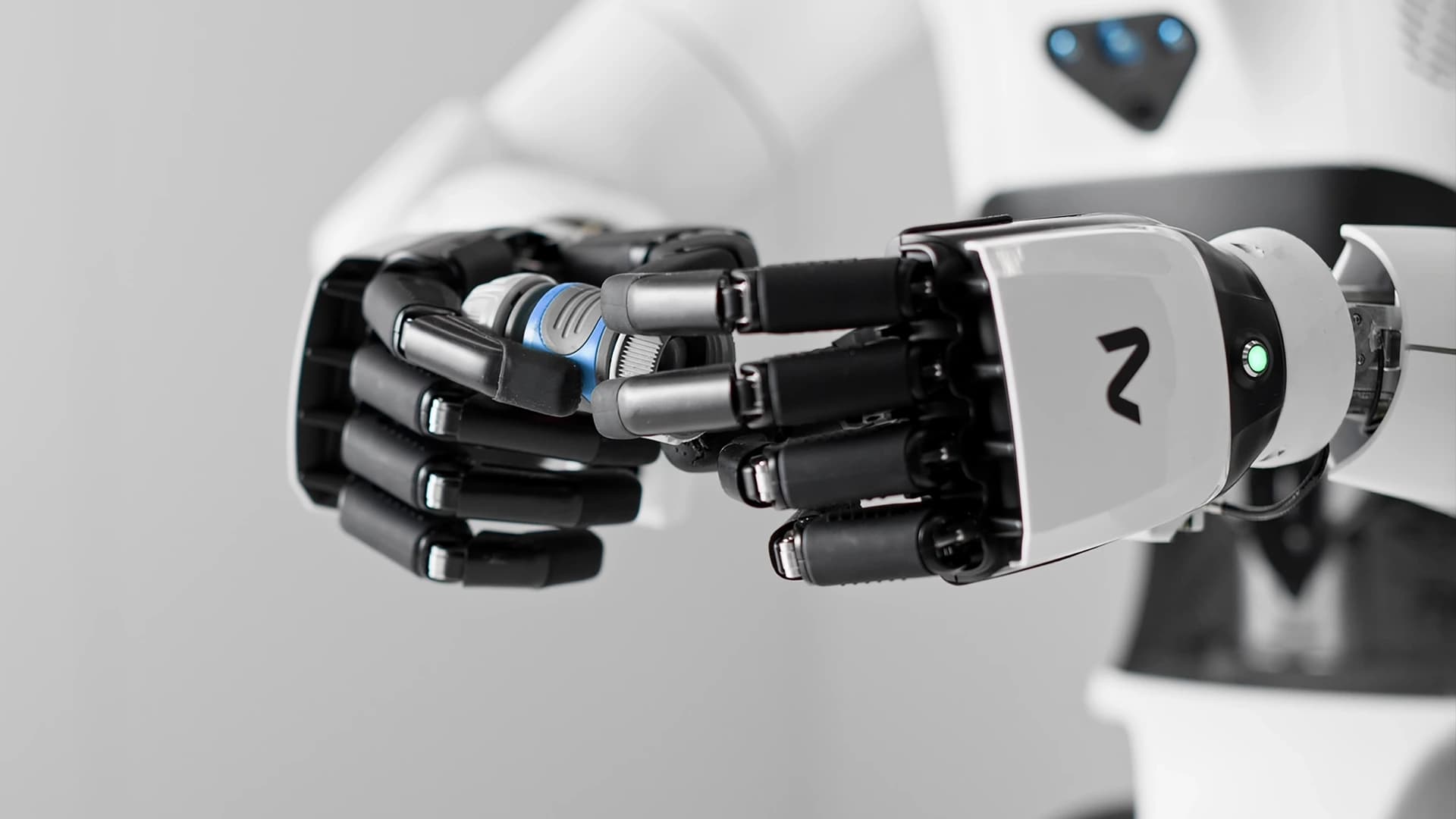
At the heart of the deal is a focus on "mixed-criticality" systems—the ability for a robot to handle high-level AI reasoning (the "brain") while simultaneously maintaining ultra-low-latency, real-time control of its physical motors (the "nervous system"). By aligning Qualcomm’s heterogeneous edge computing with Neura’s proprietary actuator and sensor technology, the companies hope to create a standardized runtime interface.
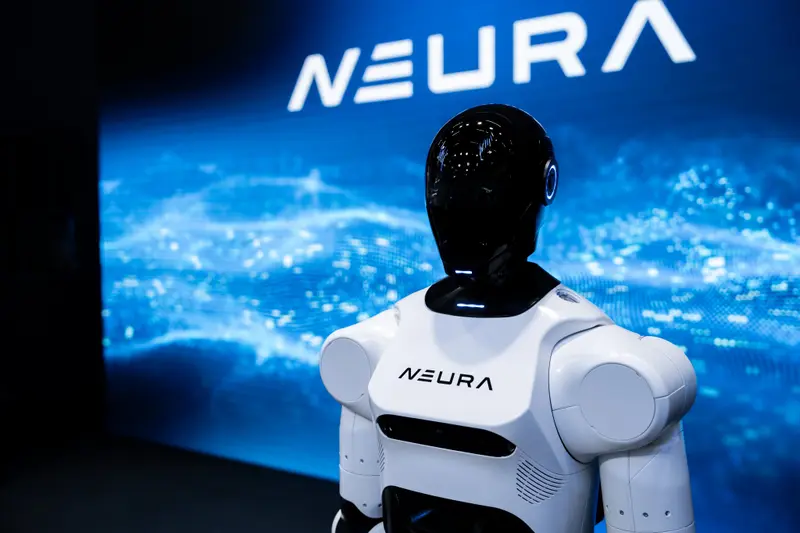
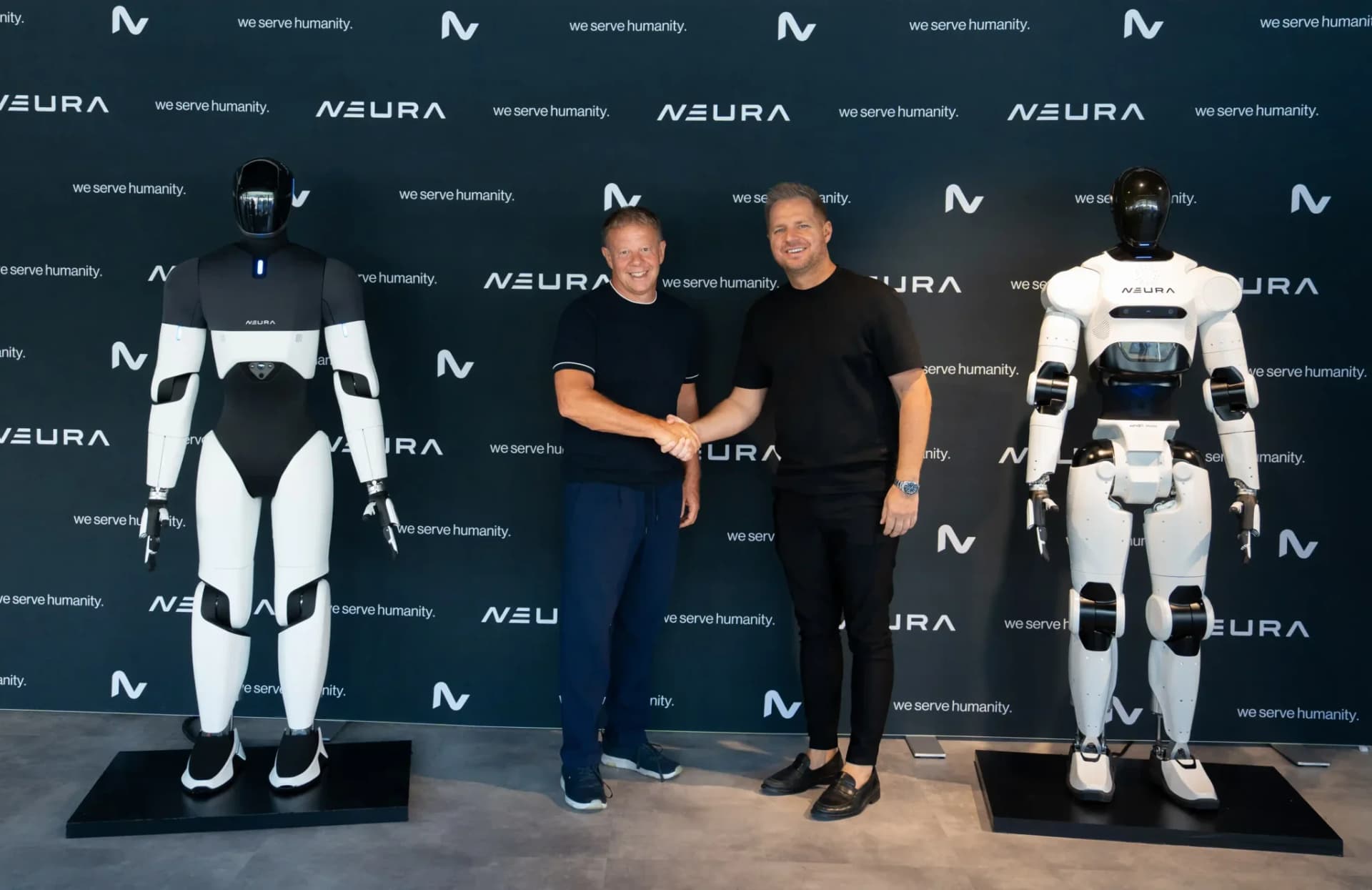
This standardization is intended to simplify how physical AI workloads are deployed and updated across various form factors. For Neura, this means its 4NE-1 humanoid and its MiPA service robot can serve as reference platforms for a broader developer marketplace.
The weekly humanoid robotics briefing
One email a week: the launches, funding and research that mattered, with context from Humanoids Daily.
Read recent issues"Robotics represents one of the most demanding edge AI use cases, where decisions must happen instantly, reliably, and locally," said Nakul Duggal, Group GM at Qualcomm Technologies. He noted that the partnership reflects a shift toward moving perception and reasoning directly onto the device rather than relying on the cloud for safety-critical responses.
Leveraging the Neuraverse
The collaboration heavily integrates Neura’s Neuraverse, a cloud-based platform designed to act as a shared intelligence network for robots. Under the new agreement, the Neuraverse will serve as the primary environment for:
- Simulation and Training: Generating data to refine physical AI models.
- Orchestration: Managing fleets of robots running on Dragonwing hardware.
- Lifecycle Management: Deploying breakthroughs from a single robot across an entire global network.
This "build-once, deploy-across-multiple-form-factors" approach mirrors Neura CEO David Reger’s long-standing vision of democratizing robotic innovation, effectively creating an "app store" for physical tasks.
Scaling Amidst a Capital Influx
The Qualcomm partnership arrives at a moment of intense scaling for the Metzingen-based firm. Neura recently secured a reported €1 billion ($1.2 billion) in funding from Tether to transition from R&D to large-scale industrialization.
By securing a world-class semiconductor partner, Neura is addressing the computational bottleneck of humanoid robotics just as it addresses the mechanical ones through manufacturing deals in India and supply chain expansions in China.
While the partnership promises a standardized future, the challenge remains in the "sim-to-real" gap. The companies plan to use Neura’s physical AI training centers, known as NEURA Gyms, to validate these new Dragonwing-powered architectures in real-world scenarios before they reach the general market.
Share this article
Read next
- Published on
- Reading time
- 6 min read
NEURA Robotics Unleashes Next-Gen Humanoids and Cognitive Ecosystem at Automatica 2025
- Published on
- Reading time
- 4 min read
NEURA Robotics, SAP, and NVIDIA Partner to Bring Business AI to Physical Robots
- Published on
- Reading time
- 3 min read
NEURA Gives Its Robot AI Touch, Sound and Memory Ahead of 11-Minute Laundry Demo
- Published on
- Reading time
- 3 min read
NEURA Launches HealthTech Unit, With MiPA on Its Healthcare Roadmap
- Published on
- Reading time
- 25 min read
The Humanoids of Europe: Built by Their Customers
- Published on
- Reading time
- 5 min read
NEURA Robotics and SECO Team Up to Scale European Physical AI Hardware
The weekly humanoid robotics briefing
One email a week: the launches, funding and research that mattered, with context from Humanoids Daily.
Read recent issues