- Published on
OpenAI Hardware Leader Caitlin Kalinowski Resigns Over Pentagon Deal as Benjamin Bolte Joins
One tap, and our reporting appears more often in your Google Top Stories. It makes a real difference to a small newsroom.


Your guide
Rich Robinson
Jee Chee Ren · Executive tour
See China’s AI and robotics ecosystem first-hand.
Six days exploring AI, robotics and advanced manufacturing.
With Rich Robinson, Clinical Professor of Entrepreneurship at Peking University
Beijing · Guangzhou · Shenzhen
29 November–4 December 2026
Referral partnership · We earn a commission on referred bookings.
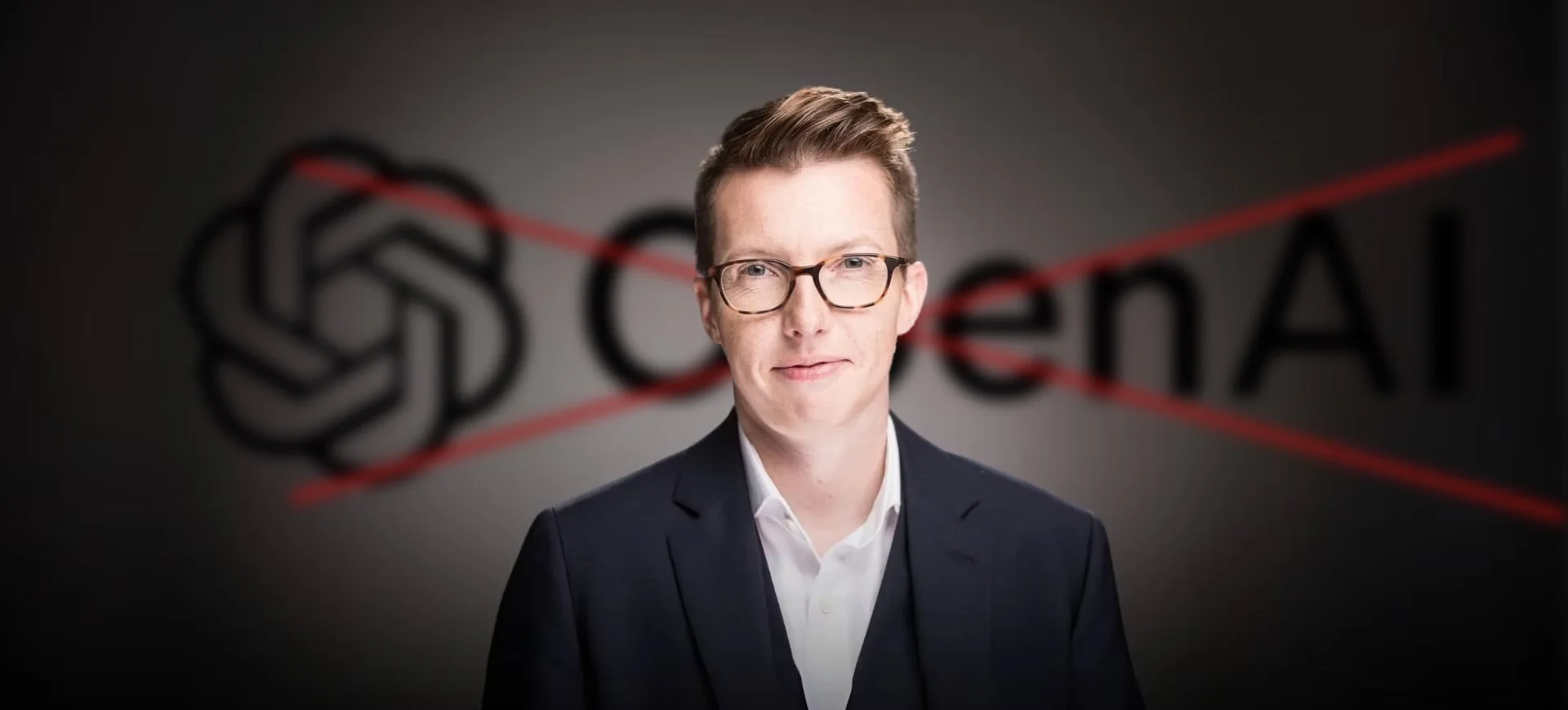
In a weekend of significant leadership shifts at OpenAI, Caitlin Kalinowski, the executive overseeing the company's hardware and robotics efforts, announced her resignation on March 7, 2026. Her departure is a direct response to OpenAI’s recent agreement with the U.S. Department of Defense, a deal that has sparked internal debate over the ethical boundaries of AI in national security.
The resignation coincided with the announcement that Benjamin Bolte, the former CEO of the now-defunct K-Scale Labs, has joined OpenAI. While the two events appear unrelated in purpose, they highlight a period of intense flux for the company’s physical computing ambitions.
Principles Over People: Kalinowski’s Exit
Kalinowski, who joined OpenAI in late 2024 after a high-profile career leading AR hardware at Meta and product design at Apple, cited "governance concerns" as the primary driver for her exit. In a series of posts on X and LinkedIn, she emphasized that while AI plays a vital role in national security, the speed and terms of OpenAI’s Pentagon contract crossed critical lines.
"Surveillance of Americans without judicial oversight and lethal autonomy without human authorization are lines that deserved more deliberation than they got," Kalinowski stated. She further clarified that her decision was about "principle, not people," maintaining respect for CEO Sam Altman and the robotics team.
The weekly humanoid robotics briefing
One email a week: the launches, funding and research that mattered, with context from Humanoids Daily.
Read recent issuesThe controversy stems from OpenAI’s decision to deploy its models on a classified government network. This move followed the collapse of similar negotiations between the Pentagon and Anthropic, which reportedly sought stricter limits on domestic surveillance. Critics within the industry have characterized OpenAI’s swift agreement as "opportunistic," a sentiment Altman later acknowledged regarding the deal’s public rollout.
OpenAI has defended the partnership, stating that its "red lines" explicitly preclude the use of its technology for autonomous weaponry or unauthorized domestic surveillance. However, Kalinowski’s departure suggests that these internal safeguards were not viewed as sufficiently established before the deal was finalized.
A New Chapter for Benjamin Bolte
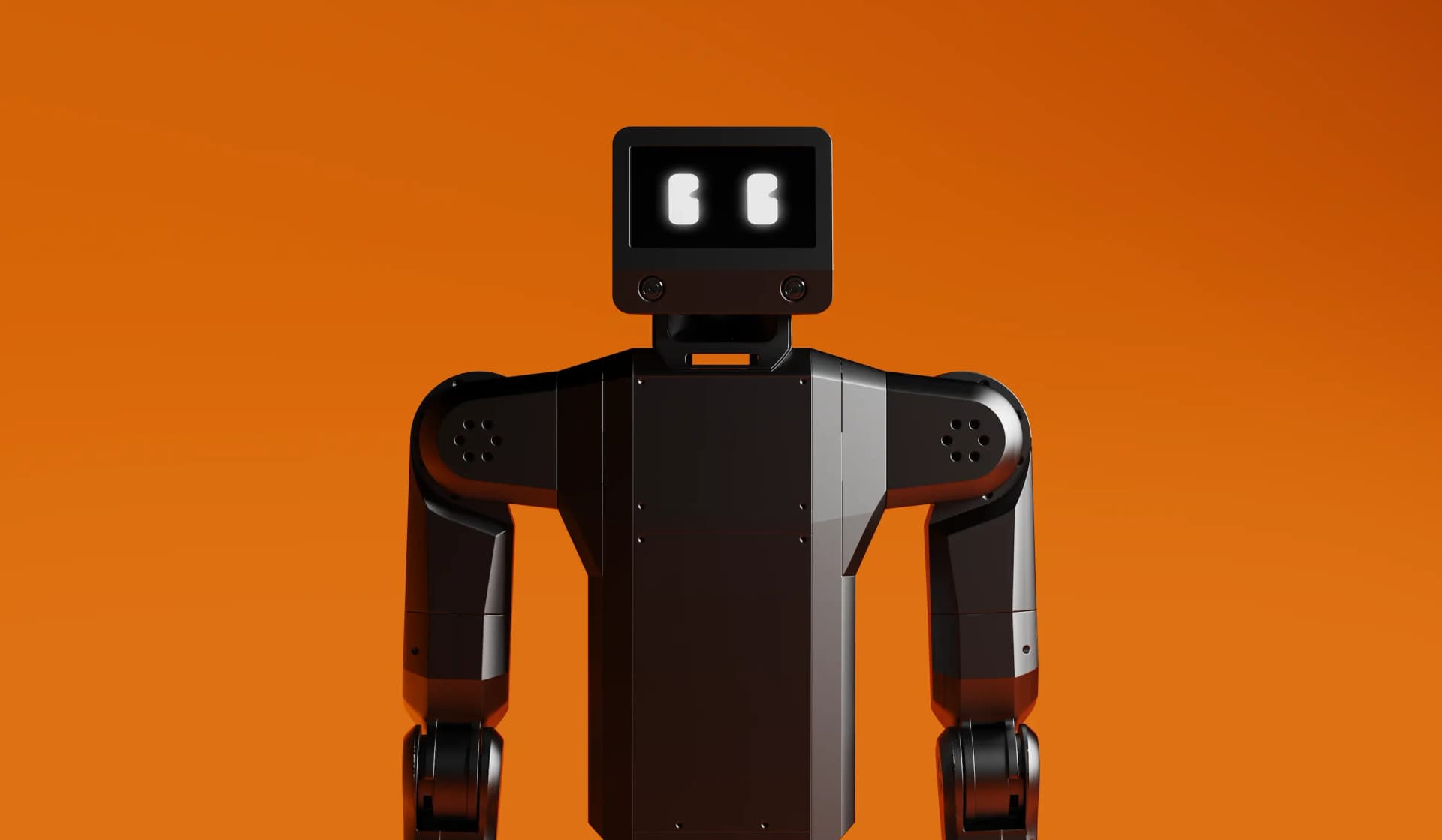
As Kalinowski departs, OpenAI is bringing in fresh expertise from the humanoid robotics sector. Benjamin Bolte announced his arrival at the company just as news of the resignation broke. Bolte is best known for founding K-Scale Labs, the Palo Alto startup that gained notoriety for its open-source K-Bot before canceling orders and open-sourcing its IP due to a funding shortfall in late 2025.
"The next few years are going to be pivotal," Bolte posted on X, adding that he plans to continue supporting open-source humanoid initiatives like Asimov and Anvil where possible. While OpenAI has not confirmed Bolte’s specific role, his background in low-cost humanoid platforms and open-source operating systems like KOS aligns with OpenAI’s stated interest in building AI systems that can simulate and interact with the physical world.
The Growing Pains of OpenAI Robotics
The leadership churn comes at a critical time for OpenAI’s hardware division. Under Kalinowski and VP of Research Aditya Ramesh, the team has been tasked with bridging the gap between large language models and physical robotics.
Before the recent shutdown of his own firm, Bolte had spoken candidly about the immense capital hurdles facing hardware startups. By joining OpenAI, he enters an environment with nearly unmatched resources, but one now grappling with the political and ethical complexities of government contracting.
As OpenAI continues to navigate its relationship with the Department of Defense, the departure of a veteran like Kalinowski serves as a stark reminder of the tension between rapid commercial-military expansion and the "slow-down" approach favored by many AI safety and hardware pioneers.
Share this article
Read next
- Published on
- Reading time
- 6 min read
OpenAI’s GPT-6 Astra Hits 95% on Physical Manipulation Benchmark, But Precision Tasks Expose Familiar Bottlenecks
- Published on
- Reading time
- 5 min read
Sam Altman Confirms OpenAI "Will Definitely Do a Humanoid"
- Published on
- Reading time
- 4 min read
OpenAI Pivots Directly Into Hardware, Launching Internal Robotics Division
- Published on
- Reading time
- 3 min read
Watch: K-Scale Labs CEO Explains Shutdown: "I Bet the Farm on the K-Bot Launch"
- Published on
- Reading time
- 3 min read
K-Scale Labs Cancels K-Bot Orders, Open-Sources All IP After Funding Fails
- Published on
- Reading time
- 3 min read
Silicon Colosseum: Inside the Underground Event Putting Humanoid Robots in the Ring


The weekly humanoid robotics briefing
One email a week: the launches, funding and research that mattered, with context from Humanoids Daily.
Read recent issues