- Published on
Odyssey Unveils Odyssey-3, With Flexion Building Humanoid Control on Its World Model
One tap, and our reporting appears more often in your Google Top Stories. It makes a real difference to a small newsroom.

Supported by RoboStrategySupport for Humanoids Daily comes from RoboStrategy
Sponsored
Investing involves risk, including possible loss of principal. Read the prospectus before investing.
- Odyssey has unveiled Odyssey-3, a foundation world model adapted for applications ranging from robot manipulation to driving and simulated environments.
- Swiss robotics software company Flexion built humanoid control policies on the model, using tens of hours of humanoid teleoperation data, according to Odyssey.
- Odyssey reports real-time task execution and greater resilience to lighting changes than the vision-language-action baselines it tested, without publishing numerical humanoid success rates.
- A public release is planned in the coming weeks.
Odyssey has unveiled Odyssey-3, a foundation world model that it says can support robot control, driving and interactive simulated environments. For humanoid robotics, the announcement centers on a research collaboration with Swiss autonomy company Flexion, which has built control policies on top of the model using tens of hours of humanoid teleoperation data.
Announced on September 15, the partnership connects Odyssey’s visual pretraining with Flexion’s work in robot learning and whole-body control. Flexion also confirmed the collaboration on X, describing its work on a world action model for physical applications.
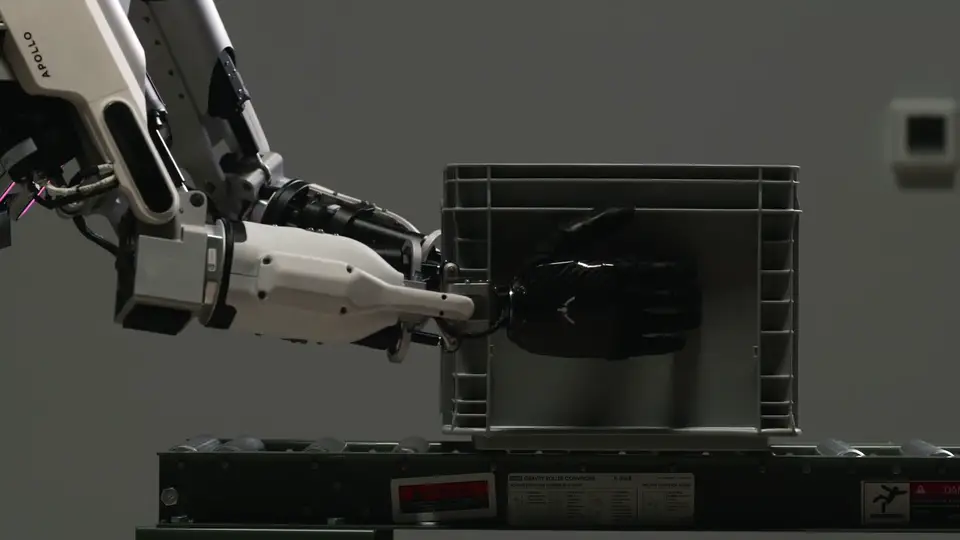
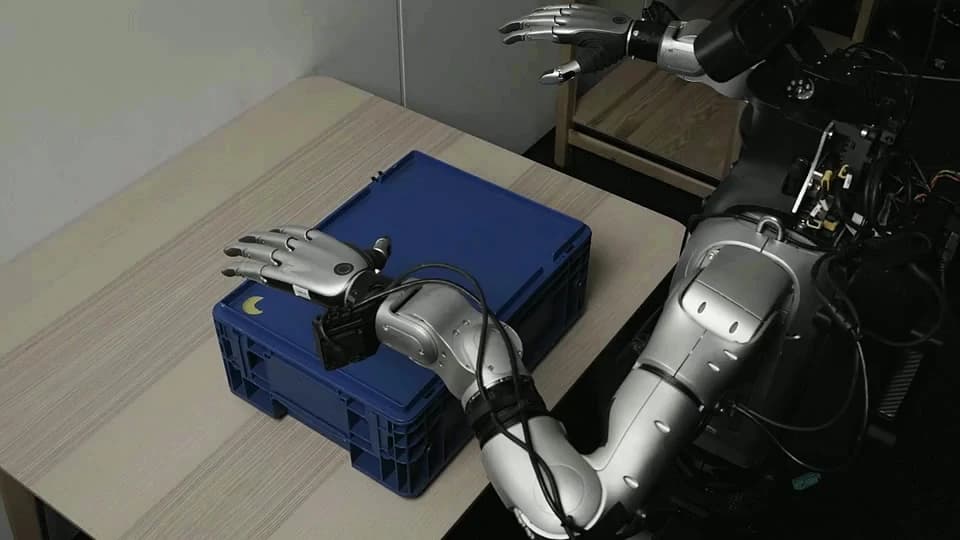
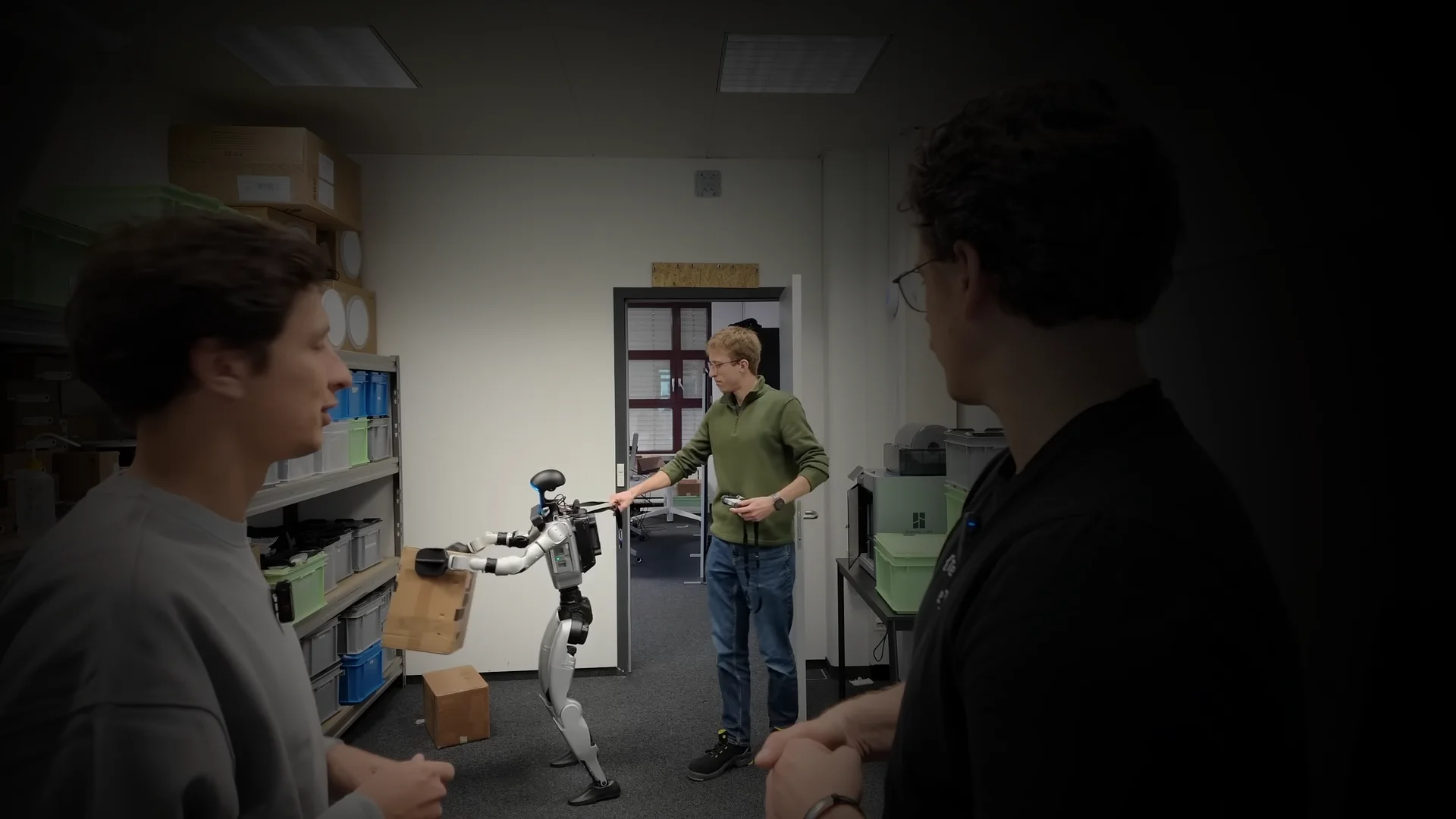
The demonstrations show humanoids opening containers, handling boxes and arranging tableware. Odyssey says the resulting system performs tasks in real time and handles lighting changes that cause the vision-language-action, or VLA, baselines it tested to fail.
From predicting the world to acting in it
Odyssey describes its new model as an autoregressive diffusion transformer trained on a broad collection of visual observations. The underlying bet is that learning how scenes evolve can give a model useful knowledge about motion, objects and the consequences of actions before it encounters a particular robot.
The weekly humanoid robotics briefing
One email a week: the launches, funding and research that mattered, with context from Humanoids Daily.
Read recent issuesTo connect that knowledge to controls, Odyssey trains an action decoder: an output component that translates the model’s internal representations into actions. Its training examples pair observations with the actions taken by the system being controlled.
That distinction matters. The announcement presents a shared foundation adapted for different systems, with additional training and engineering needed to make each one act. For the humanoid demonstrations, Odyssey explicitly credits Flexion with substantial work developing the policies on top of its base model.
As we explored in our world-model taxonomy, the term covers several different roles in robotics. A model can generate a simulated environment, help anticipate what happens next or provide the foundation for a control policy. Odyssey’s announcement spans those uses; the Flexion collaboration concerns the last of them.
What Flexion has demonstrated
The humanoid examples include opening a blue container and removing a cardboard box, moving a plate to the center of a table and placing a mug on it, positioning a box against a wooden corner, and opening a cardboard box.
According to Odyssey, these policies were developed with tens of hours of humanoid teleoperation data. That figure describes the robot-specific experience used to build on a pretrained model, rather than the total data behind the system.
Flexion CEO Nikita Rudin frames the attraction as access to physical knowledge learned beyond a robot’s own demonstrations. Flexion then contributes the learning and control expertise needed to apply it on hardware.
The arrangement fits the role we described for the Zurich company in The Humanoids of Europe: a supplier of autonomy software for other companies’ robots. Here, that software effort incorporates an external foundation model.
The evidence remains preliminary. Odyssey’s launch post does not identify the VLA baselines, give trial counts or publish a numerical humanoid success rate. Its reported lighting robustness is an encouraging research result, but the announcement leaves the scale and repeatability of that advantage unclear.
A broader test of visual pretraining
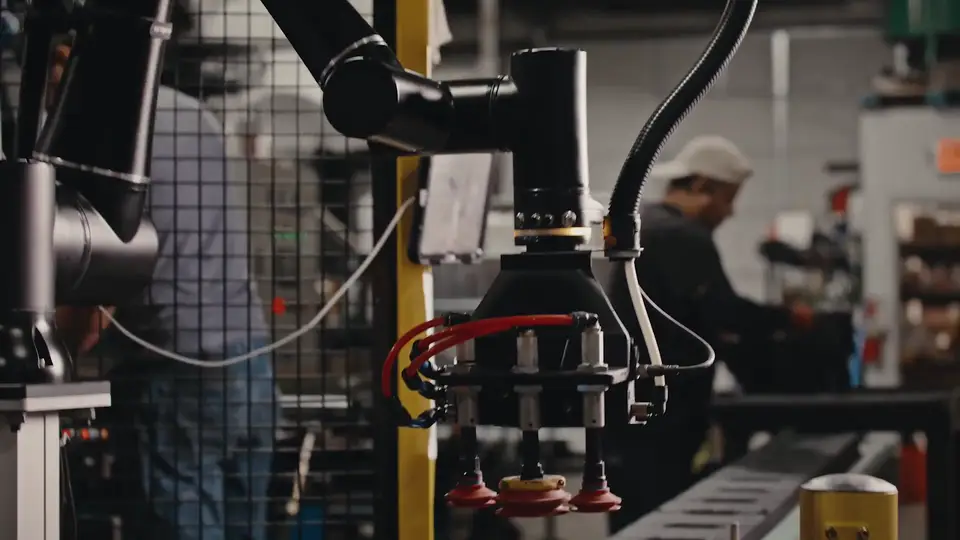
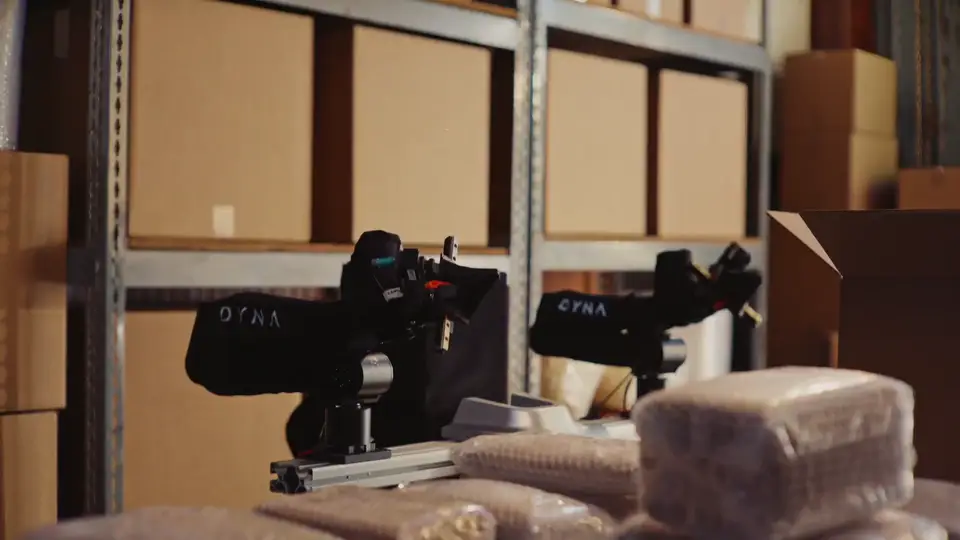
Beyond humanoids, Odyssey shows robot-arm manipulation and reports recovery behaviors such as correcting missed grasps. It is working with Poke & Wiggle to evaluate transfer across robot bodies, viewpoints and controls.
The wider announcement also includes driving policies tested on roads in India with safety drivers, drone navigation demonstrated in simulation, and policies trained to play video games. These are separate applications of the foundation, with different training and evaluation settings.
For robotics, the larger question is whether broad visual pretraining can consistently reduce the amount of robot-specific experience needed to acquire useful skills. That connects Odyssey’s work to the direction discussed in our coverage of 1X’s world-model approach, although the systems and reported evaluations are not directly comparable.
Odyssey says it plans to release Odyssey-3 publicly in the coming weeks. For now, the Flexion collaboration offers a concrete example of a foundation-model developer and a humanoid autonomy company dividing the work between learning from the visual world and making a robot act within it.
Sources and further reading
Share this article
Read next
- Published on
- Reading time
- 5 min read
Watch: Inside the Zurich Lab Building the "Android" of Humanoids
- Published on
- Reading time
- 5 min read
A Brain in the Alps: Flexion Raises $50M to Build the ''Android'' of Humanoids
- Published on
- Reading time
- 4 min read
Munich stealth startup shows walking humanoid “Kyle,” targets early 2027 reveal
- Published on
- Reading time
- 25 min read
The Humanoids of Europe: Built by Their Customers
- Published on
- Reading time
- 7 min read
Agile Robots CEO Predicts Physical AI Will Surpass Automotive by 10x
- Published on
- Reading time
- 5 min read
Nucleus Pivots to Wheeled Base for "Nucleus II" Following Factory Floor Pushback

The weekly humanoid robotics briefing
One email a week: the launches, funding and research that mattered, with context from Humanoids Daily.
Read recent issues