- Published on
Uncaged: Agility CEO Peggy Johnson and Co-Founder Jonathan Hurst Detail Digit 5 Architecture, AI Stack, and Supply Chains
One tap, and our reporting appears more often in your Google Top Stories. It makes a real difference to a small newsroom.

Supported by RoboStrategySupport for Humanoids Daily comes from RoboStrategy
Sponsored


Investing involves risk, including possible loss of principal. Read the prospectus before investing.
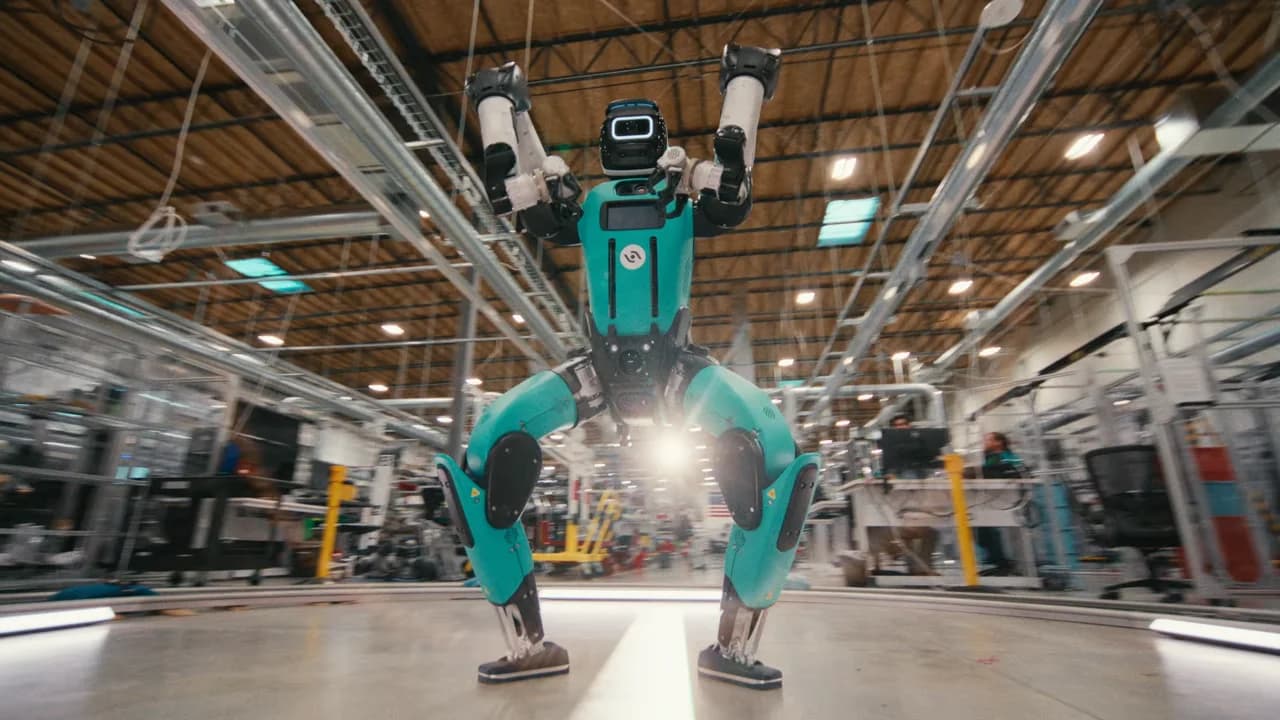
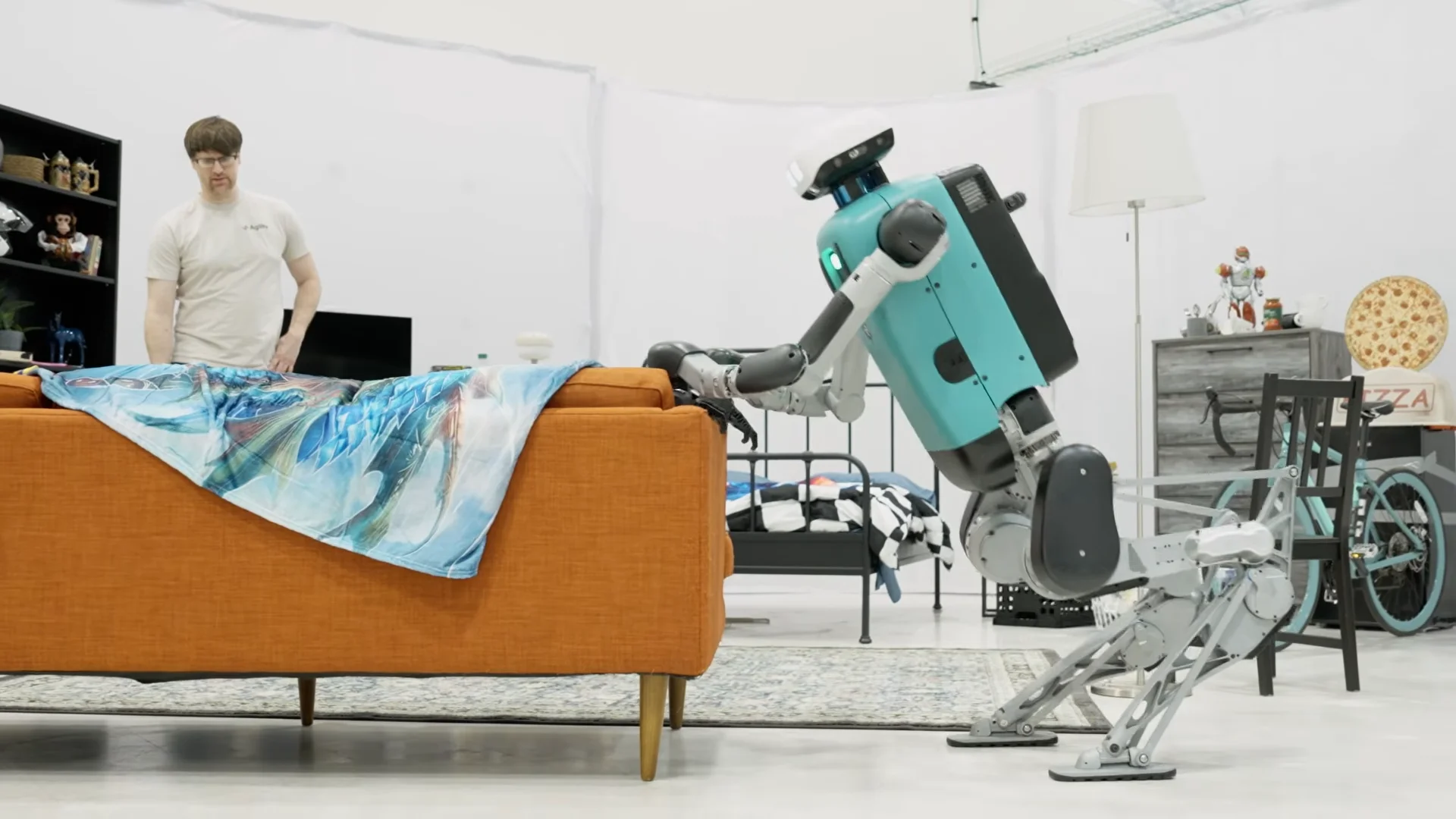
- Agility CEO Peggy Johnson detailed Digit 5's cooperative safety fallback: when people enter an operational radius, the humanoid uses 360-degree vision to bring itself down to a seated position until the path is clear.
- Co-founder and Chief Robot Officer Jonathan Hurst outlined Agility's four-layer physical AI architecture, which pairs low-level motor coordination at 1,000 Hz with high-level LLM task orchestration.
- The company frames the removal of physical safety cages as essential to expanding from isolated tote-handling workcells into end-to-end logistics workflows, including machine tending and depalletizing.
- Johnson addressed capital strategy and supply-chain sovereignty following the company's $2.5 billion SPAC deal, highlighting reliance on domestic manufacturing while acknowledging lingering dependencies on rare earths and LiDAR.
Following the morning reveal of Digit 5, Agility Robotics executives spent the day filling in critical operational, algorithmic, and commercial details.
Between an appearance by CEO Peggy Johnson on Bloomberg Technology and a deep-dive architecture briefing from co-founder and Chief Robot Officer Jonathan Hurst, the company outlined how it intends to make "cooperative safety" work on real factory floors—and why uncaging the humanoid is the linchpin of its commercial survival.
The Seated Failsafe, ISO 25785-1, and Uncaged Workcells
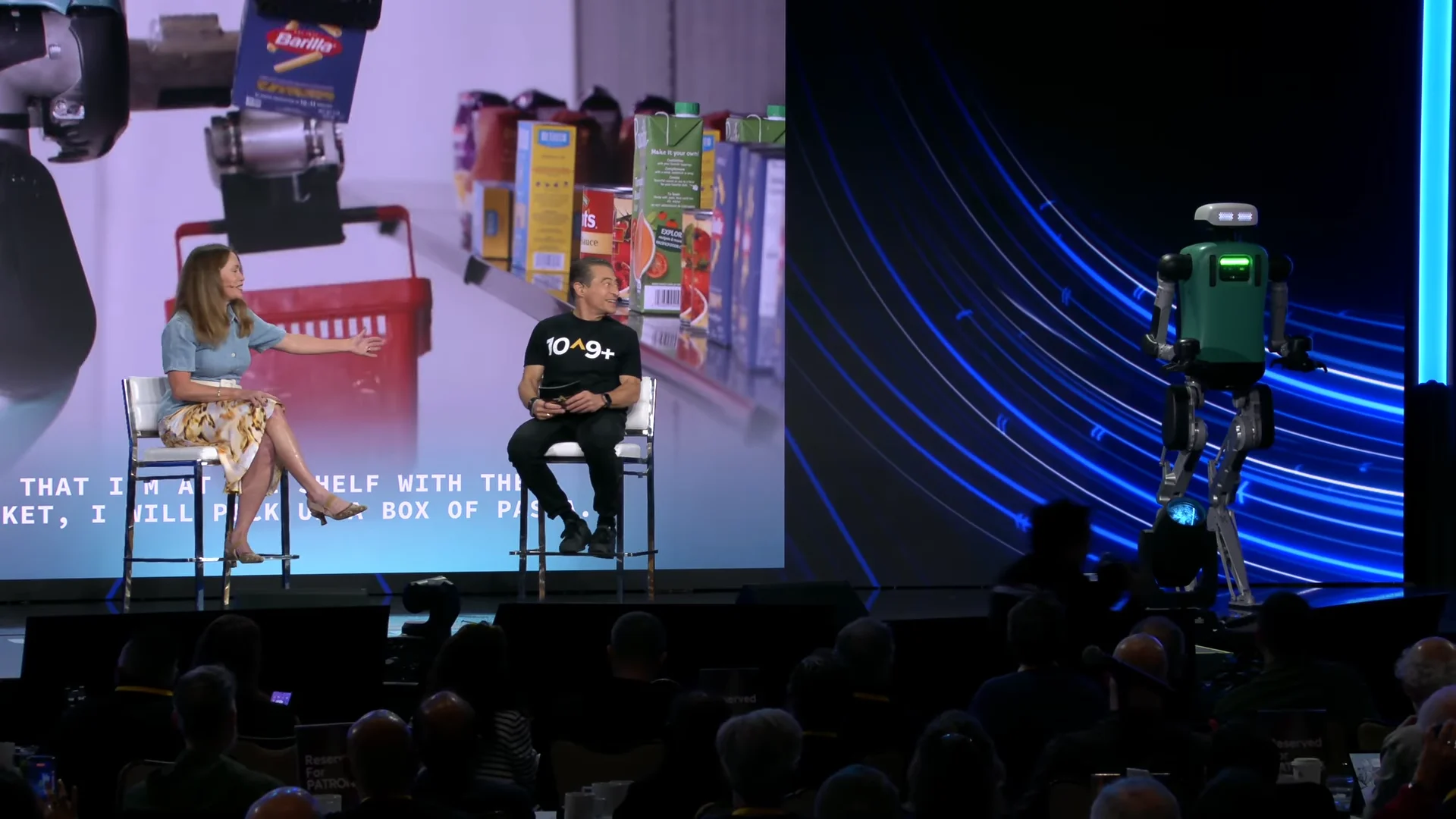
The central premise of Digit 5 is eliminating the perimeter fencing, interlocks, and plexiglass workcells that have traditionally isolated industrial bipedal robots from human coworkers. Speaking on Bloomberg Technology, Johnson provided concrete specifics on how the hardware behaves when a human enters its immediate operational envelope.
"Digit has 360-degree vision—it needs to be able to see all around so that it can monitor and observe for humans," Johnson said. "When humans become within a certain barrier or a certain radius, it will bring itself safely down to the ground until the human passes."
The weekly humanoid robotics briefing
One email a week: the launches, funding and research that mattered, with context from Humanoids Daily.
Read recent issuesRather than freezing upright—which leaves a 284-pound (129 kg) biped vulnerable to tipping or external disturbance—Digit 5's software triggers a controlled descent into a seated posture on the floor. Once the onboard perception stack confirms the human worker has cleared the perimeter, the humanoid stands back up autonomously and resumes its workflow. Johnson emphasized that this response relies on low-latency edge inference, ensuring that rapid human movements trigger immediate machine reactions without disrupting facility flow.
In an engineering briefing published later in the day, Kevin Ree, Distinguished Robotic Safety Engineer at Agility, added crucial technical and regulatory context to that behavior. Ree serves as project leader for ISO 25785-1, a standard currently in development that establishes safety requirements for dynamically stable industrial mobile robots—a classification that formally encompasses legged humanoids alongside existing standards like ISO 10218, ISO 13482, and RIA/ANSI R15.08.
Ree outlined a deliberate progression in Agility's technical roadmap, distinguishing between "cooperative" and "collaborative" safety:
- Cooperative Safety (Digit 5): The robot shares an open industrial workspace and moves without physical barriers or perimeter switches, but performs tasks asynchronously—such as placing a bin down for a worker to retrieve later.
- Collaborative Safety (Future Scope): Close, direct physical interaction, including handing objects back and forth directly between human and robot hands.
Where Digit 4 depended heavily on external workcell measures supplemented by basic onboard monitoring, Digit 5 shifts functional safety directly onto the humanoid's electrical, mechanical, and software architecture.
That shift is essential for operational scalability. Daniel Diez, Agility's Chief Business Officer, underscored the logistical limits of legacy enclosures in remarks to Bloomberg: "You cannot put 150 robots into a warehouse where every one of them has to be surrounded by a 10-by-20 plexiglass set of walls."
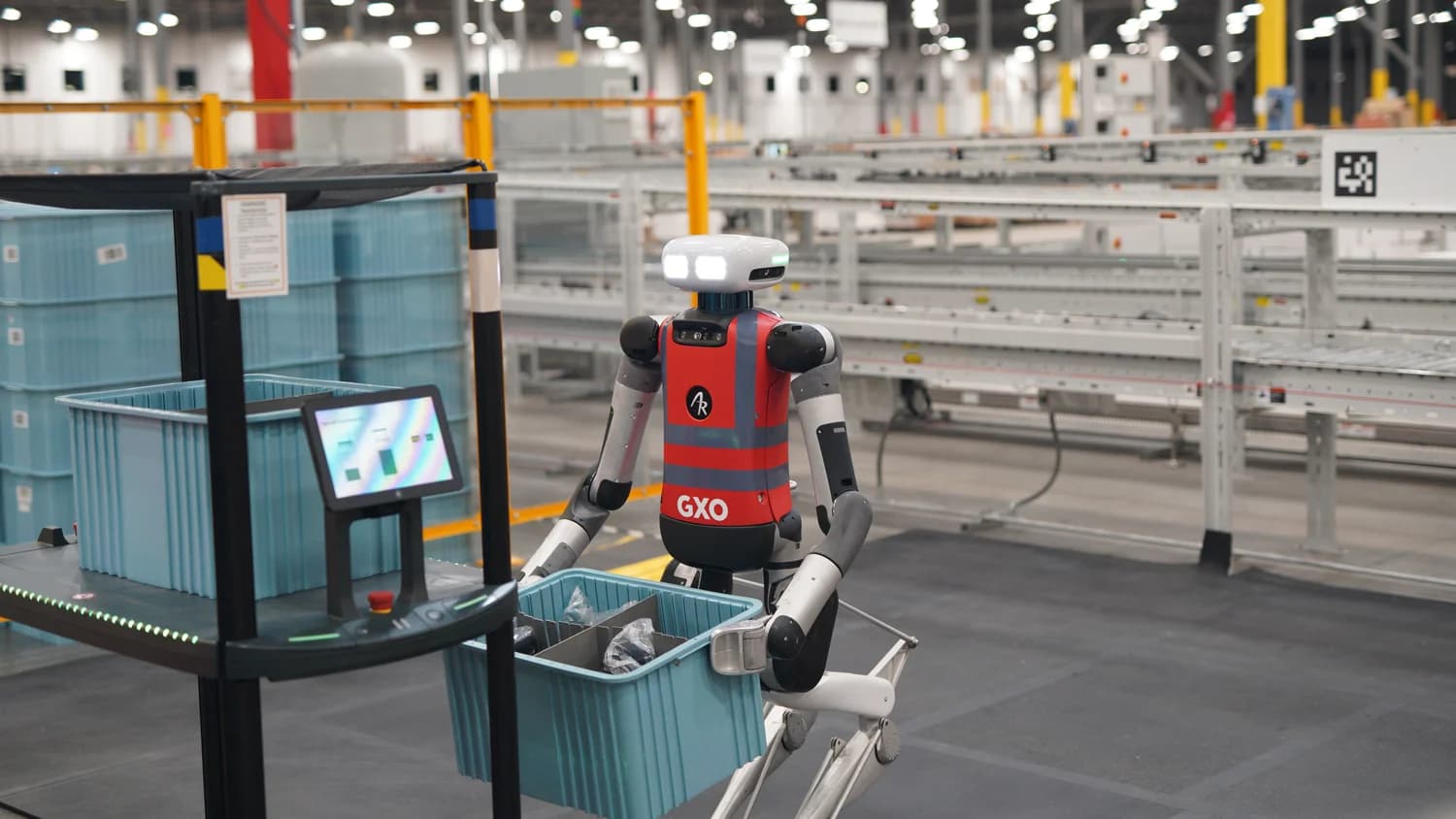
Uncaging the humanoid also expands its functional scope beyond isolated tote handling. While Digit 4 accumulated more than 65,000 operational hours across nine customer facilities—including Schaeffler, GXO Logistics, and Toyota Motor Manufacturing Canada—Johnson pointed out that physical cages inherently trap robots in single-task silos:
"Right now Digit is deployed inside a physical safety barrier like much automation you might see in these facilities. That limits it generally to a single task. But if Digit comes outside of the safety barrier, it can now take on full workflows inside these facilities—from unloading a pallet down in the receiving area to then tending machines, kitting, sequencing, quality control, and then packing things up on the other end and sending it out for shipping."
Inside Jonathan Hurst's Four-Layer AI Stack
While Johnson tackled operational behavior, co-founder Jonathan Hurst released an architectural breakdown of the software powering Digit 5, framing physical AI as a modular hierarchy rather than a monolithic black box.
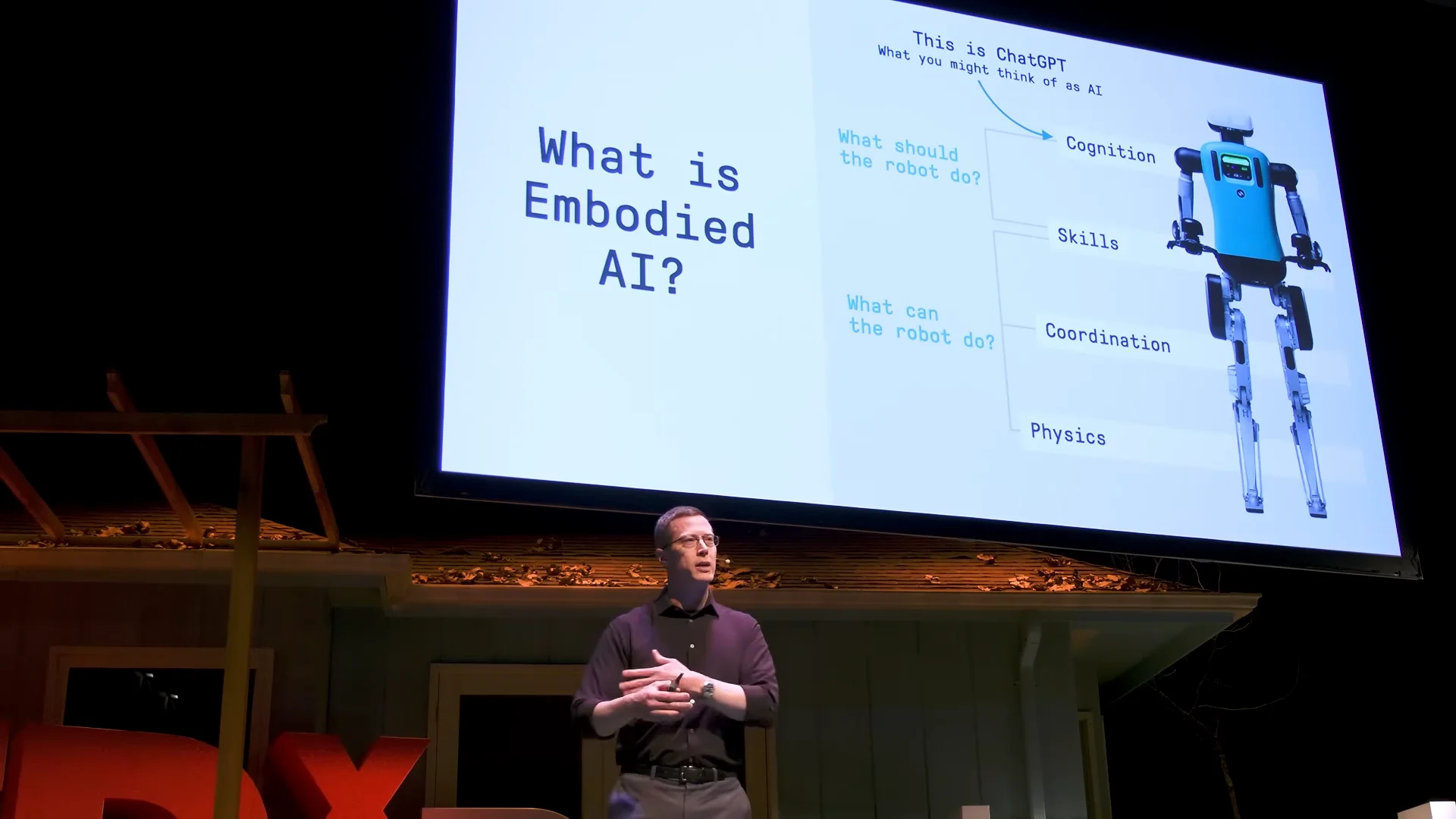
Hurst structured Agility's stack into four distinct layers:
- Hardware Foundation: Custom structural engineering, cycloidal actuators, and physical mechanics built to handle repetitive dynamic loads and reach heights up to 7.2 feet.
- Coordination Layer: Low-level motor control executing across all 30 onboard motors at 1,000 times per second (1 kHz). This layer stabilizes the dynamic bipedal gait, manages balance, and executes reflexive reaching and walking primitives.
- Skill Definition Layer: Domain-specific manipulation actions, such as picking up an object, sliding a tote out from a rack, or turning a latch. Hurst explained that Agility bootstraps these behaviors using teleoperation, motion capture, and simulated kinematic animations before the robot refines execution through physical reinforcement.
- Cognitive Orchestration Layer: Large language models (LLMs) and vision-language-action reasoning systems that interpret human task descriptions and assemble defined physical skills into cohesive multi-step workflows.
Hurst argued that while computer vision and object recognition are "almost solved" compared to a decade ago, the primary bottleneck in embodied intelligence remains the complete absence of web-scale physical data.
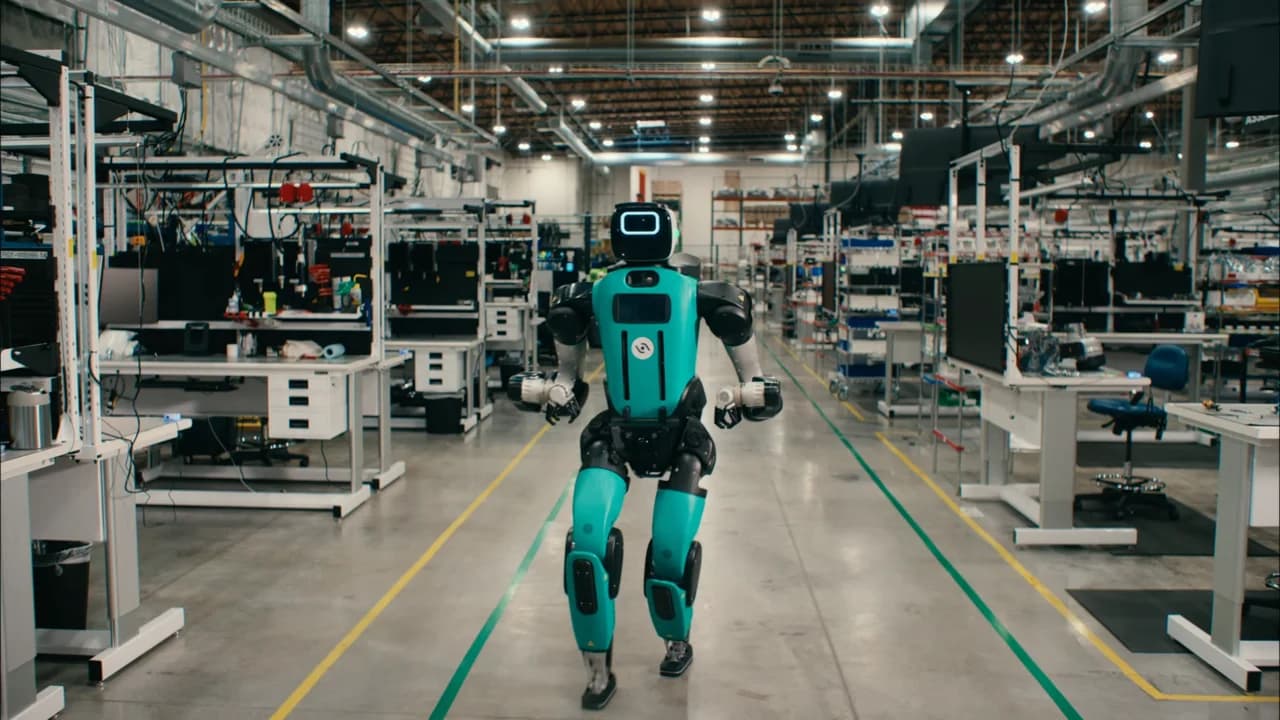
"Training an AI to play chess or to generate text... the way it's been done to date is training it on enormous amounts of data, and that data exists online," Hurst said. "Training a robot to navigate a three-dimensional space in a human environment that varies widely—there is no source of data for any of that. There's no source of data that tells you what torques you should apply to all the different motors on your specific robot given all of the sensor input in this new environment. We have to invent that."
Public Scrutiny, Unit Economics, and Supply Chains
The technical explanations arrive against a demanding financial backdrop. Last week, Agility filed its Form S-4 registration statement to go public via a $2.5 billion merger with Churchill Capital Corp XI. As examined in our deep dive into the S-4 filing, the company generated $1.78 million in 2025 revenue against a $140 million operating loss, with substantial reliance on related-party engagements.
When asked why Agility chose a SPAC vehicle over an initial public offering or private venture rounds, Johnson pointed to capital intensity and commercial velocity.
"We have over $300 million of orders for multi-year commitments for Digit 5, and we wanted to ensure we were able to deliver on those as well as continue to work with the number of customers in our pipeline," Johnson said. She added that entering the public markets allows Agility to "define the category" as the first publicly listed pure-play humanoid developer in the US, establishing benchmark standards for enterprise integration and safety certifications.
Geopolitics and supply chain stability also featured prominently. While Chinese rivals like Unitree have listed on Asian exchanges and scaled hardware aggressively, recent US regulatory actions—including the FCC's decision to place foreign advanced robotics on its Covered List—have restricted foreign hardware from entering American industrial plants.
Johnson pointed to Agility's RoboFab production center in Salem, Oregon, emphasizing that the company has deliberately structured its supply base around domestic and allied partners. However, she acknowledged persistent structural dependencies.
"From the start, we have manufactured in the United States in Salem, Oregon, and we have intentionally kept an eye on our supply chain to largely be US and allied focused," Johnson said. "Clearly things like LiDAR and rare earth metals we'll need to continue to have a supply for, and I know the US government is working on those supply chains to ensure that new industries like robotics will continue to have access."
With early access scheduled for early 2027 and broader commercial shipments targeted for late 2027, Agility's ability to turn its seated failsafe and four-layer stack into an OSHA-cleared industrial reality will determine whether Digit 5 fulfills the $300 million promise in its order book.
Share this article
Read next
- Published on
- Reading time
- 5 min read
Agility unveils Digit 5, designed to work closer to people
- Published on
- Reading time
- 5 min read
Beyond the Backflip: Agility’s Jonathan Hurst on the Pragmatic Path to a Humanoid Future
- Published on
- Reading time
- 5 min read
Breaking the Cage: Agility CEO Peggy Johnson Outlines Vision for "Unconstrained" Humanoids at Abundance Summit 2026
- Published on
- Reading time
- 4 min read
Beyond the Bot: Agility Robotics Rebrands to "Agility" to Signal Broader Ambitions
- Published on
- Reading time
- 3 min read
Agility Robotics Lands Toyota as Commercial Partner, Aiming at Automotive Production
- Published on
- Reading time
- 4 min read
Agility Robotics Hits 100,000 Totes Milestone, Firing a Data-Driven Shot in the Humanoid Wars

The weekly humanoid robotics briefing
One email a week: the launches, funding and research that mattered, with context from Humanoids Daily.
Read recent issues