- Published on
Physical Intelligence Reportedly Seeks $1B at a $20B Valuation
One tap, and our reporting appears more often in your Google Top Stories. It makes a real difference to a small newsroom.

Physical Intelligence is reportedly discussing a funding round of at least $1 billion at a valuation of roughly $20 billion, as the robotics AI company begins opening its models to outside developers.
- Bloomberg reports that existing backers Avenir and Lux Capital are in talks to lead the round; the financing has not been announced as completed.
- PI launched its API beta on October 13, allowing developers to upload robot data, fine-tune models and access hosted inference.
- Sergey Levine’s comments in a separate interview explain the broader ambition: a shared intelligence layer that can learn across different robot bodies and applications.

Bloomberg’s October 27 report, by Rebecca Torrence and Natasha Mascarenhas, cites people familiar with the discussions. Existing investors Avenir and Lux Capital are in talks to lead the financing. Bloomberg reports that PI raised money at an $11.5 billion valuation earlier this year, but still has no revenue.
PI, Avenir and Lux did not respond to Bloomberg’s requests for comment. The proposed amount and valuation remain under discussion, rather than terms of a completed round.
From robot models to a developer platform
Bloomberg also reports that opening PI’s latest models to outside developers has increased investor interest, citing people familiar with the fundraising effort. That links the reported financing to a specific step toward making its research available for other companies to build on.
Follow humanoid robotics without following every announcement.
Get the week’s most important launches, funding and research—and why they matter—in one email from Humanoids Daily.
Once a week. Unsubscribe anytime.
Read recent issuesThe concrete product development behind the funding headlines is PI’s new API beta. Developers can supply their own demonstrations, run fine-tuning on infrastructure managed by PI and use the resulting models through hosted inference.
PI describes a repeated development cycle: collect demonstrations, train, test on a robot, and use failures to decide what data to gather next. The API is intended to let application developers run that cycle themselves, while PI supplies the underlying models and infrastructure.
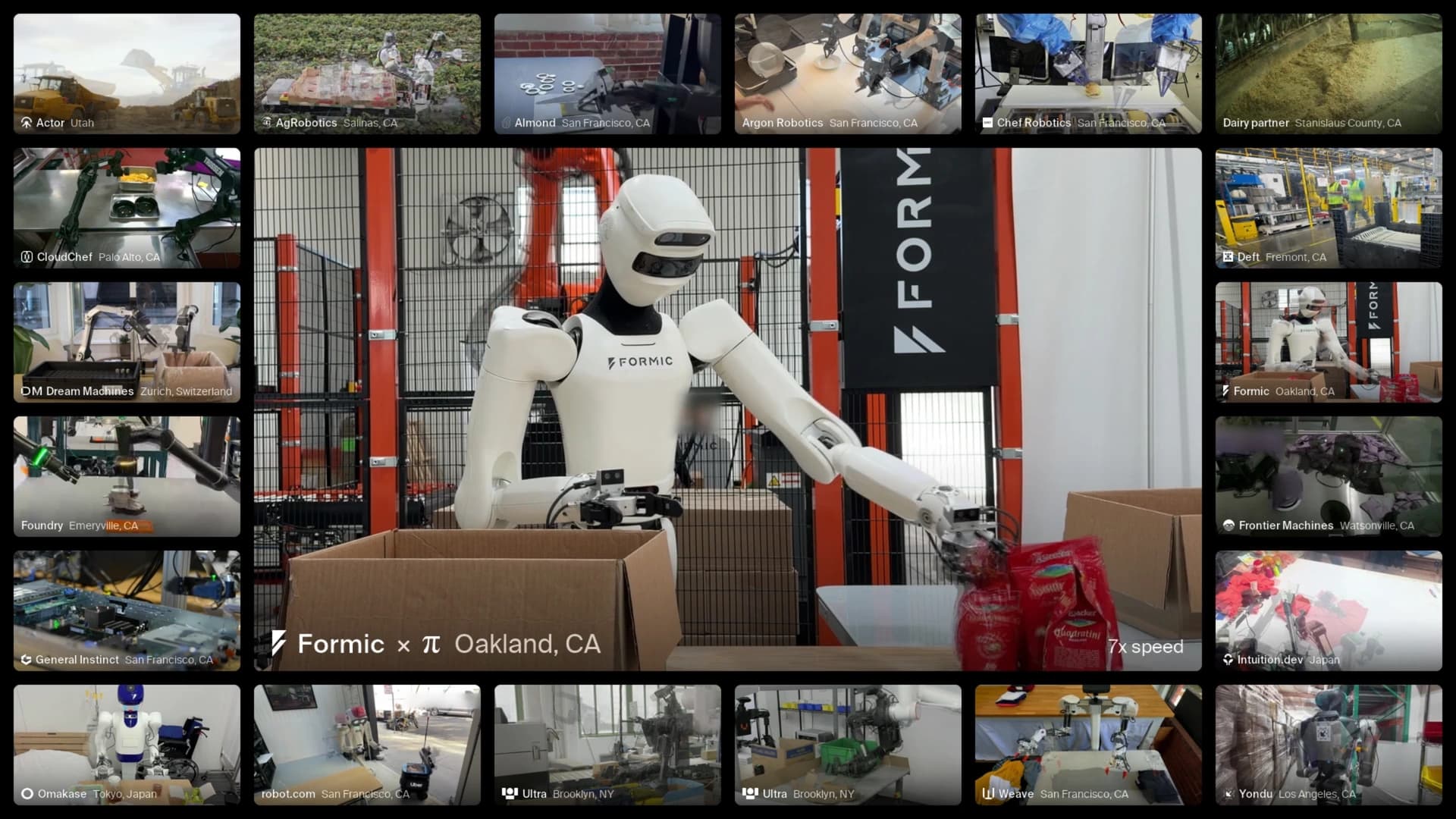
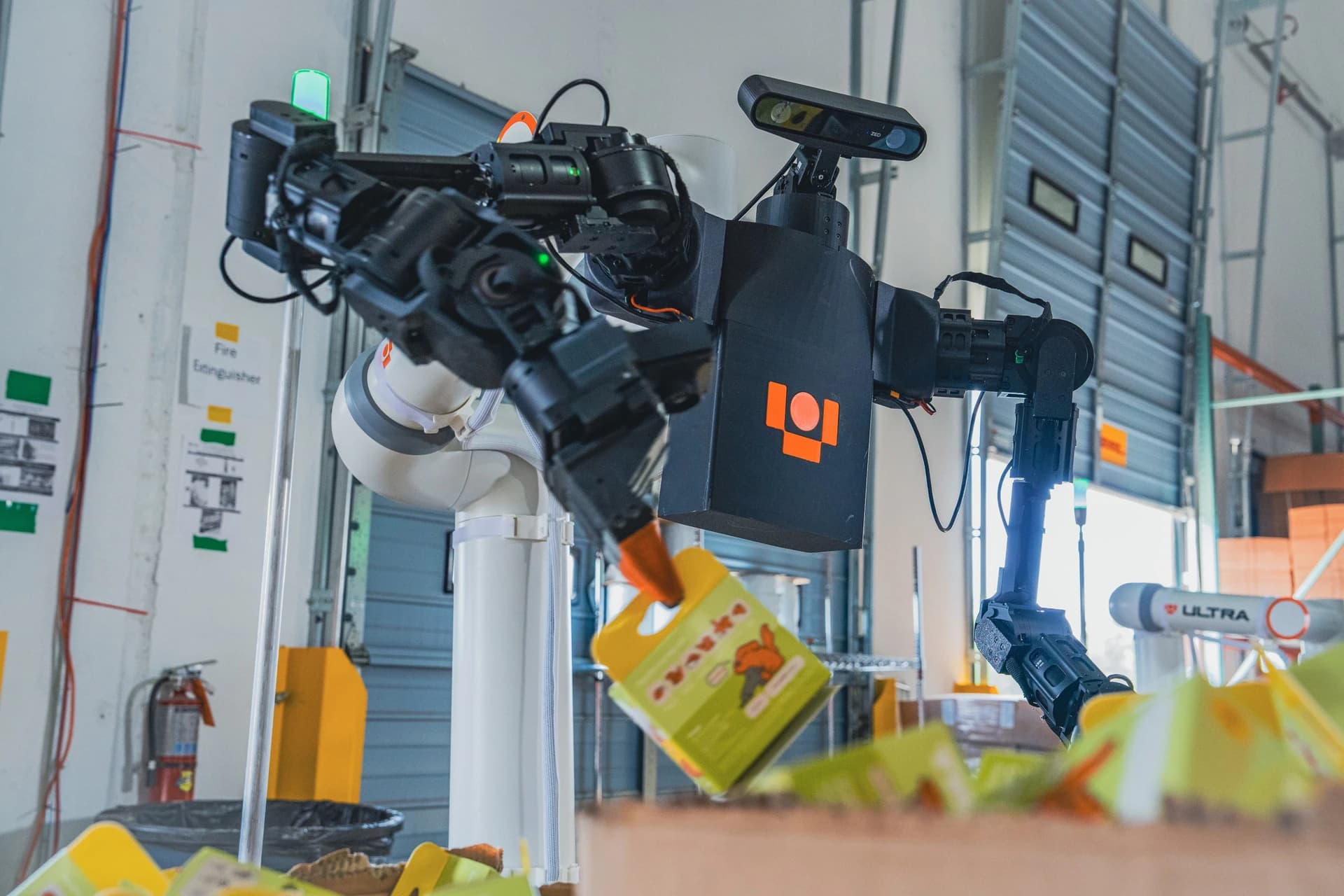
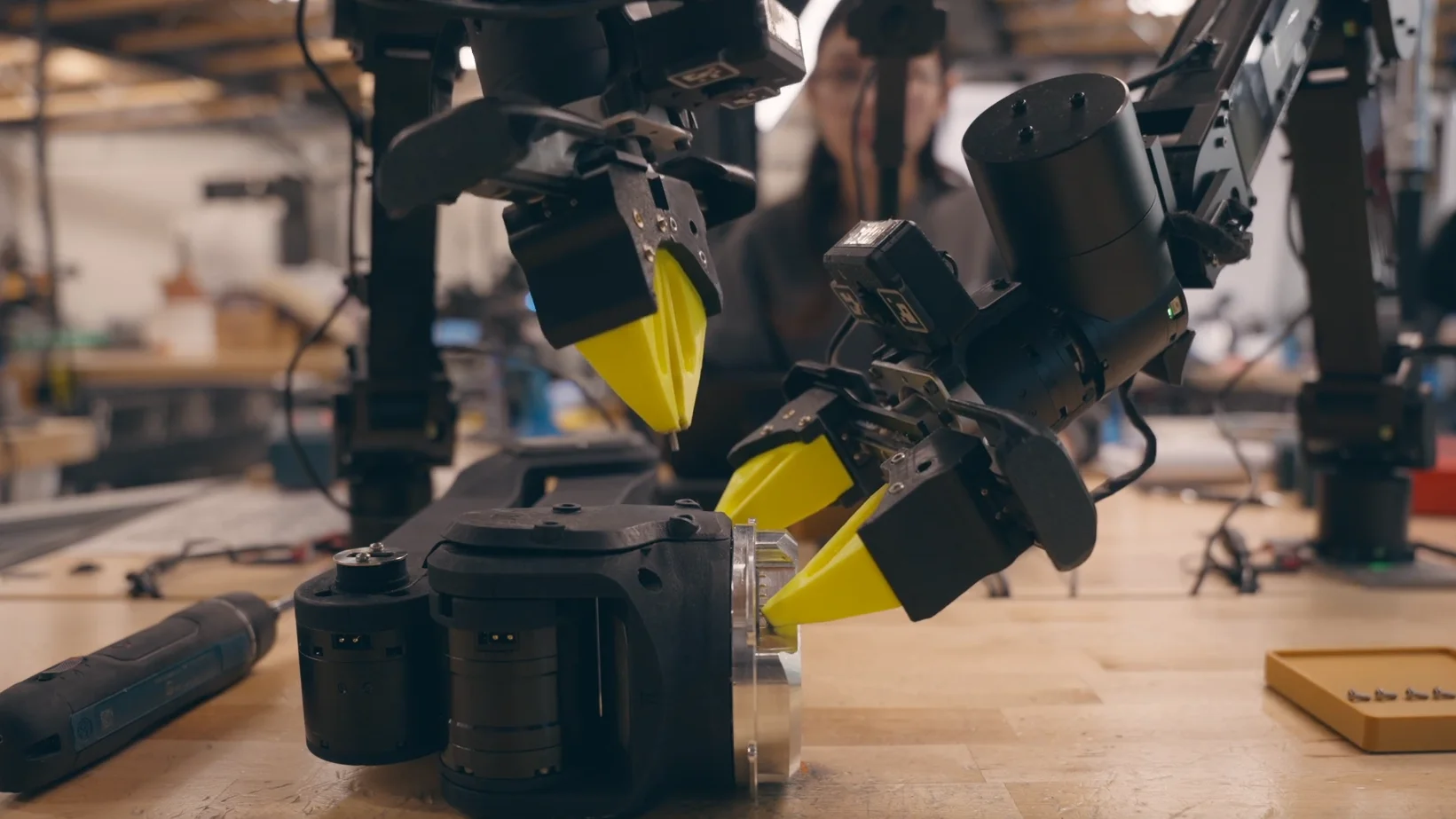
The company’s examples extend beyond humanoids. They include heavy machinery and a dual-arm robot deburring components for its own assembly. PI says most of the showcased applications used cloud-hosted inference, while acknowledging connectivity challenges in some cases. Beta access is still being offered through an application process.
Why learning across robot bodies matters
In a separate South Park Commons interview, PI co-founder Sergey Levine outlined why the company sees breadth as an advantage for robotics learning. His remarks concern PI’s research strategy, rather than the reported financing.
“If you want your humanoid to be really good, do you get lots of examples of a humanoid or do you solve all of the robotics problems?” Levine asked.
He argued that broader training exposes models to more unusual situations and exceptions. For humanoid developers, the implication is that useful capabilities could come from experience gathered across many kinds of robots, rather than only from machines with the same body.
Levine also emphasized the underlying training material: “The most important thing for building foundation models, paradoxically, is not the model itself—it's the data,” he said later in the conversation.
The API gives that research thesis a practical route to developers building specific applications. The next test is whether those developers can turn adaptable models into reliable operation on their own hardware. A completed funding round would provide more resources for that effort; the reported valuation alone does not establish that the deployment challenge has been solved.
Share this article
Follow humanoid robotics without following every announcement.
Get the week’s most important launches, funding and research—and why they matter—in one email from Humanoids Daily.
Once a week. Unsubscribe anytime.
Read recent issuesRead next
- Published on
- Reading time
- 2 min read
Physical Intelligence Opens API Beta for Robot Model Training and Inference
- Published on
- Reading time
- 3 min read
Ultra Raises $50 Million Series A for Warehouse Robots, Deepens Physical Intelligence Partnership
- Published on
- Reading time
- 6 min read
Physical Intelligence Unveils π0.7: The Rise of Compositional Generalization in Robotics
- Published on
- Reading time
- 4 min read
Physical Intelligence in Talks for $1 Billion Round, Eyeing an $11 Billion Valuation
- Published on
- Reading time
- 4 min read
The Last Millimeter: Physical Intelligence Unveils RL Tokens for Hyper-Fast Precision
- Published on
- Reading time
- 4 min read
Don’t Forget the Salt: Physical Intelligence Equips Robots with 15-Minute "Multi-Scale" Memory