- Published on
Sanctuary AI Secures Zeon Investment to Develop Resilient Materials for Industrial Robotic Hands
One tap, and our reporting appears more often in your Google Top Stories. It makes a real difference to a small newsroom.

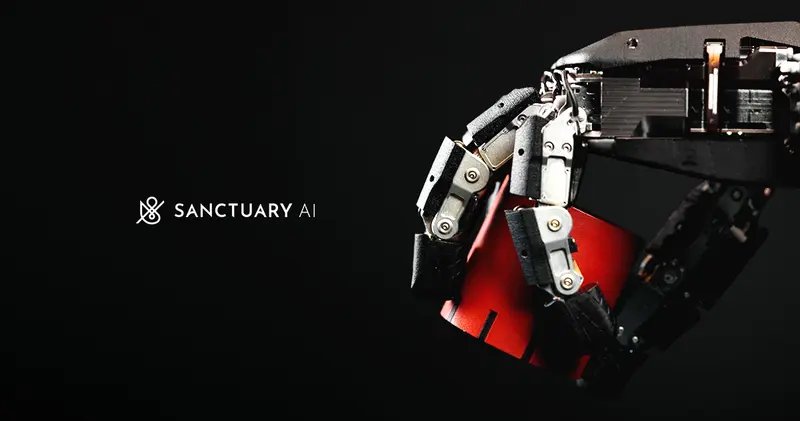
- Sanctuary AI has partnered with and received investment from Zeon Corporation, a Japanese materials manufacturer, to co-develop specialized materials for robotic dexterity.
- The collaboration will focus on creating rugged elastomeric components that can survive harsh factory conditions while maintaining the high-fidelity tactile precision required for manipulation.
- This material development directly supports Sanctuary AI's stated target of deploying general-purpose, dexterous robots into real-world industrial environments by 2026.
- The partnership complements Sanctuary AI's recent sim-to-real control breakthroughs and its robust intellectual property portfolio.
As humanoid and general-purpose robots transition from controlled laboratory demonstrations to active factory floors, the industry is increasingly confronting a foundational hardware challenge: material durability. To address this, Vancouver-based Sanctuary AI has announced a strategic partnership with—and an investment from—Tokyo-based Zeon Corporation.
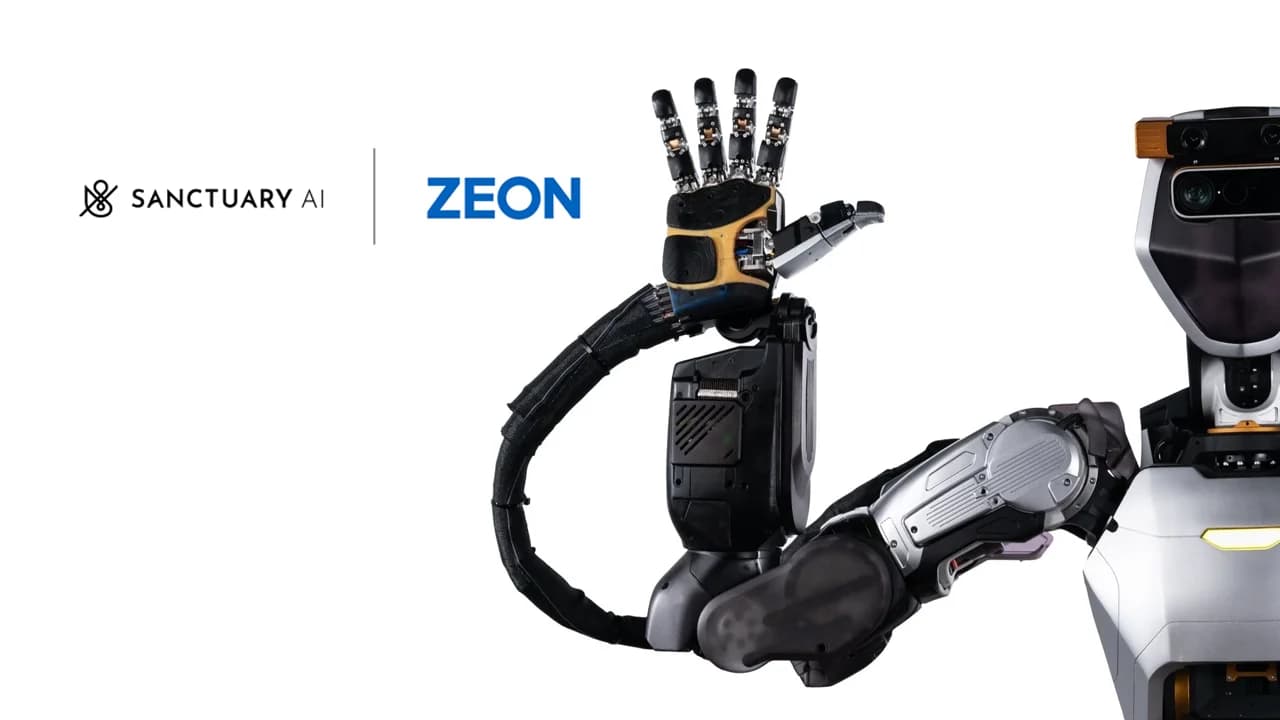
The collaboration, facilitated through Zeon's venture capital arm, Zeon Ventures Inc., is aimed at advancing specialized materials tailored for dexterous robotics. Specifically, the two companies will co-develop rugged elastomeric components for robotic hands intended for industrial deployment.
The Durability Versus Dexterity Trade-Off
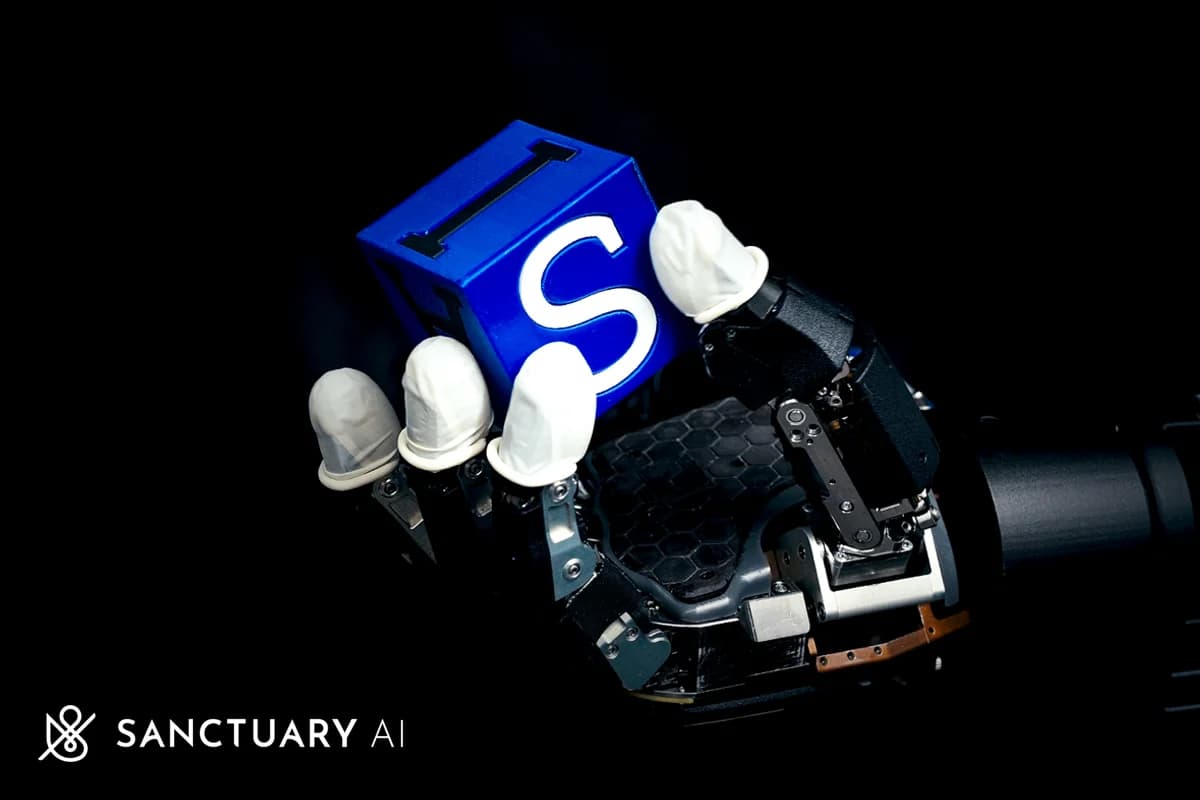
Sanctuary AI’s approach to hardware relies heavily on unique miniaturized hydraulic actuators and high-fidelity tactile sensing, designed to give its robots a "near-human sense of touch". While the company has recently demonstrated impressive zero-shot transfer capabilities and successful reinforcement learning for complex manipulation, maintaining that high-precision performance in the physical world requires a highly resilient outer layer.
"Transitioning dexterous robots from the lab to the factory floor will require resilient materials that balance industrial-grade toughness with the tactile precision of human touch," Sanctuary AI stated.
The weekly humanoid robotics briefing
One email a week: the launches, funding and research that mattered, with context from Humanoids Daily.
Read recent issuesIf the contact surfaces of a high-degree-of-freedom hand degrade too quickly under the repetitive stress of industrial labor, the underlying sensors and hydraulic systems cannot function accurately. To prevent this, Zeon will leverage its extensive expertise in elastomeric materials, as well as its testing capabilities, to support Sanctuary AI's product development.
The 2026 Commercialization Push
The timeline for this partnership reflects a broader acceleration across the robotics sector. Sanctuary AI noted that in 2026, "greater urgency" is being placed on solving industrial dexterity challenges to enable real-world deployments. This aligns with current industry momentum, where companies are increasingly moving beyond proof-of-concept videos to digital twin testing with partners like Schaeffler and active pilot programs.
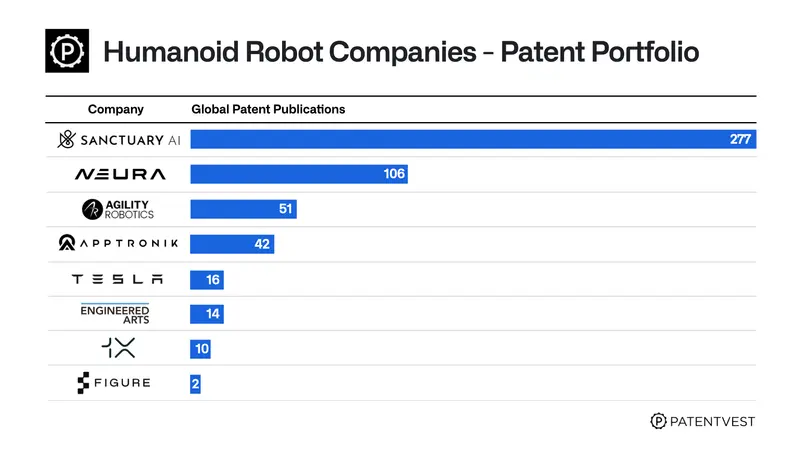
Sanctuary AI is entering this commercialization phase from a well-capitalized and protected position. Backed by over $140 million in total funding and holding a leading global intellectual property portfolio, the company is well-positioned to scale its "Carbon" Physical AI alongside its proprietary hand technology.
For Zeon, the investment represents a strategic expansion into next-generation automation. The materials manufacturer views deploying dexterous robotic systems at scale as a vital catalyst for driving economic growth and supporting aging societies. The partnership is a component of Zeon’s "STAGE30" Medium-Term Business Plan, which targets raising the company's sales ratio in key growth areas to 48% of total sales by fiscal 2028.
Share this article
Read next
- Published on
- Reading time
- 3 min read
Sanctuary AI Achieves "Zero-Shot" Sim-to-Real Milestone for Hydraulic Dexterous Hands
- Published on
- Reading time
- 3 min read
Agility Robotics Lands Toyota as Commercial Partner, Aiming at Automotive Production
- Published on
- Reading time
- 3 min read
Cinema Robotics Firm Axibo Secures $12M to Build Humanoid Robots in Canada
- Published on
- Reading time
- 6 min read
Humanoid Hype vs. Hardware Reality: New Report Scrutinizes Startup IP Strength
- Published on
- Reading time
- 3 min read
Humanoid Robots: Insights from Agility Robotics and Apptronik Executives
- Published on
- Reading time
- 3 min read
Sanctuary AI Touts Reinforcement Learning Success for Dexterous Robot Hand Manipulation

The weekly humanoid robotics briefing
One email a week: the launches, funding and research that mattered, with context from Humanoids Daily.
Read recent issues