- Published on
Vesoma Emerges From Stealth With a Humanoid Built to Learn
One tap, and our reporting appears more often in your Google Top Stories. It makes a real difference to a small newsroom.

Supported by RoboStrategySupport for Humanoids Daily comes from RoboStrategy
Sponsored
Investing involves risk, including possible loss of principal. Read the prospectus before investing.
- The European startup behind the Kyle walking prototype has introduced itself as Vesoma, with more than 60 people across Munich and Limassol.
- Former Google DeepMind research director Martin Riedmiller is chief AI officer. Synapticon co-founder Nikolai Ensslen leads the company alongside Easybrain co-founder Peter Skoromnyi.
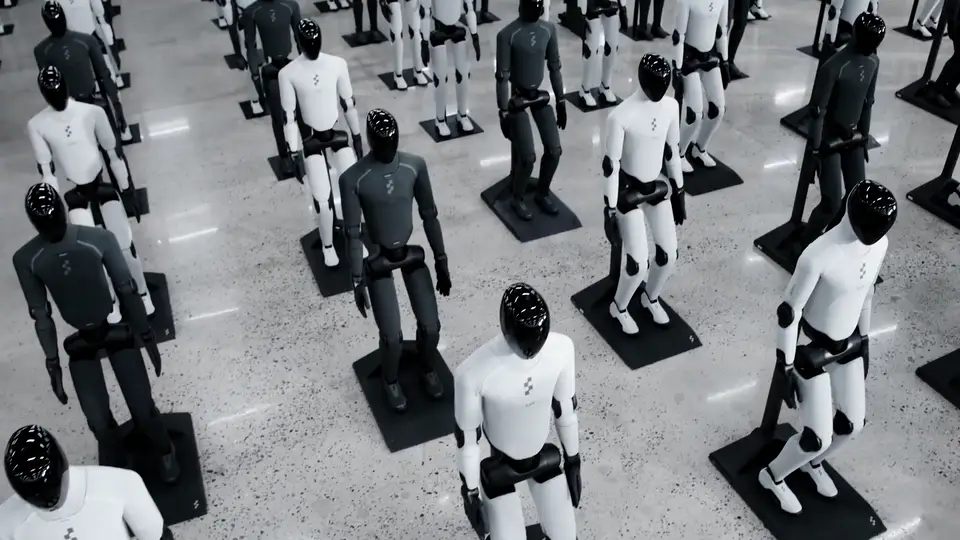
- Vesoma wants robots to learn physical work through their own interactions. Its first Vesoma 1 units are being built, but the published product imagery is explicitly labeled as design visualization.
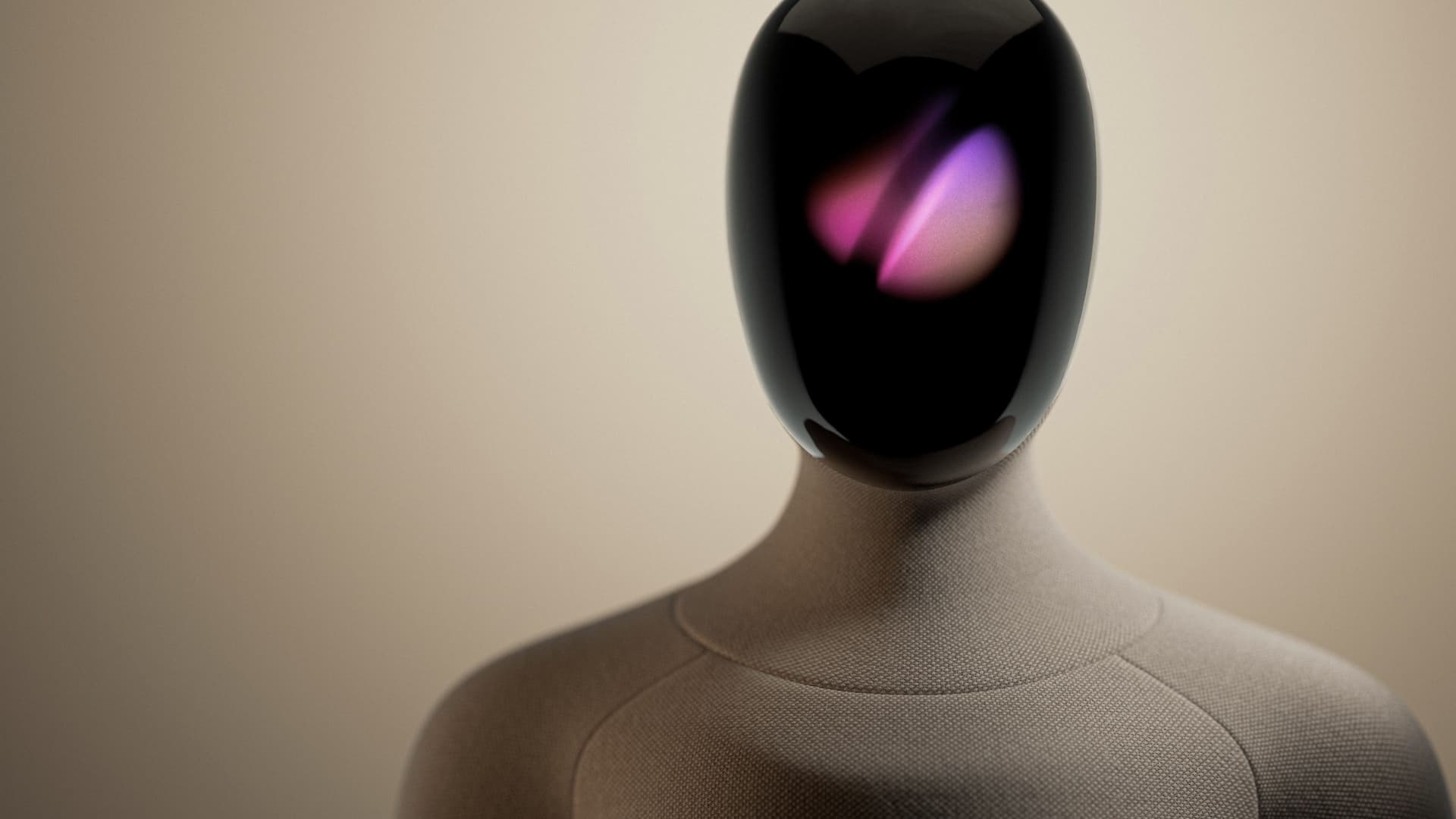
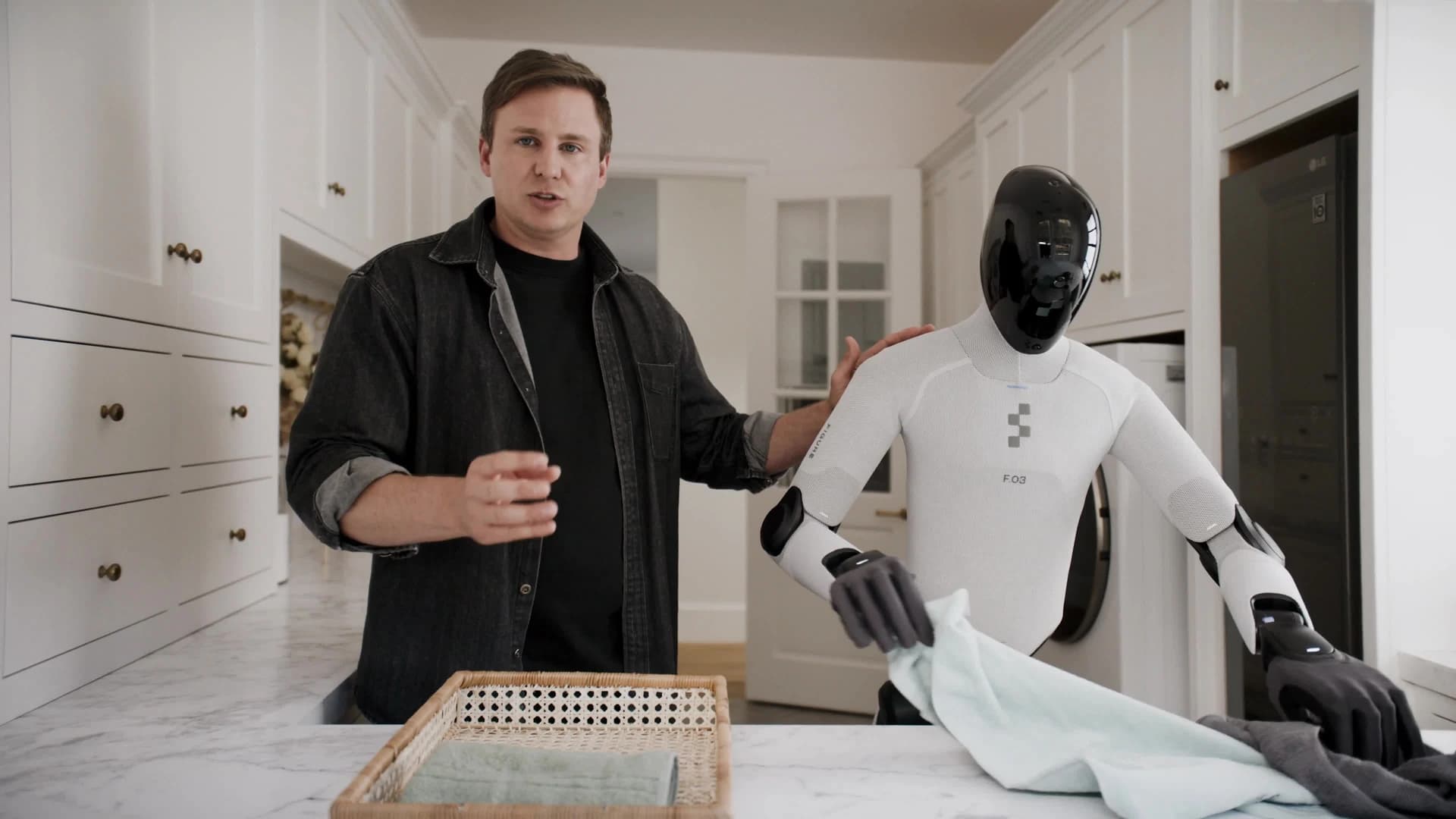
The startup behind Munich’s boxy Kyle humanoid prototype now has a name: Vesoma. The company has emerged publicly with a team of more than 60 people, a first product called Vesoma 1, and a bet that learning through interaction can carry humanoids beyond impressive demonstrations into reliable work.
In its introduction dated September 22, Vesoma says it began work in December 2025 and has fitted out more than 3,500 square metres of laboratory and office space in Munich, Germany, and Limassol, Cyprus. Its September 23 announcement on X says the first Vesoma 1 units are being built.
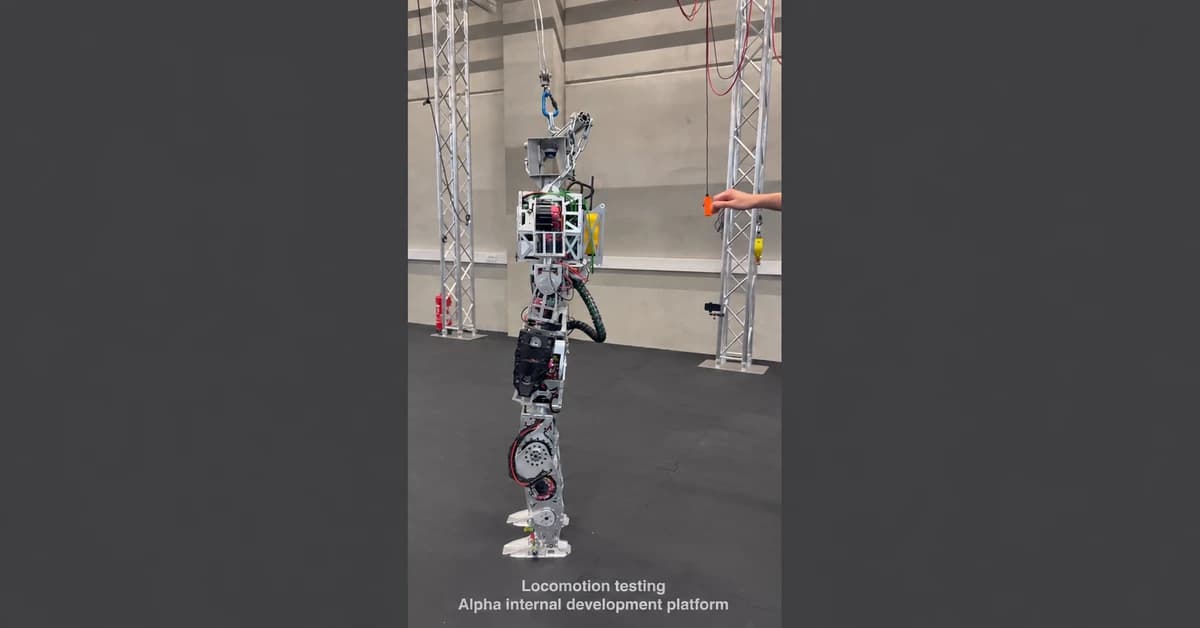
Humanoids Daily covered the team’s walking Kyle prototype earlier this month, when it was still operating without a public company identity. The launch adds a clearer account of its leadership, intended customers and technical approach.
From Kyle to Vesoma 1
Vesoma says it designed, built and walked its first humanoid prototypes within six months, using a learned locomotion policy. That is an early engineering milestone, rather than evidence that the machines can already perform useful work across a full shift.
The weekly humanoid robotics briefing
One email a week: the launches, funding and research that mattered, with context from Humanoids Daily.
Read recent issuesKyle was previously described by CEO Nikolai Ensslen as an alpha development platform, distinct from the planned first-generation product. At the time, Ensslen targeted an early 2027 product unveiling. The new announcement does not give a customer delivery date or establish that this earlier timetable has changed.
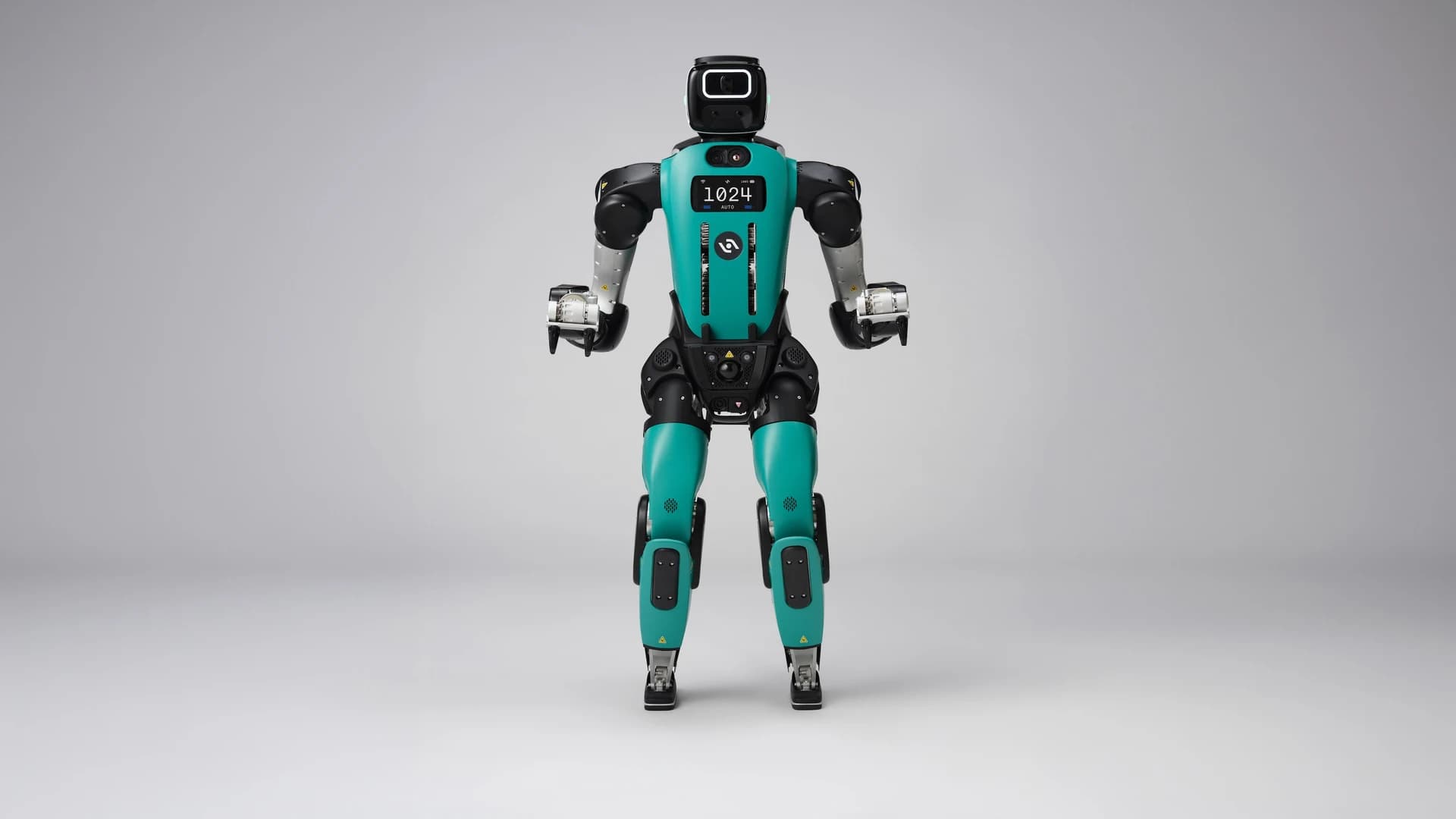
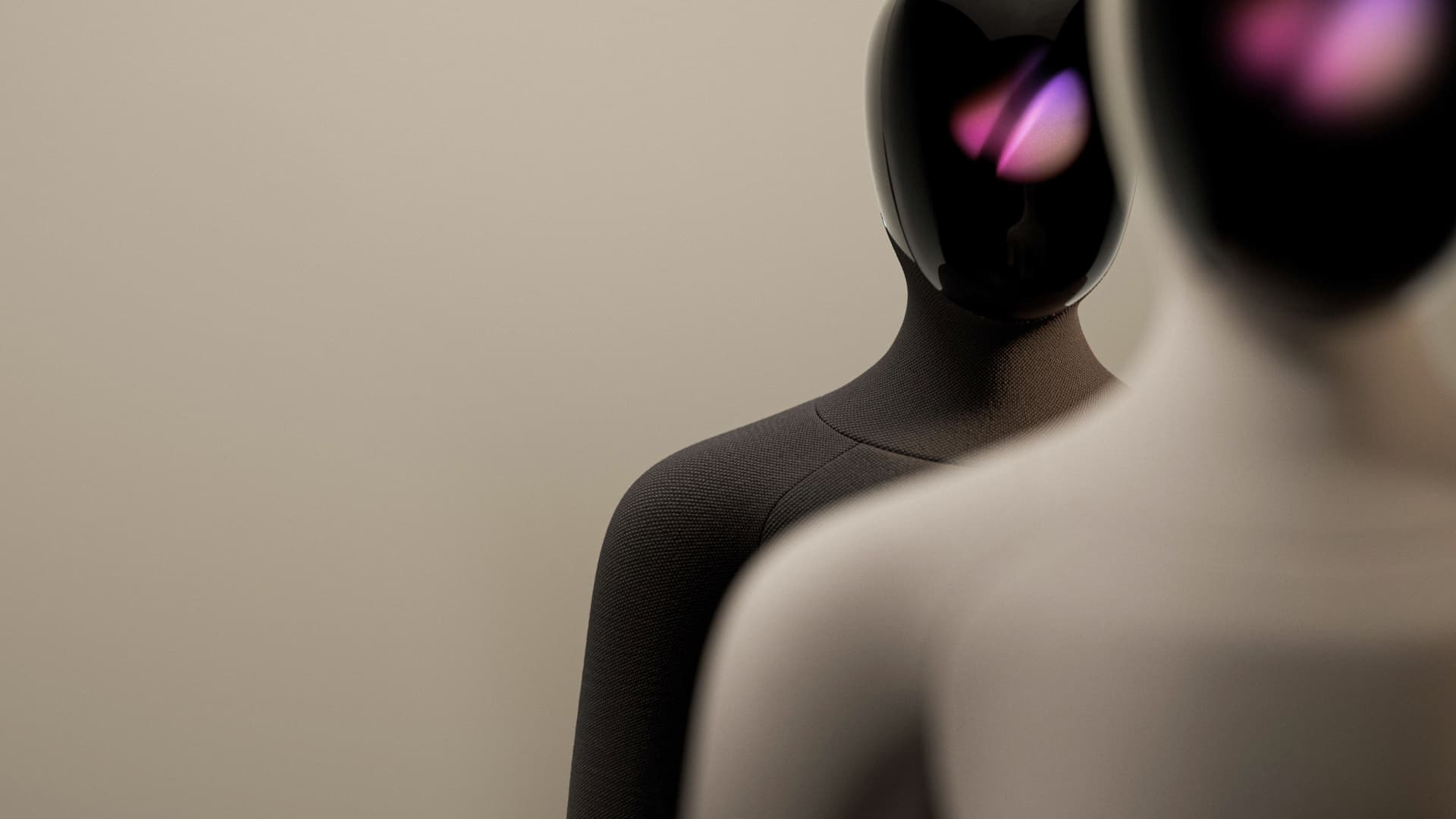
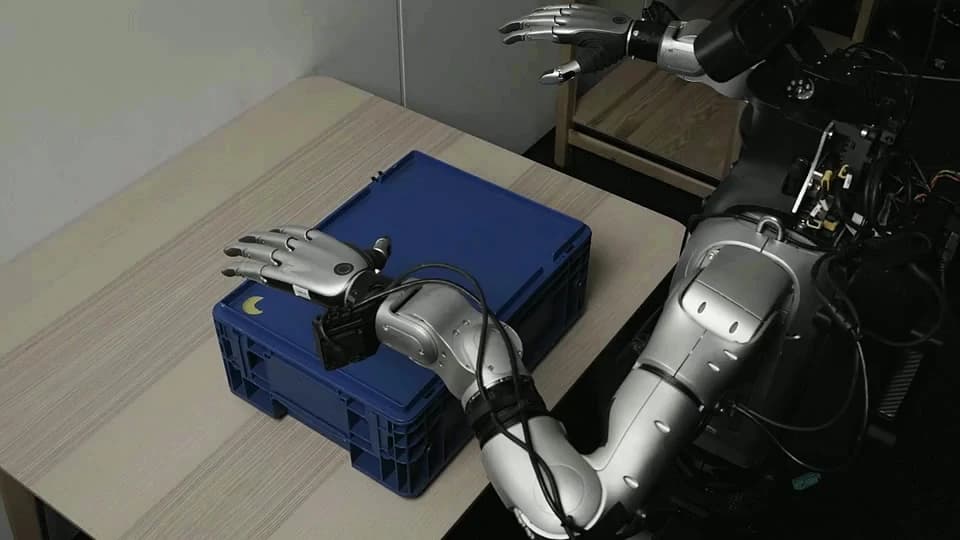
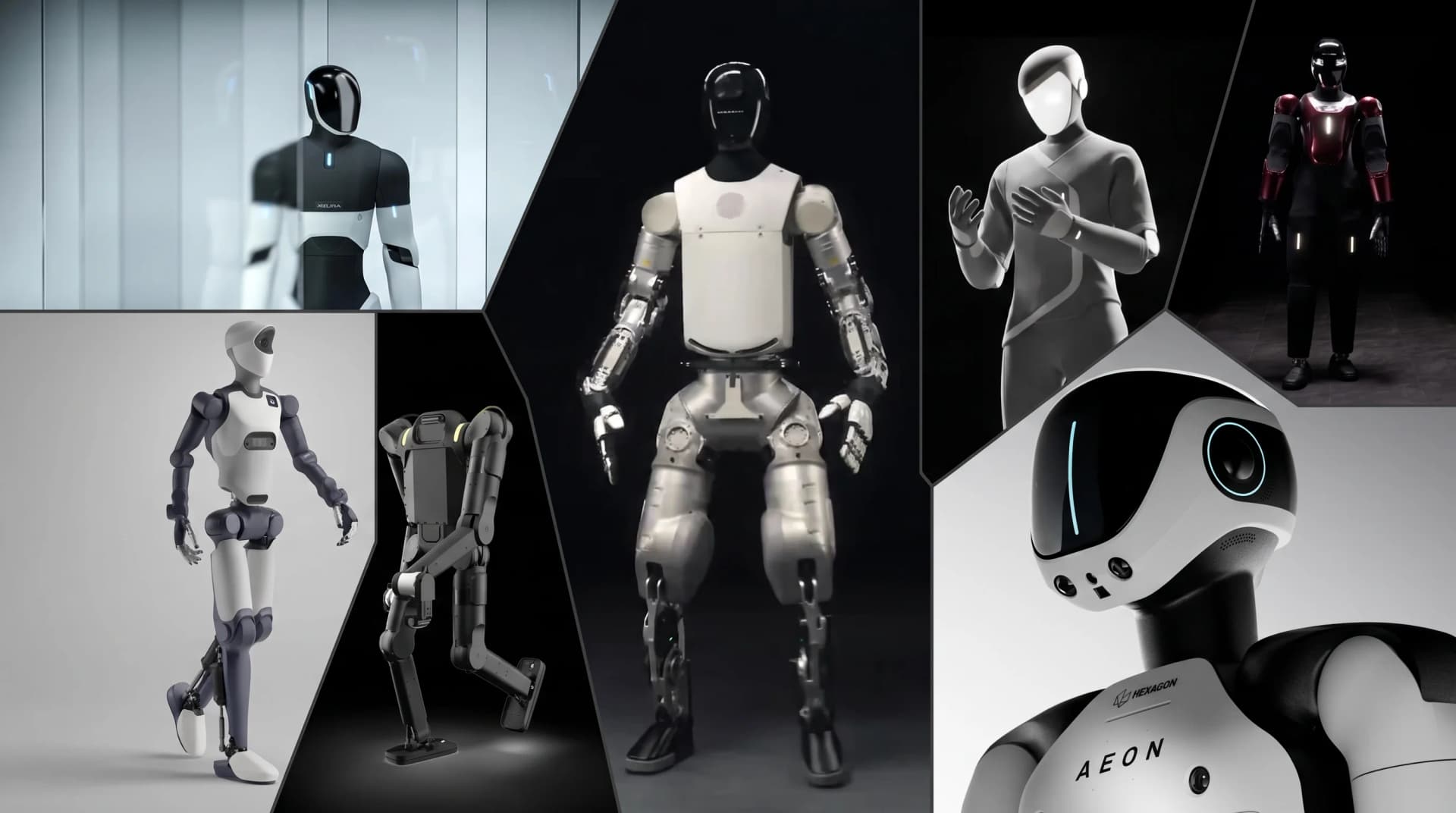
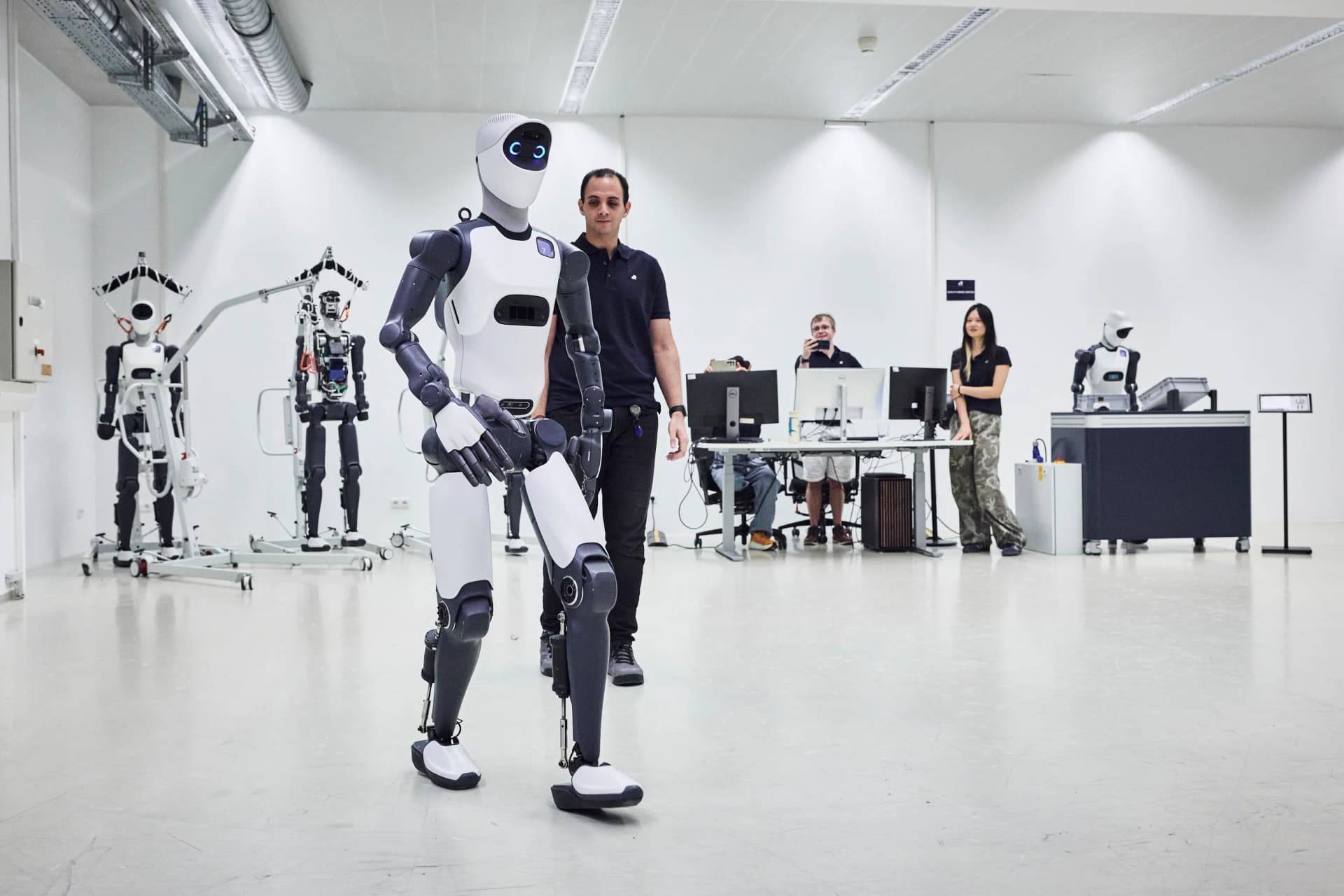
The polished robot images now available in Vesoma’s media kit are labeled design visualizations. Vesoma 1 remains under development, while alpha robots are already in the laboratory. The distinction matters: these images introduce a proposed appearance, not photographs documenting a finished production machine.
A bet on learning through interaction
Vesoma’s central argument is that demonstrations alone will not deliver the reliability customers need. It wants an agent that improves through its own interactions with the physical world, supported by hardware designed around that learning process.
The company points to locomotion as its first example and says the harder work lies ahead: extending the approach to manipulation involving contact, coordinated whole-body tasks and environments where mistakes can damage objects.
This is a research and engineering direction, not a demonstrated general capability. The announcement supplies no manipulation success rates, intervention figures or full-shift customer results with which to assess the proposed advantage over systems trained on human demonstrations. Its criticism of imitation-led approaches should therefore be read as the company’s thesis, rather than a settled verdict on competing methods.
Vesoma’s website identifies manufacturing, logistics and warehousing as its initial markets, with a broader range of work envisaged over time.
DeepMind research meets industrial hardware
The leadership page resolves one question left open in our earlier coverage: Martin Riedmiller, previously a research director and Control Team lead at Google DeepMind, is Vesoma’s chief AI officer.
Ensslen, co-founder of motion-control and functional-safety specialist Synapticon, is co-founder and CEO. Fellow co-founder Peter Skoromnyi, who co-founded games company Easybrain, serves as chief strategy officer. The pairing brings industrial robotics experience together with experience building a large consumer software business.
The team also includes operations chief Jonas Reinecke, formerly of precision-manufacturing company Daedalus. Vesoma identifies Marcelo Gutierrez as head of design, crediting his earlier work on Tesla’s Optimus, Apptronik’s Apollo and Cartwheel’s Yogi.
Vesoma joins the companies examined in our feature on Europe’s humanoid sector in arguing that the region’s industrial expertise can support a competitive robotics business. It also explicitly rules out weapons, military and surveillance uses.
The next meaningful test will be what Vesoma 1 can do beyond walking: which tasks it learns, how much experience that requires, and how reliably it performs when conditions change.
Share this article
Read next
- Published on
- Reading time
- 3 min read
UBTECH Brings Walker C1 to Slovenia in Balkan Expansion Push
- Published on
- Reading time
- 5 min read
KIST Chief Says Korea Can Join the US and China as a Humanoid Power
- Published on
- Reading time
- 5 min read
Odyssey Unveils Odyssey-3, With Flexion Building Humanoid Control on Its World Model
- Published on
- Reading time
- 4 min read
Munich stealth startup shows walking humanoid “Kyle,” targets early 2027 reveal
- Published on
- Reading time
- 25 min read
The Humanoids of Europe: Built by Their Customers
- Published on
- Reading time
- 7 min read
Agile Robots CEO Predicts Physical AI Will Surpass Automotive by 10x
The weekly humanoid robotics briefing
One email a week: the launches, funding and research that mattered, with context from Humanoids Daily.
Read recent issues