- Published on
Tesla App Contains Optimus Gen 3 Renders—Here’s What They Show
One tap, and our reporting appears more often in your Google Top Stories. It makes a real difference to a small newsroom.

Supported by RoboStrategySupport for Humanoids Daily comes from RoboStrategy
Sponsored
Investing involves risk, including possible loss of principal. Read the prospectus before investing.
- Humanoids Daily examined a downloaded Tesla Android 4.61.0-4607 bundle and verified nine robot PNGs, including three with
_gen3filenames. - The full-body
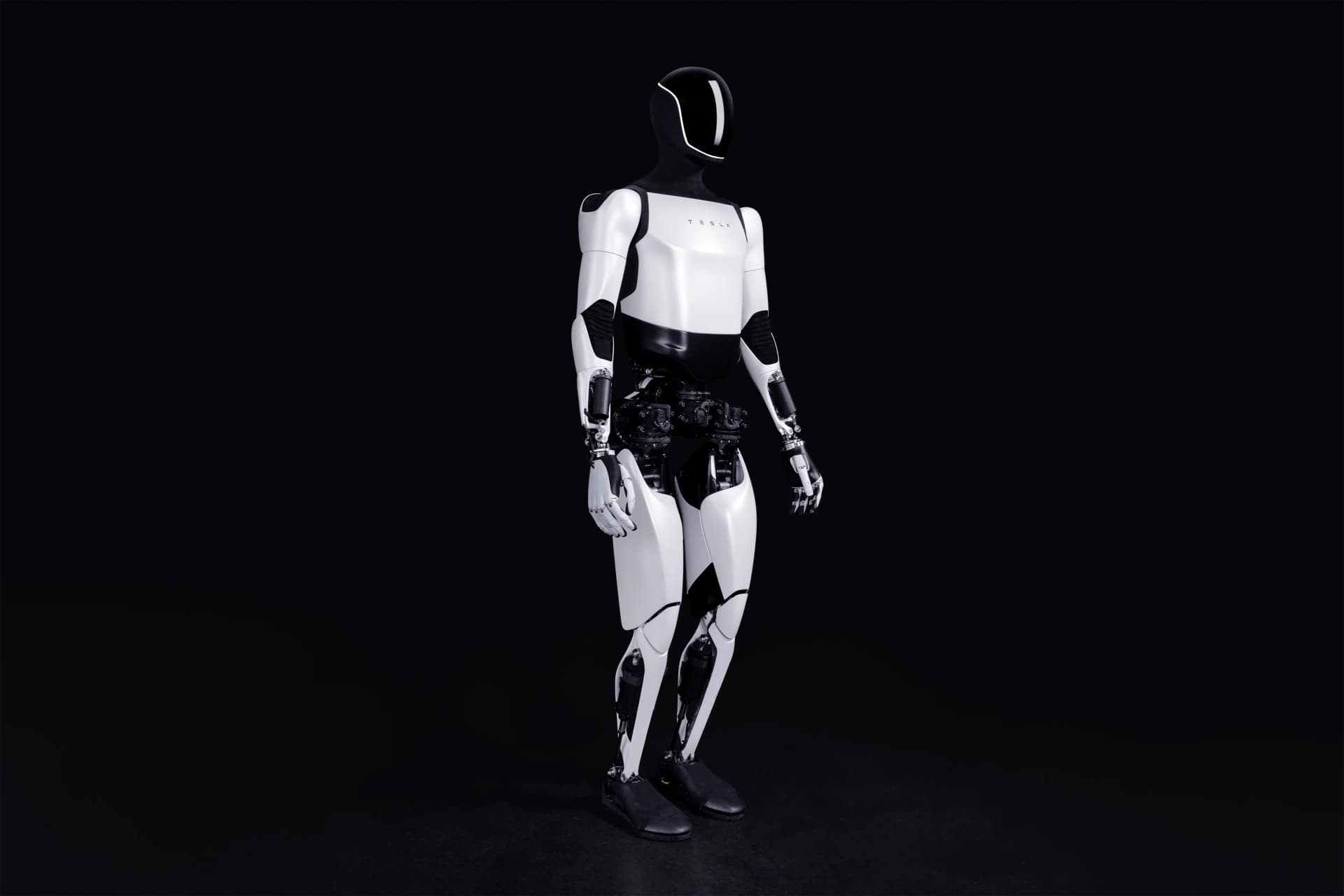
_gen3image shows a more enclosed exterior than the_goldvariant, notably around the hips and lower legs. - The files sit under
assets/mock/. Their presence does not confirm the final Optimus Gen 3 design, a working app interface or a launch timetable. - A comparison of four builds dates the first appearance of the
_gen3set to August 27. Higher-resolution versions arrived September 5 and remained byte-identical in the September 22 release.
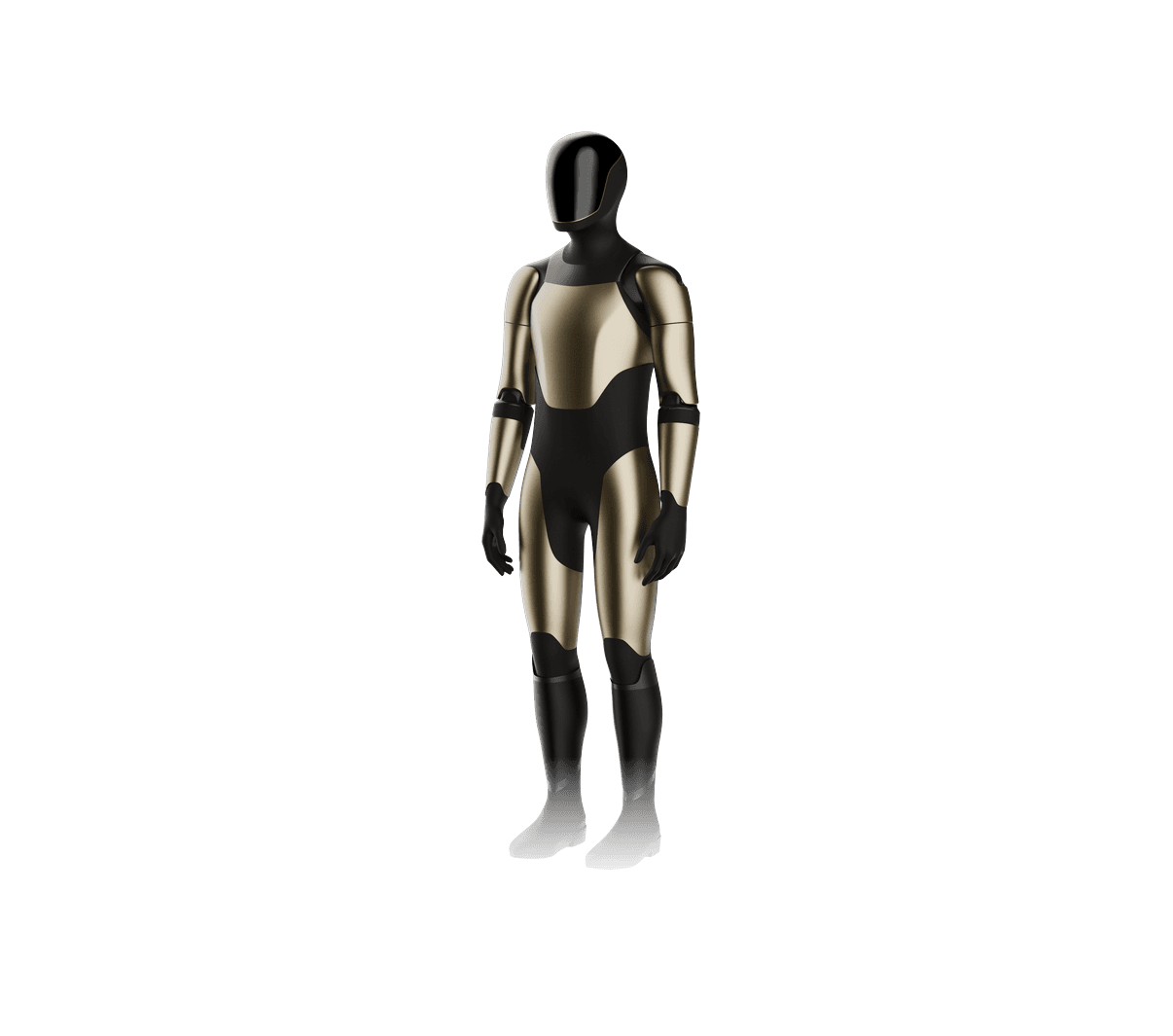
Tesla’s Android app package contains robot renders explicitly labeled _gen3, offering a possible preview of Optimus’s next appearance. Humanoids Daily examined a downloaded 4.61.0-4607 bundle and verified the files directly, rather than relying on screenshots circulating on social media.
A follow-up comparison of four Android builds puts the first appearance of the _gen3 set at August 27, 2026, nearly four weeks before the current reports. These are not newly added images in the September 22 update. Whether they accurately represent the final third-generation robot remains a separate question.
What is actually in the package
The downloaded .apkm bundle contains multiple APK files. Opening split_assets_pack.apk reveals nine PNGs under assets/mock/: close-up, full-body and inactive images, each supplied in an unsuffixed version, a _gold version and a _gen3 version.
For example, the full-body file is named robot_home_full_body_gen3.png. It and the corresponding _gold image are both 1206 × 1065 pixels. We checked all nine extracted PNGs against the files inside the downloaded bundle and confirmed they match byte for byte.
The weekly humanoid robotics briefing
One email a week: the launches, funding and research that mattered, with context from Humanoids Daily.
Read recent issuesAccessing these images required ordinary archive extraction. No decryption or code decompilation was needed to retrieve the PNGs.
The filenames provide evidence that the assets were organized as different robot variants. They do not, on their own, establish which physical prototypes exist or whether every detail depicted has been finalized.
The renders were already there in August
Humanoids Daily compared the robot assets across four app builds. The timeline separates their first inclusion from a later increase in image resolution:
| Android app build | Release date | Robot asset changes |
|---|---|---|
| 4.59.5-4504 | August 9 | No _gen3 images. The gold variant has only a 402 × 272 waist-up image on a gradient background. |
| 4.60.0-4542 | August 27 | The three-image _gen3 set first appears. The gold variant is also expanded into a matching standing full-body, close-up and inactive set. Full-body and inactive images are 402 × 355. |
| 4.60.5-4573 | September 5 | Gold and _gen3 full-body and inactive images increase to 1206 × 1065, retaining the same depicted designs. |
| 4.61.0-4607 | September 22 | The gold and _gen3 sets are byte-identical to the September 5 build. |
The unsuffixed white robot set remains unchanged across these builds. Close-ups are separate, smaller assets; the resolution increase concerns the full-body and inactive images.
The gold and _gen3 sets appearing together in matching formats suggests they were prepared as alternative artwork for a shared interface. That is an inference from the assets, not a confirmed description of how Tesla intends to use them. Similarly, larger exports establish an increase in resolution, not that a feature became production-ready.
A more enclosed exterior
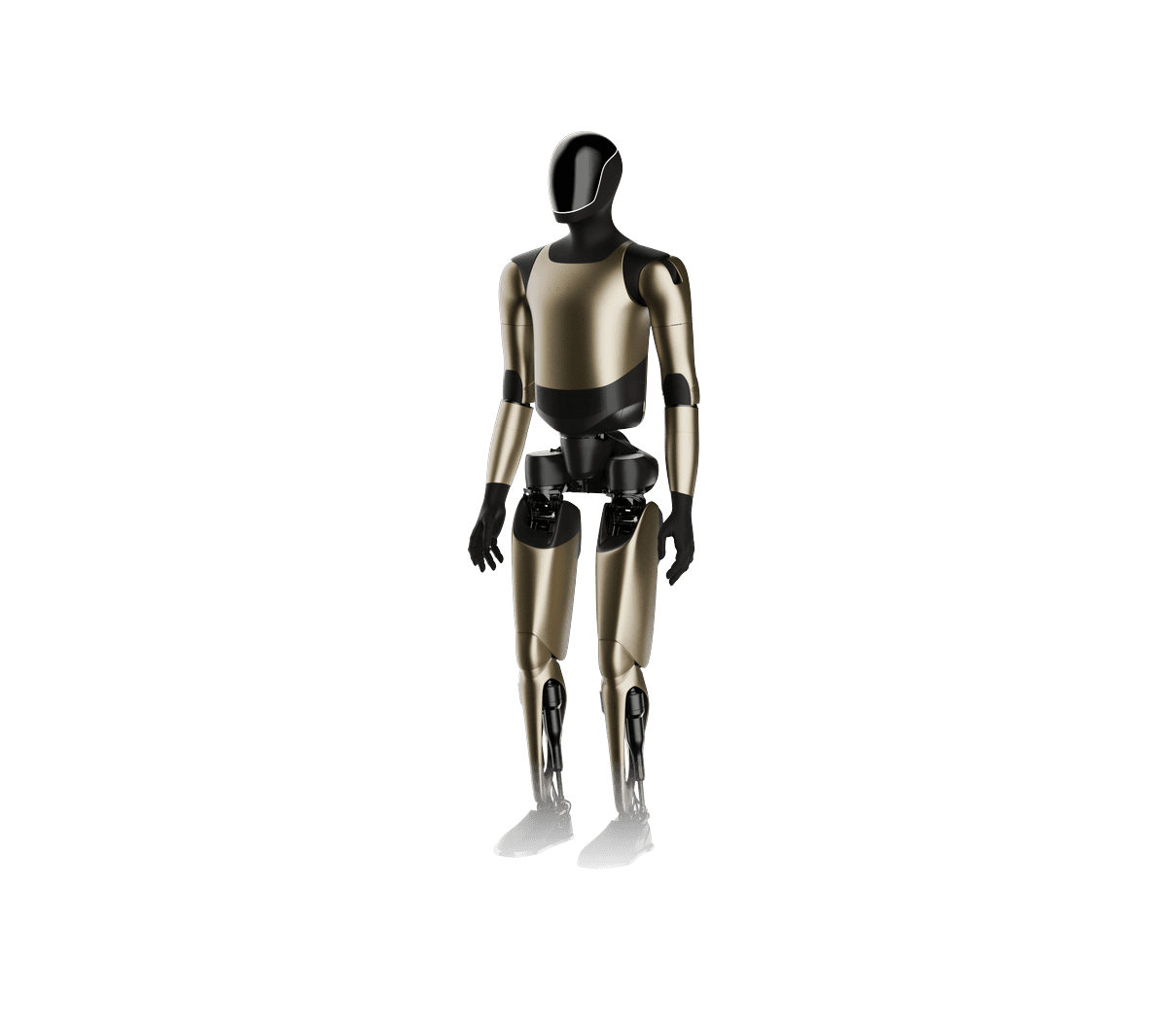
The clearest visual difference is the treatment of the lower body. The _gold full-body render exposes mechanical structures around the hips and lower legs. The _gen3 version covers those areas with a more continuous exterior, combining gold-toned panels with black surfaces.
The renders show a standing robot viewed at an angle, with its arms down. They are useful for comparing the depicted exterior, but cannot, of course, establish payload, joint performance, hand dexterity or manufacturing readiness. Covered mechanisms are also not evidence that the underlying mechanical design has been simplified.
Darker “inactive” variants hint at possible app states
The gold and _gen3 full-body renders each have a darker counterpart with inactive in the filename: robot_home_inactive_gold.png and robot_home_inactive_gen3.png. The robot retains the same standing pose, but appears more dimly lit.
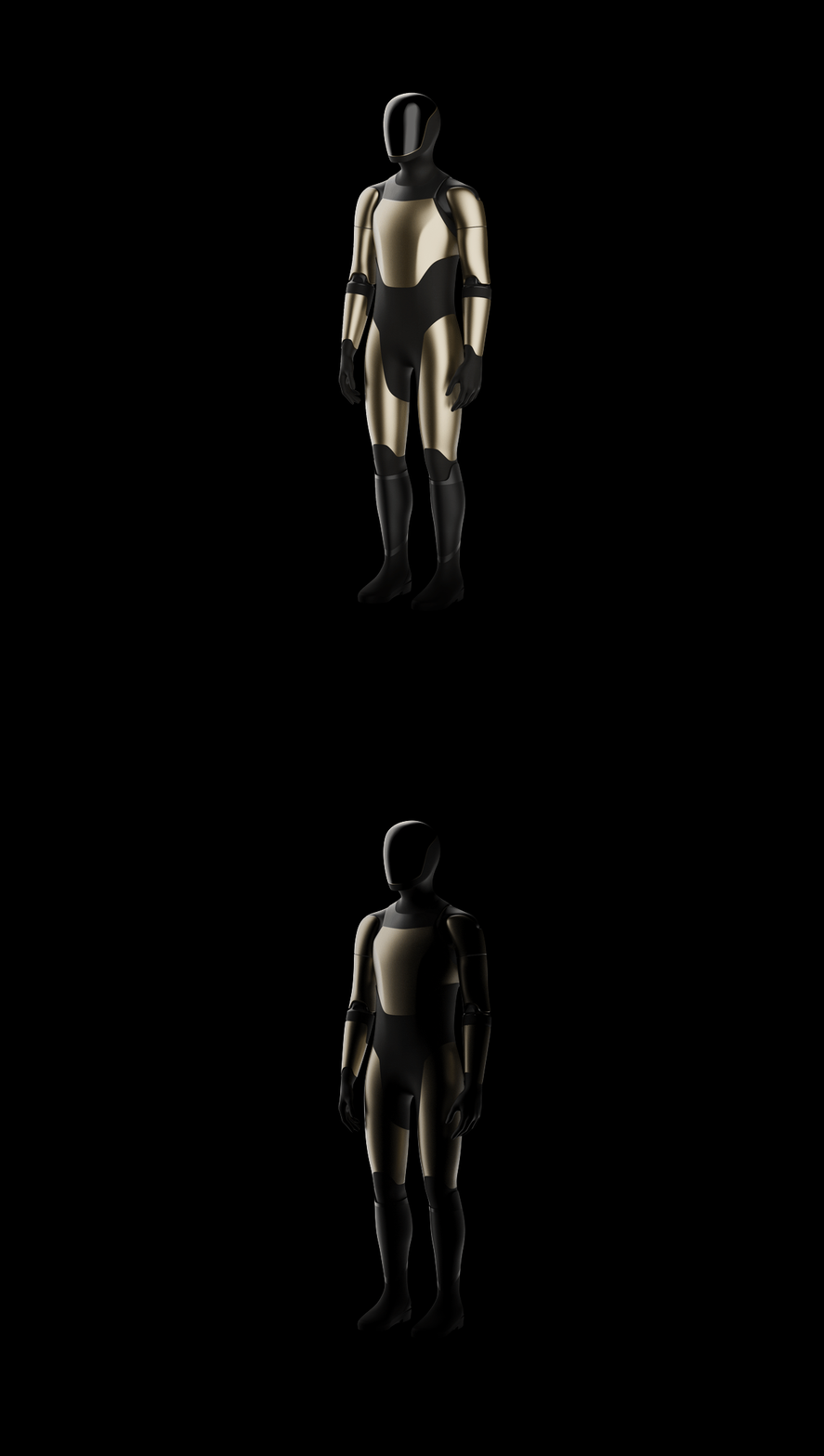
One possible explanation is that Tesla prepared artwork for different interface states—for example, a robot that is not currently active, or a placeholder for a user who does not have an Optimus linked to their account. That is speculation based on the filenames and appearance. The assets do not reveal what would trigger either image, or confirm that such a feature is available.
App assets are not an app launch
The assets/mock/ directory name is a reason to distinguish packaged artwork from a released feature. Mock assets can support development or interface prototyping; finding them does not demonstrate that owners can connect to an Optimus through the app.
Searches of the JavaScript bundles across all four builds found no direct references to the robot_* filenames. Many other mock assets are referenced as /mock/<name>.png, although some non-robot files also lack those references. The absence of a direct filename match does not rule out dynamic or indirect loading, so it cannot establish that no code displays the images.
The only _gen3 string found in the code refers to Tesla’s Gen 3 Wall Connector charger. It is not evidence of an Optimus Gen 3 interface.
This finding adds a visual element to our earlier coverage of Optimus-related Tesla app findings. The renders should nevertheless be assessed on their own evidence, rather than treated as confirmation of every feature previously inferred from app code.
What remains unresolved
The build comparison establishes when the renders entered the inspected public app releases. It does not establish when Tesla created them, whether they depict finalized hardware or when an Optimus feature might become available.
Tesla’s public Android builds have contained explicitly named _gen3 robot artwork since August 27, with higher-resolution exports present since September 5. That is a concrete record of app asset preparation; the final hardware, its capabilities and any usable app integration remain unconfirmed by these files.
Share this article
Read next
- Published on
- Reading time
- 4 min read
Supply Chain Rumors Hint at Massive Optimus Order as Fremont Production Line Ramps Up
- Published on
- Reading time
- 5 min read
The Terafab Manifesto: Tesla and Intel Join Forces to Power Musk’s "Galactic" AI Ambitions
- Published on
- Reading time
- 3 min read
Finishing Touches: Tesla Misses Self-Imposed Q1 Deadline for Optimus Gen 3 Reveal
- Published on
- Reading time
- 3 min read
A 'Formula One' Pace: Tesla's Optimus Director Teases Gen 3 Prototype in New Recruitment Push
- Published on
- Reading time
- 3 min read
Tesla Reportedly Begins New Optimus Supplier Audits in China
- Published on
- Reading time
- 3 min read
Tesla’s Optimus Factory Nears a Steel-Frame Milestone in Texas
The weekly humanoid robotics briefing
One email a week: the launches, funding and research that mattered, with context from Humanoids Daily.
Read recent issues