- Published on
The FCC Bans Foreign Humanoids: Unpacking the Sweeping New Restrictions on Robotic Devices
One tap, and our reporting appears more often in your Google Top Stories. It makes a real difference to a small newsroom.

Supported by RoboStrategySupport for Humanoids Daily comes from RoboStrategy
Sponsored


Investing involves risk, including possible loss of principal. Read the prospectus before investing.
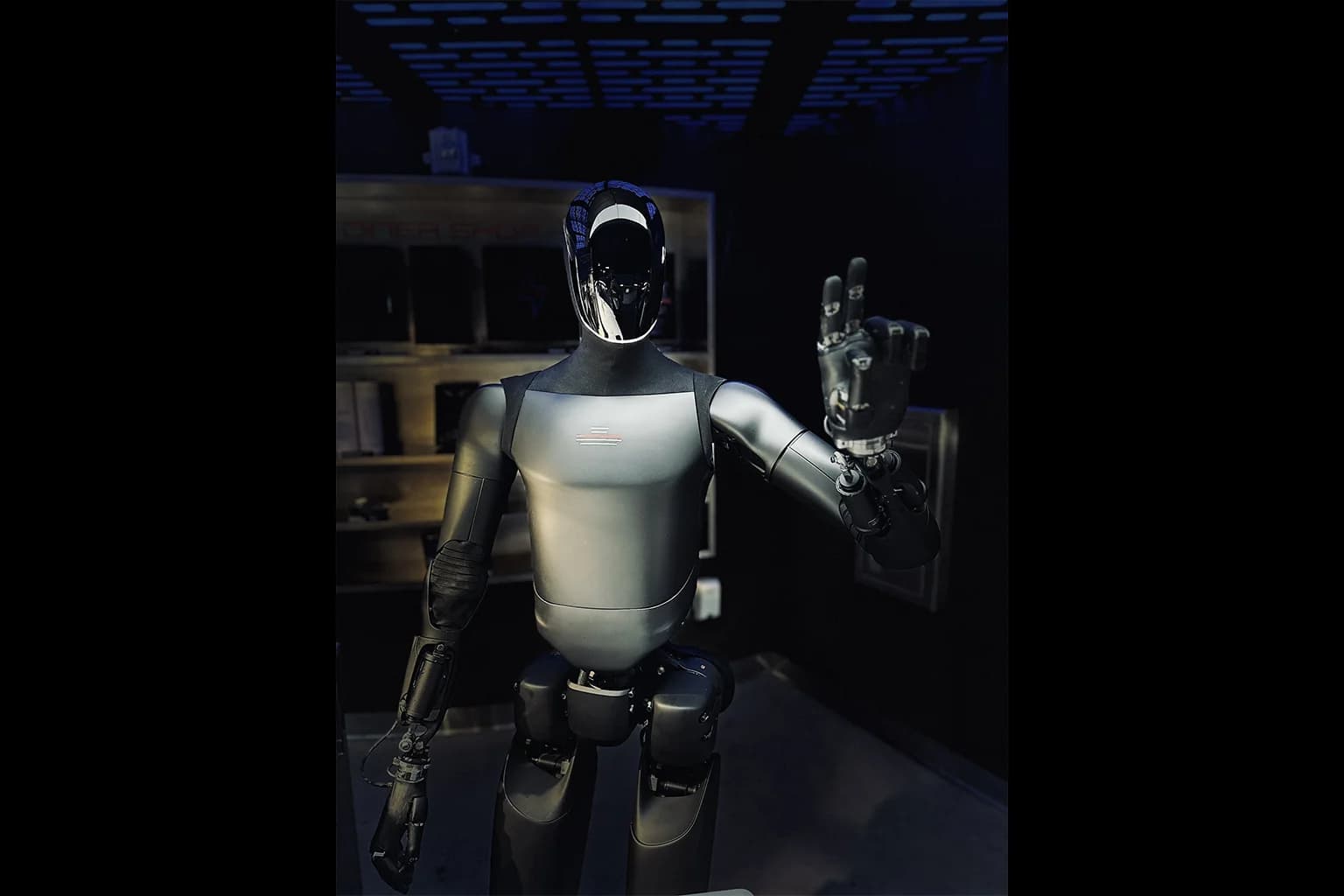
- The Federal Communications Commission (FCC) has banned the import and sale of new foreign-produced "advanced robotic devices," encompassing humanoids, quadrupeds, and even commercial robot vacuums weighing over 4.4 pounds.
- The restrictions aim to protect U.S. infrastructure from surveillance and data theft while forcing a reshoring of the robotics manufacturing base.
- The ban is expected to severely impact Chinese manufacturers like Unitree, which currently dominates the global market and serves as the primary hardware baseline for American AI researchers.
- Hardware manufacturers can apply for "Conditional Approvals" from the Department of War (DoW), provided they commit to moving manufacturing and supply chains to the United States.
- China’s commerce ministry has threatened retaliation, with analysts warning of potential countermeasures involving rare earth mineral exports or restricted market access for U.S. tech giants.
The geopolitical firewall surrounding the American artificial intelligence sector has officially extended into the physical realm. The Federal Communications Commission (FCC), acting on determinations by the Trump administration and a White House-convened interagency body, has enacted a sweeping ban on the importation of new foreign-produced advanced robotic devices and connected power inverters.
The restrictions, which take effect immediately for unreleased models, bar these devices from receiving FCC equipment authorization—a mandatory hurdle for importing, marketing, or selling electronics in the United States.
While the policy is technically country-neutral on paper, the move is a direct strike at China's dominant robotics industry. The administration cited the need to protect the U.S. AI buildout from "unacceptable risks," including supply chain vulnerabilities, potential data exfiltration by malign actors, and the threat of remote commandeering of hardware near American critical infrastructure.
A Sweeping Definition
While the debate over banning Chinese humanoids has largely focused on bipedal machines, the FCC’s definition of an "advanced robotic device" casts a much wider net.
The weekly humanoid robotics briefing
One email a week: the launches, funding and research that mattered, with context from Humanoids Daily.
Read recent issuesThe ban applies to almost any software-controlled mechanical mobile device that weighs over 4.4 pounds, possesses environmental sensors, and features network connectivity speeds of at least 200 kbps. By establishing these parameters, the FCC has effectively banned future models of autonomous lawnmowers, sidewalk delivery bots, warehouse logistics robots, and consumer robot vacuums produced outside the United States.
The agency carved out explicit exemptions for specific classes of hardware, including connected vehicles, uncrewed aircraft systems (drones), underwater vehicles, medical surgical instruments, and fixed industrial robotic arms.
The Unitree Dilemma and the Research Baseline
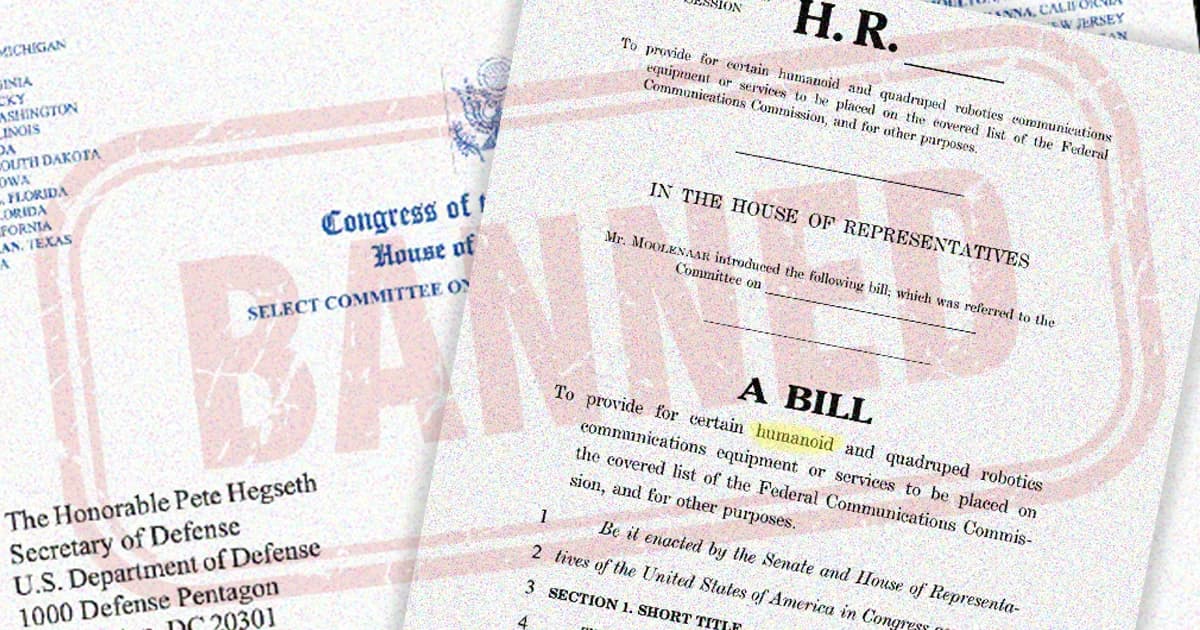
The restrictions realize the ambitions of protectionist legislation like the GUARD Act, whose sponsor, Rep. John Moolenaar, praised the FCC's action for strengthening the domestic robotics industry. However, the immediate commercial casualty is expected to be Hangzhou-based Unitree Robotics.
Unitree currently commands just under a fifth of the global humanoid market share and is heavily relied upon by U.S. academic and research institutions for affordable testing hardware. The company, which recently achieved a massive corporate milestone with its fast-tracked STAR Market IPO approval, was also recently added to a Pentagon list of alleged Chinese military-backed companies.
The ban severely complicates deeply entangled international partnerships. For example, Unitree recently partnered with Nvidia to power its robot "brains" using the American chipmaker's cutting-edge Blackwell architecture. Though Nvidia has stressed that data from these robots remains localized in the U.S., China hawks remain unconvinced.
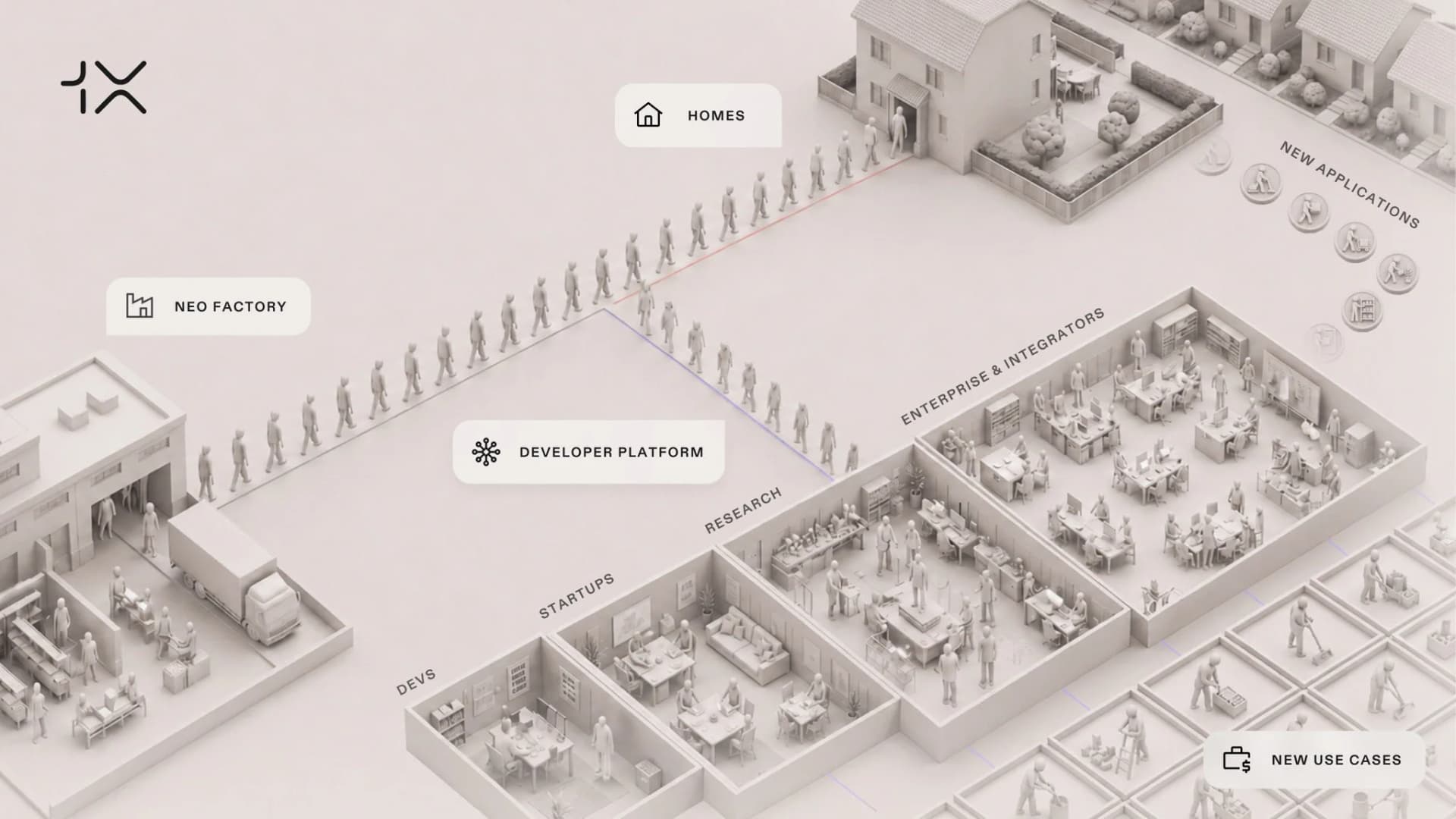
With the primary pipeline of affordable Chinese hardware now severed, the pressure on domestic companies to provide open platforms has intensified. This physical hardware vacuum contextualizes recent strategic shifts by Western manufacturers, such as 1X accelerating its NEO developer release to offer non-Chinese alternatives to stranded researchers.
Conditional Approvals and Geopolitical Retaliation
Foreign manufacturers hoping to continue selling into the U.S. market face a steep bureaucratic hurdle. The FCC has established a "Conditional Approval" waiver process overseen by the Department of War (DoW) and the Department of Homeland Security (DHS). However, securing a waiver effectively requires foreign companies to swear off offshore production and commit to investing heavily in U.S. domestic manufacturing.
The aggressive policy shift has already drawn intense blowback from Beijing. China's commerce ministry publicly urged the U.S. to withdraw the decision, stating that the continuous escalation of restrictions "severely damages China-U.S. economic and trade stability".
If the bans remain in place, the Chinese government has threatened countermeasures. Market analysts predict that Beijing could weaponize its dominance in rare earth minerals—critical components for tech manufacturing—or restrict market access in China for highly exposed American firms.
For American consumers and enterprise operators, there is a minor reprieve: the FCC's Covered List does not retroactively brick devices. Consumers can continue to operate previously purchased, lawfully authorized devices. Furthermore, pursuant to a rule waiver, existing foreign-produced robots operating in the U.S. can still receive basic software and firmware updates to maintain usability. However, the FCC maintains the authority to revoke existing authorizations in the future, leaving the long-term status of even current robotic fleets hanging in the balance.
Share this article
Read next
- Published on
- Reading time
- 4 min read
The Imminent Embodied AI Ban: FCC to Target Chinese Humanoids
- Published on
- Reading time
- 6 min read
The Battle Over Chinese Humanoids: As Congress Debates the GUARD Act, Industry Divides Over National Security vs. Research Reality
- Published on
- Reading time
- 5 min read
1X Accelerates NEO Developer Release to Counter U.S. Bans on Chinese Humanoids
- Published on
- Reading time
- 6 min read
From Stadiums to the Front Line: How China and the US Are Preparing Humanoids for Combat
- Published on
- Reading time
- 4 min read
Supply Chain Rumors Hint at Massive Optimus Order as Fremont Production Line Ramps Up
- Published on
- Reading time
- 6 min read
The GUARD Act: Bipartisan Bill Seeks to Ban Chinese Robots, Threatening the US Research Baseline


The weekly humanoid robotics briefing
One email a week: the launches, funding and research that mattered, with context from Humanoids Daily.
Read recent issues