- Published on
Changan Automobile Launches Robotics Subsidiary, Targeting 2028 for Humanoid Mass Production
One tap, and our reporting appears more often in your Google Top Stories. It makes a real difference to a small newsroom.

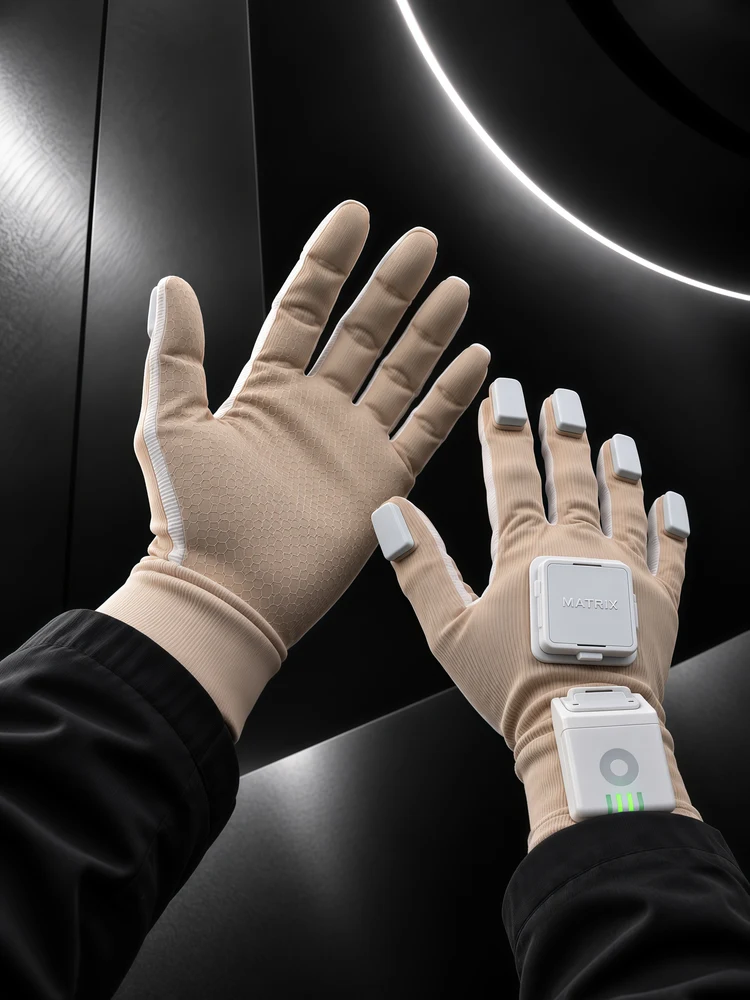


The line between "building cars" and "building humans" is blurring at an accelerated pace. Changan Automobile has officially entered the fray with the establishment of Changan Tianshu Intelligent Robot (Chongqing) Co., Ltd. on March 31, 2026.
The new entity, backed by a registered capital of 450 million yuan ($62 million), is a joint venture between China Changan Automobile Group, Changan Automobile (holding 50%), Chongqing Changan Technology (holding 10%), and Chenzhi Automobile Technology. This move marks the transition of Changan's "Tianshu" brand from a conceptual automotive intelligence suite to a standalone robotics powerhouse.

The "1+N+X" Roadmap
Changan is not entering the sector with a singular prototype, but rather a modular strategy it calls "1+N+X." This framework positions the humanoid robot as the "core thread" (the 1) that will eventually weave together vehicle components, mobility ecosystems, and specialized service applications (the N and X).
While the company has been developing its robotics roadmap for nearly a decade, the new subsidiary sets a concrete, multi-stage timeline:
The weekly humanoid robotics briefing
One email a week: the launches, funding and research that mattered, with context from Humanoids Daily.
Read recent issues- Q1 2026: Launch of the first specialized vehicle-component robot.
- 2027: Official debut of the general-purpose humanoid platform.
- 2028: Target for mass production and delivery of humanoid robots and flying cars.
- 2030 and Beyond: Expansion into the family service robot market.
This 2028 production target is notably more conservative than that of XPENG, which recently broke ground on a "full-chain" factory in Guangzhou to meet an aggressive late-2026 production goal. However, it reflects a similar "factory-first" philosophy intended to bridge the gap between laboratory apprentices and industrial interns.
Technical Foundation: Meet "Xiao'an"
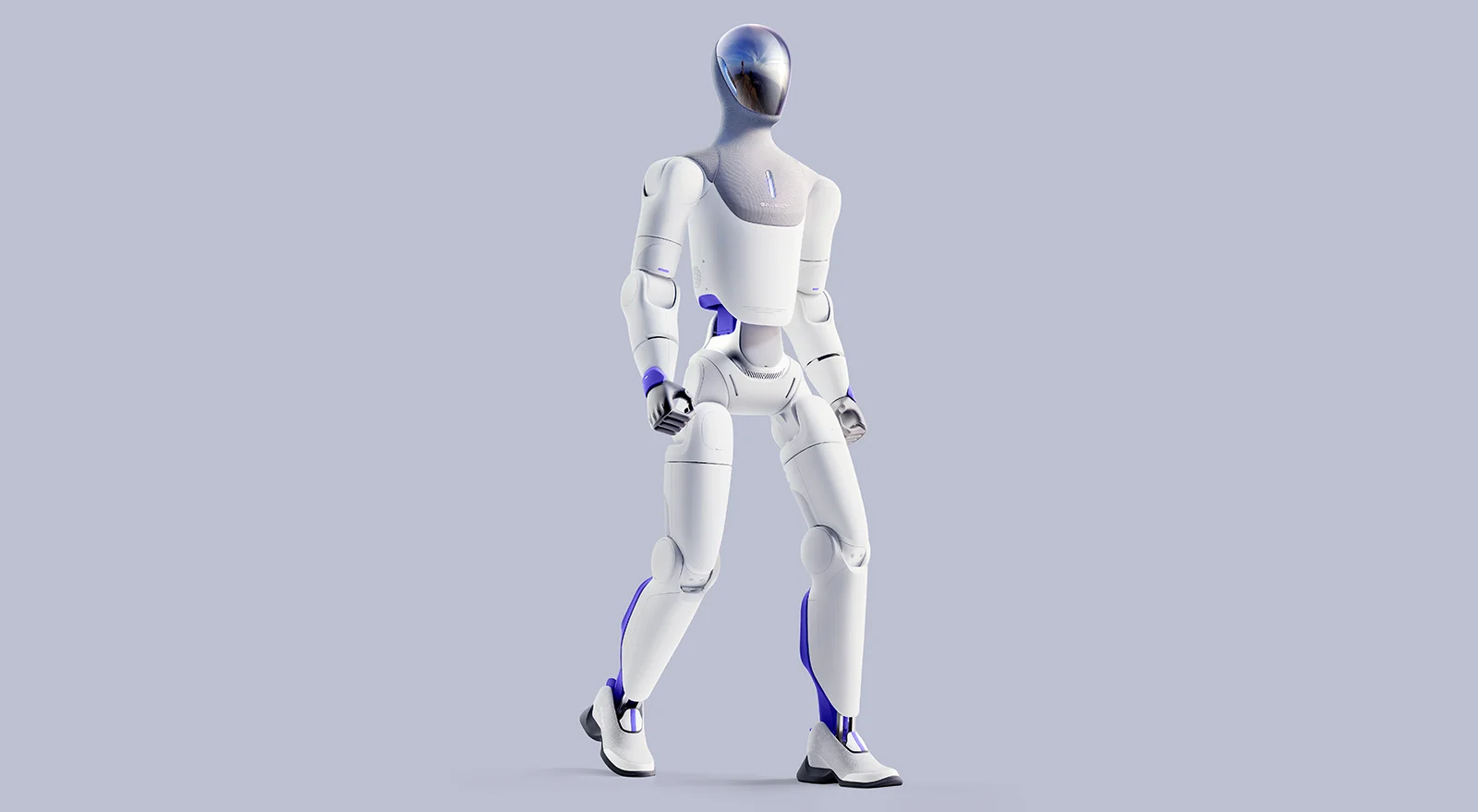
Changan’s technical entry point is Xiao’an, a humanoid robot first showcased during the 2025 Guangzhou Auto Show. The platform features 40 degrees of freedom (DOF), allowing for complex locomotion and manipulation. Its sensory suite includes a single LiDAR and five cameras, all processed through the company’s proprietary Tianshu large model, which enables real-time human-machine dialogue and gesture imitation.
Changan argues that modern electric vehicles are essentially "robots on four wheels," sharing high commonality with humanoids in perception, decision-making, and execution. By leveraging its existing steer-by-wire chassis technology and end-to-end AI algorithms, the company aims to transfer automotive-grade reliability to the robotics sector.
A Crowded Factory Floor
Changan’s entry comes amid a surge of industrial deployments across China's "Big Auto" firms. Just days before Changan's announcement, SAIC-GM welcomed a new "employee" at its Ultium Super Factory in Shanghai: Nengzai No. 1. Based on AgiBot’s A2-W platform, the robot is already performing high-precision tasks on the Buick E7 battery assembly line, including cell grabbing and loading.
This shift toward "work mode" aligns with the recently released national standard system for humanoid robotics, which seeks to regulate the industry as it moves from spectacles to the shop floor.
However, the transition is not without friction. While Xiaomi recently reported a 90.2% success rate in its automotive assembly pilot, it has had to innovate radically in hardware—specifically developing active cooling systems and bionic sweat glands to handle the thermal loads of continuous 150,000-cycle operation.
The "S-Curve" Reality Check
Despite the enthusiasm, industry veterans remain cautious. XPENG CEO He Xiaopeng recently noted that humanoid R&D is "dozens of times more difficult" than car manufacturing. Even global leaders are feeling the pressure; Tesla recently missed its Q1 deadline for the Optimus Gen 3 reveal, with Elon Musk warning of an "agonizingly slow" production S-curve.
For Changan, the success of Tianshu Intelligent Robot will depend on whether it can leverage its massive manufacturing footprint to solve the "isomorphism problem"—ensuring that the intelligence it has spent billions developing for cars can successfully inhabit a bipedal frame. With a target of creating a 100 billion yuan cluster by 2035, Changan is betting that the future of mobility doesn't just drive—it walks.
Share this article
Read next
- Published on
- Reading time
- 3 min read
Galbot Prices ET1 Humanoid From 79,000 Yuan Across Three Versions
- Published on
- Reading time
- 3 min read
UBTECH CEO Tours Robot Factory, Says Monthly Output Could Reach 1,500 Units
- Published on
- Reading time
- 3 min read
Astribot Brings Its $18,000 T1 Robot to North America at IROS
- Published on
- Reading time
- 3 min read
IDC Puts H1 Humanoid Shipments Near 25,000, With AGIBOT Leading
- Published on
- Reading time
- 3 min read
MindOn Targets Human Speed in New Mind-1 Robot Demo
- Published on
- Reading time
- 4 min read
AGIBOT Says 100 X2 Humanoids Are Working Across 100 ASD Retail Stores

The weekly humanoid robotics briefing
One email a week: the launches, funding and research that mattered, with context from Humanoids Daily.
Read recent issues