- Published on
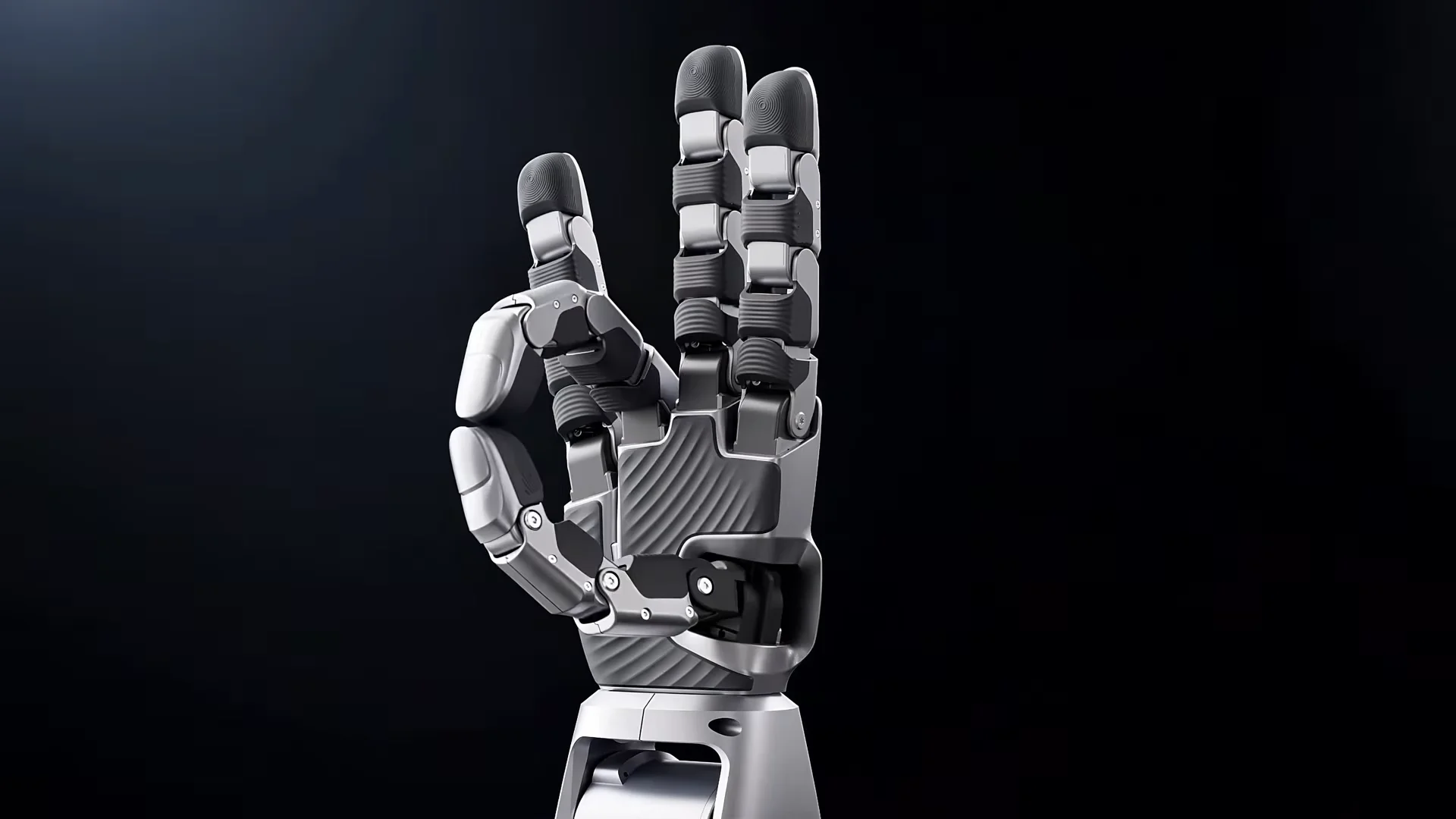
Sweating the Details: Xiaomi Unveils Upgraded CyberOne Hand with "Bionic Glands" and Full-Palm Touch
One tap, and our reporting appears more often in your Google Top Stories. It makes a real difference to a small newsroom.

Supported by RoboStrategySupport for Humanoids Daily comes from RoboStrategy
Sponsored

Investing involves risk, including possible loss of principal. Read the prospectus before investing.
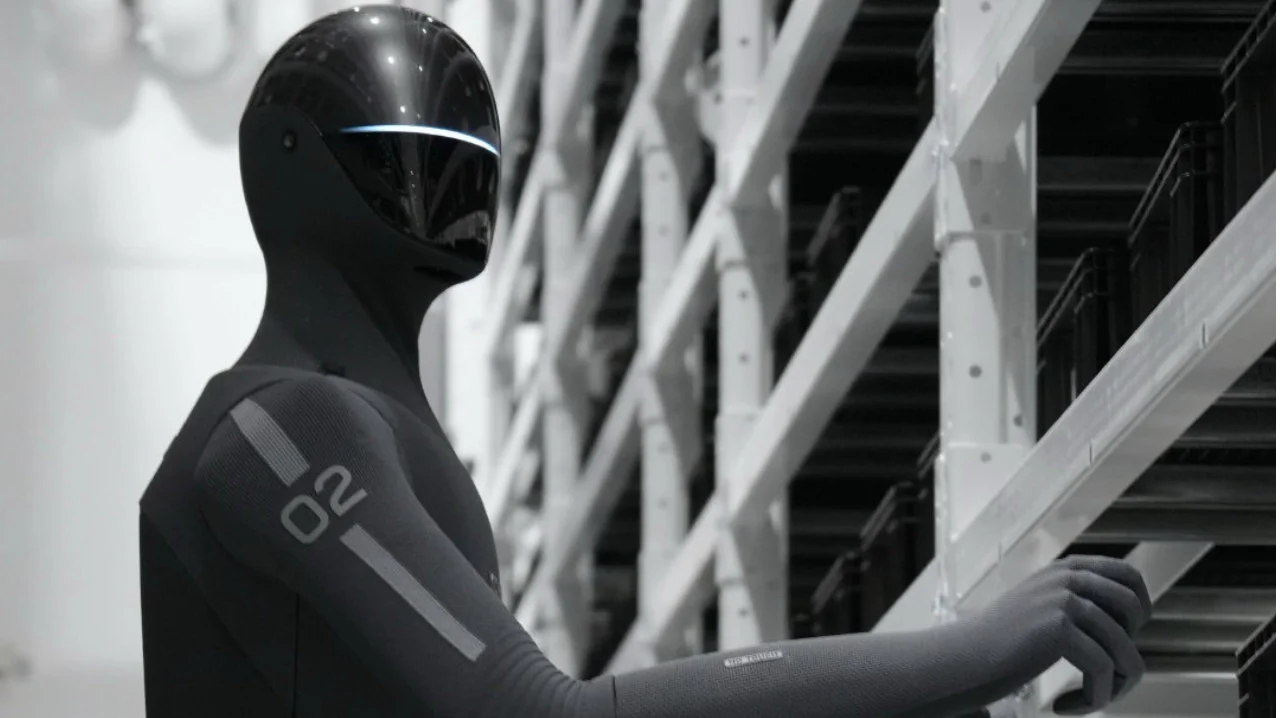
Just weeks after revealing its humanoid robots had achieved a 90.2% success rate during a live automotive assembly pilot, Xiaomi has detailed the next evolution of its hardware aimed at pushing that metric to near perfection.
In a technical update published to Weibo this morning, the company’s robotics division outlined a radical redesign of the CyberOne bionic hand. The update focuses on solving three critical bottlenecks in dexterous manipulation: physical scale, mechanical endurance, and thermal management.
Shrinking to Human Scale
To better leverage human teleoperation data, Xiaomi has compressed the volume of the bionic hand by roughly 60%, reducing its dimensions from 228x105x64mm to a highly compact 187x88x36mm. This achieves a 1:1 proportional match with an average adult human hand.
Despite the size reduction, mechanical complexity has increased significantly. The new design features a 50% increase in total degrees of freedom (DOF) and an 83% jump in active DOF, bringing the hand into the 22-27 DOF range necessary to replicate authentic human kinematics.
The weekly humanoid robotics briefing
One email a week: the launches, funding and research that mattered, with context from Humanoids Daily.
Read recent issues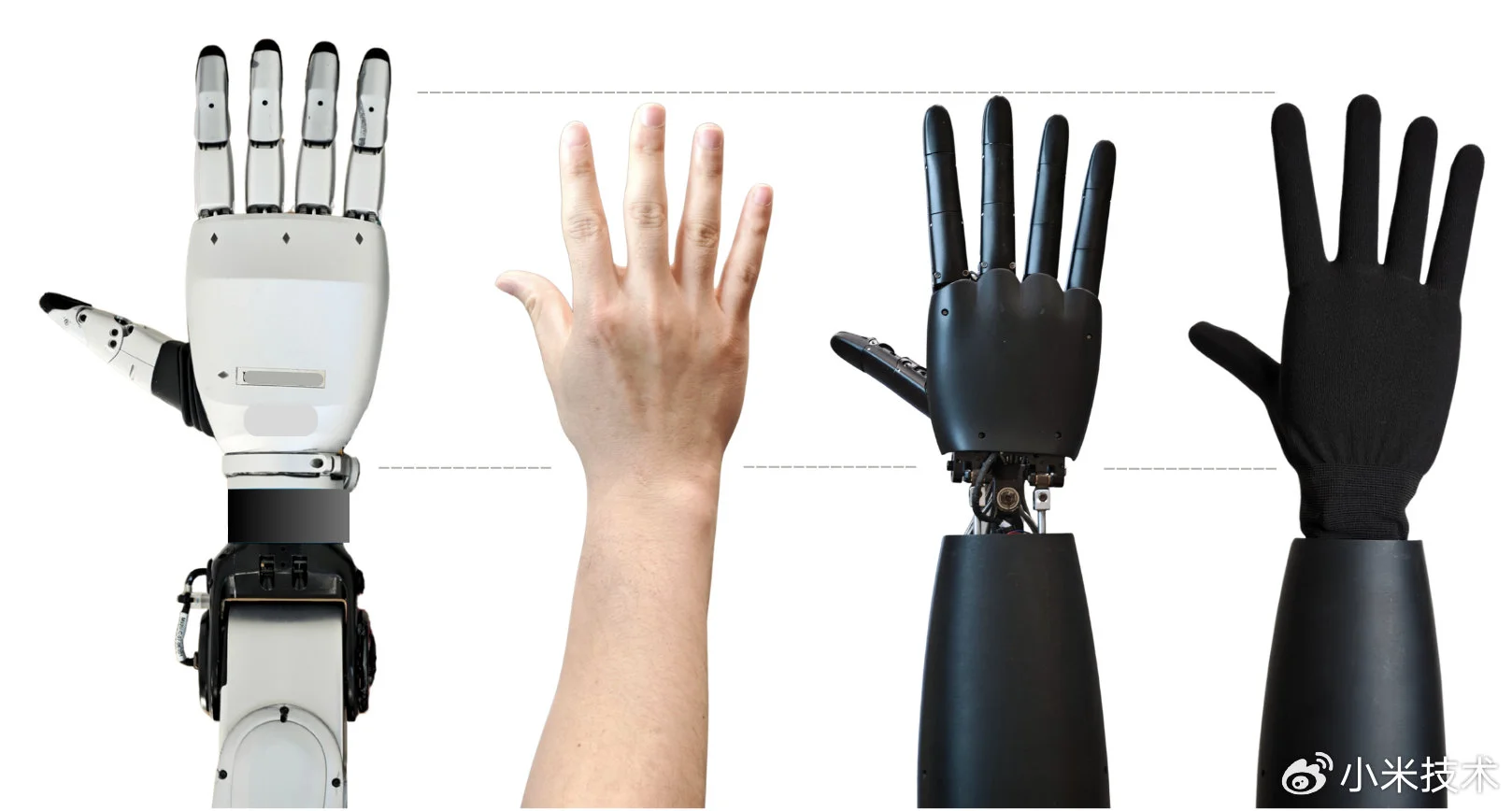
By matching the human hand's form factor and reach, Xiaomi aims to minimize the "isomorphism problem"—the physical discrepancy that often degrades the quality of teleoperation data when translating human movements to a robotic counterpart.
Tactile Gloves and the Data Pipeline
High-DOF hands are functionally useless without robust sensory feedback. To that end, Xiaomi has expanded the hand's "full-palm" tactile sensor coverage to 8,200 square millimeters.
To train the hand, Xiaomi is utilizing sensorized tactile gloves worn by human operators. This allows the system to capture high-fidelity, full-palm interaction data—encompassing the fingertips, finger pads, and the palm itself. This data is fed directly into the company's dual-model software stack, which includes the vision-language-action model Xiaomi-Robotics-0 and the tactile-focused TacRefineNet. By utilizing a glove-based approach, researchers can rapidly gather expansive manipulation datasets while bypassing the notoriously slow and inefficient processes of traditional teleoperation.
Surviving the Factory Floor
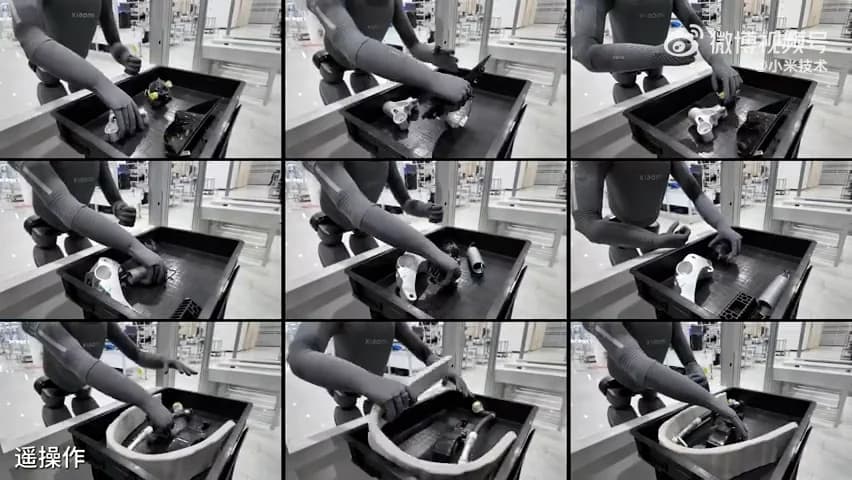
In real-world industrial environments, robotic hands face immense physical stress. Xiaomi noted that early iterations of highly complex hands often suffered catastrophic failures—such as snapped tendons, broken springs, or damaged casings—in under 10,000 cycles.
Following a year of iterative design-simulation-testing loops, the new hand has reportedly cleared a massive durability threshold. Unedited, but sped up x2000, footage released by the company demonstrates the hardware surviving over 150,000 continuous grasping cycles without failure, marking a critical step toward production-grade reliability.
"Bionic Sweat Glands"
Perhaps the most novel engineering solution in the new hand addresses thermodynamics. Packing over 20 motors into a human-sized hand creates severe localized overheating. Xiaomi estimates that a single robotic hand performing heavy-duty tasks can draw over 100 watts of power; at 70% efficiency, more than 30 watts are converted directly into heat. Under "stall" conditions—where the hand is applying sustained force without moving—this thermal load limits continuous operation times.
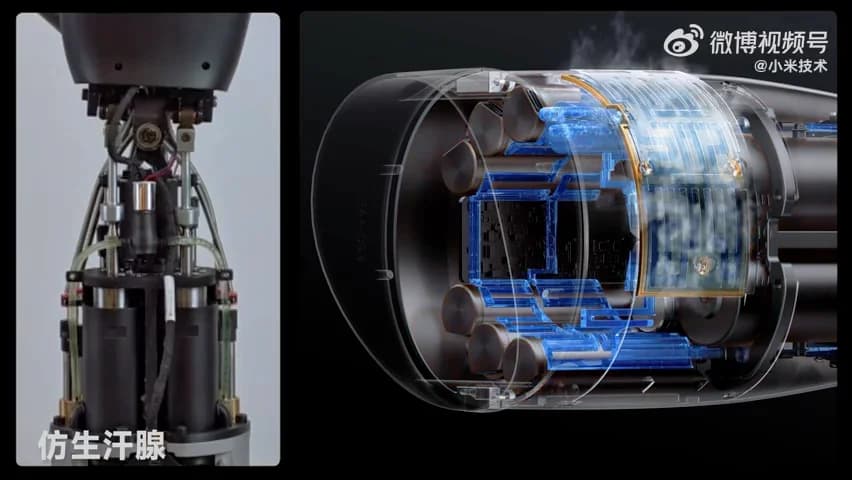
To solve this, Xiaomi engineered an active cooling system modeled after human sweat glands. The forearm incorporates metal 3D-printed liquid cooling channels. A micro-pump moves heat away from the motors to an evaporation zone. By vaporizing just 0.5 mL of water per minute, this system strips away approximately 10 watts of heat, significantly extending the duration the robot can maintain high-force grips.
As CEO Lei Jun pushes for large-scale deployment within five years, bridging the gap from a 90% success rate to 99.9% reliability requires hardware that can endure the brutal realities of a continuous production line. With its bionic sweat glands and 150,000-cycle durability, Xiaomi's latest hand shows exactly how the company plans to survive the heat of the factory floor.
Share this article
Read next
- Published on
- Reading time
- 4 min read
Xiaomi Debuts CyberOne V2 at Investor Day, Moving Beyond the Factory Floor
- Published on
- Reading time
- 10 min read
The Contact Problem: How AGILINK’s New OmniHand 3 Ultra-M is Teaching Robots to Feel
- Published on
- Reading time
- 5 min read
Wuji Tech Teases Wuji Hand 2: High Engineering Ambitions Behind a CGI Veil
- Published on
- Reading time
- 5 min read
The Great Dexterity Divide: Why Robotics Leaders Are Warring Over Tendon vs. Direct-Drive Hands
- Published on
- Reading time
- 6 min read
The "Final Boss" of Home Robotics: 1X Unveils Next-Gen Robotic Hands for NEO Alongside New CFO
- Published on
- Reading time
- 3 min read
Sanctuary AI Achieves "Zero-Shot" Sim-to-Real Milestone for Hydraulic Dexterous Hands


The weekly humanoid robotics briefing
One email a week: the launches, funding and research that mattered, with context from Humanoids Daily.
Read recent issues