- Published on
China Unveils National Standard System as Humanoid Leaders Pivot from "Kung Fu" to "Work Mode"
One tap, and our reporting appears more often in your Google Top Stories. It makes a real difference to a small newsroom.


Your guide
Rich Robinson
Jee Chee Ren · Executive tour
See China’s AI and robotics ecosystem first-hand.
Six days exploring AI, robotics and advanced manufacturing.
With Rich Robinson, Clinical Professor of Entrepreneurship at Peking University
Beijing · Guangzhou · Shenzhen
29 November–4 December 2026
Referral partnership · We earn a commission on referred bookings.
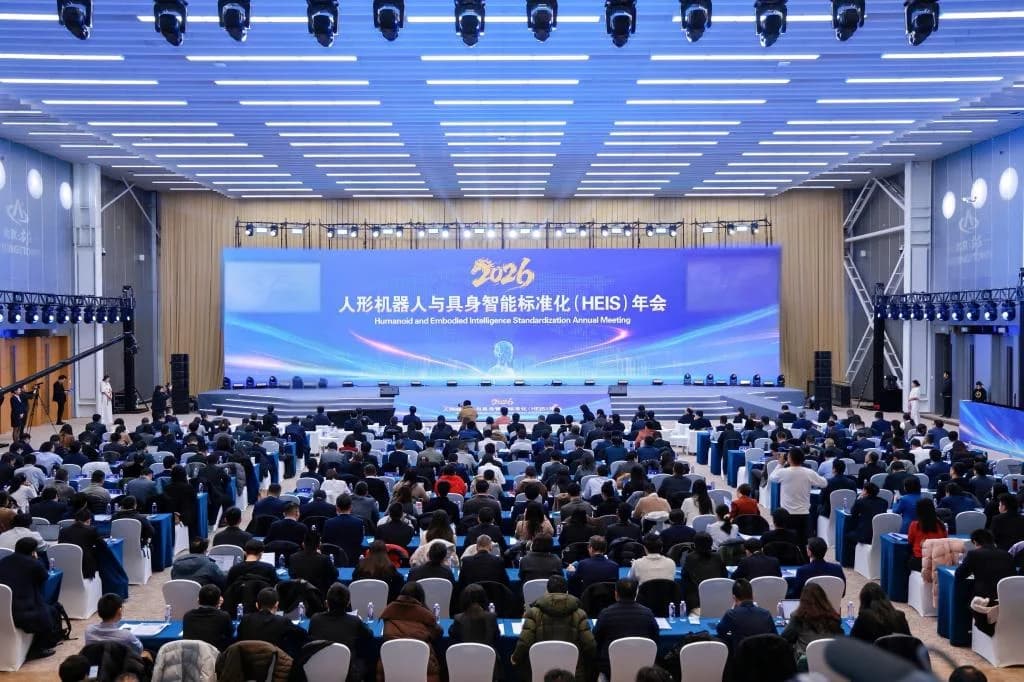
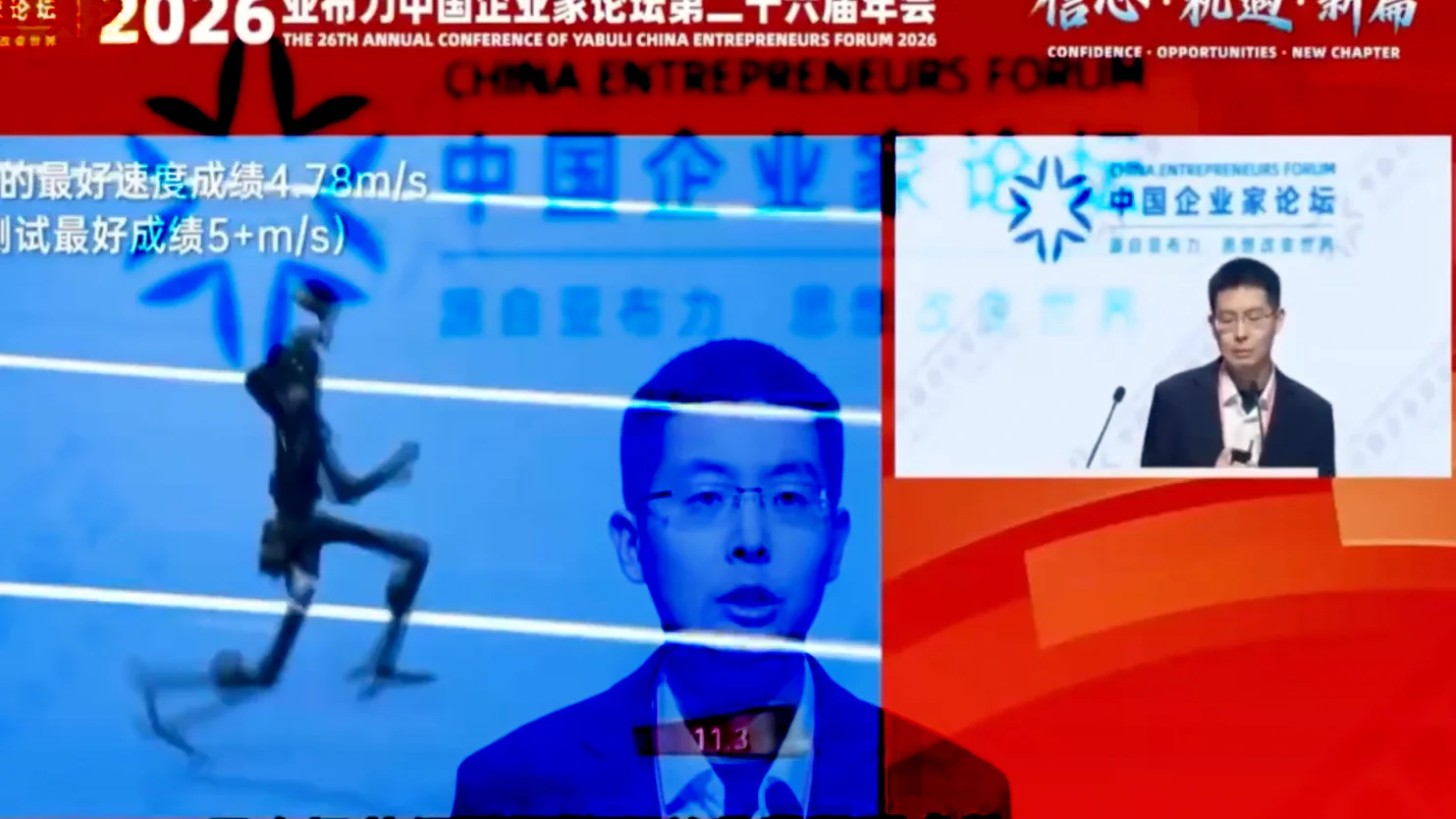
BEIJING—The era of robotic showmanship is officially giving way to the grind of industrial labor. At the inaugural Humanoid Robot and Embodied AI Standardization (HEIS) annual conference held in Beijing on February 28, 2026, China released its first national-level standard system for the sector, marking a decisive step toward transforming experimental hardware into regulated industrial infrastructure.
The release of the "Humanoid Robot and Embodied AI Standard System (2026 Edition)" follows the initial drafting of the "Dream Team" committee by the Ministry of Industry and Information Technology (MIIT) late last year. The new framework covers the entire industrial chain and lifecycle, divided into six core pillars: basic commonality, brain-like and intelligent computing, limbs and components, complete machines and systems, application, and safety and ethics.
From Spectacle to the Shop Floor
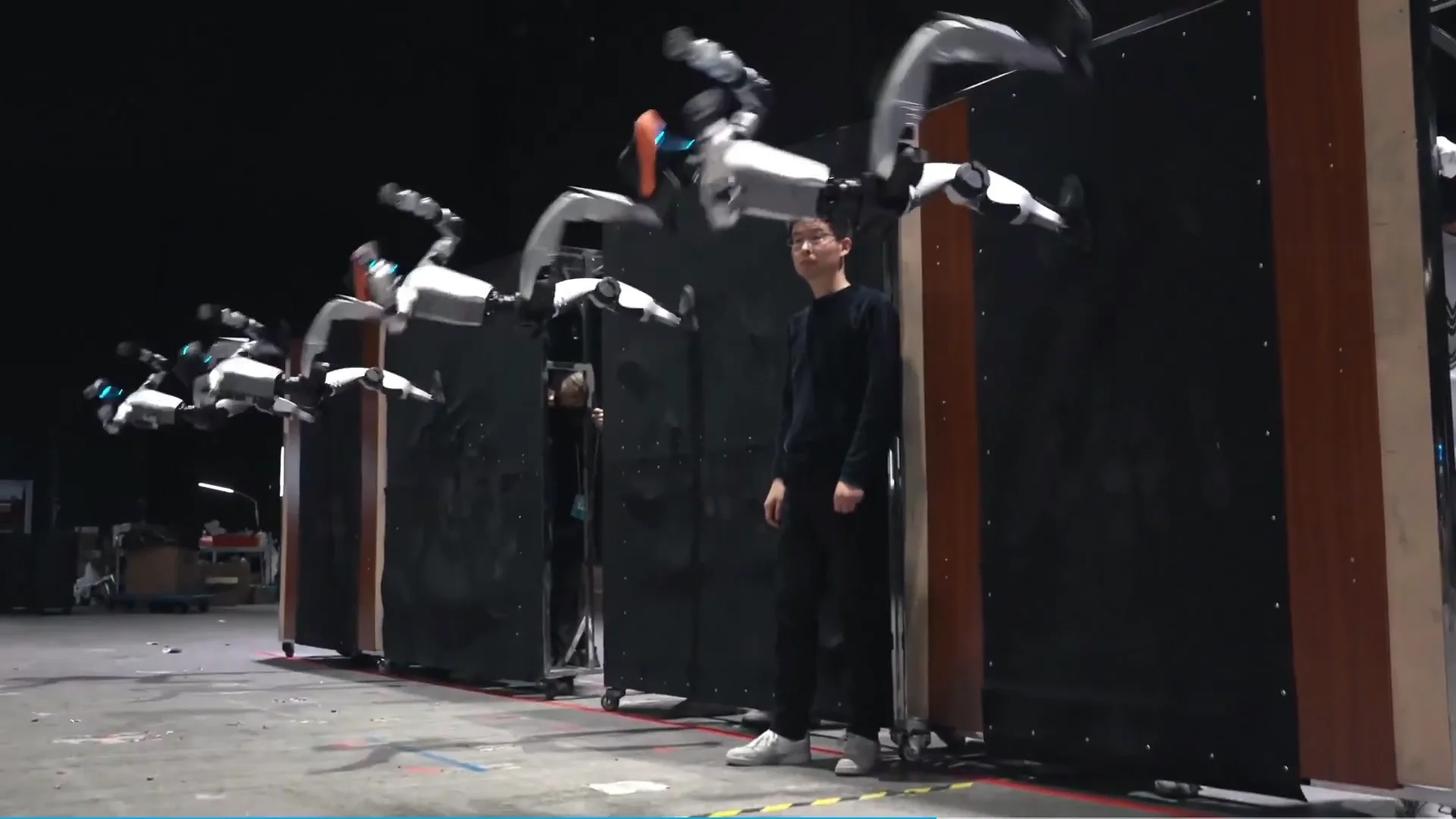
The keynote of the conference, delivered by Unitree Robotics founder Wang Xingxing, addressed the elephant in the room: why the industry has spent so much time on "Kung Fu" routines and somersaults. Wang, serving as the deputy director of the HEIS technical committee, argued that high-tier mobility is not just for show but is a "prerequisite for labor."
"Movement is the foundation," Wang told the audience. "Only when movement is sufficiently stable and the range of motion is high enough does the transition to actual work become logical."
The weekly humanoid robotics briefing
One email a week: the launches, funding and research that mattered, with context from Humanoids Daily.
Read recent issuesWang revealed that Unitree has been quietly deploying humanoids in automotive factories owned by NIO and Geely since 2024. While the robots have achieved a 100% success rate in "single-sequence" tasks like basic parts assembly, Wang admitted that "long-sequence" complex tasks involving more than 20 steps remain a significant hurdle, particularly when handling miniature components.
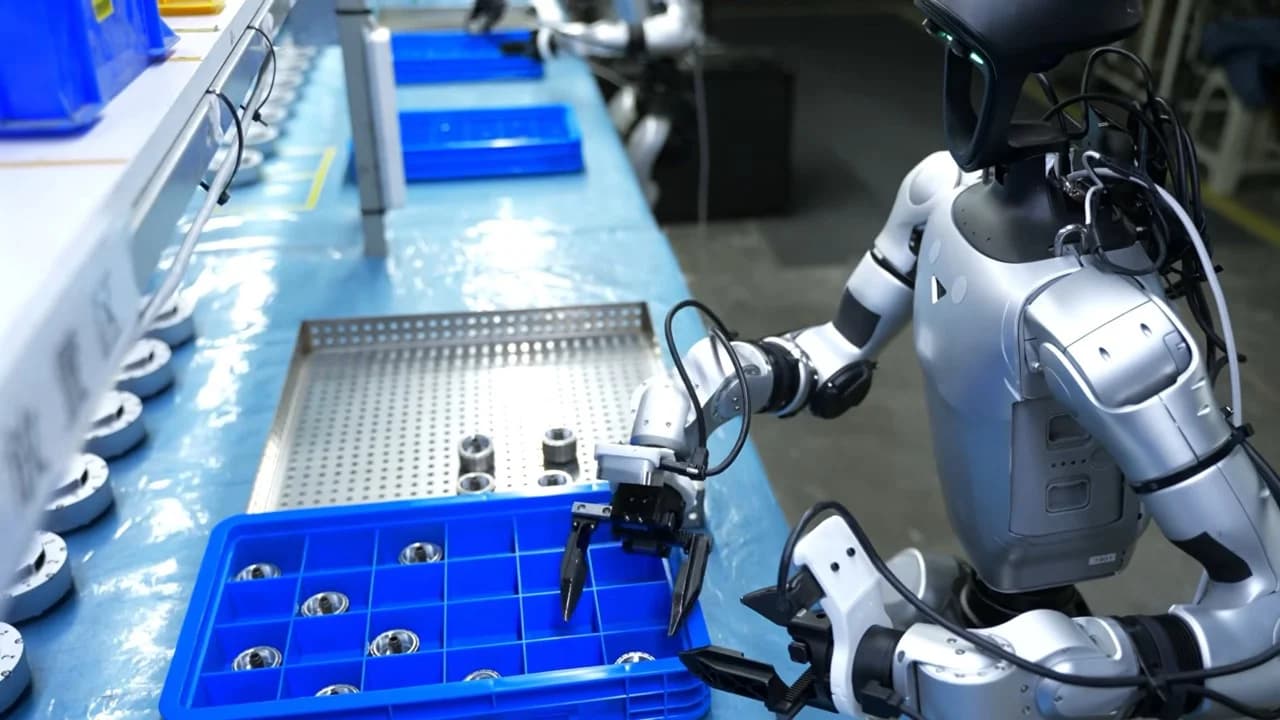
The conference also served as a final confirmation of the intense shipment war that defined 2025. Wang officially disclosed that Unitree shipped over 5,500 humanoid units in 2025, with total production exceeding 6,500 units, reinforcing its claim as the global volume leader.
The Humanoid as "Intelligent Infrastructure"
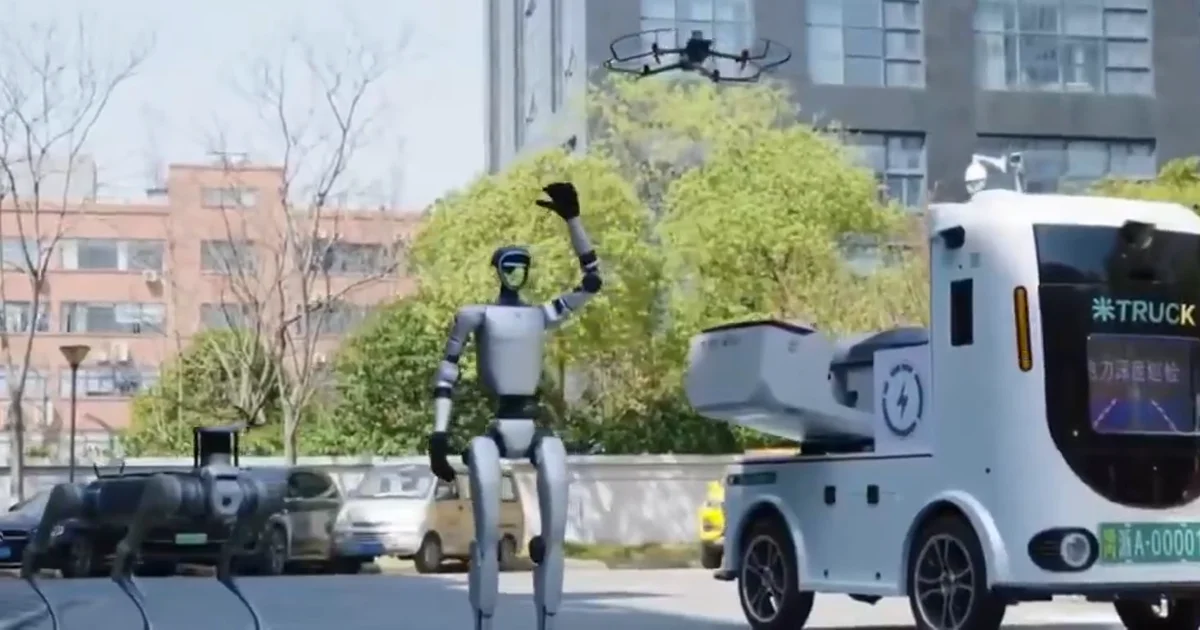
While Unitree focused on the transition to labor, AgiBot co-founder Peng Zhihui—the former Huawei "genius" whose rise has captivated the domestic tech scene—framed the humanoid form factor as the ultimate "universal interface" for a world built by and for humans.
"The physical world is designed for humans—from the height of door handles to the dimensions of stairs," Peng noted. He argued that the humanoid form allows AI to extend from the digital realm into the physical one without requiring a total overhaul of existing human environments. Peng envisions these machines as "intelligent infrastructure" that combines emotional value with scalable labor.
However, the path to making these machines "good enough" for widespread use is still blocked by technical "hallucinations." Industry experts at the event, including representatives from It-shizhihang, warned that embodied AI models must overcome gaps in spatial and physical prediction to ensure that a robot's actions align perfectly with its environment.
Solving the "Consistency" Crisis
As the industry moves toward mass production—with over 140 domestic manufacturers releasing more than 330 models in 2025—the focus has shifted to the "assembly trap." Leaders from Star-Echo (Xingdong Jiyuan) and Xinhaitu pointed out that maintaining consistency on the assembly line is grueling. Minor variables, such as the uneven application of glue in a motor, can result in a robot that cannot walk correctly.
The newly released standards aim to solve these "industrial headaches" by:
- Defining "Good" Robots: Establishing evaluation scales for intelligence levels and reliability.
- Data Standardization: Promoting "whole-body teleoperation" as a unified method for collecting high-quality physical data.
- Safety Redlines: Setting strict "human-priority" and privacy protections to manage the risks of bipedal machines operating in public spaces.
The 2026 standard system arrives just as companies like Unitree and AgiBot prepare for mid-year IPOs. By moving standardization from a theoretical roadmap to a national mandate, Beijing is betting that a unified technical framework will give its manufacturers the edge they need to cross the "utility gap" and turn 2026 into the year the humanoid robot actually goes to work.
Share this article
Read next
- Published on
- Reading time
- 3 min read
Agibot Expands Production, Targets Humanoid Robot Market with New Pudong Plant
- Published on
- Reading time
- 3 min read
Unitree’s Wang Xingxing Says GPT-6 Tests Strengthen His Optimism for Embodied AI
- Published on
- Reading time
- 7 min read
Not Ready to Scale: Unitree CEO Wang Xingxing on Why Humanoids Still Aren’t Working in Factories
- Published on
- Reading time
- 3 min read
Unitree CEO Predicts Humanoids Will Outrun Usain Bolt by Mid-2026
- Published on
- Reading time
- 2 min read
Watch: Unitree Previews "Cluster Cooperative" Tech with Mass Humanoid Performance
- Published on
- Reading time
- 4 min read
State Grid’s $995 Million Bet: 8,500 Robots to Spearhead "Deployment Year One" in Energy

The weekly humanoid robotics briefing
One email a week: the launches, funding and research that mattered, with context from Humanoids Daily.
Read recent issues