- Published on
LimX and ZINOVA Put TRON 2 to Work on Simulated Construction Sites
One tap, and our reporting appears more often in your Google Top Stories. It makes a real difference to a small newsroom.


Your guide
Rich Robinson
Jee Chee Ren · Executive tour
See China’s AI and robotics ecosystem first-hand.
Six days exploring AI, robotics and advanced manufacturing.
With Rich Robinson, Clinical Professor of Entrepreneurship at Peking University
Beijing · Guangzhou · Shenzhen
29 November–4 December 2026
Referral partnership · We earn a commission on referred bookings.
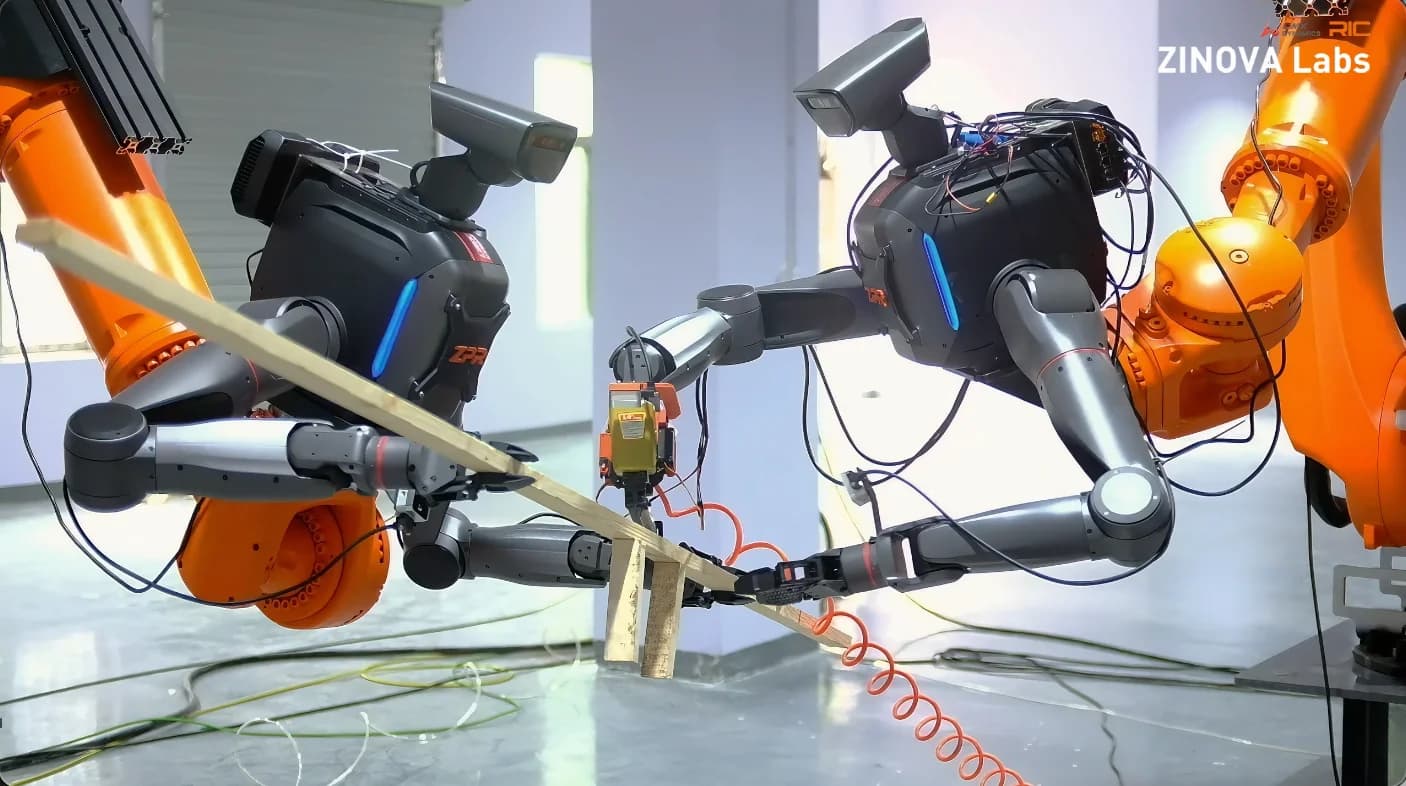
- ZINOVA Labs and LimX Dynamics partnered to demonstrate a scaled-down tilt-up construction workflow, deploying dual-arm robots to handle formwork assembly, rebar placement, and rebar tying.
- The collaboration integrates ZINOVA’s Tool Intelligence framework—spanning tool grasp, sensing via TEISI, and task-specific forms—with the modular TRON 2 platform.
- Rather than fielding a standard humanoid biped, the demonstration mounted the TRON 2 upper torso onto large industrial robotic arms, expanding workspace reach and vertical articulation.
- The proof-of-concept relies heavily on teleoperation and human-in-the-loop oversight to navigate non-standardized tasks, collecting motion and contact data intended to train future autonomous models.
As robotics companies push to move physical AI out of pilot stages and into heavy industry, LimX Dynamics and physical AI startup ZINOVA Labs are trying an unconventional approach to the physical workspace: mounting dual-arm humanoid torsos directly onto the ends of heavy industrial robot arms.
The demonstration, developed in collaboration with RIC Robotics, bypasses the mobility and balance constraints of legs entirely. By mounting the upper body of LimX’s modular TRON 2 platform atop massive articulated booms, the team combined the wide reach and payload strength of fixed automation with the dexterity of two-handed tool manipulation. In a scaled-down tilt-up construction proof-of-concept, the hybrid setup took on complex workflows usually divided across multiple trades—including formwork assembly, rebar placement, pneumatic fastening, and concrete smoothing.
Teaching Embodied AI to "Feel" Tools
At the core of the demonstration is ZINOVA’s Tool Intelligence framework, an architecture designed to teach robots how to interact with the world through existing manual tools rather than relying on custom-tooled industrial automation.
ZINOVA divides this layer into three core disciplines:
The weekly humanoid robotics briefing
One email a week: the launches, funding and research that mattered, with context from Humanoids Daily.
Read recent issues- Grasp: General-purpose manipulation models that allow robotic hands to securely hold diverse tool geometries.
- Feel: The proprietary Tool–Embodiment Interaction Sensing Interface (TEISI), which measures dynamic physical parameters—such as real-time resistance, motor torque, vibration, and impact force—when a tool engages with material.
- Form: Experimenting with alternative mechanical embodiments to meet the reach, payload, and geometry constraints of specific real-world tasks.
Construction represents an unforgiving proving ground for this approach. Unlike clean automotive assembly lines, job sites are dynamic and variable. Tolerances fluctuate, wood splits, and rebar shifts. By focusing on sensing the feedback of the tool itself, ZINOVA aims to bridge the gap between rigid visual trajectory planning and the tactile finesse required to drive a nail straight or tie flexible rebar wires securely.
A Hybrid Embodiment: TRON 2 Meets Industrial Reach
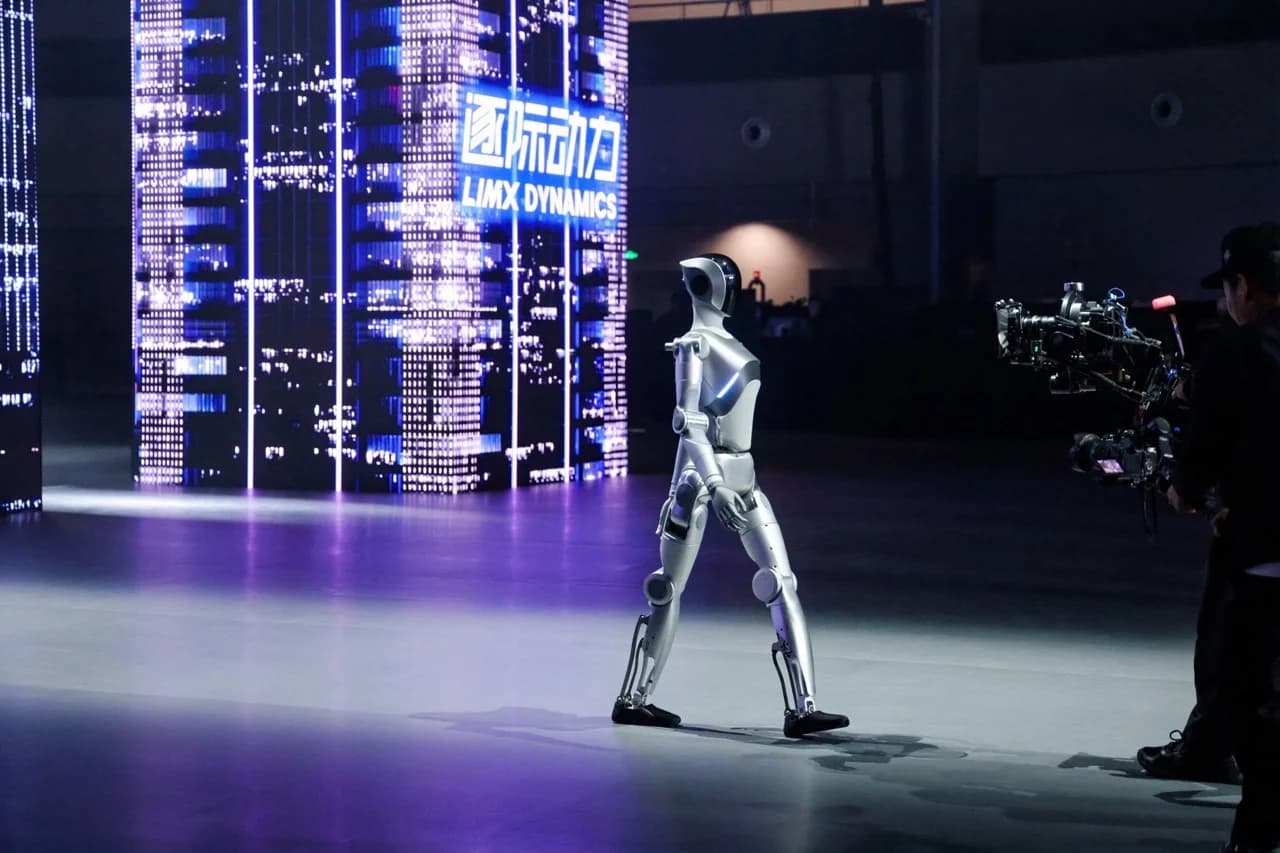
Perhaps the most pragmatic element of the demonstration is what the robots actually looked like. Instead of deploying bipedal walkers like the flagship Oli humanoid or the stage-focused Luna, the teams leveraged the modularity of the TRON 2 research platform.
When LimX originally launched TRON 2, it was pitched as a "shapeshifter" capable of bipedal walking, wheeled locomotion, or stationary dual-arm manipulation. In this deployment, the engineers detached the TRON 2 dual-arm torso and mounted it directly onto the end of a heavy, multi-axis industrial robotic arm.
This hybrid setup bypasses the payload and balance bottlenecks that make full bipedal humanoids inefficient on active construction sites. The heavy industrial boom provides raw payload, elevation, and expansive workspace reach, while the mounted TRON 2 torso handles fine dexterity, orientation adjustments, and coordinated two-handed tool manipulation. In one trial, one TRON 2 manipulated a wooden board while an adjacent unit drove fasteners using a nail gun. In another setup, the dual-arm system smoothed wet concrete within the assembled frame.
Human-in-the-Loop and Real-World Friction
Despite the visual milestone, neither LimX nor ZINOVA is claiming fully autonomous construction fleets are ready for field deployment tomorrow. The demonstration leaned on teleoperation and human-in-the-loop workflows.
On real job sites, full autonomy faces severe regulatory, safety, and operational hurdles. Construction environments demand compliance across strict trade certifications—from ironworking to carpentry. By supporting real-time teleoperation, human operators can step in during unexpected edge cases or high-liability sequences. Furthermore, teleoperating these complex manipulation tasks serves a secondary purpose: generating the dense physical contact, torque, and visual datasets needed to train future foundation models.
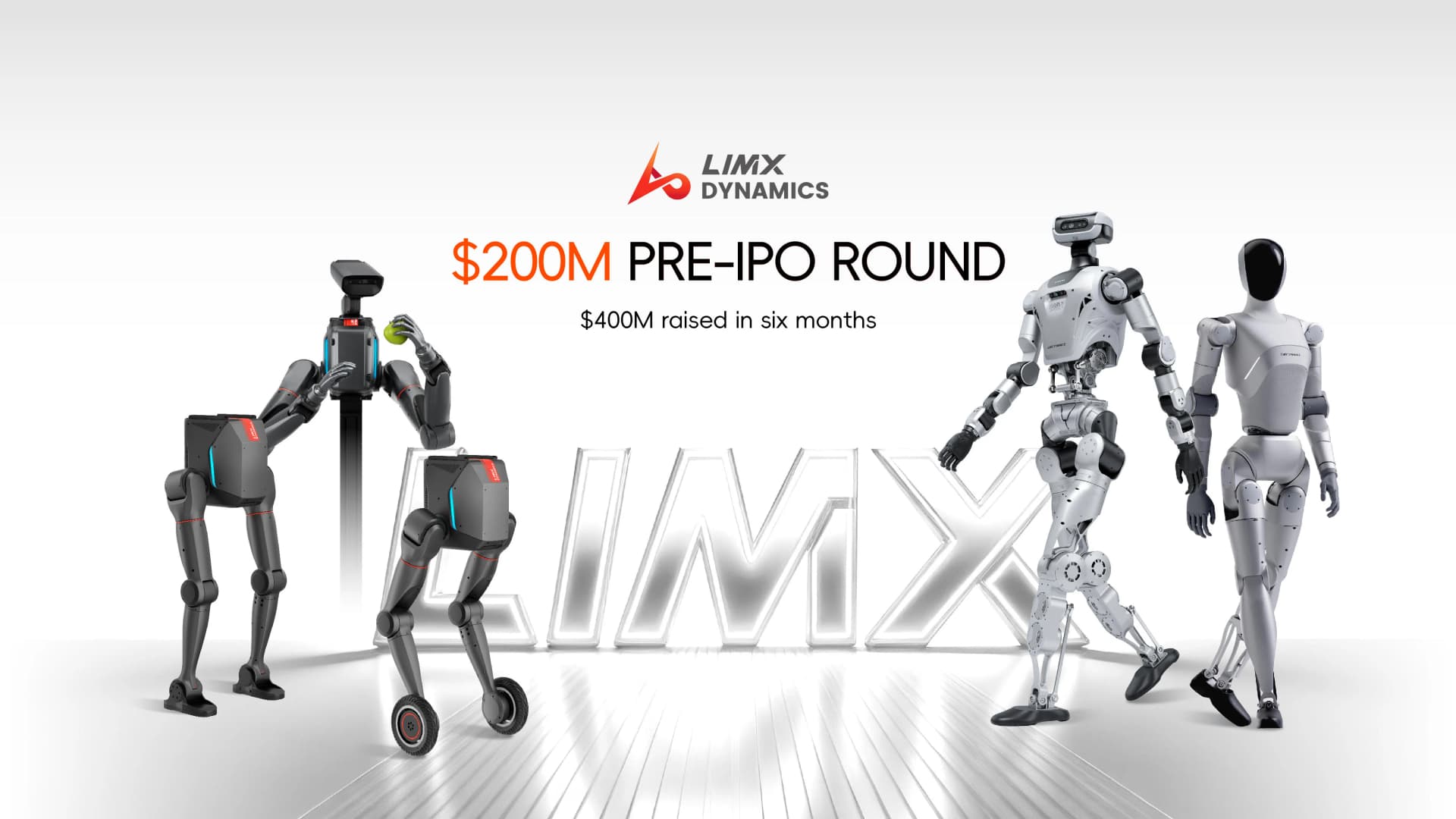
For LimX Dynamics, fresh off a $200 million Pre-IPO round and earlier Series B scaling, the partnership showcases its broader ecosystem playbook. Rather than trying to master every vertical application in-house, LimX is positioning its hardware SDKs and COSA operating infrastructure as modular building blocks for domain specialists like ZINOVA.
If embodied AI is to deliver real economic value, learning how to pick up and wield the trades' existing tools may prove far more practical than trying to reinvent the trades themselves.
Share this article
Read next
- Published on
- Reading time
- 5 min read
LimX Dynamics Secures $200M Pre-IPO Round, Unveils Fully Autonomous Oli in Uncut Demo
- Published on
- Reading time
- 5 min read
LimX Dynamics Fully Details Luna: A Fabric-Wrapped Humanoid Built for the Stage
- Published on
- Reading time
- 3 min read
LimX Dynamics Unveils "Luna": A High-Performance Humanoid Built for the Spotlight
- Published on
- Reading time
- 3 min read
LimX Dynamics Teases Sleek New Humanoid Ahead of Taobao Influencer Festival
- Published on
- Reading time
- 4 min read
LimX Dynamics Secures $200 Million Series B to Scale Modular and General-Purpose Humanoids
- Published on
- Reading time
- 4 min read
OpenMind Launches Hardware-Agnostic App Store to Unify Humanoid "Skills"


The weekly humanoid robotics briefing
One email a week: the launches, funding and research that mattered, with context from Humanoids Daily.
Read recent issues