- Published on
LimX Dynamics Secures $200M Pre-IPO Round, Unveils Fully Autonomous Oli in Uncut Demo
One tap, and our reporting appears more often in your Google Top Stories. It makes a real difference to a small newsroom.


Your guide
Rich Robinson
Jee Chee Ren · Executive tour
See China’s AI and robotics ecosystem first-hand.
Six days exploring AI, robotics and advanced manufacturing.
With Rich Robinson, Clinical Professor of Entrepreneurship at Peking University
Beijing · Guangzhou · Shenzhen
29 November–4 December 2026
Referral partnership · We earn a commission on referred bookings.
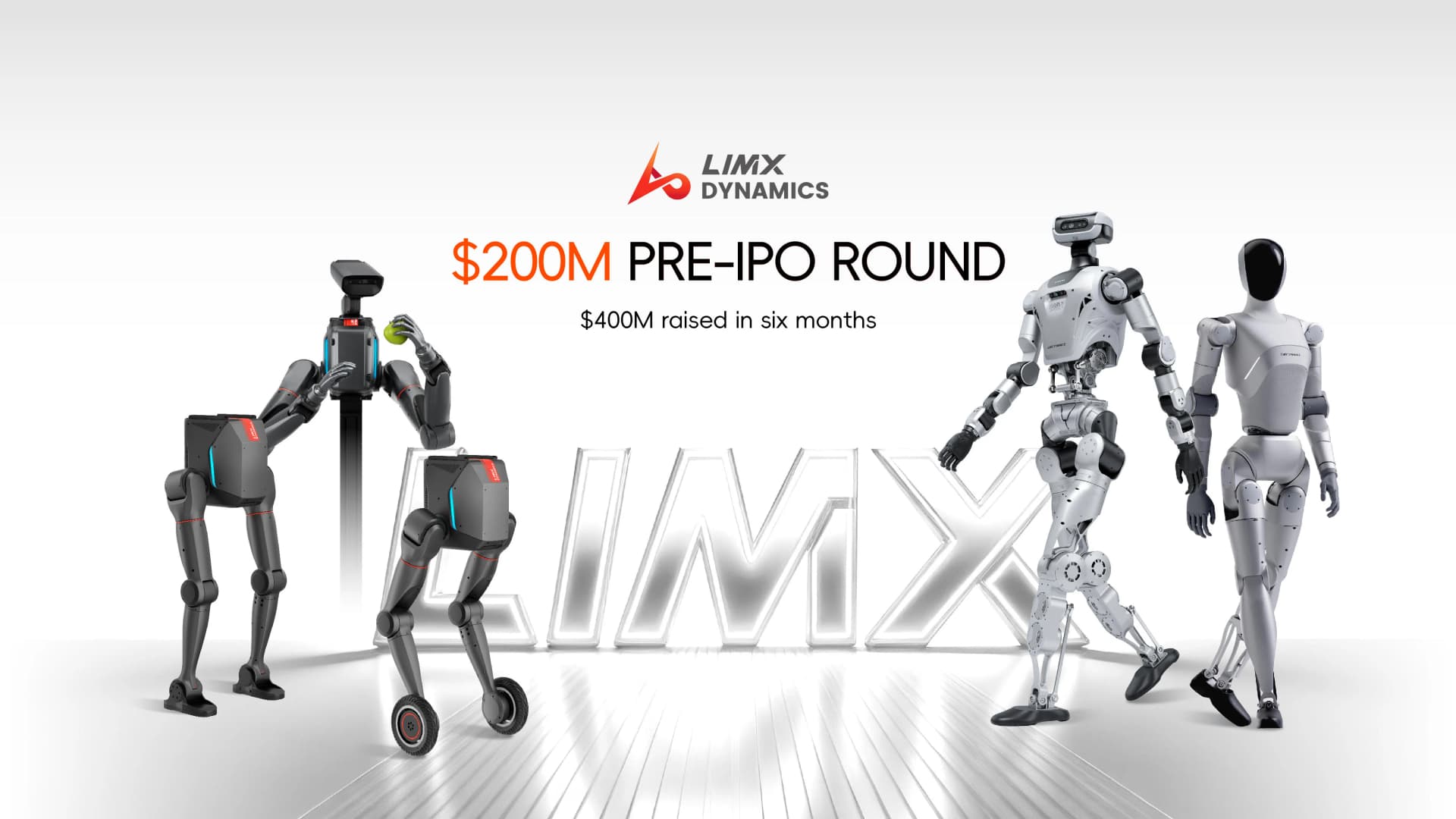
- LimX Dynamics has closed a nearly $200 million Pre-IPO financing round at an RMB 15 billion valuation, doubling down on the massive $200 million Series B it secured just six months ago.
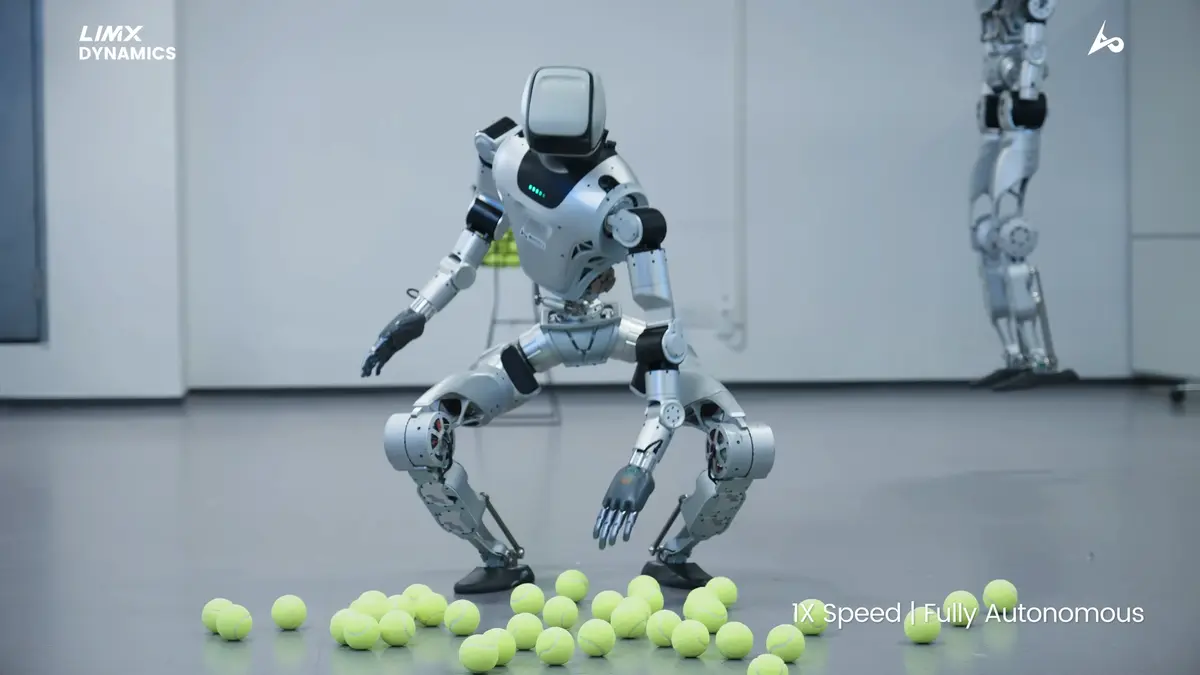
- Alongside the funding, the company unveiled LimX COSA 0.5, the latest iteration of its agentic operating system, powering the Oli humanoid through an entire room of household chores in a single, uncut, and fully autonomous take.
- COSA relies on a three-layer architecture (Systems 0, 1, and 2) integrated with the open-source FluxVLA Engine to orchestrate high-level reasoning and whole-body motion control.
- Following the recent debut of its stage-ready Luna robot, the new capital will accelerate global expansion and the deployment of thousands of physical AI units into the real world.
LimX Dynamics is proving to be a formidable capital magnet in the increasingly crowded humanoid robotics sector. The Shenzhen-based company announced the completion of a nearly $200 million Pre-IPO financing round, bringing its total capital raised over the last six months to a staggering $400 million.
The round, which values LimX at RMB 15 billion (approximately $2.2 billion), arrives on the heels of major product expansions, including the commercial release of the fabric-wrapped Luna and the modular TRON 2 research platform. However, the real showpiece accompanying this financial milestone is a major update to the company's software architecture, promising to push humanoids past scripted routines and into autonomous, long-horizon labor.
A Diverse Cap Table for Global Ambitions
The Pre-IPO round attracted a broad syndicate of strategic and financial backers from China, Europe, the Middle East, and North America. New investors joining the cap table include IDG Capital, global AI hardware manufacturer Lens Technology, the pan-European GGG Group, Redstone VC, WestSummit Capital, and the Hefei Binhu Industry Development Group.
Existing investors also doubled down. Stone Venture significantly increased its position, while automotive-backed funds such as Shangqi Capital (SAIC Motor) and NIO Capital maintained their support, underscoring the growing structural overlap between electric vehicle supply chains and embodied AI.
The weekly humanoid robotics briefing
One email a week: the launches, funding and research that mattered, with context from Humanoids Daily.
Read recent issuesAccording to the company’s press release, the $200 million injection will be aggressively deployed to scale the manufacturing of fully autonomous humanoid robots and to expand LimX's commercial presence across key markets in Europe, the Middle East, and Asia.
COSA 0.5: No Teleoperation, No Cuts
To contextualize the massive valuation, LimX provided a highly anticipated update to its "Humanoid Brain System," formally known as LimX COSA. First introduced earlier this year as an "agentic" operating system designed to bridge the gap between large language models and physical motion, COSA 0.5 is the company's attempt to prove that the intelligence actually works in chaotic physical environments.
In a newly released demonstration, the flagship humanoid, Oli, is shown autonomously navigating an entire room and performing a sequence of household chores. LimX emphasized that the footage features no teleoperation and is captured in "one continuous take"—a direct response to the robotics industry's long-standing habit of heavily editing promotional videos to hide failure states.
LimX claims this makes Oli the first full-size humanoid robot in China to successfully complete long-horizon mobile manipulation tasks in a home setting entirely autonomously.
Watch the video on YouTube in the player below:
We've previously seen similar demonstrations from American competitors like Figure.
The Three-Layer Architecture
The underlying intelligence making this possible is divided into a three-tiered software stack, effectively acting as the robot's nervous system and cerebrum:
- System 0: A foundational model handling the raw physics of whole-body motion control and balance.
- System 1: The skills layer, heavily relying on Vision-Language-Action (VLA) and Whole-Body Action Models (WAM) to execute specific physical manipulations.
- System 2: The cognitive layer, powered by large language and world models, which manages high-level reasoning, memory, task planning, and autonomous decision-making.
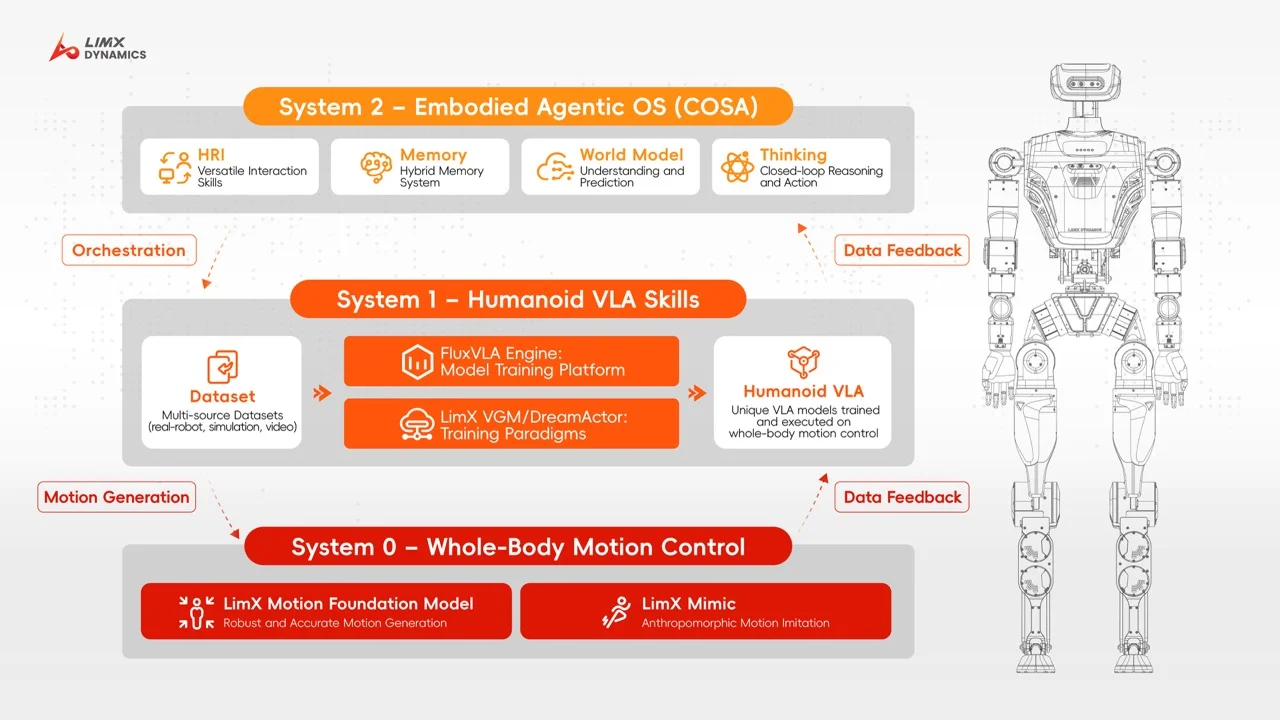
This brain is paired with the FluxVLA Engine, an open-source, enterprise-grade AI infrastructure platform built by LimX. By standardizing the engineering pipeline for training and deploying VLA models, the company hopes to attract third-party developers, preventing its hardware from becoming a closed ecosystem.
The Path to IPO
The $200 million Pre-IPO designation is a clear signal of LimX Dynamics' near-term roadmap. As the Chinese robotics sector sees a historic rush toward public markets—with competitors like Unitree and Deep Robotics already navigating fast-track approvals and profitable quarters—LimX is positioning itself as the premium, full-stack alternative.
By controlling the hardware (Luna, Oli, TRON), the infrastructure (FluxVLA), and the cognitive architecture (COSA), LimX Dynamics is betting that vertical integration will be the key to avoiding commoditization in an industry moving rapidly from the laboratory to the living room.
Share this article
Read next
- Published on
- Reading time
- 4 min read
LimX Dynamics Secures $200 Million Series B to Scale Modular and General-Purpose Humanoids
- Published on
- Reading time
- 5 min read
LimX Dynamics Fully Details Luna: A Fabric-Wrapped Humanoid Built for the Stage
- Published on
- Reading time
- 3 min read
LimX Dynamics Unveils "Luna": A High-Performance Humanoid Built for the Spotlight
- Published on
- Reading time
- 3 min read
LimX Dynamics’ New Humanoid Robot Demonstrates a Rare Skill: Autonomous Loco-Manipulation
- Published on
- Reading time
- 3 min read
LimX Dynamics Teases Sleek New Humanoid Ahead of Taobao Influencer Festival
- Published on
- Reading time
- 5 min read
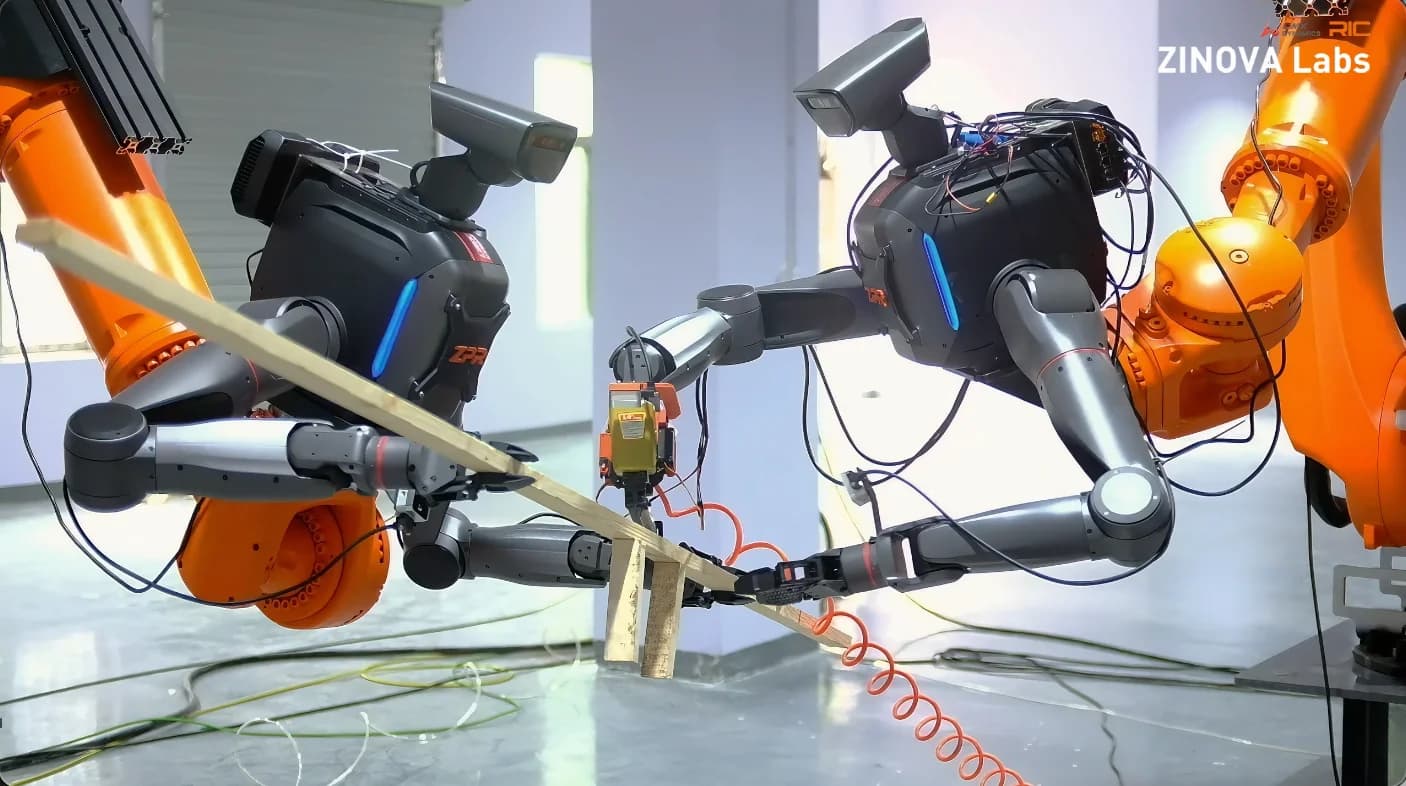
LimX and ZINOVA Put TRON 2 to Work on Simulated Construction Sites



The weekly humanoid robotics briefing
One email a week: the launches, funding and research that mattered, with context from Humanoids Daily.
Read recent issues