- Published on
MagicLab Pivots to "Magic-Mix" Intelligence with $1 Billion Developer Ecosystem Bet
One tap, and our reporting appears more often in your Google Top Stories. It makes a real difference to a small newsroom.

- MagicLab unveiled the MagicBot X1 humanoid and the H01 dexterous hand alongside its new Magic-Mix foundational world model.
- The company launched the "Co-Create 1000 Initiative," committing $1 billion over five years to build a global developer ecosystem.
- Strategic partnerships were announced with Silicon Valley firms, including OpenMind, deepening MagicLab's role in the hardware-agnostic software movement.
- MagicLab projects $14 billion in annual revenue by 2036, supported by a presence in over 50 countries.
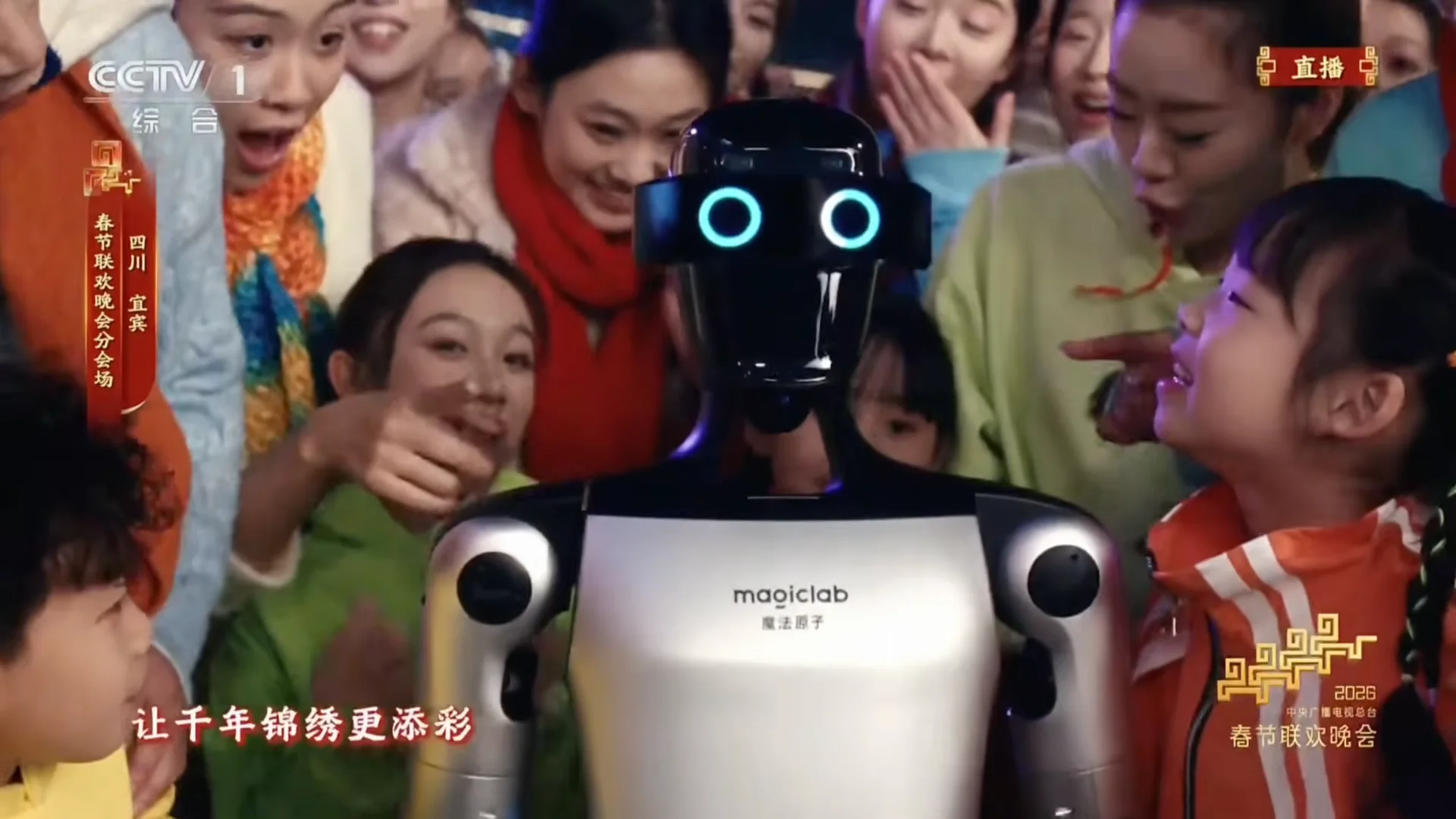
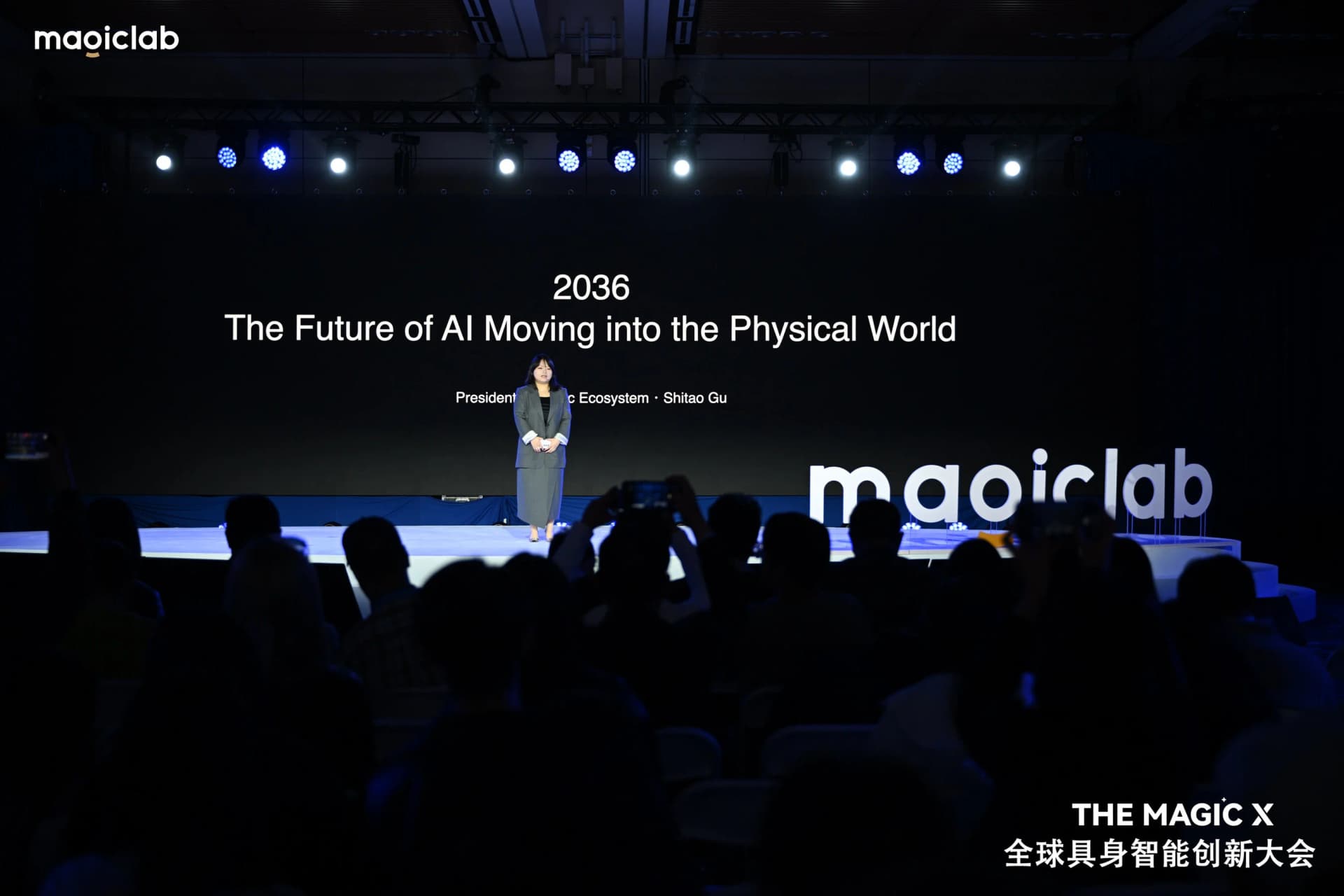
SILICON VALLEY — MagicLab Robotics, the firm that recently captured headlines for the fluid, expressive motions of its machines on the CCTV Spring Festival Gala stage, is making a aggressive move to define itself as a pillar of "intelligence infrastructure". At its Global Embodied Intelligence Summit (GEIS) held today, the company revealed a full-stack hardware and software portfolio designed to move beyond "cultural framing" and into large-scale commercial utility.
The Core Stack: Magic-Mix and MagicBot X1
The centerpieces of the announcement were the MagicBot X1 flagship humanoid and the Magic-Mix foundational world model. While MagicLab has previously been recognized for its role in entertainment—performing the musical number "We Are Made in China" for hundreds of millions of viewers—the X1 represents a pivot toward "real-world applications" in manufacturing and commercial services.
The hardware is complemented by the H01 dexterous hand, designed to handle the precision requirements of MagicLab’s nine targeted industrial scenarios, which include healthcare, logistics, and public safety. This development aligns with a broader industry trend where mobility is viewed merely as the "prerequisite for labor," as recently argued by Unitree founder Wang Xingxing.
A $1 Billion Bet on Open Intelligence
MagicLab’s most significant strategic move is the launch of the "Co-Create 1000 Initiative." The company has committed $1 billion over the next five years to foster a dedicated developer ecosystem. This initiative aims to enable secondary development on MagicLab platforms, effectively attempting to lower the barrier for third-party "skills" to be deployed on its hardware.
Follow humanoid robotics without following every announcement.
Get the week’s most important launches, funding and research—and why they matter—in one email from Humanoids Daily.
Once a week. Unsubscribe anytime.
Read recent issuesThis ecosystem play is bolstered by strategic collaborations with several Silicon Valley-based AI firms, most notably OpenMind. MagicLab was already identified as a founding partner in OpenMind’s hardware-agnostic App Store consortium, which seeks to unify robotic capabilities through software updates rather than hardware overhauls. By partnering with firms like PrismaX AI and Cosmicbrain AI, MagicLab is positioning itself as a neutral hardware provider capable of hosting a variety of "brains."
Scaling Toward a $14 Billion Future
While domestic Chinese firms are currently embroiled in an intense "shipment war," MagicLab is leaning heavily into its international footprint. The company reported that 60% of its total 2025 sales came from international markets, with operations now spanning more than 50 countries.
The company’s long-term financial projections are ambitious, targeting $14 billion in annual revenue by 2036. To reach this, MagicLab must successfully navigate what analysts call the "utility gap"—the transition from robots that can perform synchronized martial arts to those that can manage "long-sequence" complex tasks on a factory production line.
By combining its hardware-agnostic software partnerships with a massive investment in developer tools, MagicLab is betting that the "Android of robotics" moment will be won not just by the best body, but by the most accessible intelligence ecosystem.
Share this article
Follow humanoid robotics without following every announcement.
Get the week’s most important launches, funding and research—and why they matter—in one email from Humanoids Daily.
Once a week. Unsubscribe anytime.
Read recent issuesRead next
- Published on
- Reading time
- 4 min read
The "Robot Super Bowl": Humanoids Dominate China’s 2026 Spring Festival Gala
- Published on
- Reading time
- 5 min read
The Spring Festival Gala Effect: Humanoid Orders Surge as Unitree Eyes 20,000-Unit Year
- Published on
- Reading time
- 2 min read
MagicLab's Xiaomai: Watch how Humanoid Robot Demonstrates Hair Styling, Hotel Services, and Car Parking
- Published on
- Reading time
- 8 min read
The Unitree G1 Is Becoming a Platform for American Robot Startups
- Published on
- Reading time
- 3 min read
Astribot Brings Its $18,000 T1 Robot to North America at IROS
- Published on
- Reading time
- 6 min read
From Stadiums to the Front Line: How China and the US Are Preparing Humanoids for Combat