- Published on
Musk: AI5 Chip Goes to Optimus as Tesla Cars Stay on AI4
One tap, and our reporting appears more often in your Google Top Stories. It makes a real difference to a small newsroom.
Supported by RoboStrategySupport for Humanoids Daily comes from RoboStrategy
Sponsored
Investing involves risk, including possible loss of principal. Read the prospectus before investing.
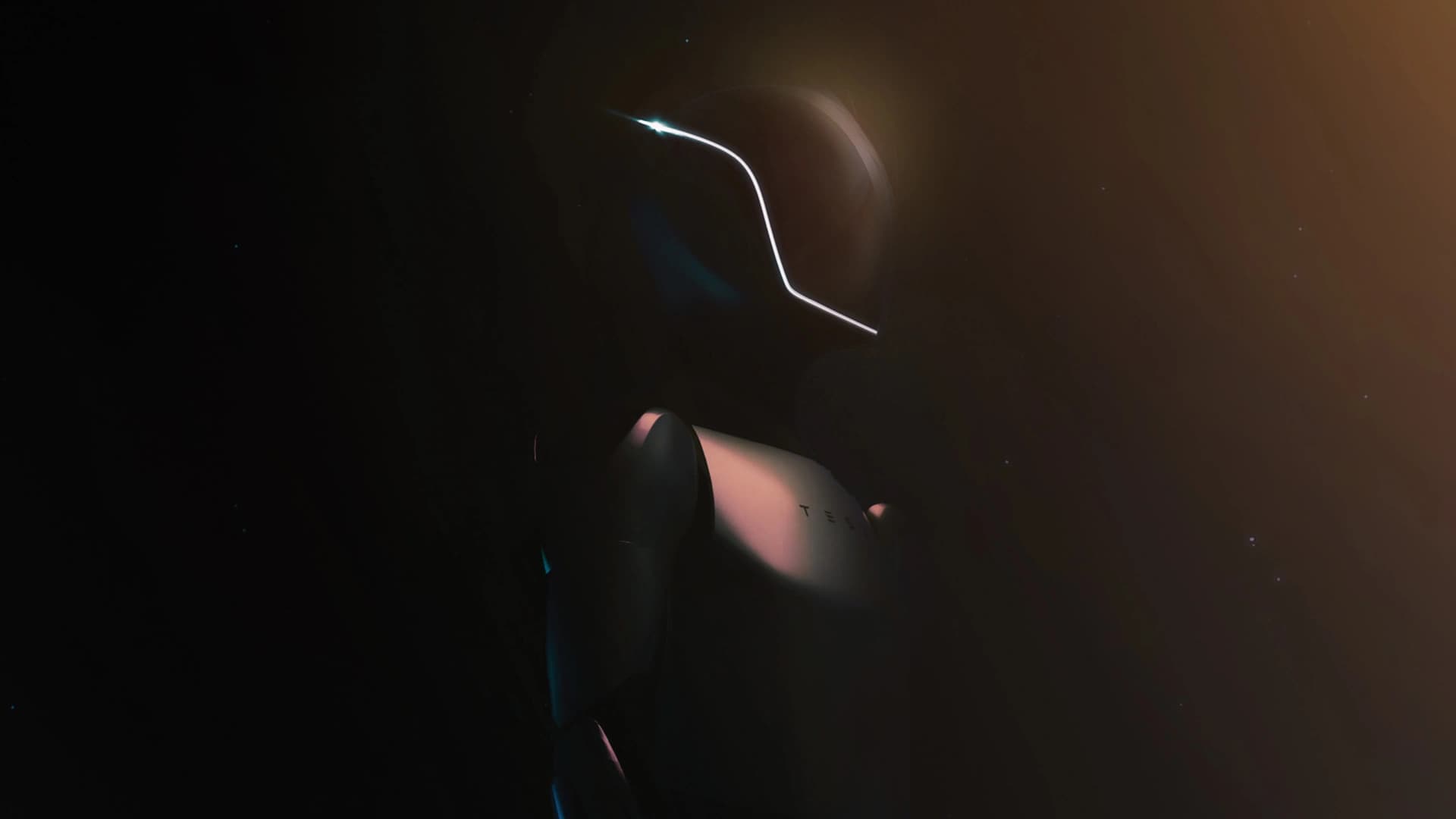
Tesla's next self-driving computer, AI5, will go to Optimus, and Tesla's cars will stay on the current AI4 hardware, according to Elon Musk.
Musk made the comment on X on November 22, as Tesla rolls out FSD v15 to customers. An owner of an older AI3-equipped Tesla asked when AI5 would arrive in new cars, saying they were considering waiting before upgrading. "It's going to Optimus," Musk replied. "Cars will remain at AI4. That's enough to solve superhuman driving."
- Elon Musk says AI5 is going to Optimus, while Tesla's cars will remain on AI4, which he says is enough for "superhuman driving."
- Musk now puts AI5 at roughly 12 times the compute of AI4. On Tesla's Q3 call he described it as roughly ten times.
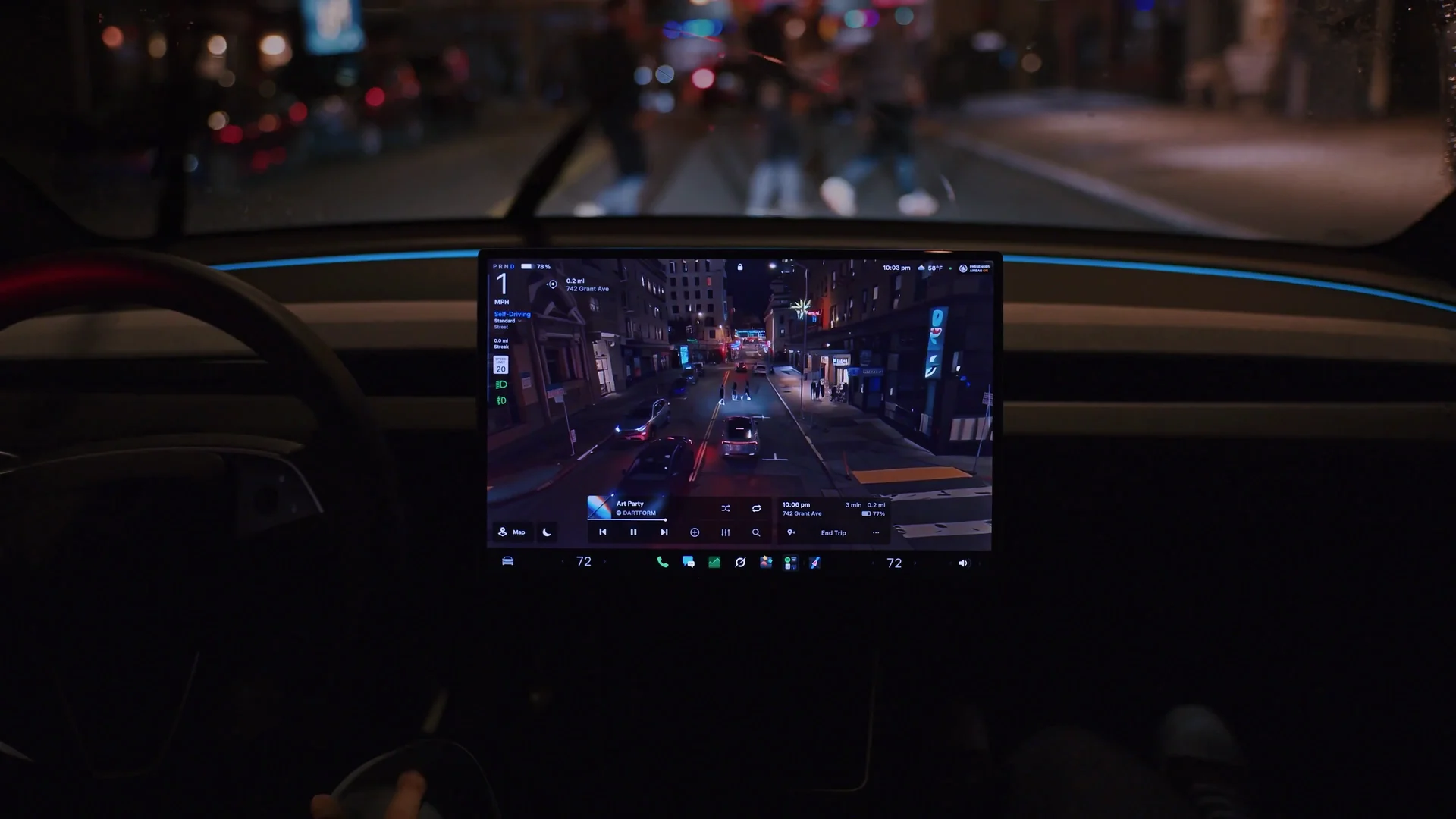
- FSD v15's new Reality View renders the scene around the car with a ~1B-parameter diffusion model that runs on the car's AI4 computer, fed by the same vision features that drive the car.
- Musk says Reality View runs on half of one of AI4's six TRIP neural accelerators, and that the chip's 8-bit-only math forces workarounds.
- Ashok Elluswamy, Tesla's VP of AI, says the detailed new render uses less compute than Tesla's much simpler early FSD visualization did.
A chip roadmap that now points at the robot
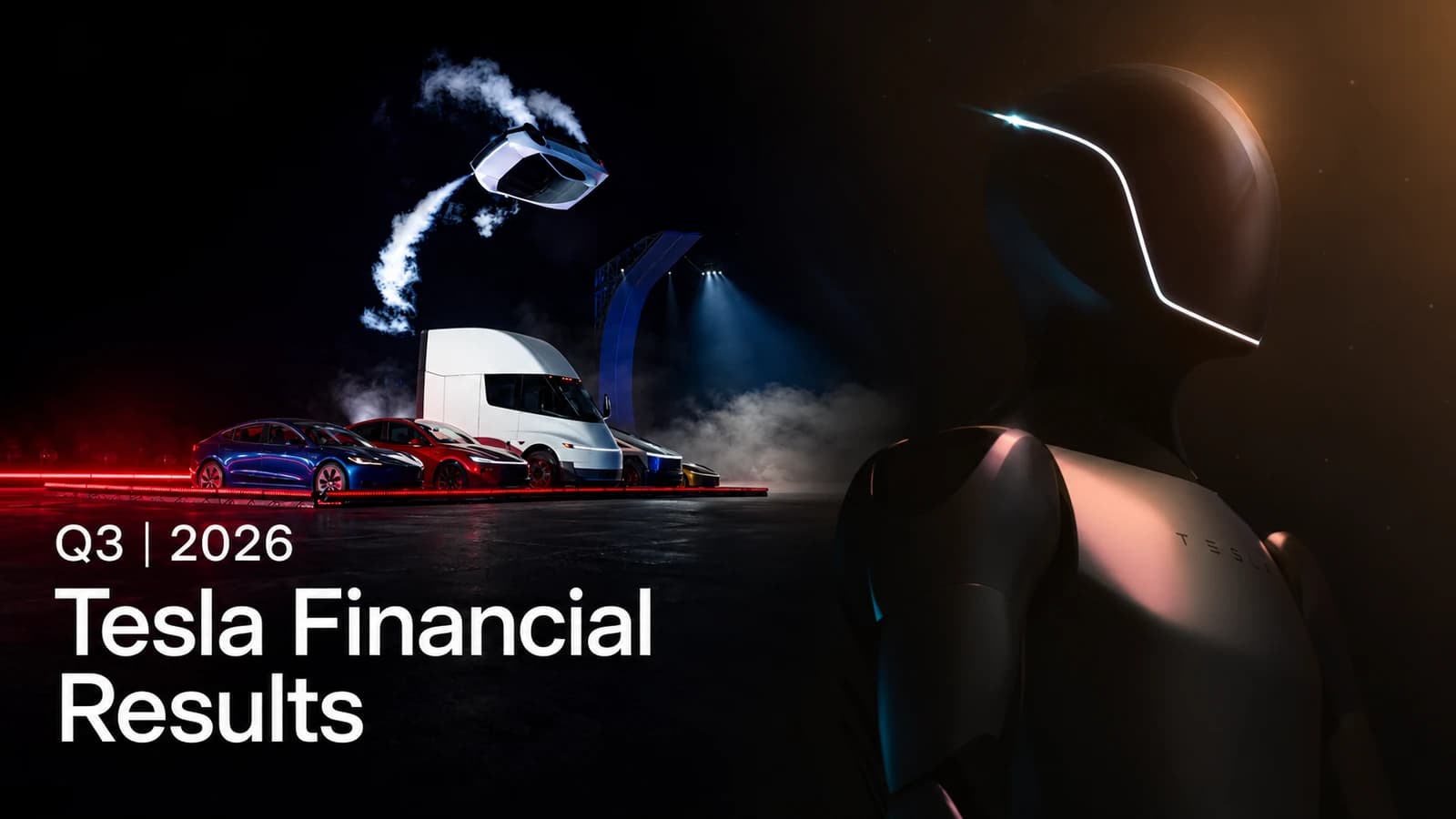
The statement narrows where Tesla's next computer will be used first. On Tesla's Q3 earnings call, Musk targeted roughly April 2027 for integrating AI5 into Optimus, arguing that a humanoid's many joints and wider range of tasks demand more processing than driving. Tesla had already halved AI5's planned RAM to 72GB to secure enough memory for robot production.
The compute figure has also moved. On the Q3 call Musk described AI5 as offering about an order of magnitude more compute than AI4. In a post on November 22 he wrote: "AI5 is a gigantic improvement. Roughly 12X more compute."
Follow humanoid robotics without following every announcement.
Get the week’s most important launches, funding and research—and why they matter—in one email from Humanoids Daily.
Once a week. Unsubscribe anytime.
Read recent issuesKeeping cars on AI4 means Tesla's driving software has to reach its goals on hardware already in customers' vehicles. Musk did not say whether AI5 would ever reach a car, or how the decision affects AI3 owners like the one who asked.
What FSD v15 shows on the screen
The exchange came during a wave of attention for FSD v15, and in particular for a new visualization Tesla calls Reality View. Instead of the gray placeholder shapes of earlier versions, the display now generates a detailed render of the car's surroundings, seen from a camera position behind and above the car that resembles a drone shot. Owners have compared it to a video game.
Tesla owner and X creator BLKMDL3, after an afternoon and evening driving v15.0.1, wrote that the view shows reflections on the car, buildings, trees and turn arrows, and that in parking garages it renders the ceiling into the top of the image. The review called it "the best backup/360 camera money can buy." Other changes in the review include pothole avoidance, automatic slowing to the speed limit near speed cameras, smoother handling of dips and speed bumps, a turn signal sound that fades after a few clicks, and parking preferences that learn where the owner parks in their driveway.
How Reality View is generated
Musk followed up with a technical description of the feature. Tesla has had what he called a "~pixel-perfect world model since last year," used to generate synthetic training data. The model in the car is a much smaller version.
According to Musk, the in-car model is a conditional mean-flow model that works from the recent sequence of features produced by Tesla's Universal Vision Encoder (UVE). Those are the same features that feed the 3-billion-parameter model that produces the driving actions. Reality View branches off from them and runs a separate diffusion model of about one billion parameters. Each step takes the previous Reality View image, adds noise, and denoises it into the current frame.
The output is a short video chunk of eight images at 36 frames per second, at the resolution of the car's screen. A new chunk is produced for every UVE frame, which arrive at 18 Hz, with the work spread over four cycles. Musk said latency is still high because of limited compute, and that Tesla can cut about 35% of it by feeding newer UVE features into the diffusion transformer's layers partway through.
Because the render is built from the driving system's own features rather than from the raw camera feeds, it doubles as a picture of what the network has encoded about the scene.
Half an accelerator
The hardware details explain why Musk brought up AI5 at all. The AI4 computer carries two systems-on-chip, labeled A and B, each with three neural-network accelerators Tesla calls TRIP.
"After we moved our tiny decoder into SRAM, we only have half a TRIP out of three on SoC B, for this reality visualizer, so spent the compute as best we could," Musk wrote. He added that TRIP "basically only handles 8-bit int," and has to run softmax, a standard operation in transformer models, "in emulation mode in 28 steps."
Those constraints are what Musk's 12x figure for AI5 is measured against.
The new render is also cheaper to run than the one it replaced, according to Ashok Elluswamy, Tesla's vice president of AI and head of the Optimus program. On November 21, Elluswamy quoted a side-by-side comparison posted by Tesla commentator Whole Mars Catalog. It set the neon wireframe boxes and dotted lane lines of Tesla's early FSD Beta display next to a v15 frame showing a city street with building facades and parked cars. "The crazier thing is that the right side uses less compute than what the left used to take," Elluswamy wrote. "Extreme compute efficiency optimization."
The world model behind both products
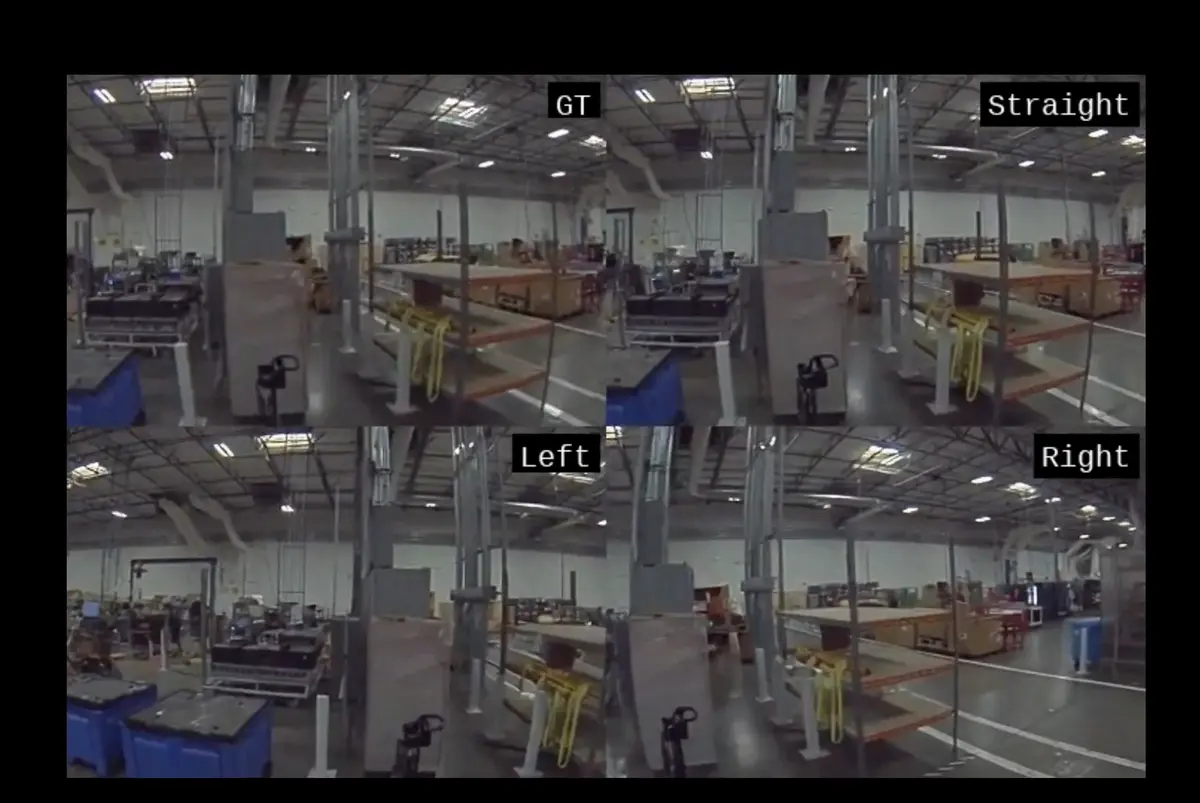
Tesla has said for some time that its driving and robot programs share one AI stack. Elluswamy has described a unified neural world simulator for FSD and Optimus that generates video of the world in response to the network's actions, so that policies can be trained and evaluated without a physical fleet.
Musk's description of Reality View puts a smaller version of that kind of model into customer cars for the first time, and confirms that the larger one is in use for synthetic data. For Optimus, the bottleneck is data: as Tesla said in Q3, the robot does not inherit a deployed fleet the way the car program did, which is one reason Tesla is planning a training fleet of 10,000 to 20,000 robots.
Share this article
Follow humanoid robotics without following every announcement.
Get the week’s most important launches, funding and research—and why they matter—in one email from Humanoids Daily.
Once a week. Unsubscribe anytime.
Read recent issuesRead next
- Published on
- Reading time
- 5 min read
Tesla AI Chief Details Unified 'World Simulator' for FSD and Optimus
- Published on
- Reading time
- 6 min read
Meta AI Chief Yann LeCun Claims Humanoid Firms "Have No Idea" How to Build Generally Useful AI
- Published on
- Reading time
- 4 min read
Humanoids Summit Confirms Tesla Optimus for December Event, but Not Reservations
- Published on
- Reading time
- 6 min read
Tesla Begins Optimus Production in Fremont, Targets Customer Deliveries in Late 2027
- Published on
- Reading time
- 3 min read
Tesla Makes Its Case for Board Continuity Ahead of December 3 Shareholder Vote
- Published on
- Reading time
- 2 min read
Musk Puts Optimus and Cybercab at the Center of Tesla’s Future Value