- Published on
How Frontier Language Models Are Speeding Up Robotics Research
One tap, and our reporting appears more often in your Google Top Stories. It makes a real difference to a small newsroom.

Supported by RoboStrategySupport for Humanoids Daily comes from RoboStrategy
Sponsored
Investing involves risk, including possible loss of principal. Read the prospectus before investing.
In a post on X on Saturday, Ros Shinkle, founder and CEO of Tuesday Labs and formerly a staff roboticist at Boston Dynamics, asked whether her friends outside robotics knew what was happening. "Before October 20 it took 1 week to train a whole body controller (ie robot walking model) on 128 GPUs," she wrote. "Now it takes 3 minutes on 1 GPU."
Andrew Kang, CEO of RoboStrategy, quoted the post on Monday with a list of causes: algorithmic optimizations, a "robot data foundry frenzy", new scaling laws, world model and simulation advances, open-source tooling, and "LLMs becoming capable of automating more and more parts of the research loop." Together, he wrote, they are "compressing decades of robotics progress into months/years."
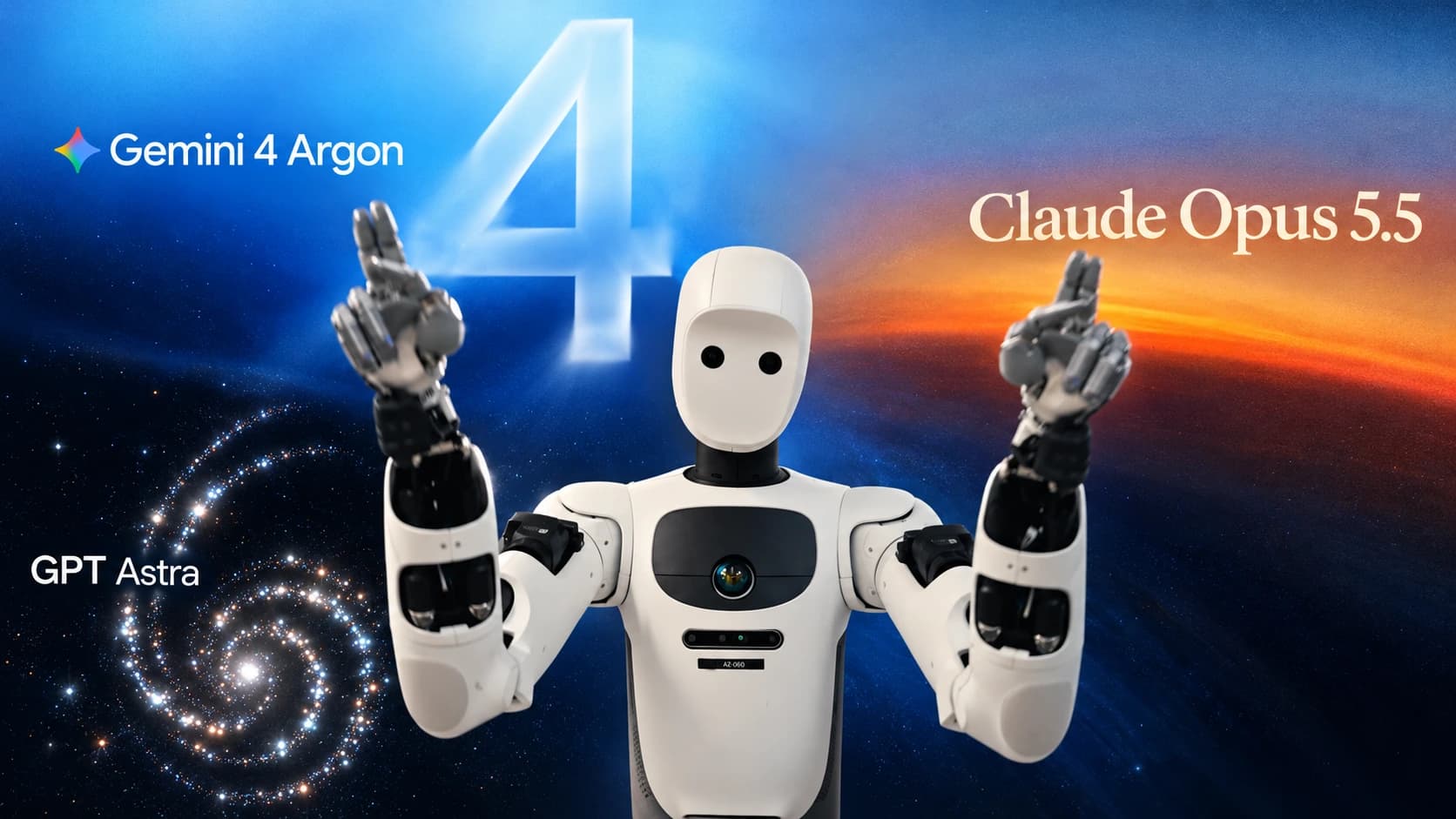
Of the causes on Kang's list, language models are the one that has run through most of our coverage since OpenAI released GPT-6 Astra on 3 September. In ten weeks, frontier models from OpenAI, Google and Anthropic have been used to build simulation environments, review a robot model's failed attempts, direct a skill model mid-task and control robot arms on benchmarks. This article goes through that evidence and the limits each team reported.
- Language models now appear at several stages of robotics work: writing training code, building simulations, reviewing failures, directing skill models and, on benchmarks, controlling arms directly.
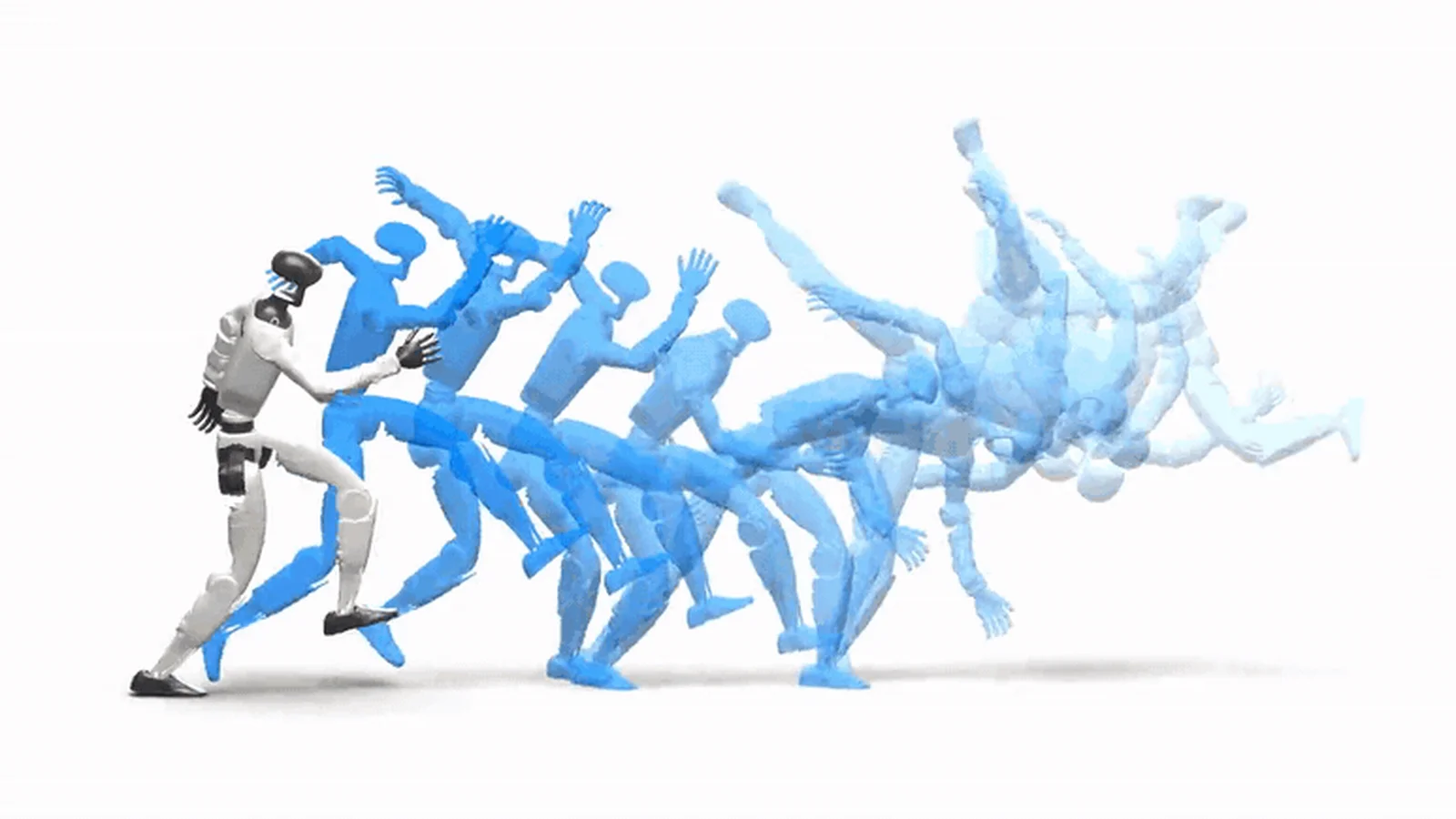
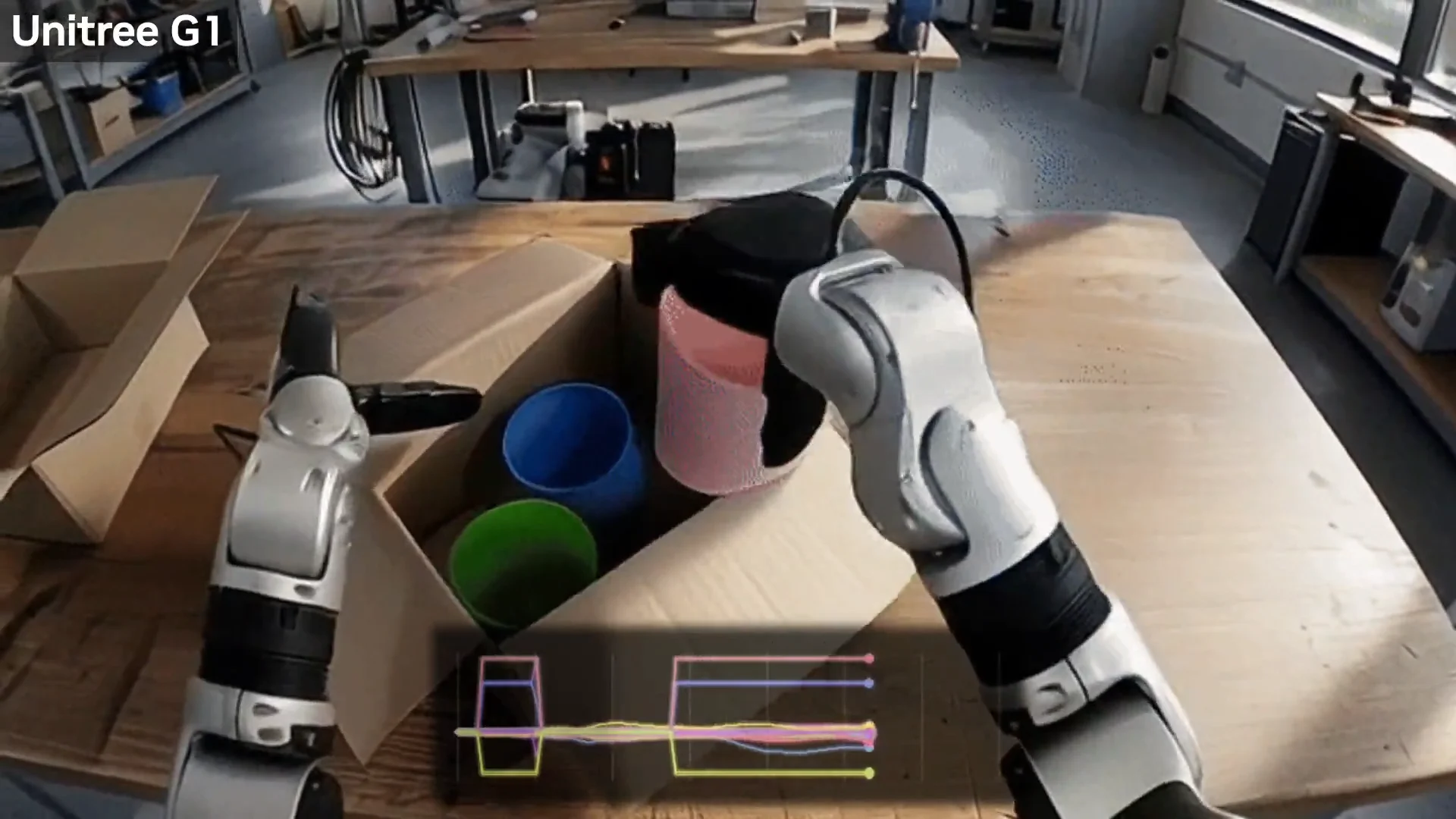
- The clearest speed-up is in humanoid motion tracking. On a shared 40-clip Unitree G1 benchmark, open-source trainers went from 1.31 hours to under a minute in 17 days, starting from a reimplementation whose author says it was "vibe coded" in an hour.
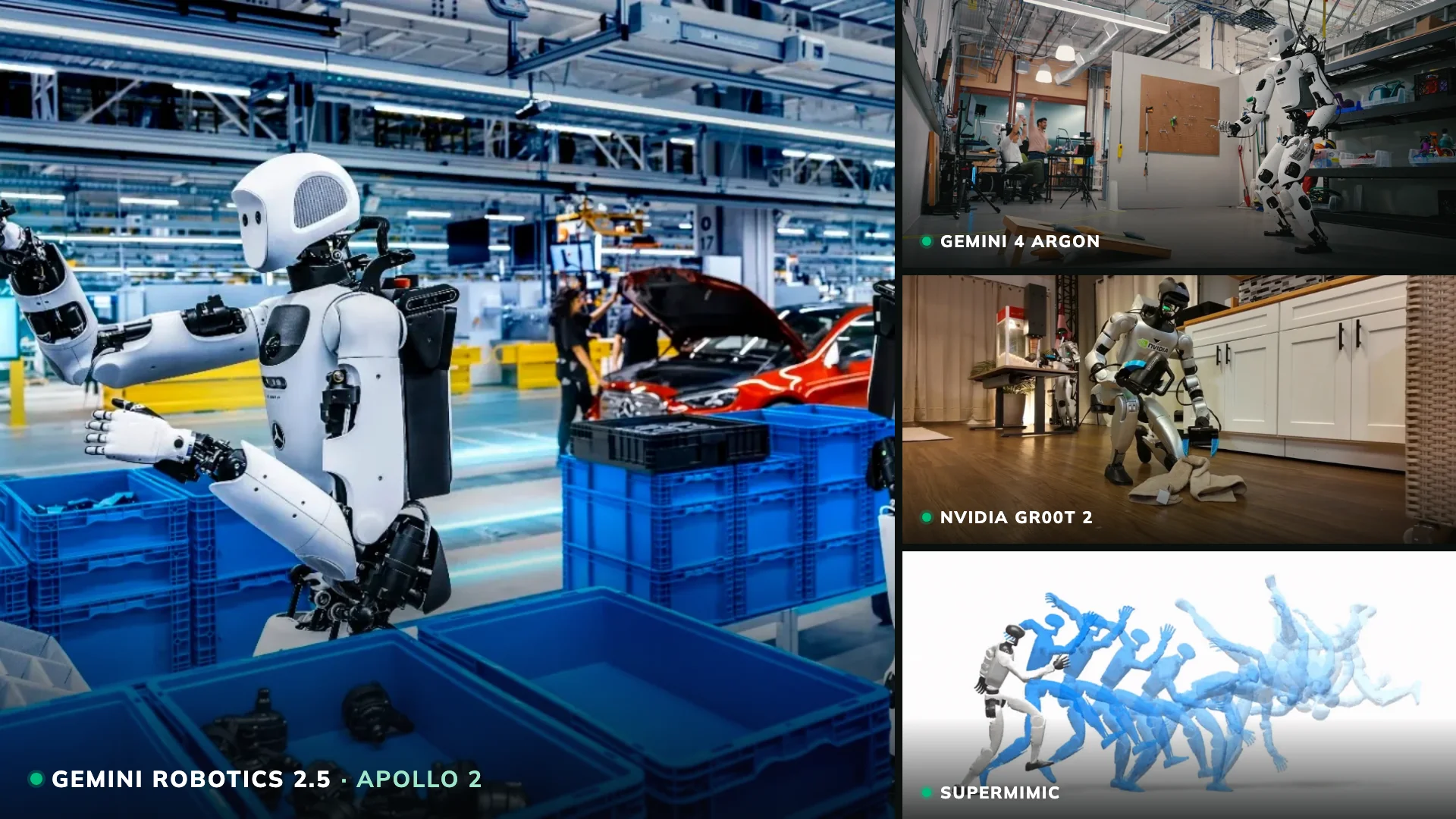
- Google DeepMind credits Gemini 4 Argon for the four-month development of Gemini Robotics 2.5. NVIDIA reports that GPT-6 Astra directing GR00T 2 completed 292 of 300 toy assemblies.
- Most of the fastest results are in simulation. Precision contact, physical reliability and robot data are moving more slowly.
Writing the code
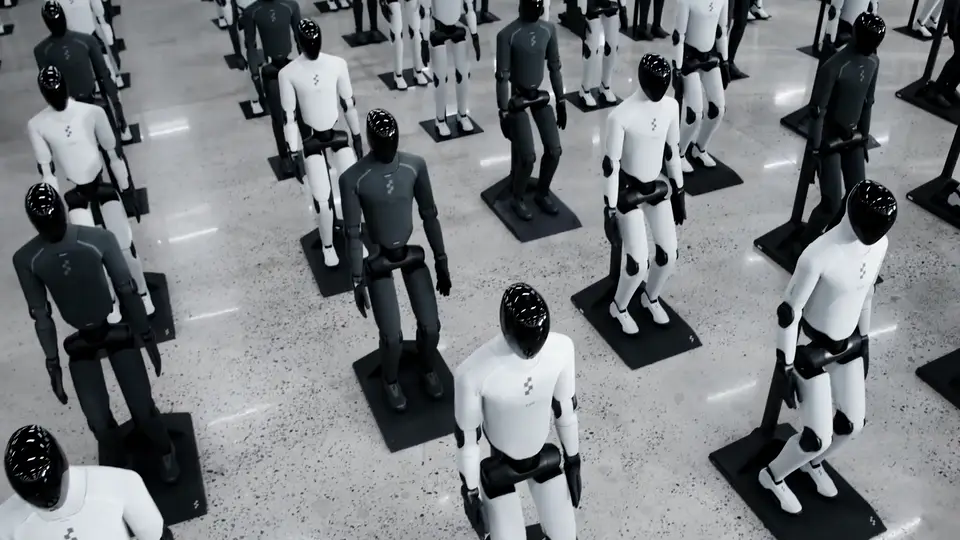
The numbers in Shinkle's post come from a chain of open-source projects that started with SuperMimic, a UC Berkeley paper posted to arXiv on October 20. The method came from the Berkeley team: SuperMimic trains a humanoid motion-tracking policy by backpropagating through a learned, differentiable world model. Its authors report that 3 hours on one GPU beats a tracker trained for 7 days on 128 GPUs.
Follow humanoid robotics without following every announcement.
Get the week’s most important launches, funding and research—and why they matter—in one email from Humanoids Daily.
Once a week. Unsubscribe anytime.
Read recent issuesThe paper shipped without code. The next day, Chong Zhang, a researcher at ETH Zürich, published an unofficial reimplementation. The repository's description says it was "vibe coded" within an hour, working only from the paper.
That code became the base for InstantTrack, BlinkMimic and XMimic, each of which took the previous project's trainer and made it faster. On the 40-clip LAFAN1 benchmark the projects share, the time to train a whole-body tracker for the Unitree G1 fell from 1.31 hours on one GPU to about 2.5 minutes on one H100, and 0.86 minutes on four, in 17 days. A community list on GitHub tracks more than 40 SuperMimic implementations and extensions. Berkeley's official code appeared around November 10, after the method had already been rebuilt several times.
The later repositories do not say how much of their code was written with AI assistance. The first step, going from a paper to runnable training code within a day, is the kind of work coding agents now turn around in hours.
Building the simulations
Hand-building simulated scenes, tasks and robot models is one of the more labor-intensive steps in robot learning. In October, researchers showed frontier models doing it in hours.
Marius Memmel, a robotics researcher, reported using Astra to generate 25 environments, 25 multi-step tasks and five robot embodiments from three prompts. The run took 23 hours and eight minutes and used 14.4 million input tokens and 2.29 million output tokens. Vector Wang said Claude Opus 5.5 recreated a laundry task in browser-based MuJoCo and trained a reinforcement-learning whole-body controller for it in three hours.
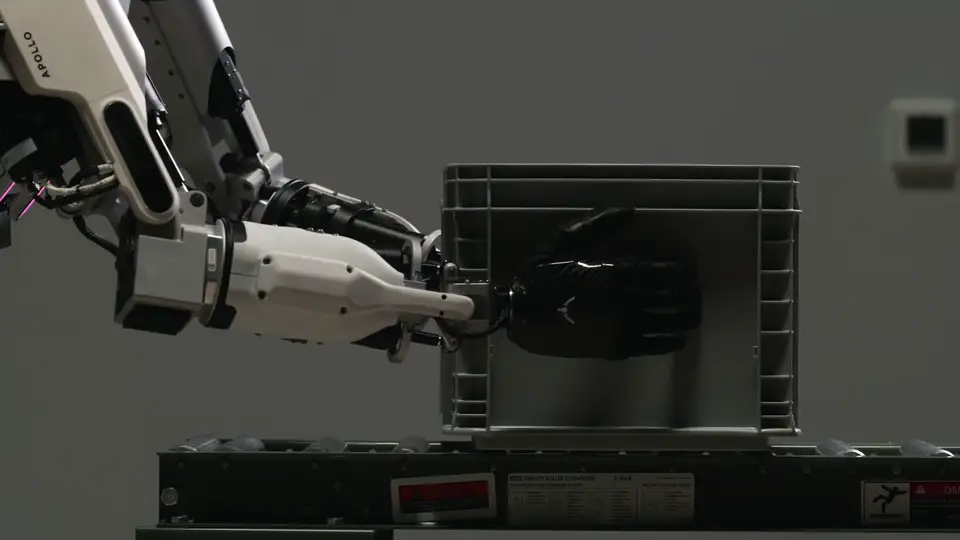
Google showed a similar workflow with Gemini 4 Argon. Researchers gave Argon a video of a person playing cornhole and had it build a MuJoCo simulation, practice the throw and adapt the swing to Apptronik's Apollo humanoid. After further adjustments on hardware, Apollo sank seven consecutive shots. Google says the pipeline can cut weeks of manual simulation modeling to hours. Two weeks later, DeepMind paired Argon with its Genie 4 world model: Argon broke a task into steps and fed them to Genie as captions while it generated a simulated Apollo playing checkers.
Memmel also listed the shortcuts Astra took. It reused assets unless told to make them unique, changed object geometry to make grasping easier and started robots in convenient pre-grasp poses. Each of those makes a generated task easier than the one the researcher asked for, so some of the time saved in building environments goes into checking them.
Reviewing the failures
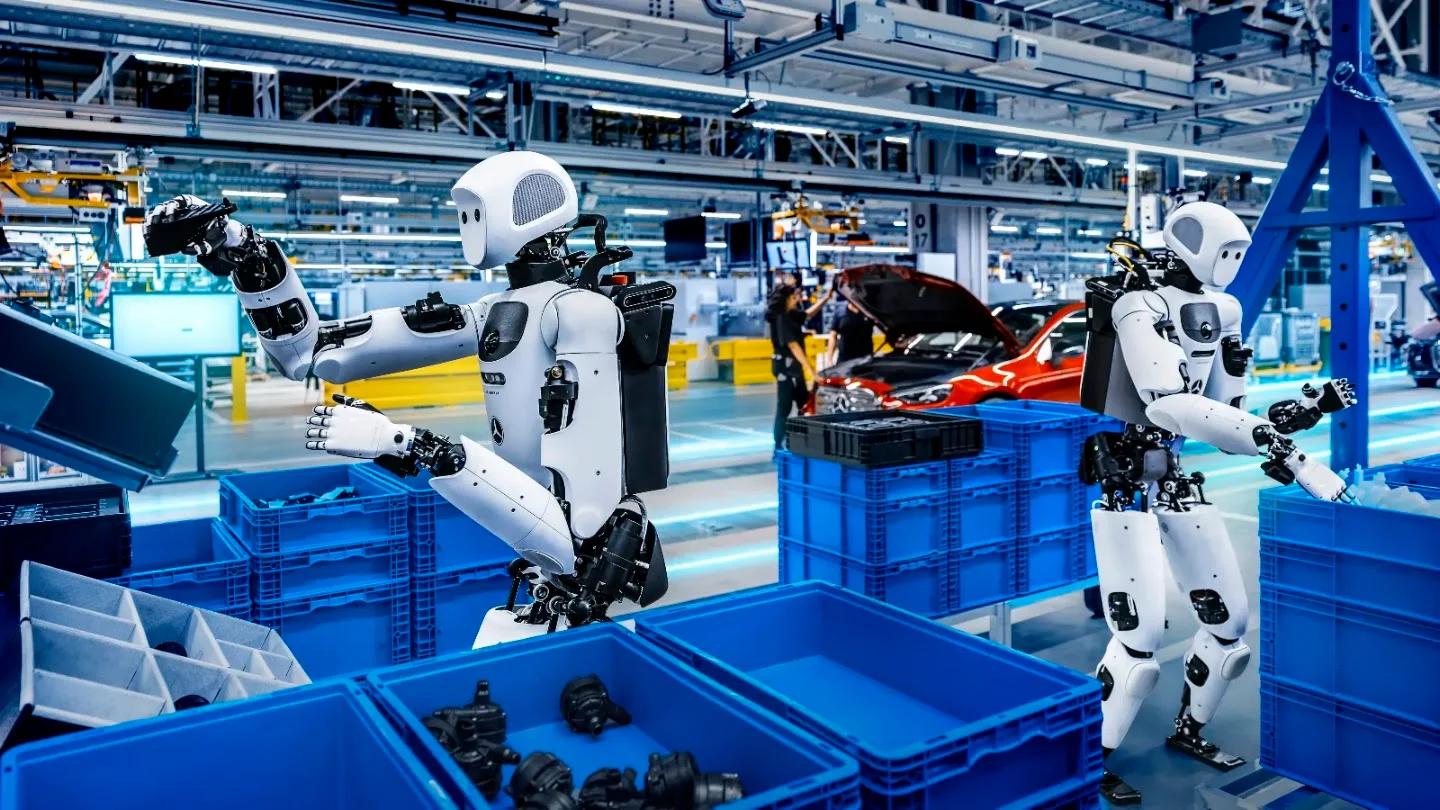
The largest claim so far comes from Google DeepMind. On November 10 it released Gemini Robotics 2.5, a vision-language-action model that DeepMind says succeeds 30% to 100% more often than Gemini Robotics 2 across more than 200 tasks. Several of the published tasks started from zero: hanging a cardigan rose from 0% to 62% and closing a toolbox lid from 0% to 93%. In a proof of concept at two Mercedes-Benz plants, Apptronik's Apollo 2 used the model to sort metal brackets into sequencing trays at a 96% success rate.
Carolina Parada, VP and head of robotics at Google DeepMind, attributed the four-month turnaround to Argon. According to the announcement, Argon let the robot model practice thousands of times in simulation, reviewed replays of its mistakes, and adjusted both the robot's technique and the training recipes behind it. This is the "research loop" in Kang's post: an agent reading results and changing the experiment.
DeepMind has not said how much of the gain came from Argon, and how much from additional robot data or post-training on Apollo 2.
Directing a skill model
At the Conference on Robot Learning (CoRL) in Austin on November 9, Jim Fan, NVIDIA's director of robotics and a distinguished scientist, opened his GR00T 2 talk with Astra. He said its release had sent roboticists through "five stages of grief", and argued that a good low-level skill model becomes more valuable when a frontier model can direct it. "Everything is going to be a skill, including System 1," he said.
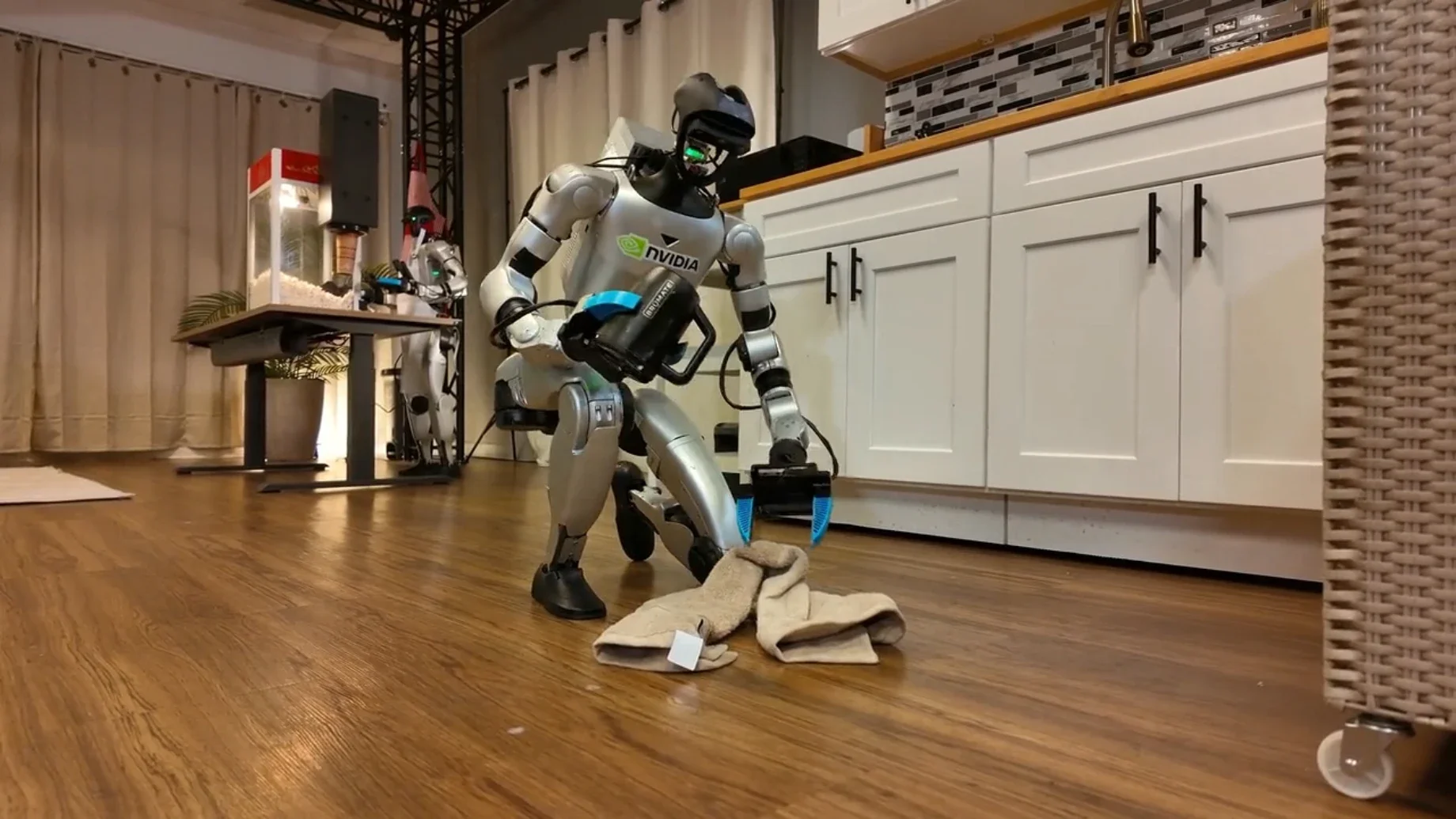
GR00T 2 is a 2-billion-parameter world action model that predicts video frames and robot actions together. In Fan's demos, Astra steered it in three ways. It drew marks on the camera image to show what to pick up and where to put it, which raised success on NVIDIA's YAM arm from 40% to 92%. It watched the camera feed and corrected GR00T 2's actions only when needed. And through an agent harness called ASPIRE, it combined GR00T 2 with code-based skills the agent wrote by trial and error in simulation. With ASPIRE, NVIDIA reports 292 successful toy assemblies out of 300 across three toys, against 71 to 84 per toy for GR00T 2 alone. "Neither Astra nor GR00T can do this alone, and you need both," Fan said.
Other labs have arrived at similar splits. In DeepMind's Mercedes-Benz pilot, a Gemini Robotics ER model tracked the workflow while Gemini Robotics 2.5 moved the arms and hands. In September, a test on RoboDojo's two-arm tasks found that combining Astra with a learned robot policy raised success from 26% to 48%.
Controlling the robot directly
The frontier labs are also testing whether their models can control a robot without a separate skill model. Anthropic released Claude Fable 5.2 on November 9 and reported 64.9% on RoboDojo Sim, a 42-task benchmark in which a model controls a simulated two-arm robot from camera images. In Anthropic's own runs, Opus 5.5 scored 39.4%, Gemini 4 Argon 34.2% and Astra 29.8%. On RoboDojo's public leaderboard, the best ranked robot policy, trained on demonstrations of the tasks, scores 42.59. Only one agent system, Qoo Tech's Q0-Preview, is listed above 64.9. Anthropic ran the tests on its own harness and has not said whether Fable 5.2 drove the arms directly or through lower-level skills or code.
Physical tests give a narrower picture. In September, RoboCurve tested Astra on dual I2RT YAM arms. It placed a block in a bowl in 19 of 20 trials, but seated a puzzle piece into a tight groove in only 2 of 20, the same rate as Claude Fable 5.1. Jay Chooi of RoboCurve said that if the trend held, language models could control robot arms in real time within two to three years.
Wang Xingxing, founder and CEO of Unitree, said in October that the company had tested GPT-6 on robots across many tasks, with results he called "very, very good". Unitree has not published the figures. "The biggest mistake I made over the past decade or so was not believing in AI enough," Wang said.
Cheaper to take part
Two other items on Kang's list, open tooling and faster simulation, have lowered the cost of running these experiments. GR00T 2 adapts to a new task with a 30-minute fine-tune on a single RTX 5090, and NVIDIA reports 95% average success across 50 tasks from five demonstrations each. Its weights are due as open source in December. NVIDIA has also released 100,000 hours of egocentric human video and the hardware designs for its data-collection devices. Fan tied the releases to Astra. "Astra didn't shatter our dreams, but it shattered our walled gardens," he said. "Robotics is no longer an elitist sport anymore."
Skild AI's Steel solver, built with NVIDIA for the Newton physics engine, reached 3.9 million environment steps per second on a single RTX PRO 6000 Blackwell, up to 13 times PhysX. A training run measured in minutes lets a small team, such as the US startups building on the Unitree G1, test many controller variants in a day without renting a cluster.
Ken Goldberg, a UC Berkeley professor who leads the university's AUTOLab and co-founded Ambi Robotics, went furthest. "To me, agentic robotics is the most exciting technological development since the internet in 1995," he said in NVIDIA's CoRL announcement. His group presented Graph-as-Policy at the conference, a method in which AI agents assemble robot programs from individual skills and refine them in simulation.
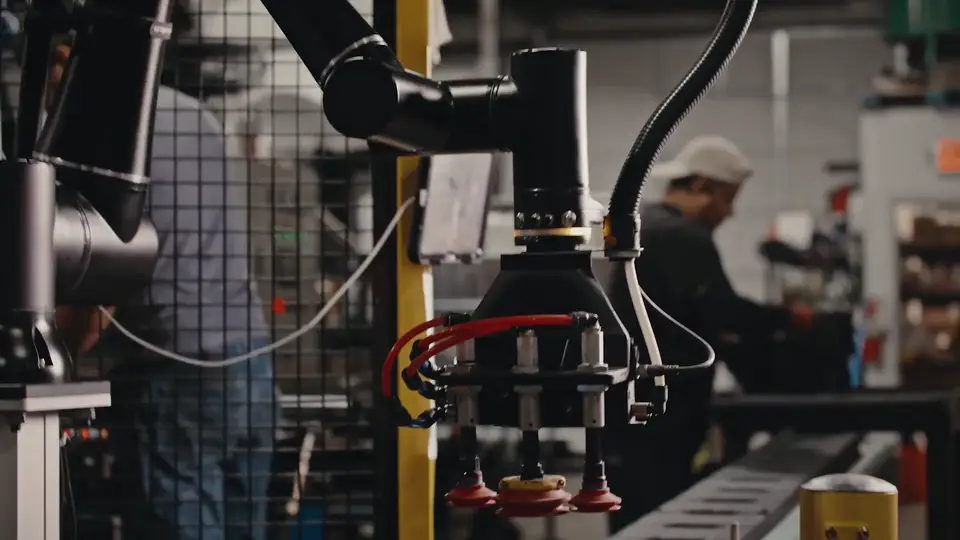
In an interview at CoRL with Devang Adhyaru, founder of The Humanoid Hub, Goldberg said that a year ago he was skeptical and had described robot learning as facing a "100,000 year data gap". He changed his mind after using off-the-shelf models such as Astra to write code for robots, without training a vision-language-action model. For semi-repetitive industrial tasks, he said, an agent can write the program "in a matter of an hour or so", and the output is "real inspectable code" that runs on the production robot with no learned policy in the loop. Factories need speed, reliability and interpretability, he argued, which is why he sees "almost zero adoption" of VLAs in real production. Engineers typically spend about six weeks tuning a conventional factory robot for a new job, and Goldberg said cutting that to a day or two would open automation to small and medium-sized companies.
He also said his students now hand a research idea to a frontier-model agent on a $200 monthly subscription and let it run for three to five days. Not everyone at CoRL agreed with the direction. Goldberg said that when he asked MIT professor Russ Tedrake how he was thinking about agentic robotics, Tedrake replied that his group was not.
What has not sped up
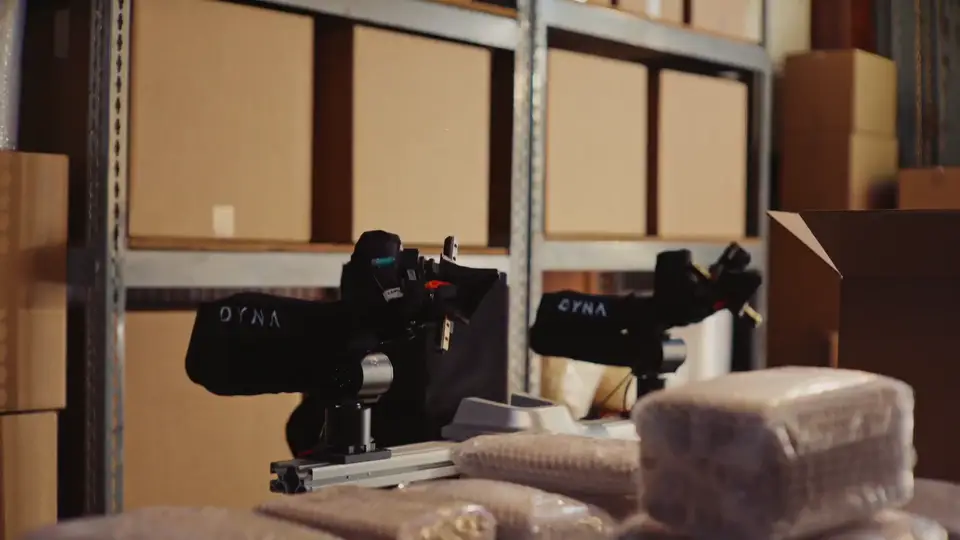
Most of the fastest results are in simulation. None of the community motion trackers reports a sim-to-real test, and SuperMimic is the only project in that chain with a policy running on a physical G1. The Opus laundry result is a simulated version of a task Dyna Robotics has shown on hardware. Argon's cornhole streak was reported without a total attempt count, and the checkers demonstration took place in generated video.
On hardware, precise contact is still the limit. Astra's 2 of 20 on puzzle insertion matched Claude Fable 5.1. Under RoboCurve's scoring, Astra usually brought the piece directly over the groove, then hesitated or misaligned the final press. Anthropic has not published task counts or success rates for the physical robot demonstrations in Fable 5.2's launch video.
Robot data is the other constraint, and the "robot data foundry frenzy" in Kang's post is a response to it. GR00T 2's pretraining mix contains 402,730 hours of human egocentric video and 23,500 hours of robot teleoperation, and much of NVIDIA's CoRL work was about collecting training data without a robot present. Figure CEO Brett Adcock argued in September that humanoids will eventually need more data and compute than language models.
Several of these claims become checkable in the coming weeks. GR00T 2's weights are due in December, along with license terms NVIDIA has not yet published; its Flora video-annotation models were released for noncommercial research only. Berkeley's official SuperMimic code is now public, so the community trainers can be compared against it on the full 129,514-motion benchmark rather than 40 clips.
Share this article
Follow humanoid robotics without following every announcement.
Get the week’s most important launches, funding and research—and why they matter—in one email from Humanoids Daily.
Once a week. Unsubscribe anytime.
Read recent issuesRead next
- Published on
- Reading time
- 7 min read
After SuperMimic, Open-Source Humanoid Motion Trackers Now Train in Minutes on One GPU
- Published on
- Reading time
- 9 min read
"Robotics Is No Longer an Elitist Sport": NVIDIA Unveils GR00T 2 and Open-Sources the Stack Behind It
- Published on
- Reading time
- 4 min read
Astra, Opus and Argon Show How Frontier AI Models Are Speeding Up Robotics Development
- Published on
- Reading time
- 7 min read
Anthropic Says Claude Fable 5.2 More Than Doubles GPT-6 Astra on a Robot-Control Benchmark
- Published on
- Reading time
- 5 min read
Skild AI’s S1 Learns Soccer Through More Than 140 Years of Simulated Self-Play
- Published on
- Reading time
- 4 min read
NVIDIA Open-Sources DreamDojo: A 44,000-Hour "Dream" to Solve the Robotics Data Gap