- Published on
Brett Adcock Hopes Figure Robots Can Work in Any Home Within Six Months
One tap, and our reporting appears more often in your Google Top Stories. It makes a real difference to a small newsroom.

Supported by RoboStrategySupport for Humanoids Daily comes from RoboStrategy
Sponsored
Investing involves risk, including possible loss of principal. Read the prospectus before investing.
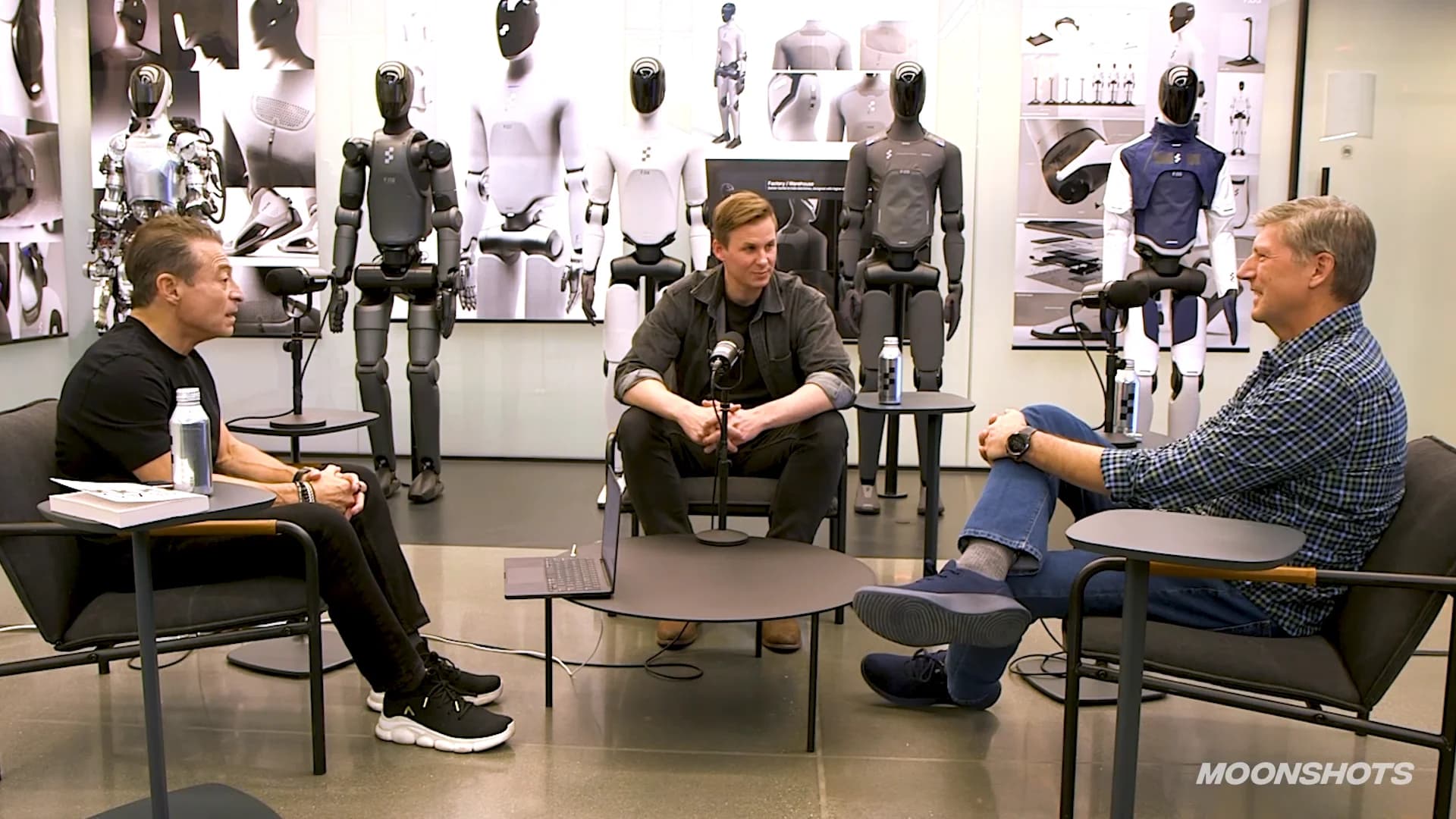
Figure AI CEO Brett Adcock says he hopes to see a Figure robot handle long, multi-hour chores in any home "in the next sub six months, perhaps even sooner." He gave the estimate on Peter H. Diamandis' Moonshots podcast, recorded at Figure's headquarters, where the hosts had just been shown an early version of Helix 3 in a closed test lab the company calls Blackbox.
- Adcock hopes Figure robots can do long-horizon work in homes they have never seen within six months, but says consumer sales would only follow once safety and reliability are proven.
- He says Figure now has "well over a thousand" robots on a campus of 700 to 800 employees, and that BotQ can build about 40,000 robots a year at full rate across four lines.
- Figure expects its Nscale cluster to give it more than 100 times its current compute from the second half of 2027, and Adcock expects billion-dollar Helix training runs by next summer.
- He calls China Figure's closest competitor, says he has not seen much from Tesla in two or three years, and claims Hark, his other company, already has more revenue than Figure.
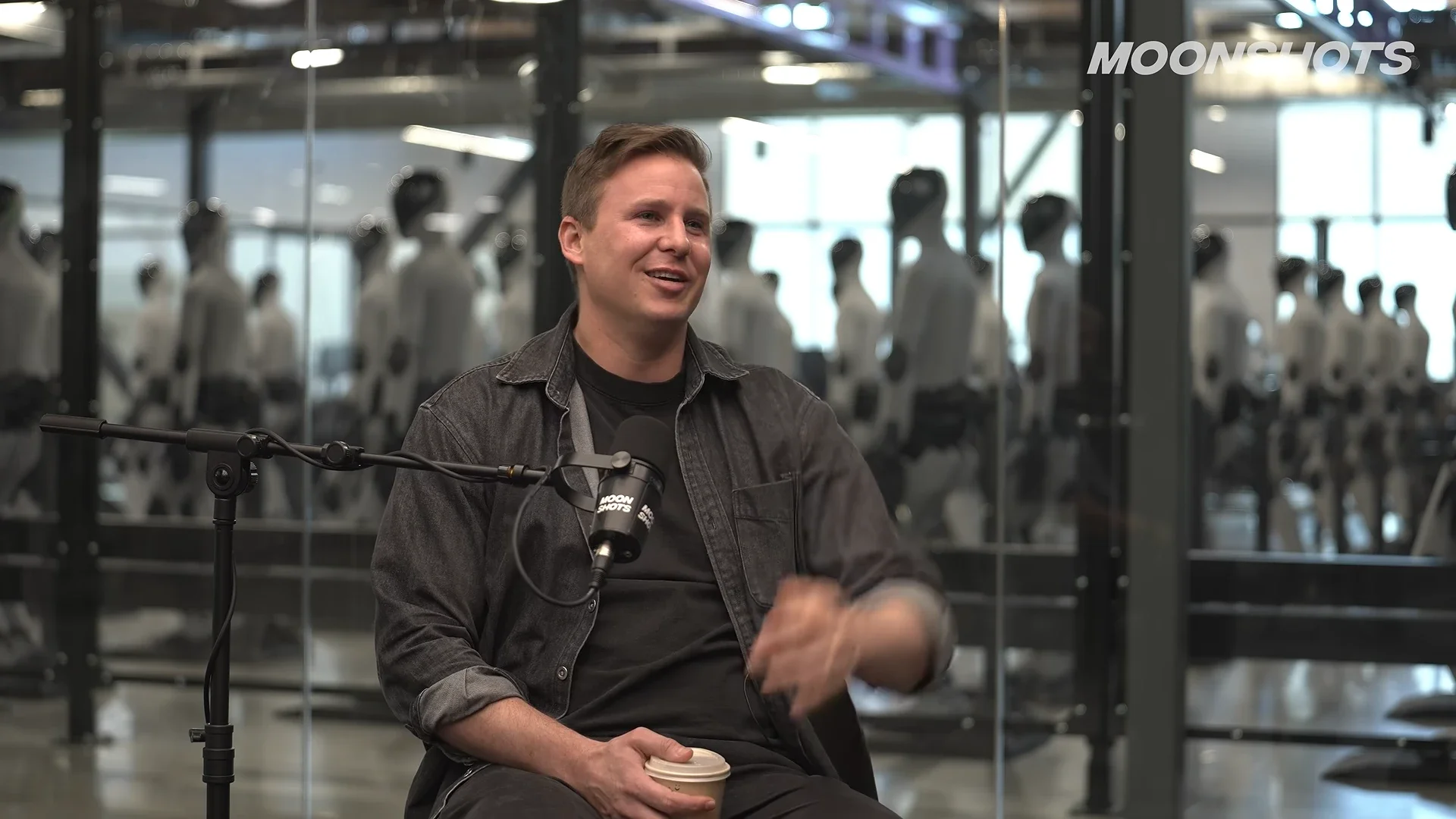
The episode, published on November 16 and running just over two hours, was hosted by Diamandis and Link Ventures founder Dave Blundin, who visited Figure for the same annual catch-up a year ago. Diamandis told viewers during the episode that he is an early investor in Figure.
A home timeline, with a gap before sales
Asked when people can order a Figure for the home, Adcock said the company would not launch until the robot can walk into an unfamiliar house, take spoken instructions and work without teleoperation or stalls. He compared early launches by others to the Humane and Rabbit AI gadgets, which he said did not work because the products were not ready.
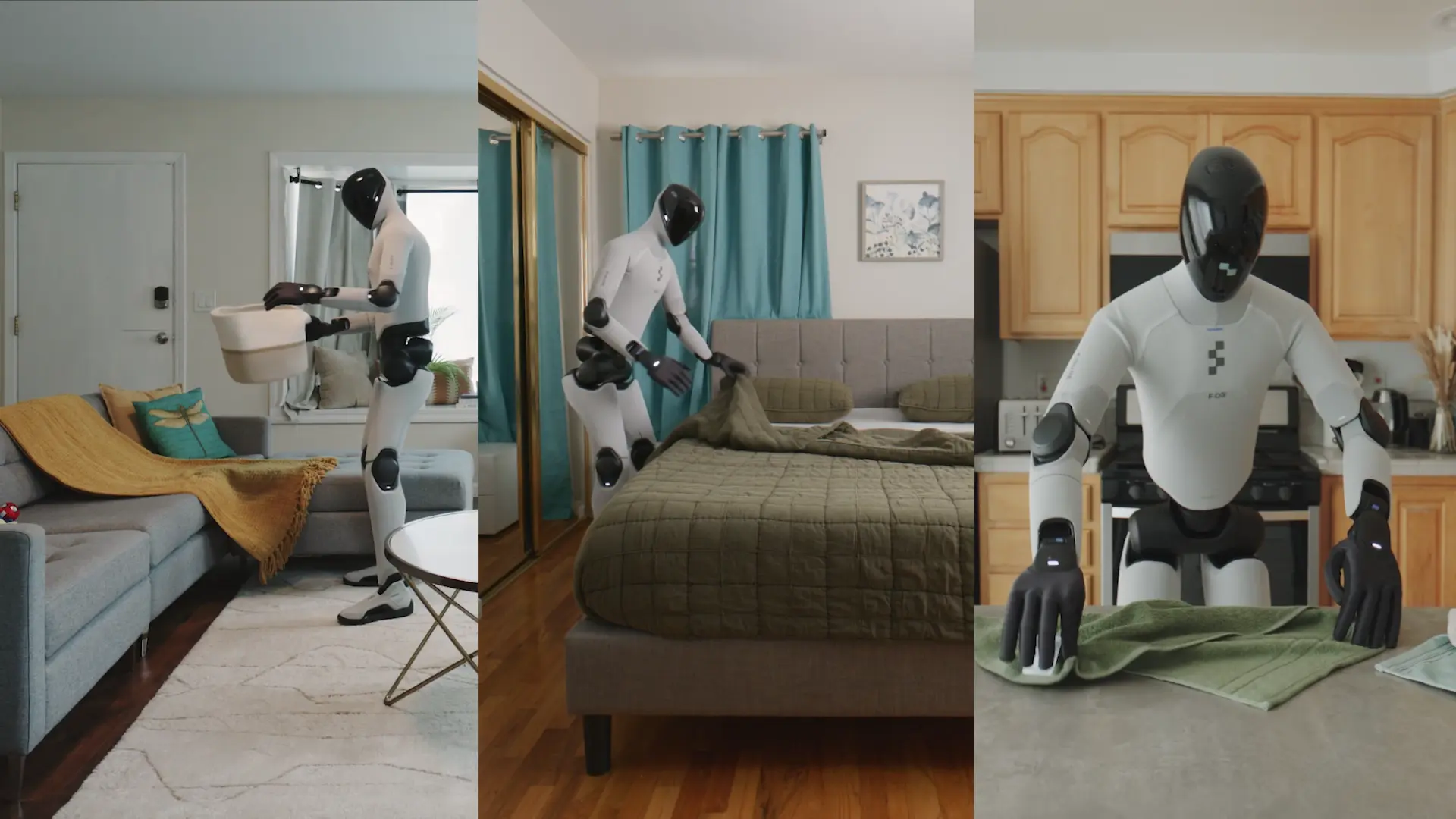
Since the Helix 2.5 release in September, Figure has been testing in "anywhere from 20 to 100" new homes in California at any given time, according to Adcock, mostly to evaluate its models. Single tasks such as making a bed or unloading a dishwasher from an open-ended prompt already work well, he said. The next step is chaining them into hours of work. He put that at under six months, while stressing he could not promise it, and said he would be "very shocked" if the full picture had not been shown before the end of 2027.
Follow humanoid robotics without following every announcement.
Get the week’s most important launches, funding and research—and why they matter—in one email from Humanoids Daily.
Once a week. Unsubscribe anytime.
Read recent issuesSelling to consumers is a separate step. Figure would still need to prove safety and reliability, and plans to handle maintenance and repairs itself at first. On price, Adcock said a home robot would need a lease of roughly $300 to $500 a month. Diamandis raised a $30,000 purchase price, a number Adcock did not repeat or confirm.
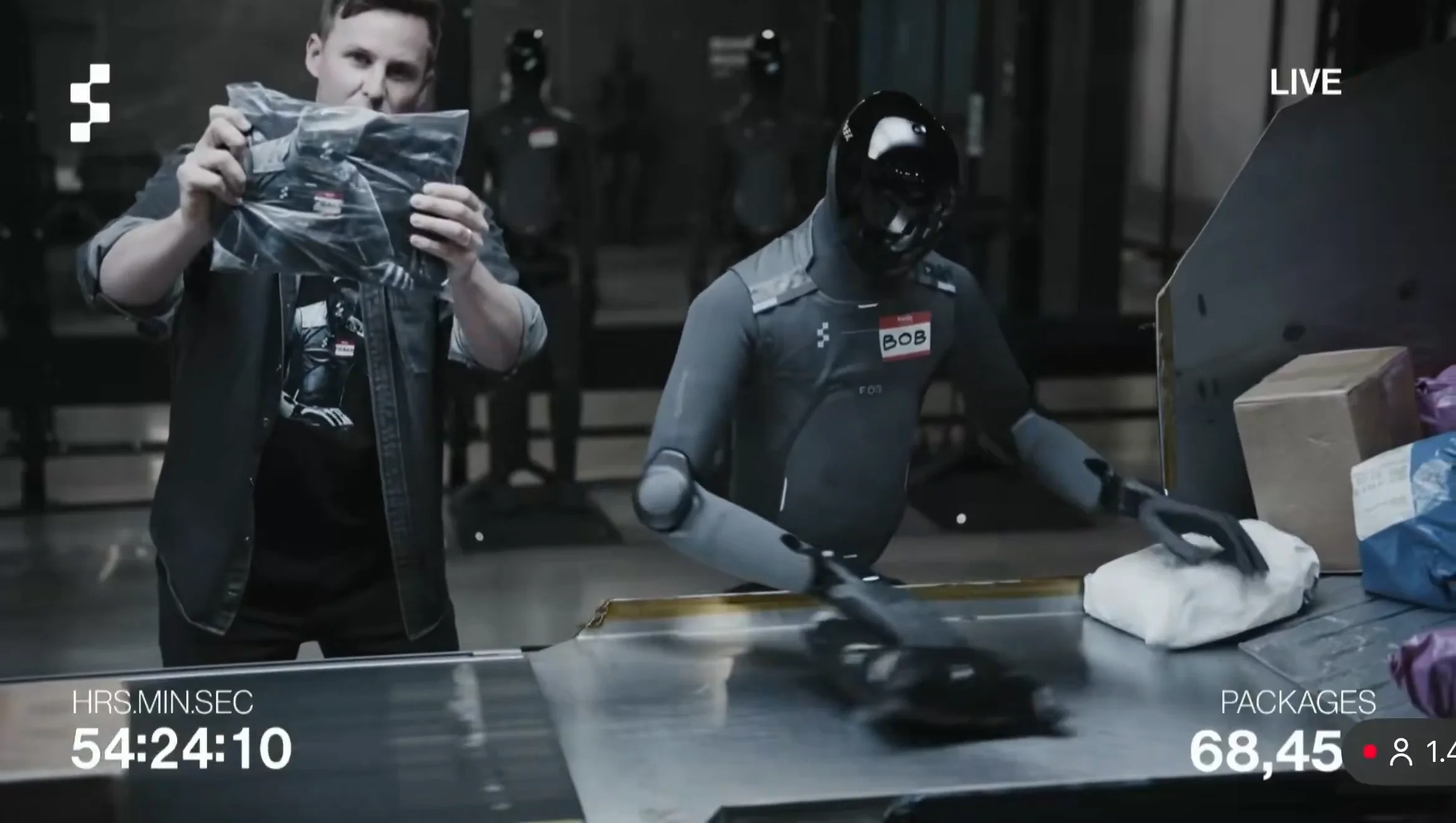
On the commercial side, he said a Helix 2.5 robot was taken to a customer warehouse three weeks ago and handled it zero-shot, despite changes in lighting, conveyors and package mix that used to confuse earlier models. He did not name the customer.
"Baby AGI," undertrained
The hosts were shown Helix 3 in Blackbox, a lab set up as a small home. Adcock said they were probably the only outsiders who had seen it. He described the model as "an adult body" with the intelligence of "a 2-year-old," and said the version shown was Figure's first Helix 3 checkpoint and "significantly undertrained." Larger models were being evaluated the same week.
Figure first teased Helix 3 at its October all-hands, where Adcock also used the "baby AGI" label. No video of Helix 3 was shown in the episode, and Figure has not released evaluation data for it.
Adcock also said all of Helix runs on the robot, from planning down to joint torques. Only real-time speech and fleet coordination run in the cloud, so a robot that loses its connection mid-task can keep working.
More robots than staff, and 40,000 a year from BotQ
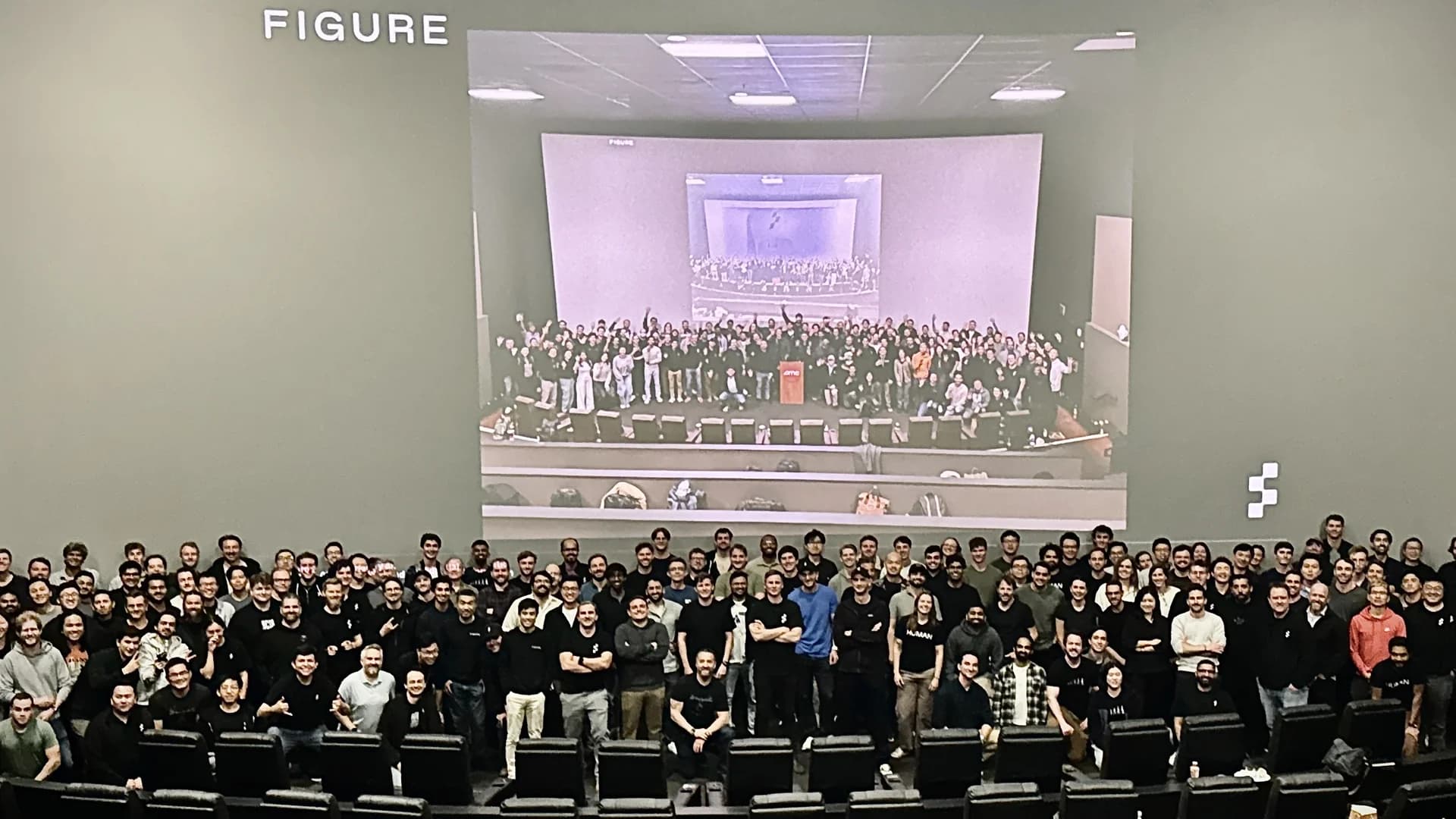
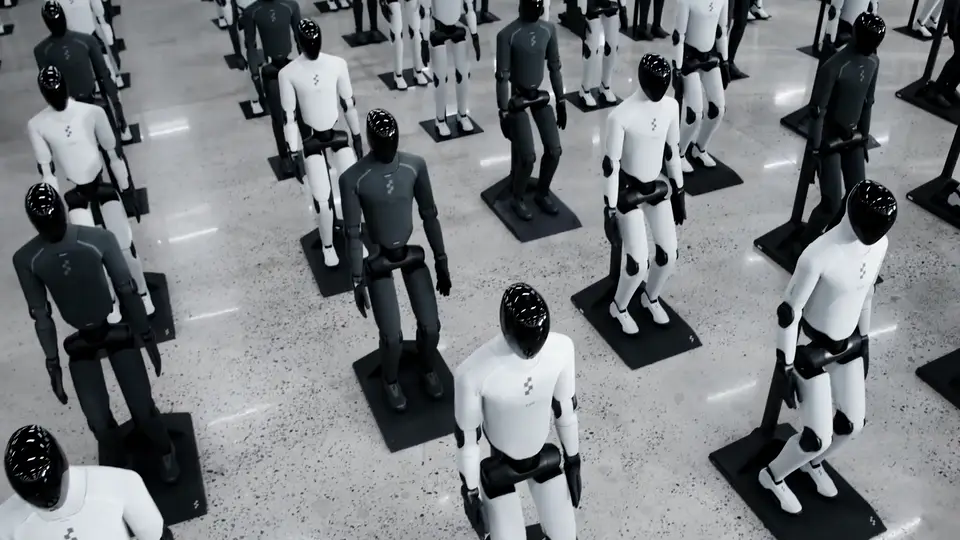
When Diamandis and Blundin arrived, about a hundred Figure 03 units were waiting outside to greet them. Adcock said Figure has roughly 700 to 800 employees and "well over a thousand" robots on campus, and that robots overtook staff four or five months ago. In the spring, he had put headcount at about 500.
The visitor robots open doors, use stairs and elevators, and talk to guests through a speech-to-speech model built by Hark. Adcock said the goal is for a visitor to check in, tour the campus and find the bathroom without speaking to a human.
On manufacturing, Adcock said BotQ can build "maybe over 40,000 or so" units a year at full rate across four lines. Figure had slowed production and was ramping back up into December and January. He said the company is working on a larger factory it has not announced, and sees a path to a million units a year from one facility if Helix keeps improving. In April, Figure said BotQ had reached one Figure 03 per hour.
100 times the compute, and none left to buy
Most of Figure's compute spending goes to training. Adcock said the company spends "low nine figures" a year on compute, that 50% to 70% of it went to Helix 3 pre-training, and that its capacity was doubling the following week.
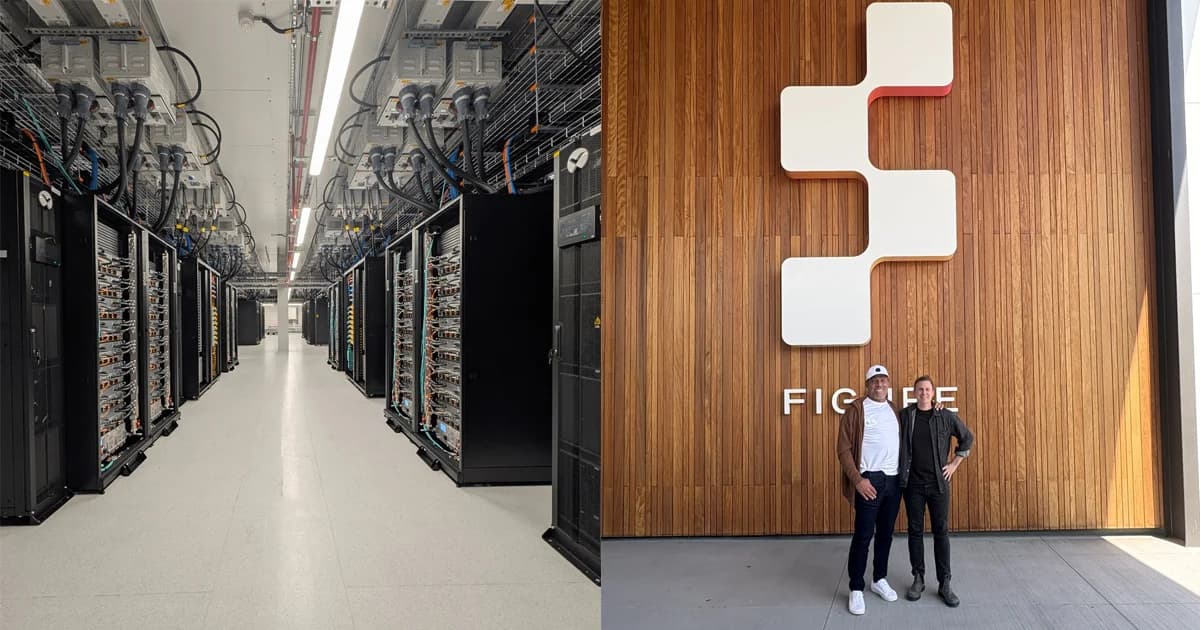
The Nscale deal, which he described as 100,000 NVIDIA Vera Rubin GPUs for more than $3 billion, is due online in the second half of 2027. Fully built out, he said, it would be "well over 100x" what Figure has now. He expects Figure to run billion-dollar Helix training runs next summer, and said the company already has about 10 to 15 times more data on its servers than was used to train the model the hosts saw.
Getting more compute in the meantime has been hard. When Figure went out for its current Blackwell cluster about seven months ago, four vendors bid. A few months later, a request to double capacity drew no bids, then a single offer at a price Adcock said favored the seller. "September 2026, the world ran out of compute," he said. Memory is the next constraint, and Adcock said a large memory maker told Figure it had no capacity for robots. Figure has since signed memory supply deals for the next few years, he said, without naming partners.
Adcock said Figure has "several billion dollars of cash" on its balance sheet. At the all-hands he had put it above $2 billion. He does not plan to take Figure public before it has solved what he calls general robotics.
Figure 04 and its hands
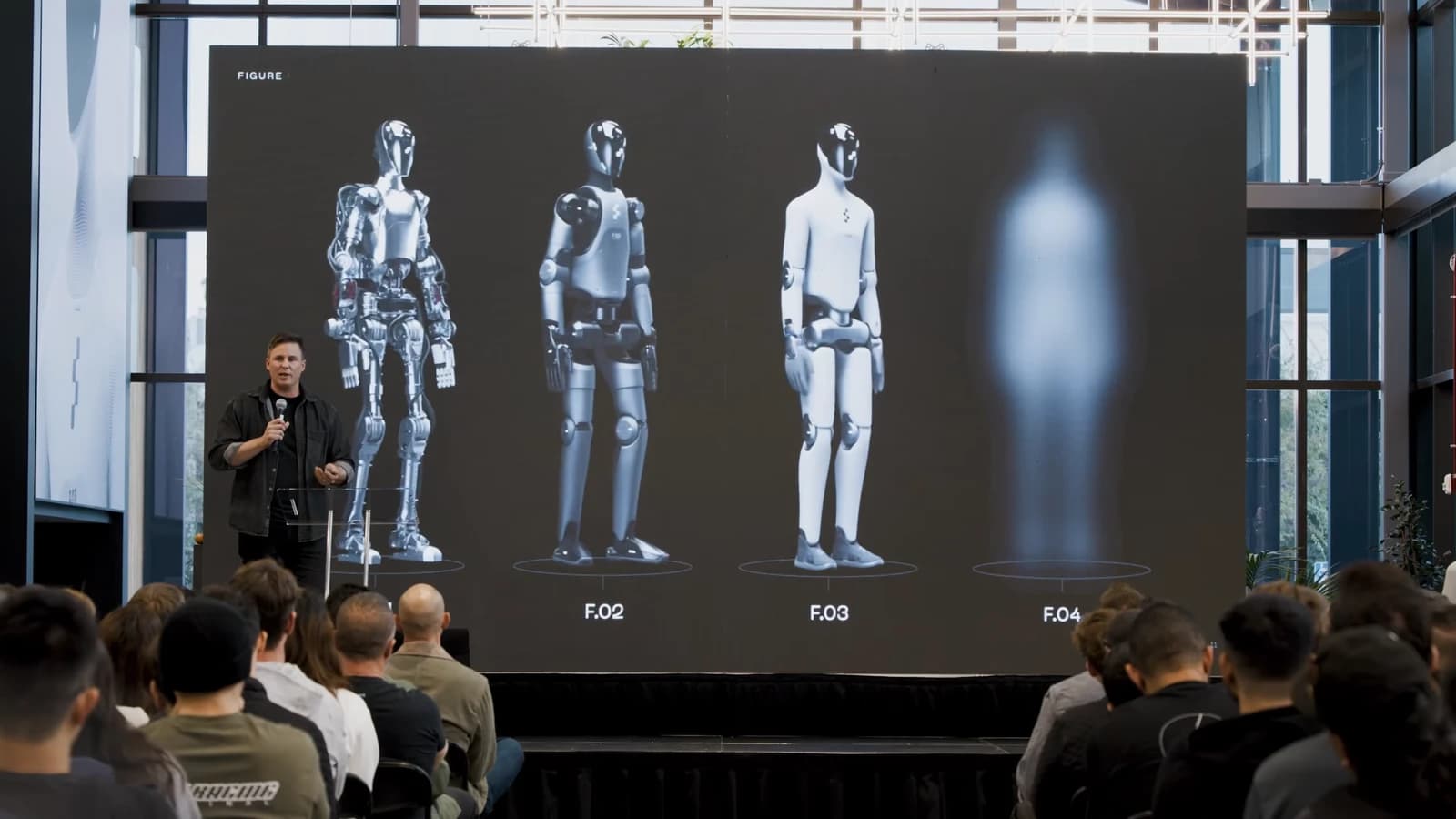
Adcock called Figure 04 the company's "iPhone one moment" and said it will make Figure 03, which he called "probably the best humanoid on the market by far," look "like a caveman." The company has built seven iterations of its hand, both tendon-driven and not, and he said "a Figure 4 with a glove and a human with a glove is almost indistinguishable."
He said Figure 04 was designed to make fully automated, "lights out" robot manufacturing possible, fixing parts of the Figure 03 design that made this hard. He expects lights-out manufacturing "for sure within five years," but would not say whether it comes in six months or three years. He gave no reveal date for Figure 04, which reached design lock in October. We looked at when it could be revealed last month.
China, Tesla and the FCC
Asked whether his competition is Tesla or China, Adcock said: "I personally haven't seen it much out of Tesla in two or three years," adding that what he had seen was teleoperated. He called "the collective China" the closest competitor, with about 150 humanoid companies whose output was "kind of all crap right now" but improving quickly year to year.
Most of the Chinese demos he has seen are dancing and martial arts, which he said come from motion-capture data replayed through reinforcement-learning controllers that do not react to their surroundings. He was blunt about Unitree: its humanoids have no hands and "compute the size of like a USB stick," so researchers bolt compute backpacks onto them.
Figure has moved its supply chain out of China, Adcock said. The shift began when tariffs on some parts hit 270% for a week last year. On the FCC's decision to bar new Chinese humanoids, he said the ban "was a shock" and that he would "love to see a really level playing ground to compete." He also confirmed that Figure still will not take on defense work.
Hark, and the split with OpenAI
The episode's last half hour turned to Hark, the AI company Adcock founded and runs from an office about 100 feet from Figure. Hark Pro, its software product, launched about a month ago. Adcock said it has passed 1.2 million sign-ups and around five million browser sessions, and that Hark had to limit access in some countries the week before. He said Hark already has more revenue than Figure and could be bigger than Figure within six months, "maybe sub 90 days." He did not give revenue figures for either company. Hark is also building its own hardware, which Adcock said he uses every day but would not describe.
He also gave his most detailed account yet of why Figure ended its OpenAI collaboration in early 2025. OpenAI co-led Figure's Series B with Microsoft and joined its board, and the two companies had teams working on robot intelligence together for about a year. Adcock said OpenAI staff almost never came to Figure's office because it was "too far from SF," and that progress was "completely lopsided," with Figure making 10 to 100 times more of it. Figure was sharing its work while OpenAI was sharing with Microsoft, he said, and after seeing Figure's results, OpenAI "really wanted to get into robotics again."
Share this article
Follow humanoid robotics without following every announcement.
Get the week’s most important launches, funding and research—and why they matter—in one email from Humanoids Daily.
Once a week. Unsubscribe anytime.
Read recent issuesRead next
- Published on
- Reading time
- 8 min read
Beyond the 60-Hour Mark: Figure AI’s Endurance Marathon Signals Playbook for Figure 4 and Supply Chain Independence
- Published on
- Reading time
- 3 min read
Compute War Chest: Figure and Hark Secure Full Datacenter of NVIDIA B200s
- Published on
- Reading time
- 4 min read
The End of C++: Brett Adcock on Helix 02 and Figure’s Path to "Room-Scale" Autonomy
- Published on
- Reading time
- 6 min read
Brett Adcock Says Figure 04 Will Be Figure’s Biggest Hardware Leap
- Published on
- Reading time
- 5 min read
Figure 04 Reaches Design Lock as Adcock Details a Multibillion-Dollar AI Push
- Published on
- Reading time
- 4 min read
The "iPhone 1 Moment": Figure 04 Reaches Full Design Lock