- Published on
Robotera Opens Orders for XHAND 1 Pro-U, the Hand in NVIDIA's GR00T 2 DexUMI Demos
One tap, and our reporting appears more often in your Google Top Stories. It makes a real difference to a small newsroom.

Supported by RoboStrategySupport for Humanoids Daily comes from RoboStrategy
Sponsored
Investing involves risk, including possible loss of principal. Read the prospectus before investing.
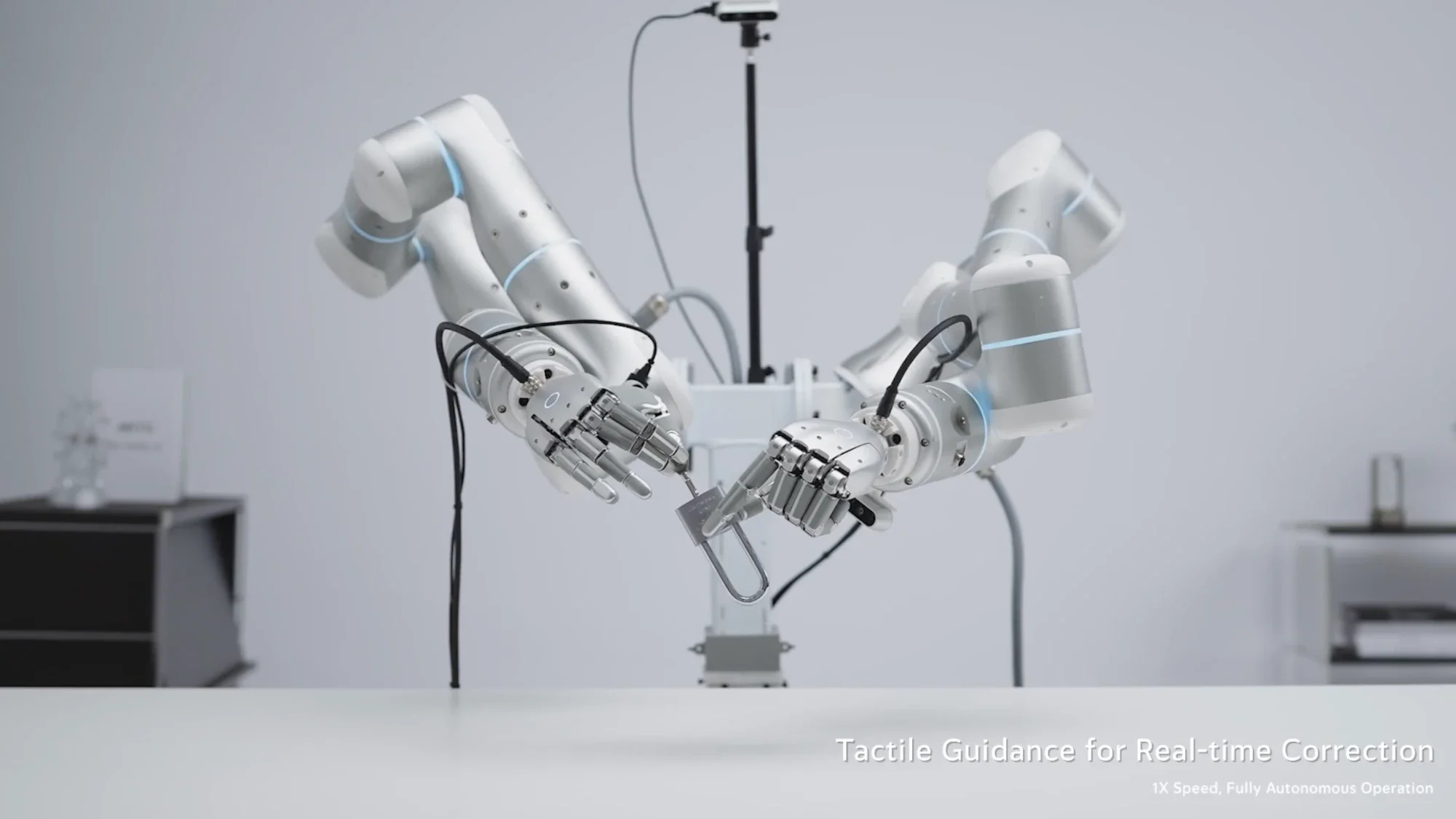
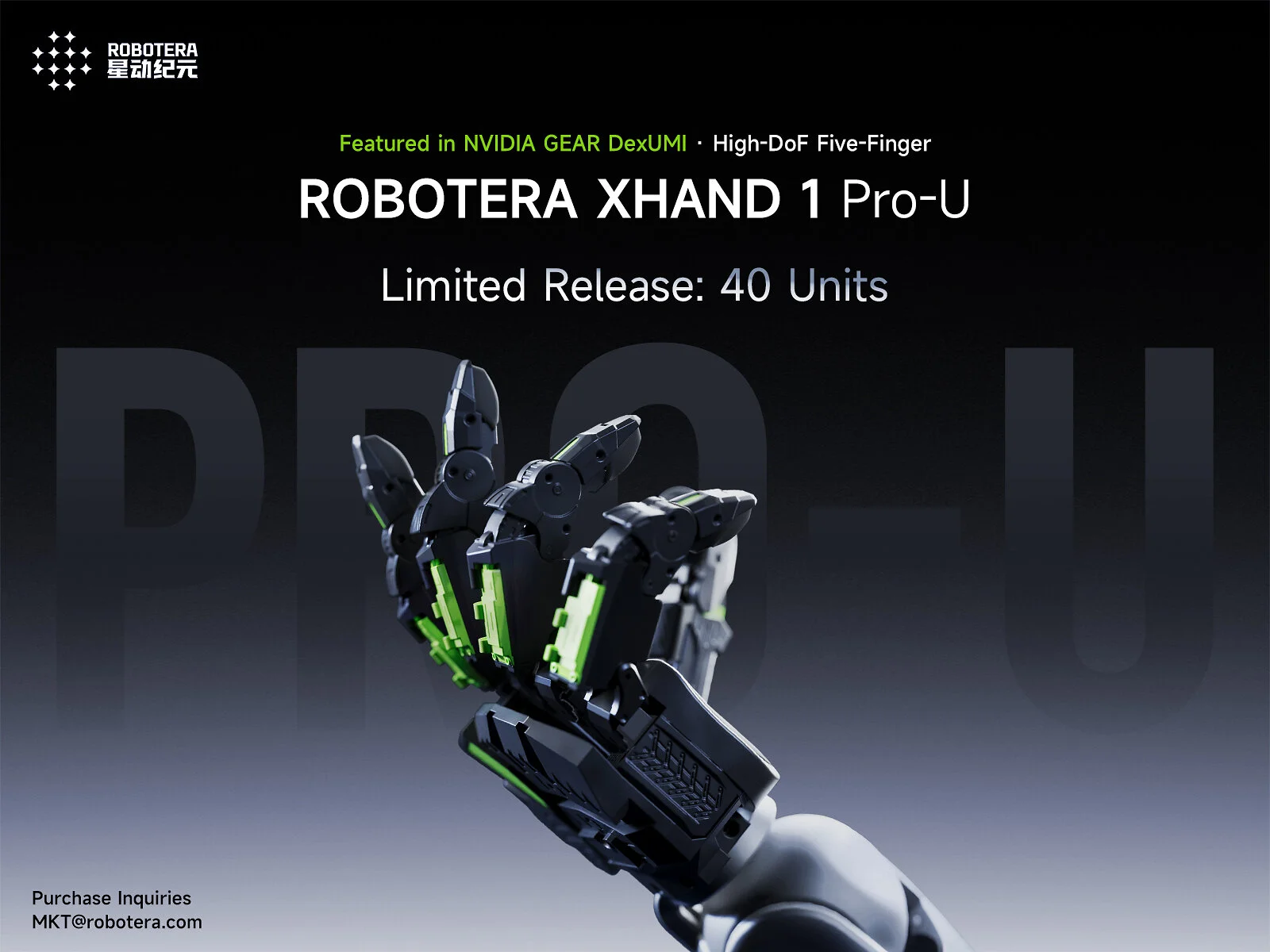
Robotera has opened commercial orders for the XHAND 1 Pro-U, a five-finger robot hand built to match NVIDIA's DexUMI exoskeleton joint for joint. It is the hand NVIDIA used for the DexUMI demos of GR00T 2, in which a two-armed robot made banana yogurt and lit a lamp with a match. Jim Fan, NVIDIA's director of robotics and a distinguished scientist, showed those demos at the Conference on Robot Learning (CoRL) in Austin last week. The Beijing company says the first batch is limited to 40 units.
- The XHAND 1 Pro-U has 16 degrees of freedom laid out to match NVIDIA GEAR Lab's DexUMI exoskeleton, so motion recorded on a human hand maps directly onto the robot hand.
- Two of the hands ran on the Tianji dual-arm robot in NVIDIA's GR00T 2 DexUMI demos. Robotera reports success rates of 60%, 80% and 75% on three multi-step tasks trained without teleoperation.
- Orders are open for an initial run of 40 units. Robotera has not published a price, weight or grip force.
- NVIDIA has released the DexUMI exoskeleton design files under CC BY 4.0, and the GR00T 2 weights are due in December.
Built to mirror the exoskeleton
DexUMI is a wearable hand. A person puts it on and handles real objects, and it records the finger joint angles along with the forces at the fingertips. NVIDIA's hardware page lists 16 degrees of freedom per hand, three joint encoders on every finger including the thumb, knuckle abduction sensing on the four fingers, and normal and shear force sensors on all five fingertips. NVIDIA describes its GEAR Lab version as having more degrees of freedom and being easier to wear than the original DexUMI research exoskeleton.
According to Robotera, the Pro-U's 16-DoF mechanical structure closely follows that layout. Each exoskeleton joint has a counterpart on the robot hand, so a demonstration can be replayed without converting the motion between two different hand designs, a step that can lose fine finger detail. Compared with the XHAND 1, Robotera moved the thumb, added tactile sensing on the palm side and changed the hand's articulation so that operators can demonstrate naturally and cover a wider range of grasps.
It is the dexterous-hand version of the approach behind UMI grippers: build the data collector first, then make sure a robot exists whose body matches it.
Follow humanoid robotics without following every announcement.
Get the week’s most important launches, funding and research—and why they matter—in one email from Humanoids Daily.
Once a week. Unsubscribe anytime.
Read recent issuesWhat the GR00T 2 demos showed
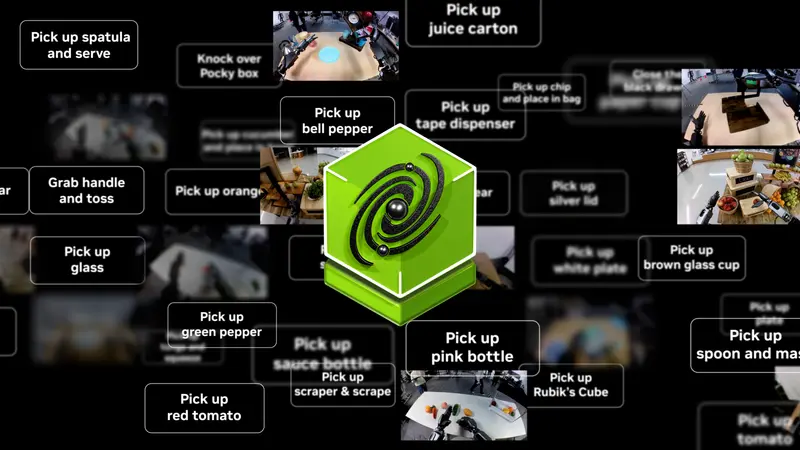
On NVIDIA's GR00T 2 project page, the model learns three bimanual tasks "from DexUMI demonstrations alone" on a Tianji robot fitted with two Robotera hands:
- Banana yogurt: preparing a bowl of yogurt with banana, the first half of a breakfast task.
- Granola: scooping granola into the bowl, the second half.
- Fire chemistry: striking a match, lighting a lamp under a flask, then putting the match out in water.
Robotera reports GR00T 2 success rates of 60% for the yogurt task, 80% for the granola and 75% for the match sequence. NVIDIA's page shows the tasks in video but does not give numbers for them. The tasks involve tool use, passing objects between hands, handling lids and coordinated two-handed motion.
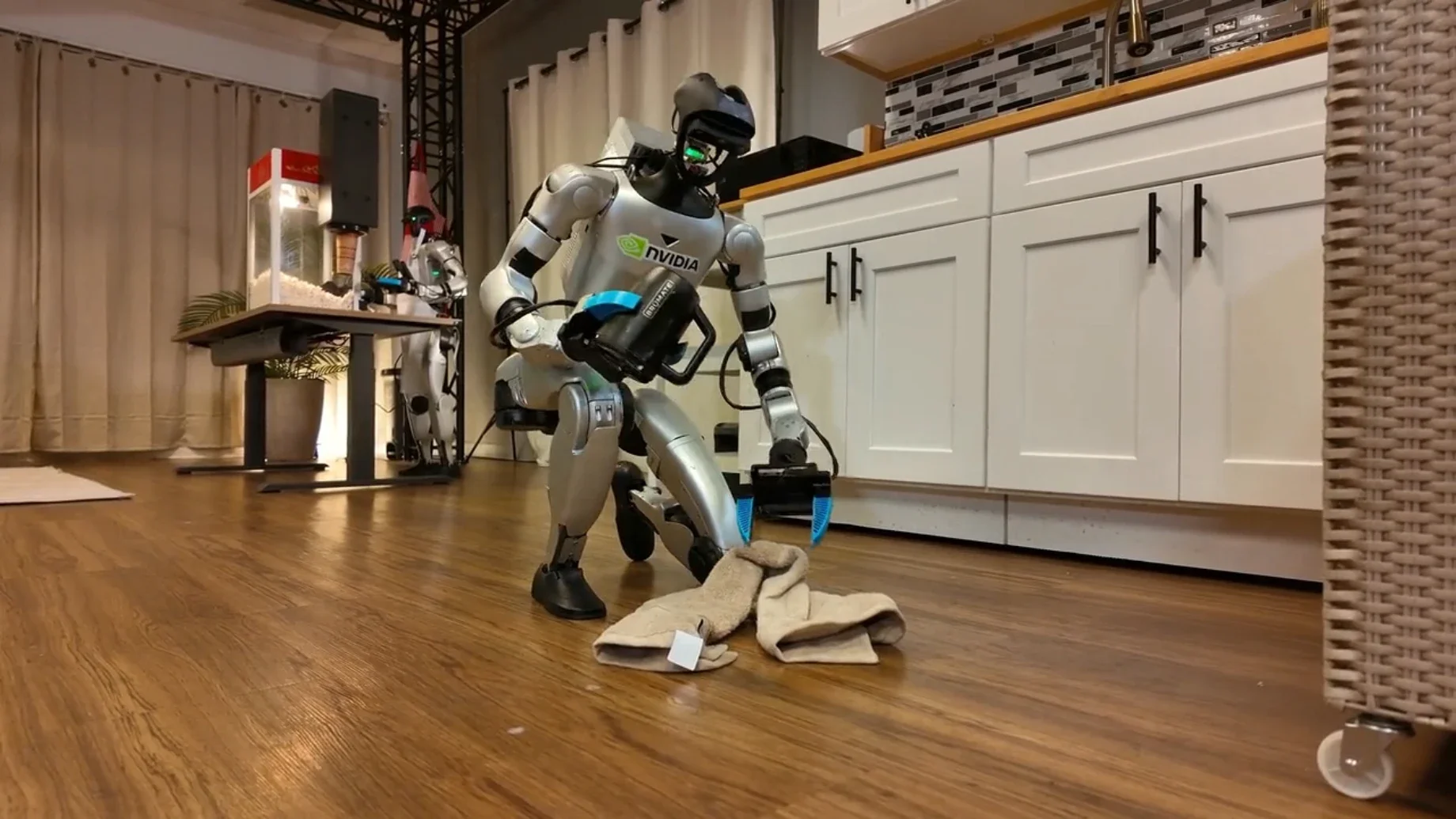
Per Robotera, post-training for these tasks used DexUMI recordings without any task-specific teleoperation or extra robot play data. The person collecting the data never controls the robot, which removes the need for a robot on site during collection. In the same CoRL talk, Fan also showed robot hands cutting bananas with a knife after training only on exoskeleton data. NVIDIA's headline few-shot results came from a different setup: two 22-DoF Sharpa hands, where five demonstrations per task gave 95% average success across 50 tasks.
Availability
Orders go through Robotera's marketing team, and the company has not published a price. Robotera's announcement also gives no weight, payload, grip force or sensor count for the Pro-U.
The capture side is already public. NVIDIA has put the DexUMI exoskeleton's bill of materials, mechanical and electrical design files and assembly guide on GitHub. The hardware designs are licensed under CC BY 4.0 and the software mostly under Apache 2.0. Fan said the GR00T 2 weights and its cross-embodiment training recipe will be released in December. A lab that builds the exoskeleton and buys one of the 40 hands would then have the hardware to repeat NVIDIA's setup.
Robotera, known in Chinese as Star Action Era, raised about $280 million in a round led by SF Group in April. In October its VPP2 model topped the RoboDojo simulation benchmark, one of the four leaderboards NVIDIA cited for GR00T 2.
Share this article
Follow humanoid robotics without following every announcement.
Get the week’s most important launches, funding and research—and why they matter—in one email from Humanoids Daily.
Once a week. Unsubscribe anytime.
Read recent issuesRead next
- Published on
- Reading time
- 7 min read
Robbyant Open-Sources LingBot-Touch, One Tactile Model for Three Sensor Types
- Published on
- Reading time
- 4 min read
Jensen Huang Resigns as NVIDIA CEO; CFO Colette Kress Steps In
- Published on
- Reading time
- 9 min read
"Robotics Is No Longer an Elitist Sport": NVIDIA Unveils GR00T 2 and Open-Sources the Stack Behind It
- Published on
- Reading time
- 3 min read
Foxconn to Deploy NVIDIA-Powered Humanoid Robots in Houston AI Server Plant
- Published on
- Reading time
- 6 min read
NVIDIA Advances Humanoid AI with GR00T N1.5, Eyeing a Future of Simulated Realities
- Published on
- Reading time
- 4 min read
NVIDIA Details Open-Source GR00T N1 Foundation Model and Hover Controller for Humanoids