- Published on
LG Signs With Korea's Robot Certification Agency to Safety-Test Its Humanoids
One tap, and our reporting appears more often in your Google Top Stories. It makes a real difference to a small newsroom.

Supported by RoboStrategySupport for Humanoids Daily comes from RoboStrategy
Sponsored

Investing involves risk, including possible loss of principal. Read the prospectus before investing.
LG Electronics has signed a memorandum of understanding with the Korea Institute for Robot Industry Advancement (KIRIA), the government agency that runs South Korea's robot certification programmes, to put its humanoid robots through safety and quality testing before they reach the market. The agreement was signed on November 13 at LG Twin Tower in Seoul, according to an LG press release published today.
- LG Electronics and KIRIA will work on a safety and usability evaluation framework for humanoid robots, starting with a domestic safety pilot certification that includes LG's CLOiD.
- LG will help build the evaluation system for KIRIA's humanoid robot safety certification centre, a KRW 18.65 billion project at the National Robot Test Field in Daegu running from 2026 to 2030.
- The company will also take part in developing Korean and international humanoid standards, ahead of the bipedal robot it plans to unveil with NVIDIA in the first quarter of 2027.
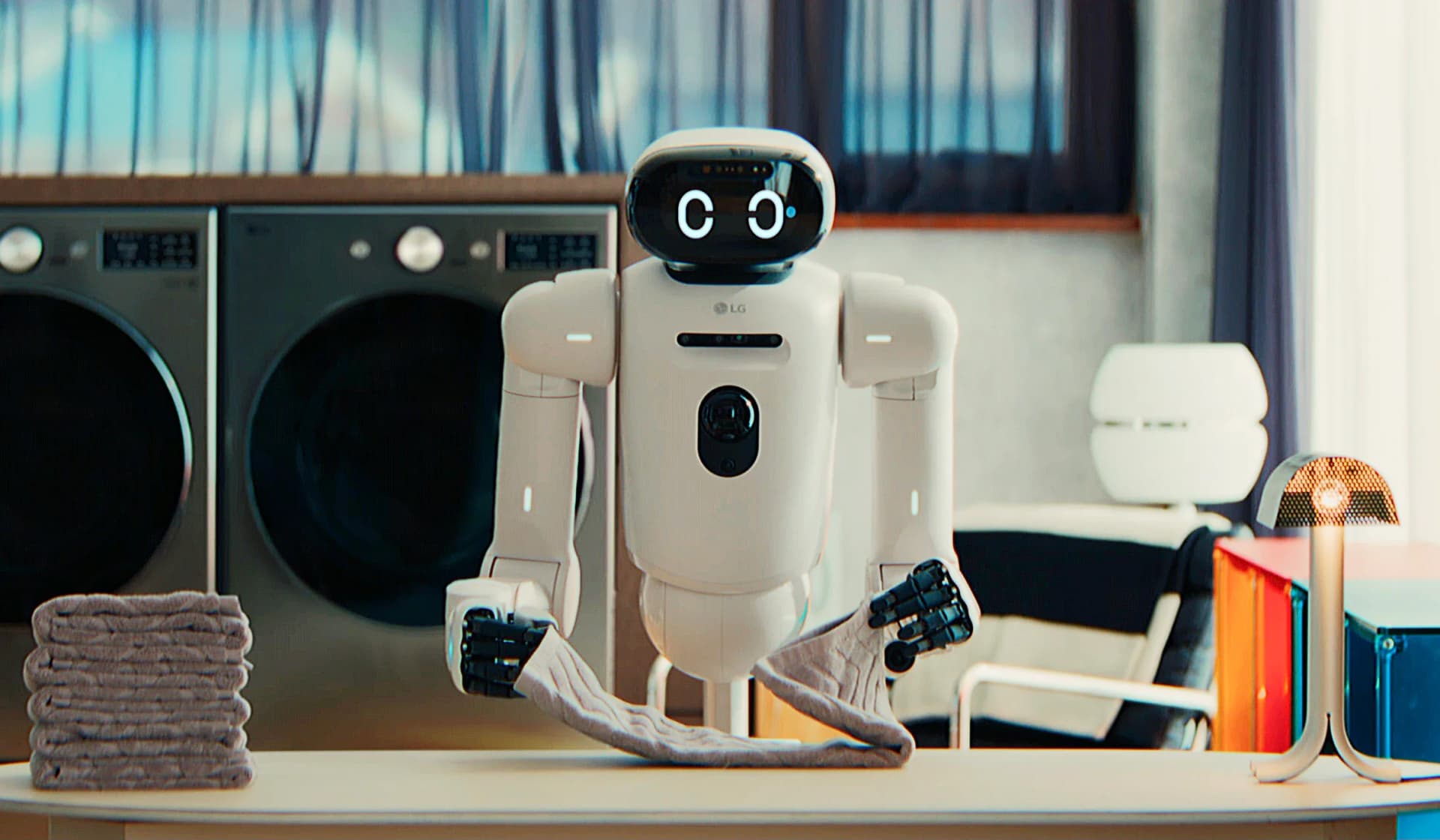
KIRIA president Cho Young-hoon and Kim Chang-min, executive vice president and head of LG Electronics' Quality Management Center, attended the signing. LG signed through its quality organisation rather than its robotics unit, and the release frames the deal as product validation rather than joint research.
What the agreement covers
The MOU has three concrete parts. First, LG's humanoid robots, CLOiD among them, will go through a domestic safety pilot certification, which LG says will establish their reliability early. Second, LG will take part in building the evaluation system for KIRIA's humanoid robot safety certification centre. Third, LG will contribute to developing national and international humanoid standards.
The two organisations describe the overall goal as a global evaluation framework for humanoid safety and usability. LG's release does not give a budget for its own participation, name the tests CLOiD will undergo, or say when the pilot certification will be completed.
Follow humanoid robotics without following every announcement.
Get the week’s most important launches, funding and research—and why they matter—in one email from Humanoids Daily.
Once a week. Unsubscribe anytime.
Read recent issues"We will proactively strengthen the safety and quality competitiveness of humanoid robots through cooperation with KIRIA," Kim said, adding that LG aims to be a brand customers can use with peace of mind in the global humanoid market.
Cho said trust in safety and quality matters most if humanoids are to spread into daily life and industrial sites. He said KIRIA will reflect experience from company sites in its evaluation system and support Korean humanoids in competing globally.
The certification centre in Daegu
The centre LG is helping to design is already funded. Daegu city announced in August that it had won an industry ministry competition to host Korea's first humanoid robot safety certification centre, with KIRIA leading the project. The total budget is KRW 18.65 billion (about $13 million): KRW 9.68 billion from the national government, KRW 7.8 billion from the city and KRW 1.17 billion in private money, spread over 2026 to 2030.
The centre will sit on the site of the National Robot Test Field in Dalseong County. Its evaluation system is meant to cover dynamic stability, AI reliability and cybersecurity, and to offer testing, field demonstration and certification in one place. Daegu also pitched it as a way for Korean companies to prepare for the EU AI Act and Cyber Resilience Act. Participants include the Institute for Advanced Engineering, the Daegu Mechatronics & Materials Institute, Keimyung University and the Korea Intelligent Automotive Parts Promotion Institute.
KIRIA already runs certification for other robot categories: delivery and patrol robots need its outdoor mobile robot operational safety certification to run on Korean sidewalks. Humanoids have no equivalent scheme yet. In the meantime, trials have relied on exemptions: the 20-robot Robros trial approved in October went through a regulatory sandbox, with risk assessments standing in for a formal standard.
Being in the room while the evaluation system is built gives LG an early look at what certification will require, and some influence over it. The release does not say whether other Korean humanoid makers will join the pilot.
Ahead of the 2027 bipedal robot
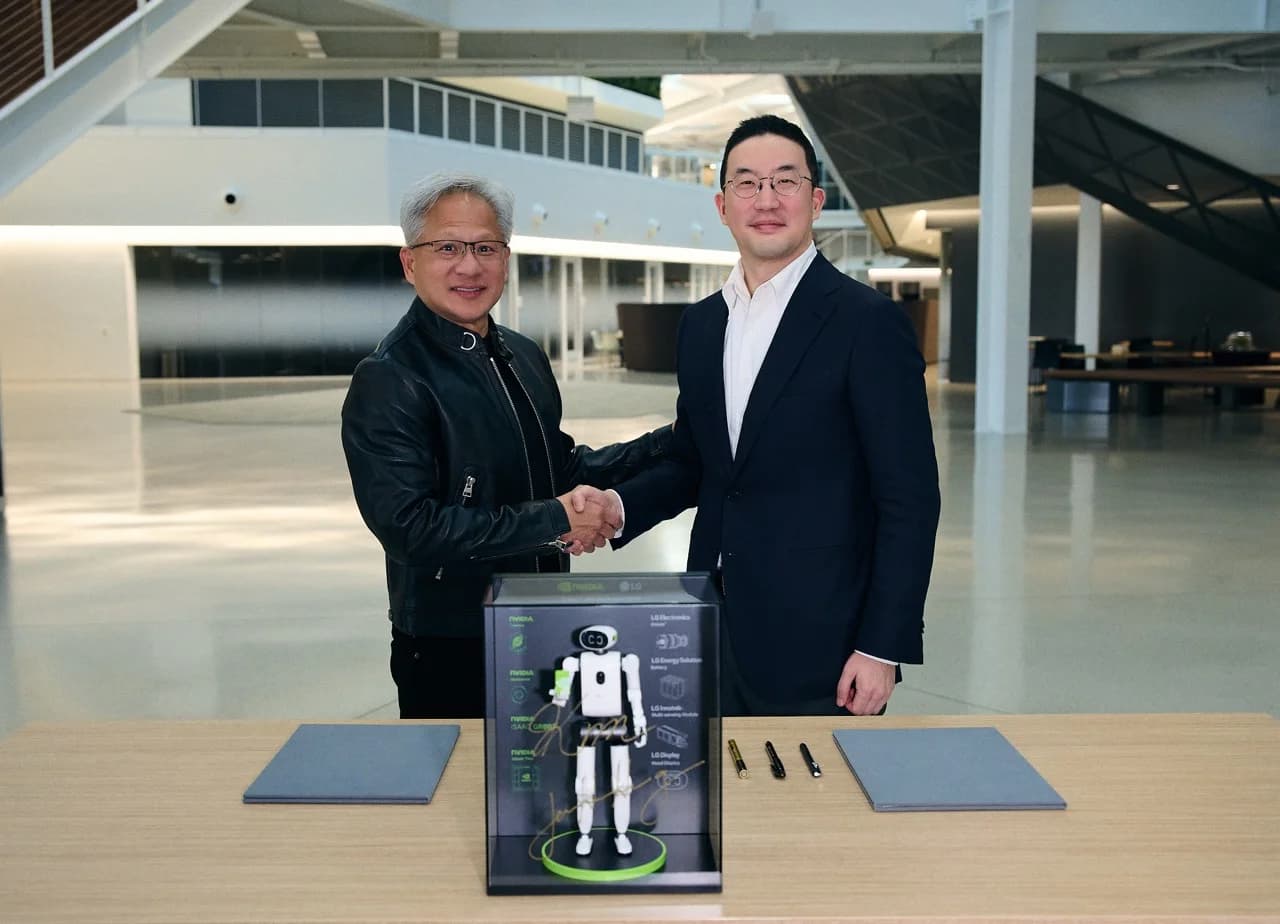
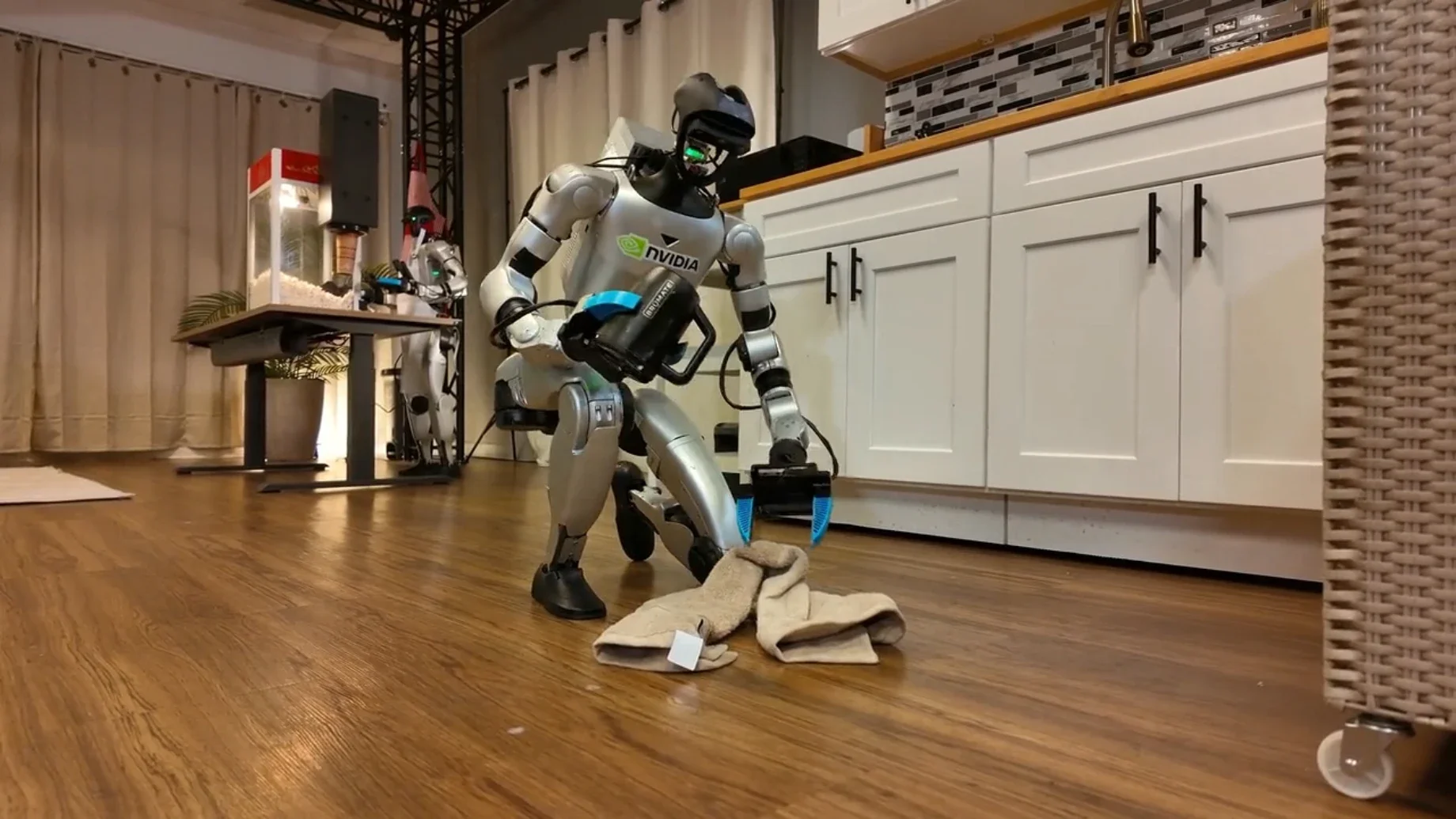
LG says it is building safety and quality into its robots from the early development stage. The timing lines up with its hardware plans. The company is developing a bipedal humanoid as an NVIDIA reference robot, which it aims to show publicly in the first quarter of next year. As we reported in August, that robot is built on NVIDIA's Isaac GR00T model and Jetson Thor compute.
The release restates LG's broader robotics plan: robot hardware, robot intelligence and data combined, with actuators and other core parts made in-house and the LG DataFactory collecting large-scale data for robot learning and operation. LG wants to move from industrial and commercial robots into household ones. On its third-quarter earnings call in October, the company put the home humanoid market at around 2030 and said its data factory had begun partial operations.
A household robot working near children and pets will face stricter scrutiny than a factory robot behind a fence, and LG appears to be lining up certification well ahead of that point.
Share this article
Follow humanoid robotics without following every announcement.
Get the week’s most important launches, funding and research—and why they matter—in one email from Humanoids Daily.
Once a week. Unsubscribe anytime.
Read recent issuesRead next
- Published on
- Reading time
- 4 min read
The "One LG" Play: How the Korean Giant is Engineering a Humanoid Supply Chain
- Published on
- Reading time
- 6 min read
HD Hyundai Robotics Builds Its Own Robot Brain, as Skild AI Pitches Korea on Building the Bodies
- Published on
- Reading time
- 2 min read
KIST’s KAPEX Humanoid Reportedly Uses Over 90% Korean-Made Core Components
- Published on
- Reading time
- 3 min read
LG Targets Home Humanoids Around 2030, With Robots and Appliances Designed to Work Together
- Published on
- Reading time
- 5 min read
LG to Unveil Next-Gen Humanoid Built on NVIDIA Isaac GR00T in Early 2027
- Published on
- Reading time
- 6 min read
Swiss Startup Embodied AI Unveils AIR, a Wheeled Robot Built to Work Beside Factory Staff Without a Cage