- Published on
Gemini Robotics 2.5 Puts Apollo 2 on Mercedes-Benz Lines as Argon Speeds Up Training
One tap, and our reporting appears more often in your Google Top Stories. It makes a real difference to a small newsroom.

- Google DeepMind has released Gemini Robotics 2.5, a vision-language-action model that it says succeeds 30% to 100% more often than Gemini Robotics 2 across more than 200 tasks, and finishes them 20% to 30% faster.
- In a proof of concept on active Mercedes-Benz lines in Kecskemét, Hungary, and Sindelfingen, Germany, Apptronik's Apollo 2 used the model to sort metal brackets from bulk bins into sequencing trays with a 96% success rate.
- DeepMind credits Gemini 4 Argon for the four-month turnaround. Argon ran thousands of practice attempts in simulation and reviewed replays of the robot's failures to adjust training recipes.
- The model is rolling out to DeepMind's robotics partners only. Google has not announced API access, pricing, or new ER or On-Device versions.
Google DeepMind has released Gemini Robotics 2.5, an update to the vision-language-action (VLA) model it launched as Gemini Robotics 2 in July. In the announcement on November 10, the company said the model was tested on more than 200 distinct tasks and showed gains in dexterity, reliability and physical safety.
Carolina Parada, VP and head of robotics at Google DeepMind, wrote that the model added hundreds of new dexterous tasks in a few months. She attributed the pace to Gemini 4 Argon, the frontier model Google released in October, which let Gemini Robotics 2.5 practice thousands of times in a virtual environment and watch replays of its own mistakes. Argon used those replays to correct the robot's technique and the training recipes behind it.
Gemini Robotics 2.5 is rolling out to DeepMind's robotics partners. The announcement does not mention availability through the Gemini API, Google AI Studio or Vertex AI, and gives no pricing. It also announces no new Embodied Reasoning (ER) or On-Device model. Gemini Robotics 2 shipped as a set of three.
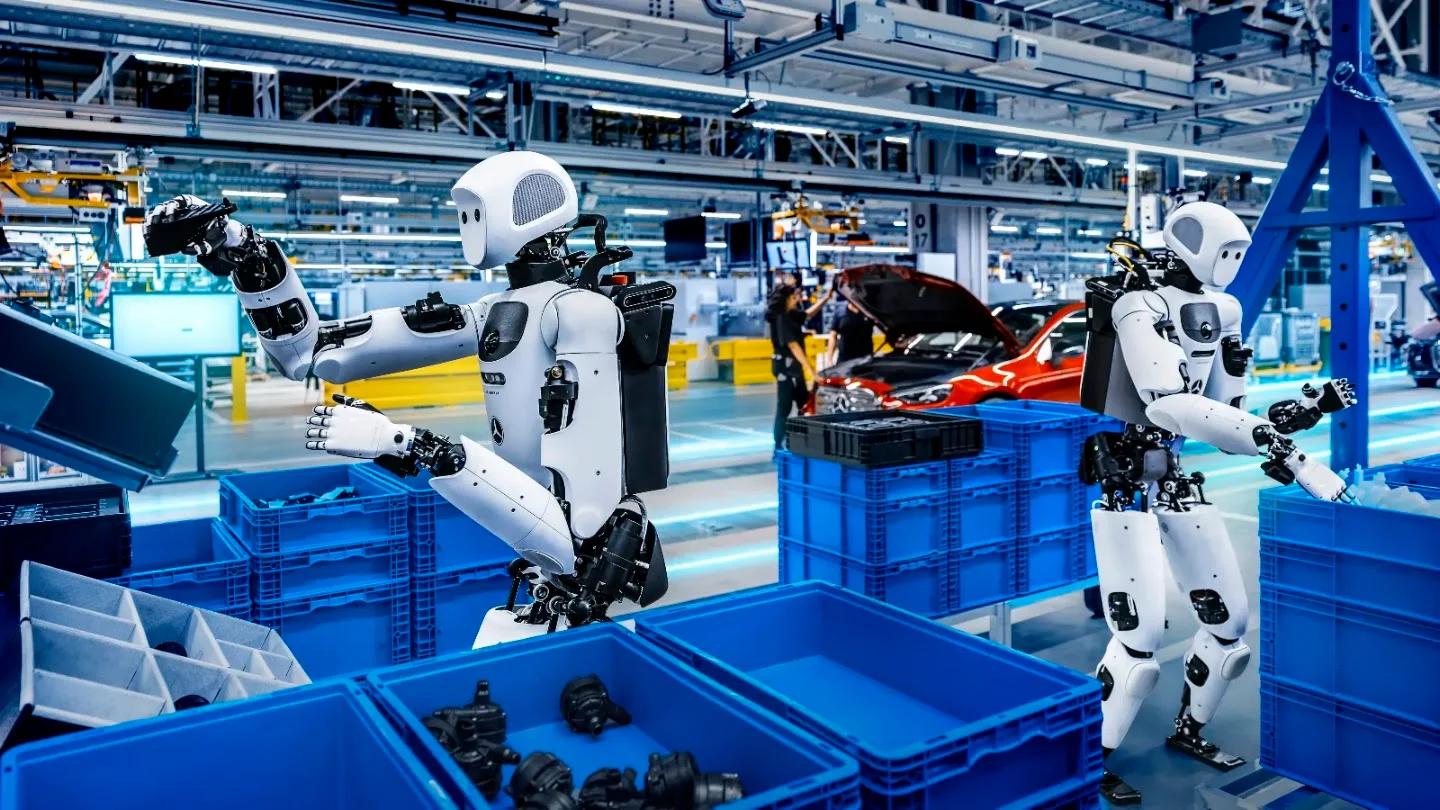
Apollo 2 on Mercedes-Benz lines
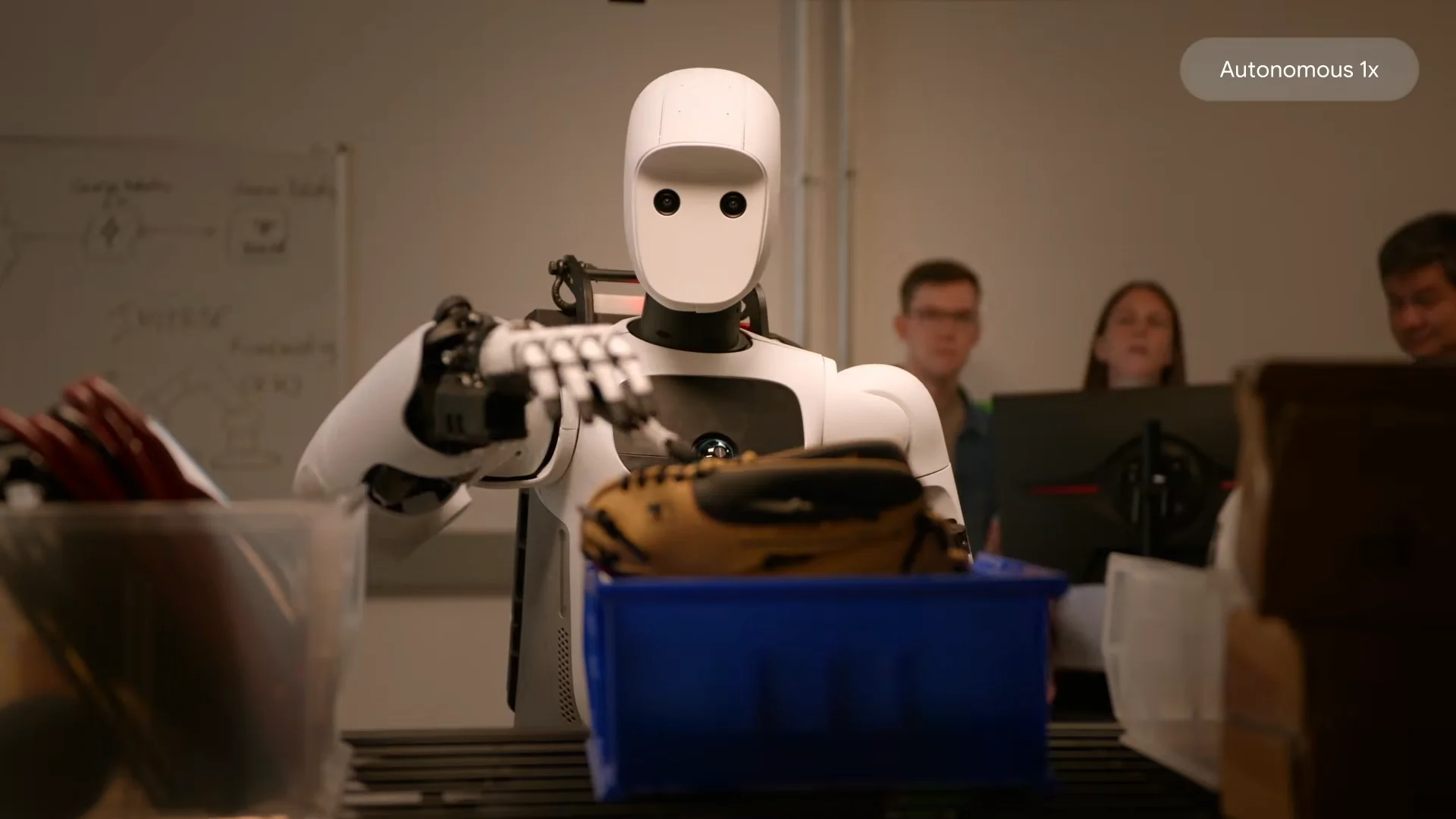
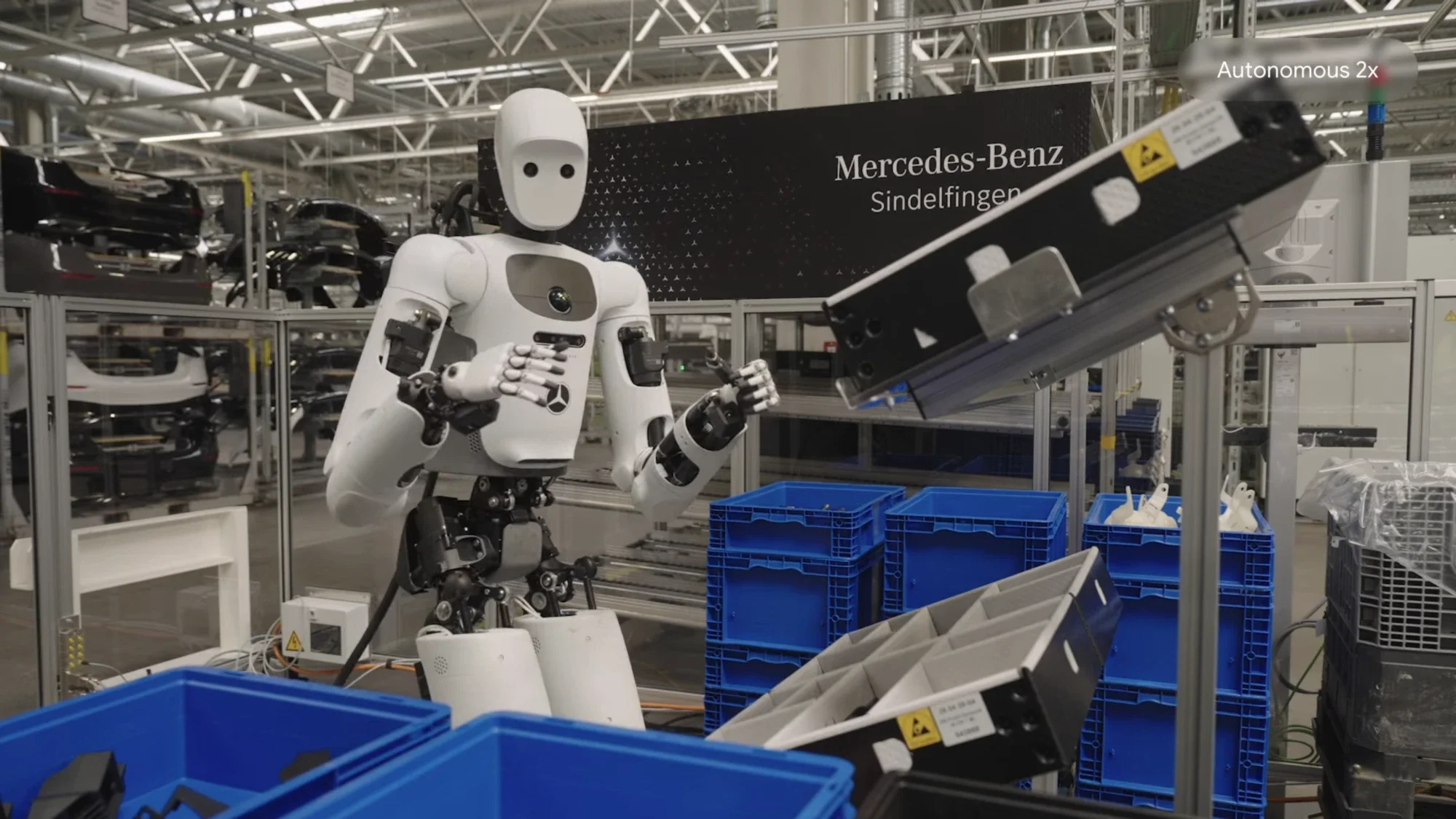
The headline result comes from a factory pilot with Apptronik and Mercedes-Benz, which invested in the Austin-based humanoid maker in 2025. Apollo 2 robots worked on active production lines at Mercedes-Benz plants in Kecskemét, Hungary, and Sindelfingen, Germany. The task was automotive kitting: picking metal brackets out of bulk bins and placing them into sequencing trays, so that parts reach the assembly line in the order they are needed.
Follow humanoid robotics without following every announcement.
Get the week’s most important launches, funding and research—and why they matter—in one email from Humanoids Daily.
Once a week. Unsubscribe anytime.
Read recent issuesThe robots carried Sharpa's five-fingered, 22-degree-of-freedom SharpaWave hand. DeepMind split the work between two models. A Gemini Robotics ER model kept track of the workflow, and Gemini Robotics 2.5 controlled the hands and arms, correcting when a grasp or placement went wrong. DeepMind reports a 96% success rate. It does not say how many picks the figure covers, how long the pilot ran, or how the robots' cycle time compared with a human worker's.
Jeff Cardenas, co-founder and CEO of Apptronik, said in the announcement: "This is what we built Apollo for: useful work alongside people in real industrial settings." He added that pairing Apollo 2 with Gemini Robotics, "we saw the models improve dramatically in just a few weeks of post-training," and said the models carried over into Mercedes-Benz production with very little drop-off.
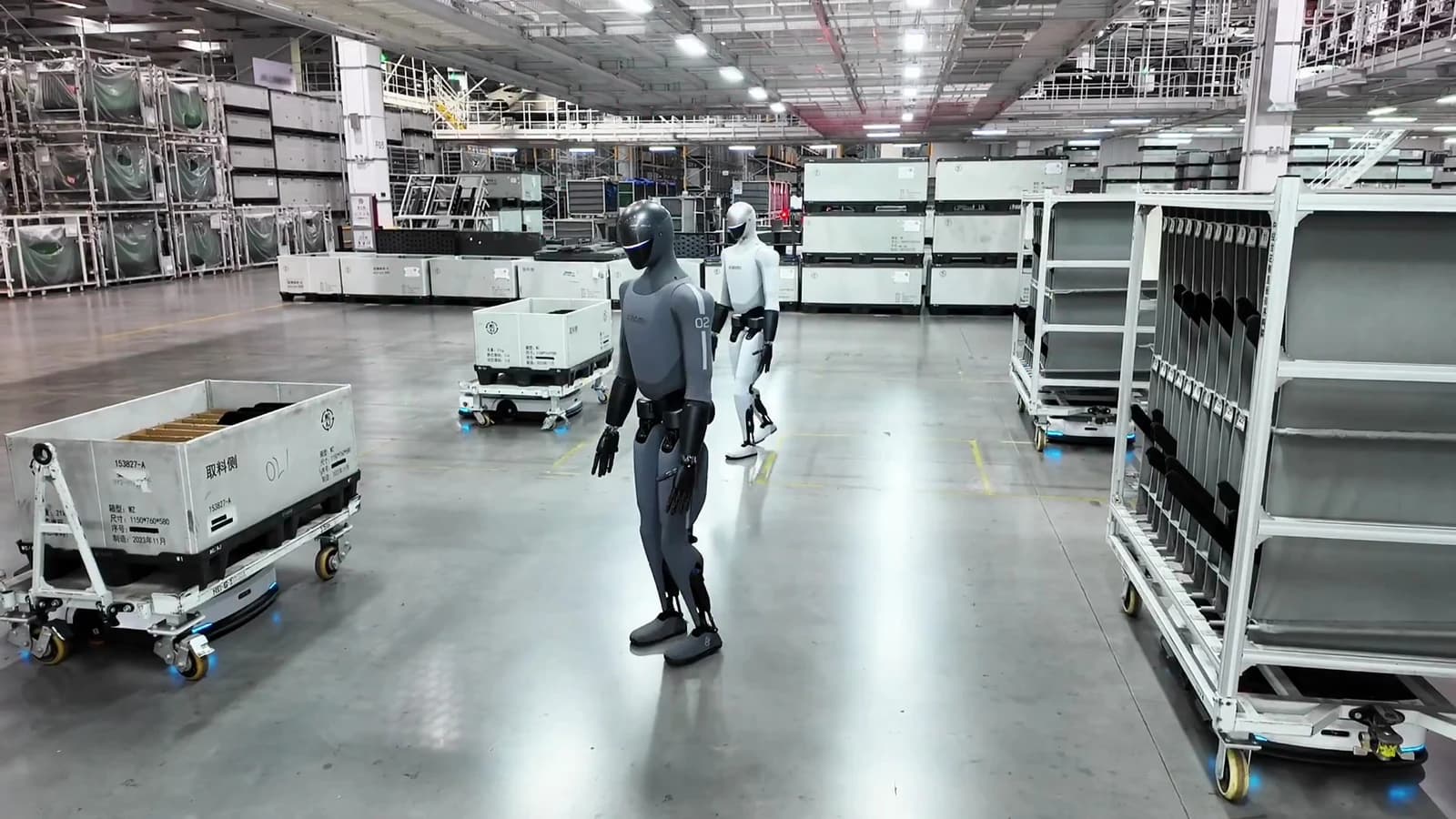
Parts kitting and sequencing has become a common first job for humanoids in car plants. BMW has brought Figure 03 into its Spartanburg plant for material sorting and sequencing, and launched a project with Hexagon's AEON humanoid at Plant Leipzig. Audi has tested Agile Robots' mobile humanoids on parts sequencing, and on November 3 Xiaomi showed two humanoids sorting center-console side covers through an eight-hour task at its car factory. DeepMind's acknowledgements thank teams at Agile, Apptronik and Mercedes-Benz for support on the release. Agile Robots signed a partnership with Google DeepMind to bring Gemini models into factories.
Task-by-task gains over Gemini Robotics 2
DeepMind compared the two VLA generations on a Franka FR3 Duo with two-fingered parallel grippers and on Apollo 2 with SharpaWave hands, in four categories: tabletop pick-and-place, multi-step and contact-rich tasks, precision kitting and insertion, and dexterous manipulation. Across the set, Gemini Robotics 2.5 succeeded 30% to 100% more often, depending on the task type, and completed tasks 20% to 30% faster.
Most of the published examples are tasks Gemini Robotics 2 could not do at all:
| Task | Gemini Robotics 2 | Gemini Robotics 2.5 |
|---|---|---|
| Pack pastries with tongs | 5% | 100% |
| Close the lid of a toolbox | 0% | 93% |
| Untie a ribbon bow | 0% | 70% |
| Hang a cardigan | 0% | 62% |
| Sweep trash into a dustpan with a brush | 0% | 52% |
| Pack a rice cooker | 0% | 40% |
| Fold pants | 0% | 40% |
| Unhang a mug and place it on a table | 29% | 75% |
On tabletop pick-and-place, DeepMind says the new model reached 100% on many tasks where its predecessor scored far lower or zero, but it did not publish per-task figures for that category or for kitting and insertion. The post does not give the number of trials behind each percentage. Other examples in the announcement include tying a bow on a gift box and pipetting liquid.
Safety steering and a jailbreak benchmark
DeepMind says Gemini Robotics 2.5 can be steered at inference time with reasoning guidance about physical hazards, similar to the safety classifiers applied to Gemini's text responses. With that guidance, safe task completion rose 33% around obstacles and 43% around nearby people.
The lab also released ASIMOV-Jailbreak, an open-source benchmark on Hugging Face with hundreds of prompts that disguise unsafe requests across dozens of scenes. That result applies to Argon, not to the new VLA: Gemini 4 Argon resisted 99.5% of the jailbreak attempts, against 82% for Gemini Robotics ER 2. It follows the ASIMOV-Agentic test DeepMind published with Gemini Robotics 2, which checked whether an embodied agent refuses unsafe tool calls.
Argon as a robotics research tool
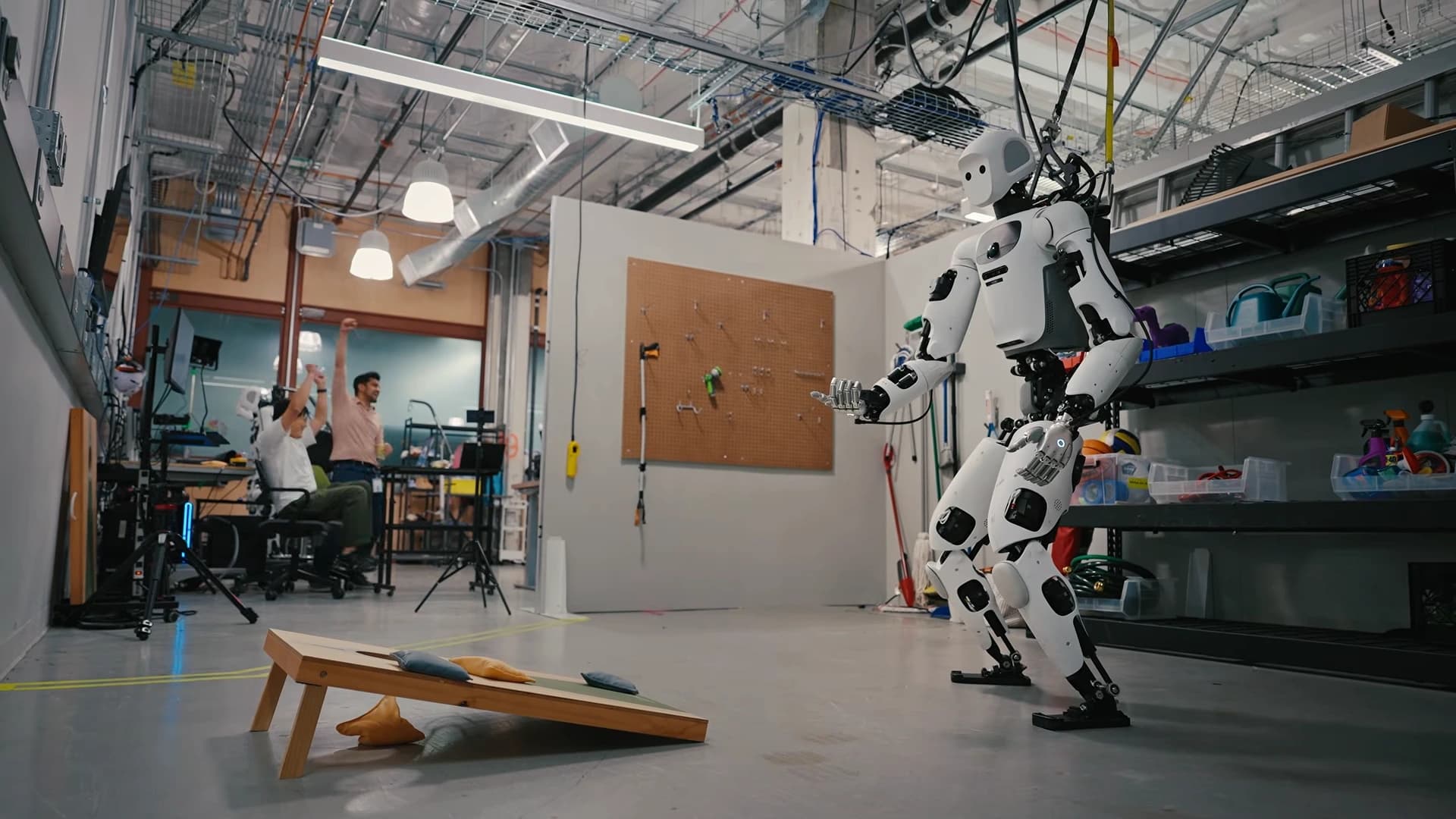
Argon has appeared in most of DeepMind's robotics news since its October launch. Google showed it teaching Apollo a cornhole throw from human video, and later paired it with Genie 4 to generate simulated Apollo scenes from task instructions. Similar agent-driven workflows have shown up at other labs, covered in our look at Astra, Opus and Argon.
Gemini Robotics 2.5 is the first Gemini Robotics model whose development DeepMind credits partly to Argon, which ran simulated practice and analyzed failures. The announcement shows examples of this in video but does not say how much of the four-month gain came from Argon compared with additional real-robot data or post-training on partner hardware such as Apollo 2.
GR00T 2 and Fable 5.2
DeepMind's release came a day after NVIDIA and Anthropic made robotics announcements of their own. On Monday, at the Conference on Robot Learning (CoRL) in Austin, Jim Fan, NVIDIA's director of robotics, presented GR00T 2, a 2-billion-parameter world action model built on NVIDIA Cosmos. NVIDIA reports 71% average success across 50 tasks from one demonstration each, and 95% from five. In Fan's demos, OpenAI's GPT-6 Astra marked up camera images to tell GR00T 2 what to pick up and corrected its actions mid-task. Together they completed 292 of 300 toy assemblies. Splitting the work between a frontier model and a low-level skill model resembles DeepMind's setup at Mercedes-Benz, where an ER model tracked the workflow and Gemini Robotics 2.5 moved the arms and hands.
The same day, Anthropic released Claude Fable 5.2 and reported 64.9% on RoboDojo Sim, a 42-task benchmark in which a model controls a simulated two-arm robot from camera images. In Anthropic's runs, Gemini 4 Argon scored 34.2% and Astra 29.8%. Anthropic tested every model on its own harness, and Fable 5.2 does not appear on RoboDojo's public leaderboard.
Share this article
Follow humanoid robotics without following every announcement.
Get the week’s most important launches, funding and research—and why they matter—in one email from Humanoids Daily.
Once a week. Unsubscribe anytime.
Read recent issuesRead next
- Published on
- Reading time
- 7 min read
Google DeepMind Unveils Gemini Robotics 2, Bringing Whole-Body Intelligence and Multi-Robot Teams to Physical AI
- Published on
- Reading time
- 4 min read
Google DeepMind Gives Robots a 'Thinking' Brain with Agentic Gemini 1.5 Models
- Published on
- Reading time
- 4 min read
Gemini 4 Argon Takes Apollo From Human Video to Seven Straight Cornhole Shots
- Published on
- Reading time
- 4 min read
Google DeepMind Robotics Head Details 'Surprising' Cross-Embodiment AI, Calls Home 'The Hardest Environment'
- Published on
- Reading time
- 4 min read
Google DeepMind Opens the Portal: Project Genie and the Quest for the "Infinite Training Loop"
- Published on
- Reading time
- 4 min read
Google DeepMind Unveils Gemini Robotics-ER 1.6: A Leap in Spatial Reasoning and Industrial Utility