- Published on
Stepping Up: Figure 03 Achieves Autonomous Ladder Climbing, Reigniting the Bipedal Debate
One tap, and our reporting appears more often in your Google Top Stories. It makes a real difference to a small newsroom.

Supported by RoboStrategySupport for Humanoids Daily comes from RoboStrategy
Sponsored

Investing involves risk, including possible loss of principal. Read the prospectus before investing.
- Figure CEO Brett Adcock shared video evidence of the Figure 03 humanoid autonomously climbing a ladder in a laboratory setting.
- Adcock utilized the milestone to sharply criticize wheeled robotics, declaring the alternative form factor an "utter dead end" due to environmental limitations like stairs and ladders.
- The new capability highlights the advanced "loco-manipulation" and balance systems recently introduced in Figure's Helix 02 software architecture.
- While the current climbing pace is methodical, Adcock claims the robot will eventually match human speed, addressing online critiques of the platform's current agility.
Expanding Vertical Mobility
The case for the bipedal humanoid form factor has always hinged on a simple premise: the human world is built for human bodies. Now, Figure AI is attempting to prove its hardware can navigate the vertical extremes of that environment.
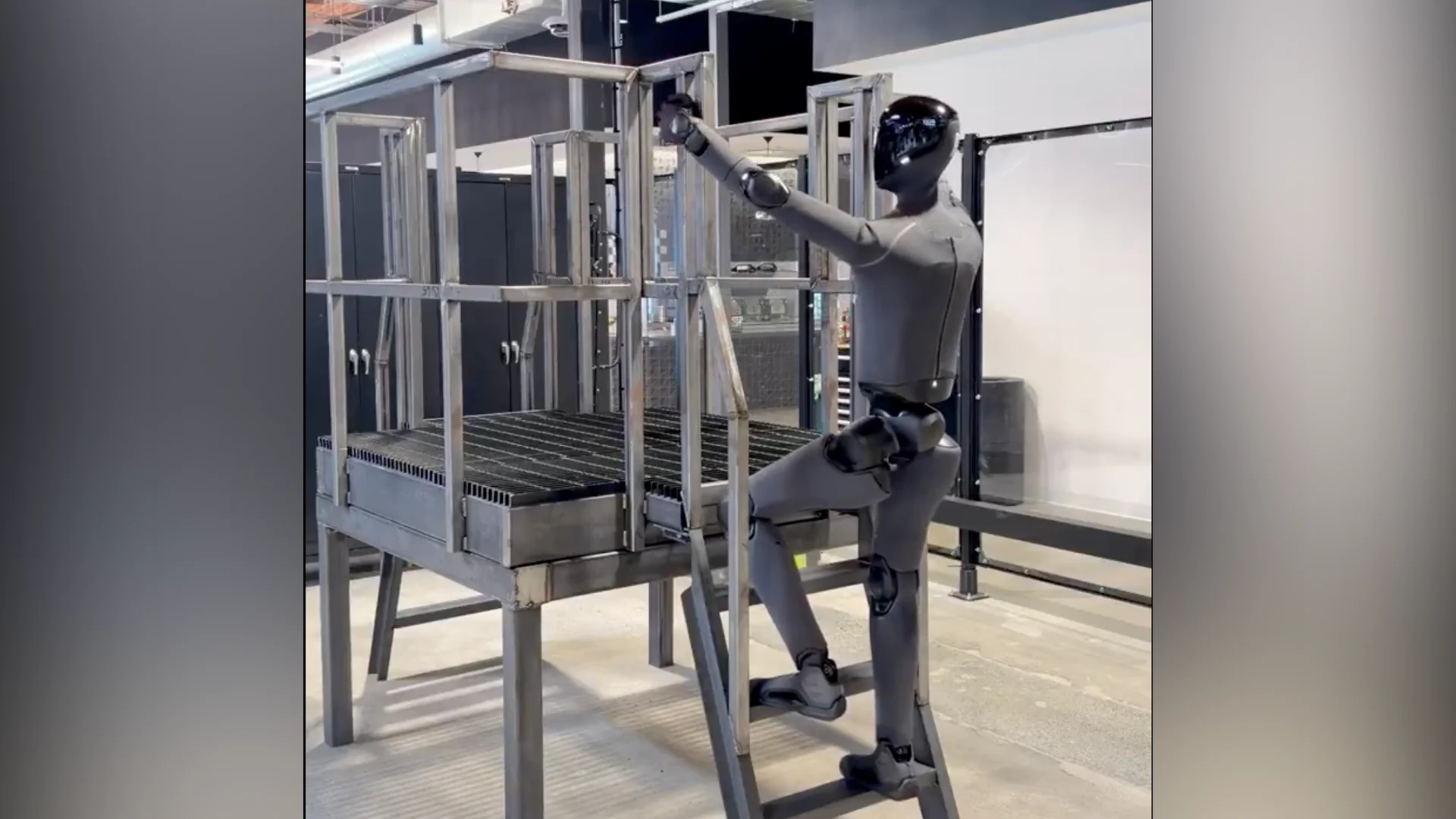
On August 1st, Figure CEO Brett Adcock posted a video on X (formerly Twitter) showcasing the company's Figure 03 humanoid navigating a short, industrial-style ladder. In the video, the charcoal-grey robot can be seen gripping the metal rungs and methodically hoisting its weight upward in a laboratory setting, likely within Figure's Sunnyvale headquarters.
"F.03 can now climb a ladder, fully autonomous," Adcock stated in the announcement.
While the robot's ascent is steady and deliberate rather than rapid, the demonstration marks a significant expansion of the platform's physical capabilities. Climbing a ladder requires a complex synthesis of vision, tactile feedback, and whole-body balance—a continuous integration of walking, reaching, and weight distribution known as "loco-manipulation". This level of full-body autonomy is powered by the company's Helix 02 AI architecture, which utilizes a dedicated "System 0" neural network operating at 1 kHz to manage balance, contact, and physical coordination.
The weekly humanoid robotics briefing
One email a week: the launches, funding and research that mattered, with context from Humanoids Daily.
Read recent issuesThe "Utter Dead End" of Wheeled Robots
Adcock did not just use the footage to highlight a technical milestone; he weaponized it in an ongoing industry debate over form factors. The robotics sector remains divided between companies heavily invested in walking bipeds—like Figure and 1X—and those developing wheeled platforms, such as Sunday Robotics with its Memo robot.
On August 2nd, Adcock quote-tweeted a comment from user Mark Jeffrey, who noted, "Your wheeled robots are stumped by stairs. Not so with the humanoids. And our world is filled with stairs and ladders."
In response, Adcock offered a blunt assessment of competing architectures: "Wheeled robots are an utter dead end."
The strong rhetoric aligns with Figure's aggressive push to justify its massive $39 billion valuation. By demonstrating that the Figure 03 can theoretically access any area a human worker can—whether it's the flat concrete of a BMW Spartanburg logistics center or the elevated scaffolding of a construction site—the company is reinforcing its pitch that bipedal machines are the only true path to general-purpose automation.
The Speed Factor
Despite the technical achievement of autonomous climbing, the demonstration drew immediate critiques regarding the robot's pace. Responding to the footage on August 2nd, user @PurpleSquirrel1 commented, "Fire fighters do it in seconds lol."
Adcock quickly replied, "This will get just as fast."
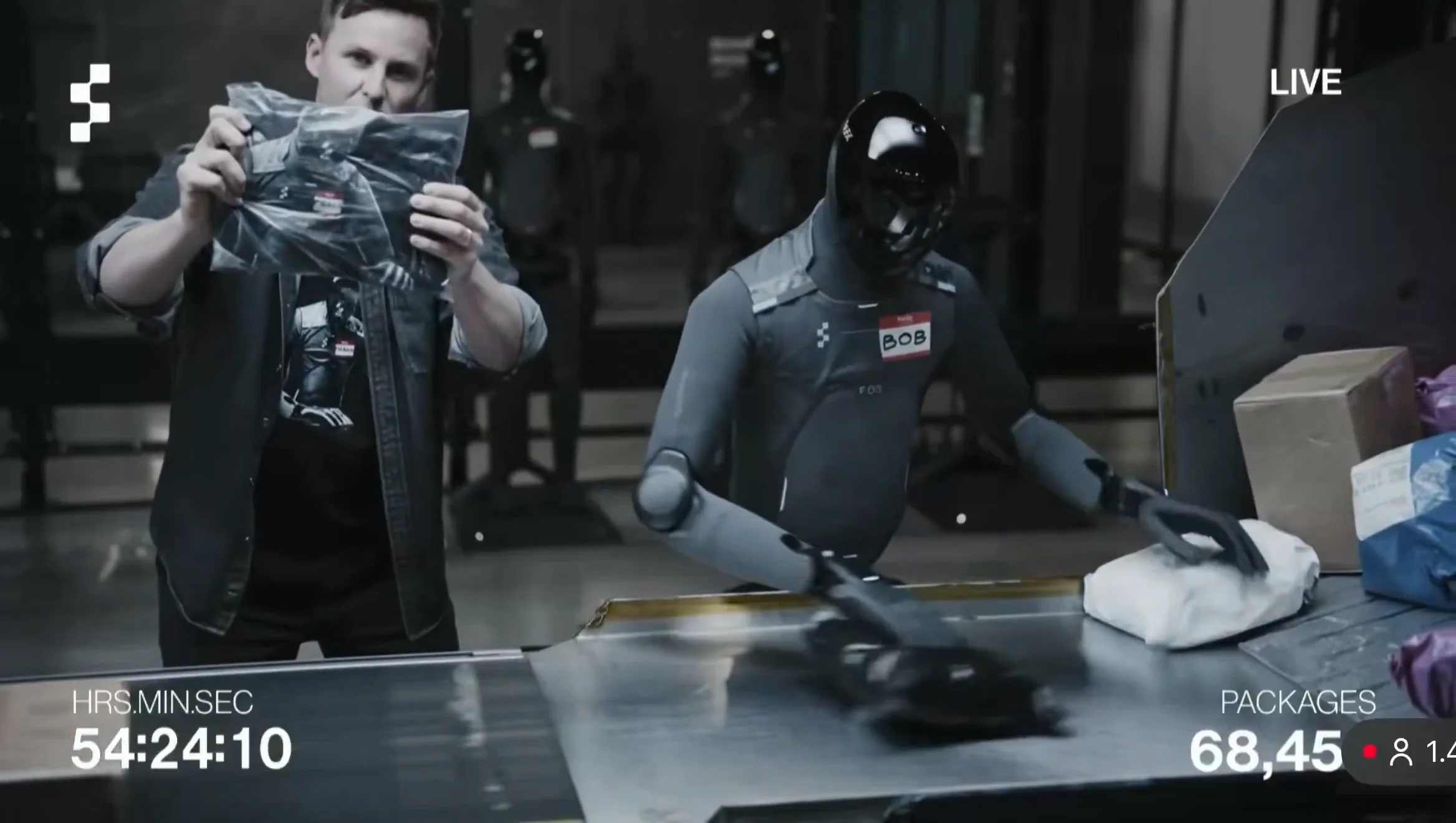
The exchange highlights a recurring tension for the humanoid robotics industry: the gap between structural capability and human-equivalent cadence. Figure has already proven its robots can sustain high-speed, repetitive tasks over long durations, recently completing a 200-hour continuous autonomous sorting marathon where the fleet processed nearly 250,000 packages. However, tasks involving heavy vertical lifting and complex gravitational balance present an entirely different set of physical constraints.
If Figure can eventually optimize the Helix 02 software to drive the Figure 03 up a ladder at human speeds without risking a catastrophic fall, it will significantly bolster the commercial viability of the platform in industrial environments. For now, the steady climb serves as another foundational piece of data for a company attempting to solve the complexities of human environments, one rung at a time.
Share this article
Read next
- Published on
- Reading time
- 8 min read
Beyond the 60-Hour Mark: Figure AI’s Endurance Marathon Signals Playbook for Figure 4 and Supply Chain Independence
- Published on
- Reading time
- 3 min read
Compute War Chest: Figure and Hark Secure Full Datacenter of NVIDIA B200s
- Published on
- Reading time
- 4 min read
Living Room Ready: Watch How Figure 03 Tackles Domestic Tidying with Helix 02
- Published on
- Reading time
- 6 min read
Figure CEO Brett Adcock Claims Humanoids Are Already Delivering ROI Amid Severe Labor Shortages
- Published on
- Reading time
- 4 min read
A Golden Milestone: Figure Manufactures Its 1,000th Figure 03 Humanoid
- Published on
- Reading time
- 4 min read
Figure AI Pops Champagne as Autonomous Marathon Crosses 200 Hours Without Hardware Failure


The weekly humanoid robotics briefing
One email a week: the launches, funding and research that mattered, with context from Humanoids Daily.
Read recent issues