- Published on
The Three Billion Humanoid Milestone: Inside Bank of America’s Long-Term Physical AI Forecast
One tap, and our reporting appears more often in your Google Top Stories. It makes a real difference to a small newsroom.

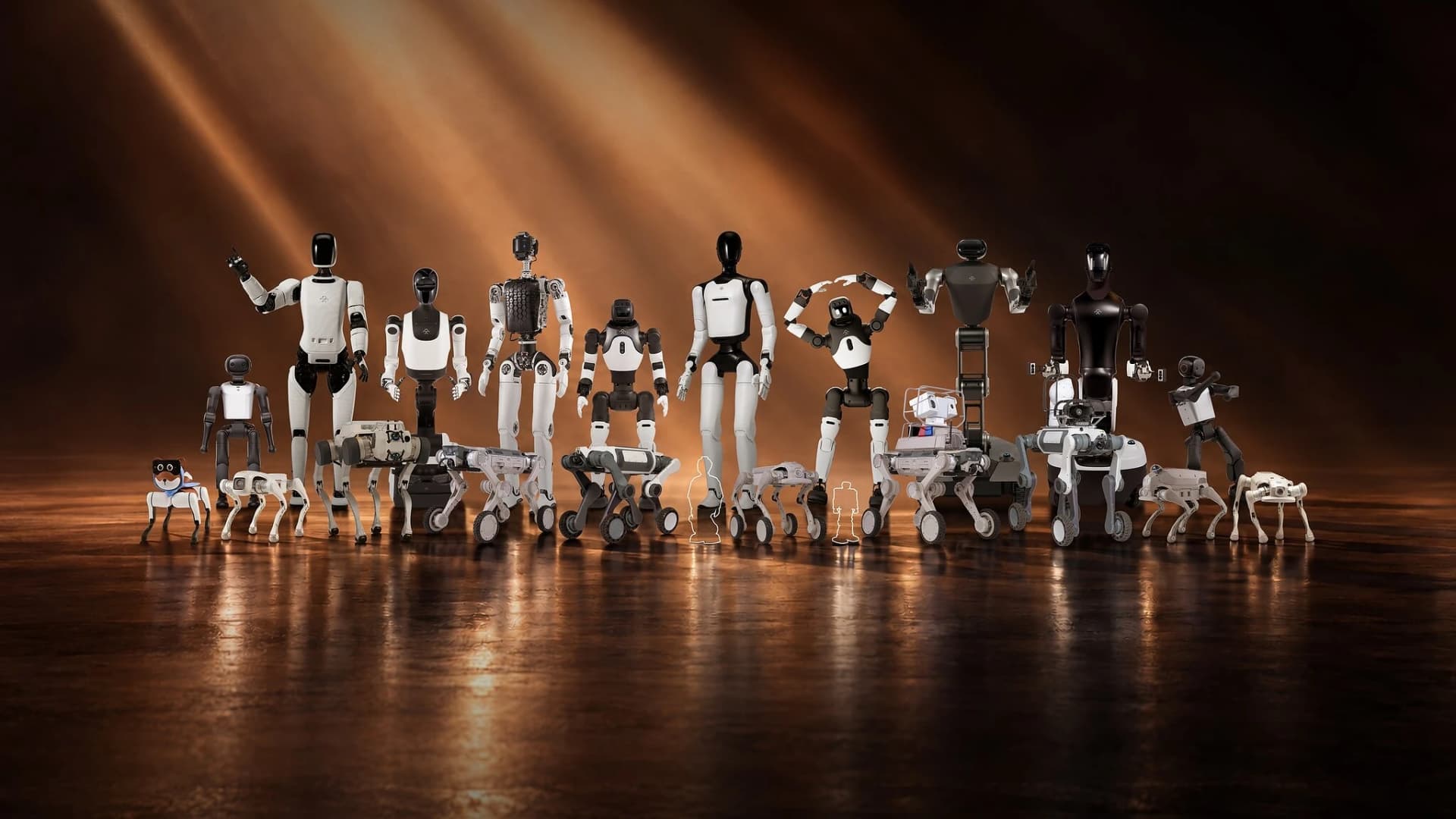
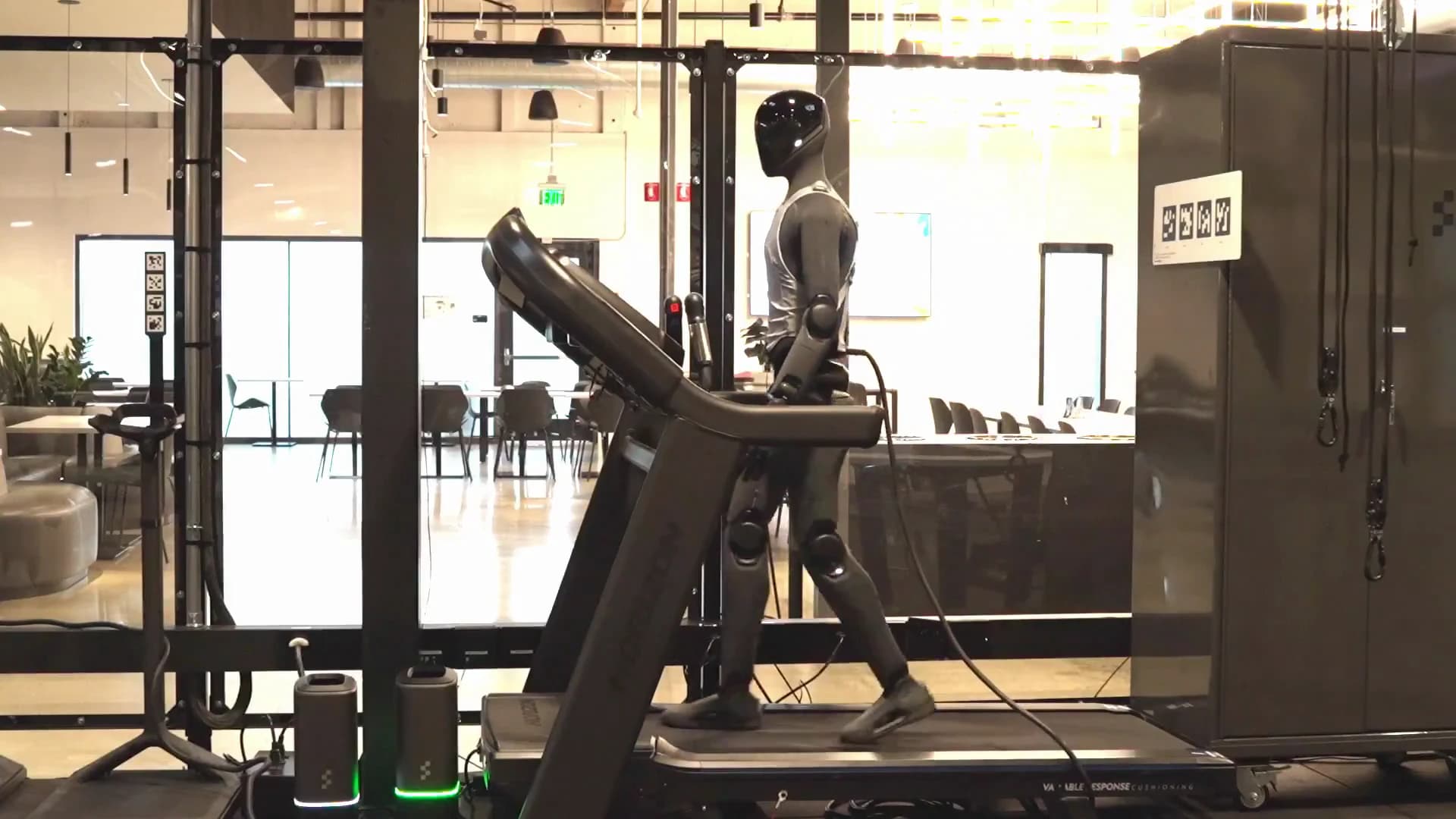
The robotics industry has spent decades in a state of incremental progress, but a new analysis suggests we have reached a definitive turning point. According to a report released this week by the Bank of America Institute, the convergence of generative AI and declining hardware costs is setting the stage for a "robot population boom" that could see three billion humanoid units in operation by 2060.
The report, titled Physical AI, part 2: Humanoid robots, suggests that humanoids will eventually surpass cars on a per-capita basis. While the immediate focus remains on industrial and automotive deployments, the analysis projects that household assistants will ultimately dominate the market, accounting for 62% of the total population by 2060.

Defining the "Mind, Body, and Soul"
Bank of America frames the modern humanoid as a synthesis of three core layers that allow a machine to move from a controlled factory floor into the "messy reality" of human environments:
- The Mind (AI System): Powered by breakthroughs in Large Language Models (LLMs), this layer handles high-level cognition, task planning, and human interaction.
- The Body (Hardware): This includes the structural materials, energy systems, and the "senses"—vision and tactile systems.
- The Soul (Motion Control): The internal coordinator responsible for the "physics" of the robot, managing body balancing and the execution of movement.
This architectural shift is what enables "embodied intelligence," where a robot doesn't just follow a script but learns directly from the world. We are, of course, seeing this transition in the wild, such as Physical Intelligence’s use of Multi-Scale Embodied Memory to help robots remember their mistakes and adjust their strategies in real-time.
Follow humanoid robotics without following every announcement.
Get the week’s most important launches, funding and research—and why they matter—in one email from Humanoids Daily.
Once a week. Unsubscribe anytime.
Read recent issues
The Economics of Adoption
The report identifies five primary drivers accelerating this transition: AI maturity, hardware economics, industrial overlap (leveraging EV supply chains), demographics (labor shortages), and deployment readiness.
Perhaps most critical is the rapid decline in the Bill of Materials (BOM). While pilot-stage humanoids currently cost between $90,000 and $100,000 to produce, Bank of America projects that standardizing specifications will cut these costs in half by 2030. In China, where manufacturers like Unitree are scaling toward 20,000 units a year, BOM costs are expected to drop below $17,000.
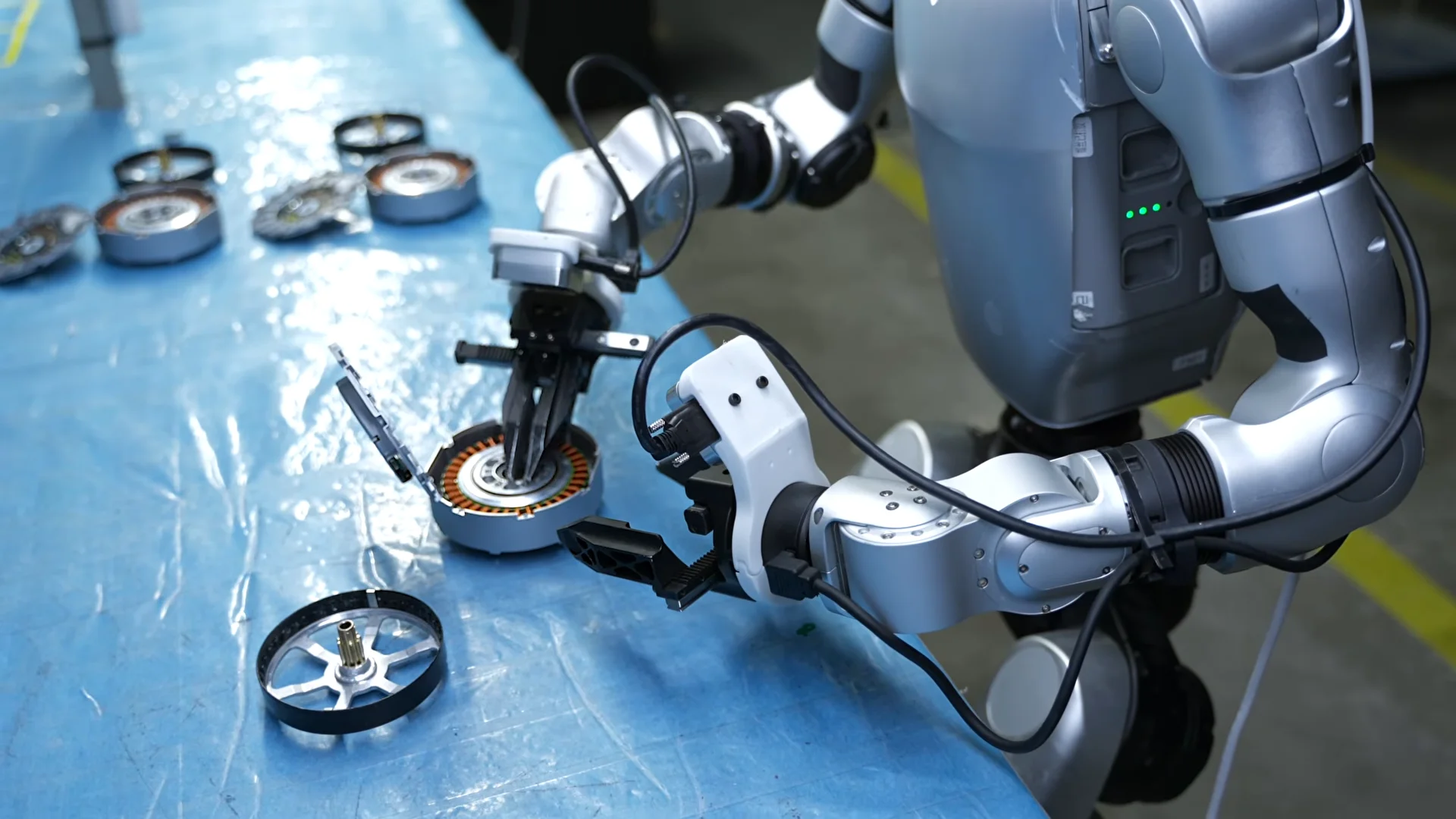
While this $17,000 projection for 2030 might seem high compared to existing entry-level platforms like the $1,445 Noetix Bumi or the $15,000 Asimov v1 kit, the report focuses on "full-spec" industrial machines. For these high-performance units, reaching such a price point would still represent a massive 50% reduction from 2025 levels, driven by the same scale effects that transformed the EV industry. These projections align with recent moves by startups like Sunday Robotics, which recently raised $165 million specifically to move away from "viral demos" and toward a $10,000 consumer appliance.
The BOM Breakdown (Projected 2030)
| Component | Share of Total Cost |
|---|---|
| Linear Actuators | 27% |
| Rotary Actuators | 24% |
| Dexterous Hands | 19% |
| Controlling System | 10% |
| Sensory & Energy Systems | 8% |
The "Phase One" Reality Check
Despite the bullish long-term forecast, the report acknowledges that the industry is still in a grueling "Phase One" of proving reliability. Current humanoids remain too fragile for 24/7 industrial environments, and the "utility gap" between a lab demo and a productive worker remains significant.
We are seeing various strategies to bridge this gap:
- Morphological Flexibility: Boston Dynamics’ production Atlas uses an "alien" aesthetic with 360-degree joints to prioritize utility over human mimicry.
- Specialized "Internships": Companies like Xiaomi are reporting 90% success rates in highly specific factory tasks, such as nut installation, rather than trying to solve general-purpose labor all at once.
- Tactile Focus: Sharpa Robotics is pushing the boundaries of bimanual dexterity, recently demonstrating an apple-peeling milestone using vision-based tactile hands.
As BofA notes, the ultimate ceiling on capability is the "data bottleneck"—the difficulty of collecting enough high-quality manipulation data to replicate human-level improvisation. Whether through Skill Capture Gloves or shared-autonomy copilots, the race to feed the "Physical AI" brain is now the industry's primary mission.
Share this article
Follow humanoid robotics without following every announcement.
Get the week’s most important launches, funding and research—and why they matter—in one email from Humanoids Daily.
Once a week. Unsubscribe anytime.
Read recent issuesRead next
- Published on
- Reading time
- 3 min read
GXO Expands Agility Partnership to Two More U.S. Sites, Starting With Digit 4
- Published on
- Reading time
- 3 min read
Noetix Robotics Files for Hong Kong IPO, Bloomberg Reports
- Published on
- Reading time
- 4 min read
Eka Robotics Raises $150 Million to Give Robots a Better Feel for the Physical World
- Published on
- Reading time
- 3 min read
After Its Stock Surge, Unitree Warns Humanoid Commercialization Is Still in Its Early Days
- Published on
- Reading time
- 2 min read
AGCO Signs Agility Deal to Bring Humanoid Robots to Its Kansas Factory
- Published on
- Reading time
- 4 min read
Faraday Future Moves to Give Its Robotics Business a Separate Listed Home in $200 Million Deal