- Published on
Watch: Inside Sunday Robotics’ Mission to Move Beyond the "Viral Demo"
One tap, and our reporting appears more often in your Google Top Stories. It makes a real difference to a small newsroom.


Your guide
Rich Robinson
Jee Chee Ren · Executive tour
See China’s AI and robotics ecosystem first-hand.
Six days exploring AI, robotics and advanced manufacturing.
With Rich Robinson, Clinical Professor of Entrepreneurship at Peking University
Beijing · Guangzhou · Shenzhen
29 November–4 December 2026
Referral partnership · We earn a commission on referred bookings.
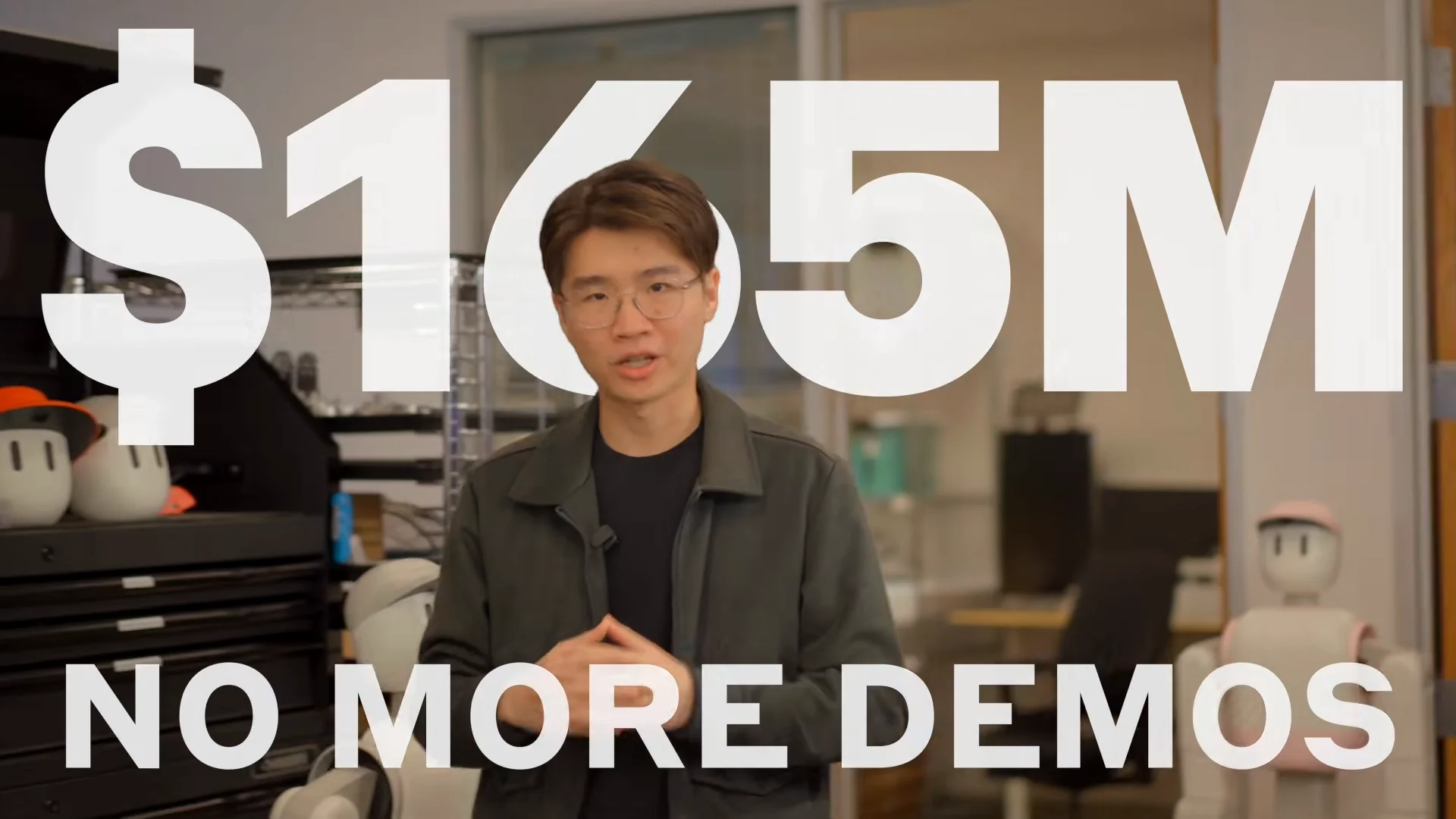
The transition from a laboratory curiosity to a household appliance is rarely televised, but Sunday Robotics is increasingly comfortable showing its work. Fresh off a $165 million Series B funding round that valued the company at $1.15 billion, CEO Tony Zhao and CTO Cheng Chi have embarked on a media blitz to argue that the "era of the viral demo" is over.
A recent lab tour with VC partner Claire Zau and an appearance on Bloomberg Technology offer a granular look at the company’s Mountain View facilities, revealing the mechanical and logistical "messiness" behind their wheeled domestic robot, Memo.
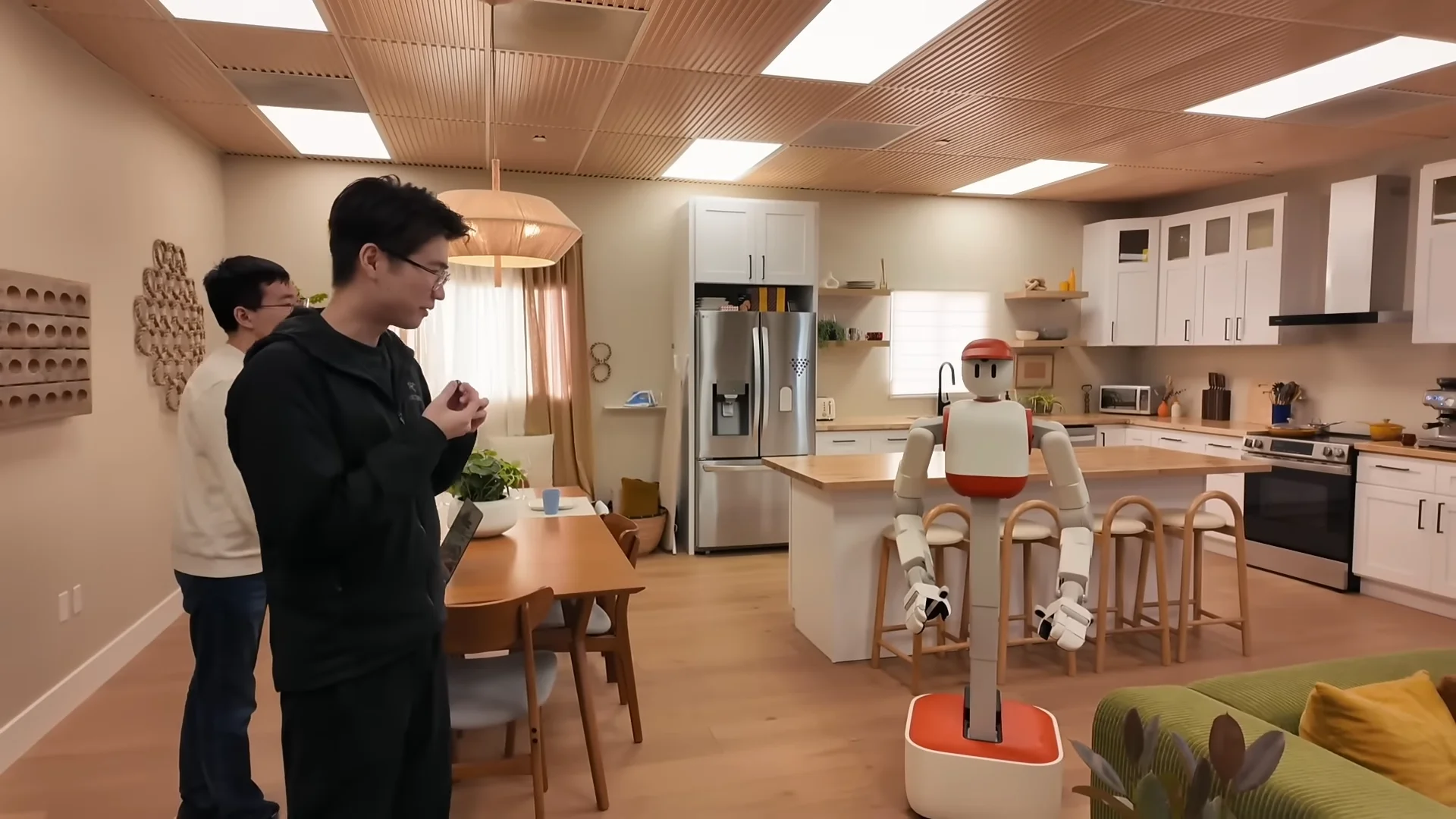
The Lab Tour: 170 Pounds of "Passive Stability"
During the tour, Zau was given a first-hand look at Memo’s "gravity compensation mode," which allows a human to move the robot’s arms with almost zero resistance—a safety feature meant to facilitate human-robot collaboration. While the robot’s arms are nimble, its base is anything but; Memo weighs 170 lbs, with 133 lbs concentrated in the base to ensure it remains "passively safe."
"When the robot is fully stretched out and we immediately cut the power... the robot will not be tipping over," Zhao explained during the tour. This stability is a central pillar of Sunday’s argument for wheels over legs. Unlike bipedal systems that require active balancing to avoid a catastrophic fall, Memo’s geometry ensures it remains upright even during a total power failure.
Follow humanoid robotics without following every announcement.
Get the week’s most important launches, funding and research—and why they matter—in one email from Humanoids Daily.
Once a week. Unsubscribe anytime.
Read recent issues
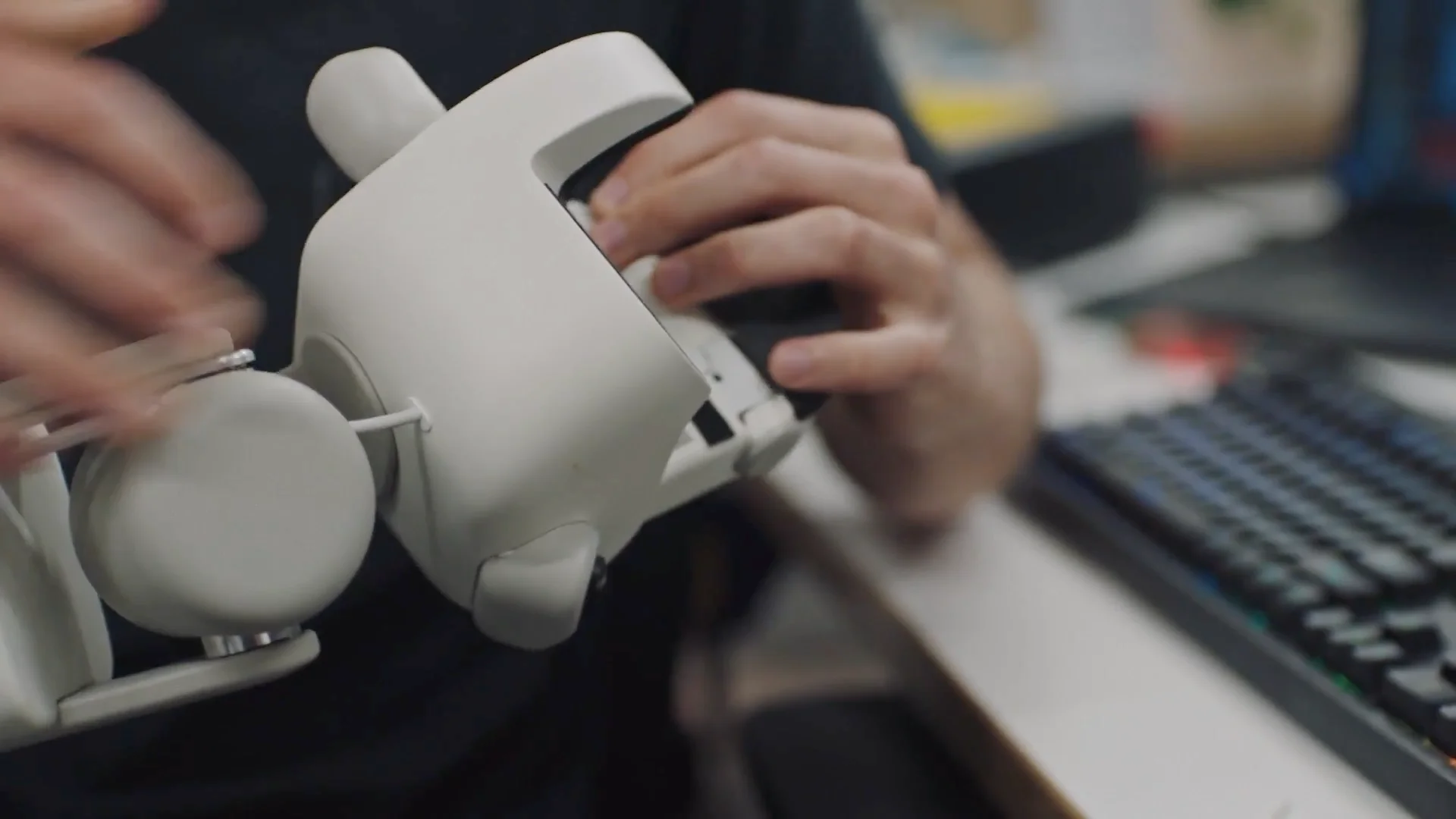
The tour also showcased the "print farm" where Sunday 3D-prints parts for both the robot and its Skill Capture Glove. The reliance on rapid prototyping has allowed the team—composed of veterans from Tesla’s Autopilot team, Waymo, and Neuralink—to iterate on hardware in a garage-like environment, despite their billion-dollar valuation.
Watch the tour below:
The $10,000 Appliance
Speaking on Bloomberg Technology, Zhao was candid about the company’s commercial roadmap. While early prototypes are expensive, Sunday is aiming for a $10,000 initial price point for the consumer market. "Just like personal computers, just like phones, it will get cheaper over time," Zhao noted.
The company is currently sifting through a waitlist of over 3,000 applicants for its 2026 Beta program. These "Founding Families" will be the first to test if Memo can handle "unseen" home environments beyond the optimized lab settings.
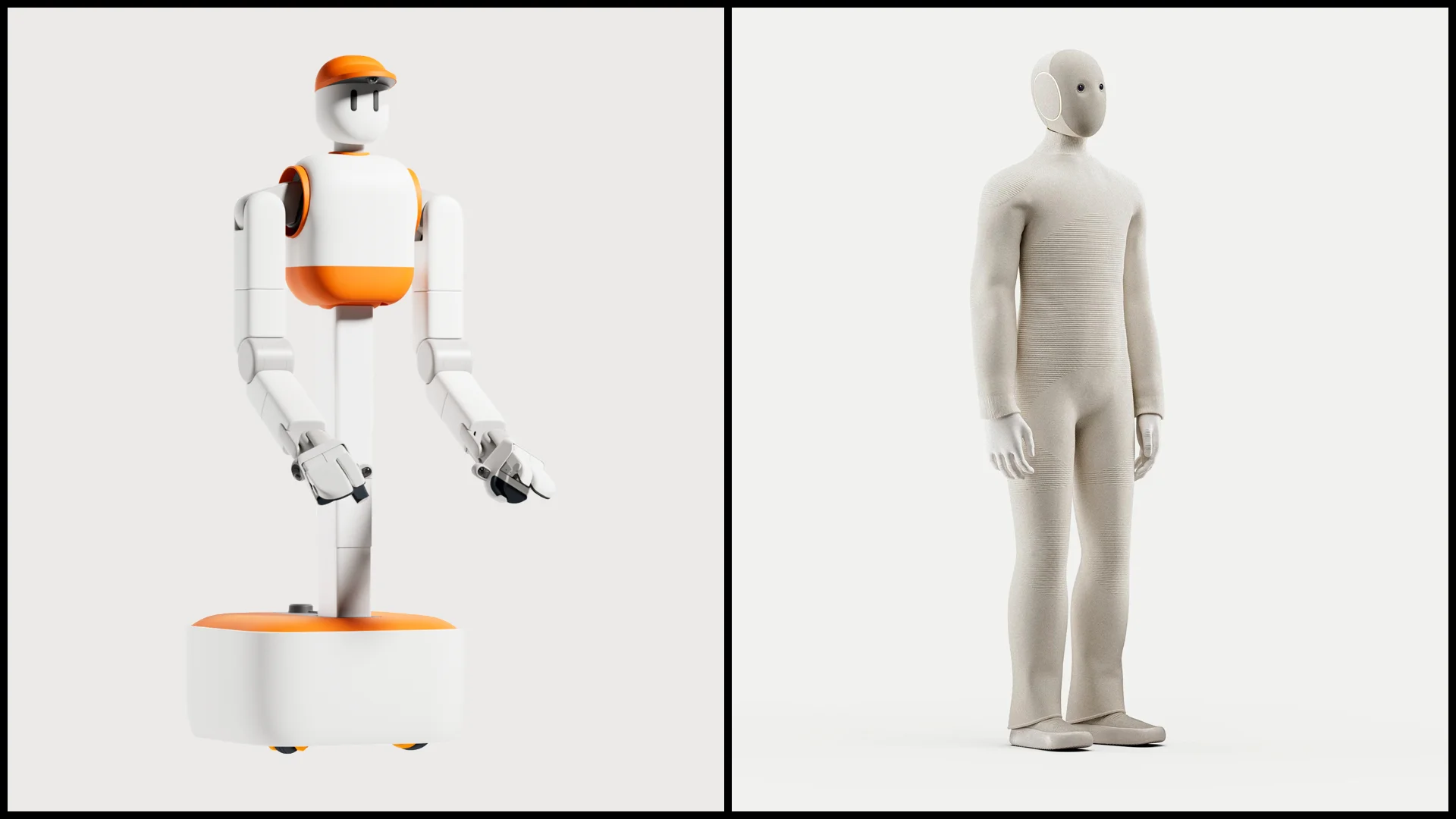
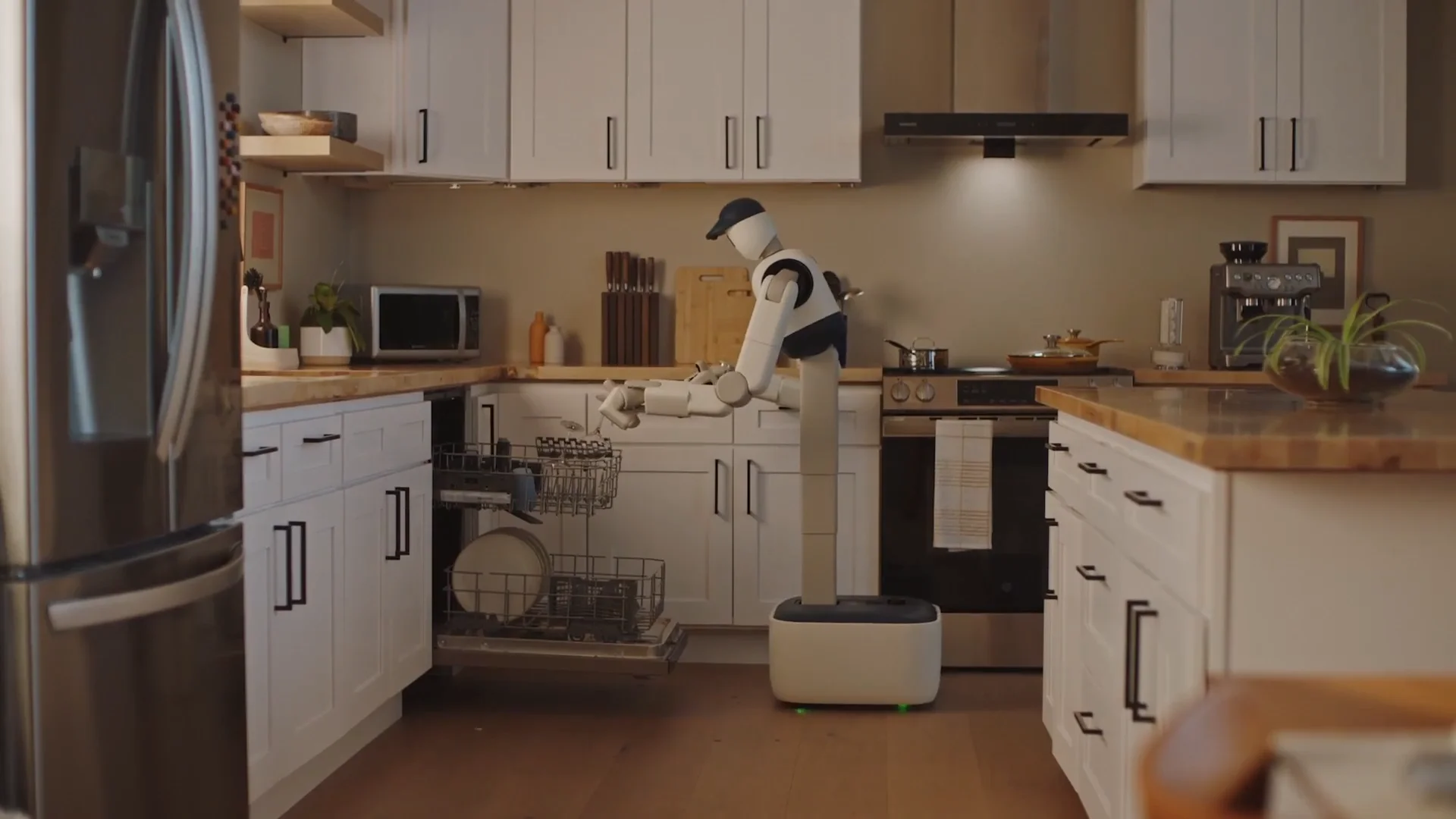
The Bloomberg interview also addressed the robot’s most distinctive accessory: its hat. While it appears decorative, the brim serves a functional purpose by hiding the robot’s cameras and microphones. Zhao explained that this allows users to make "eye contact" with the robot’s decorative eyes rather than staring into a lens, which often feels "creepy" in a domestic setting.
Watch the Bloomberg Technology interview below:
The Data Factory: From 33 Steps to "Poisonous Data"
While the lab demos—clearing a table, loading a dishwasher, and folding socks—are undeniably impressive, they remain controlled environments. The "Table-to-Dishwasher" cycle involves 33 unique interactions with 21 different objects and 130 feet of autonomous navigation.
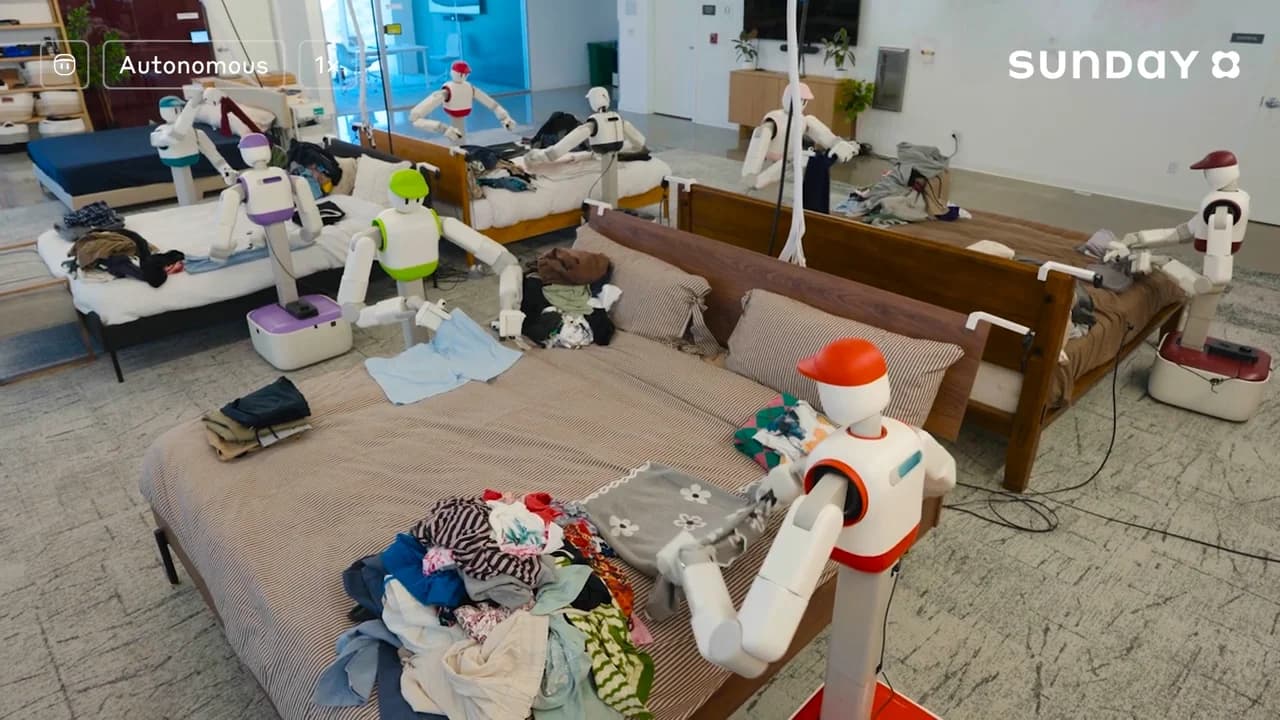
However, the real technical hurdle lies in "deformable objects" like socks. Because socks lack a consistent geometry, Memo must use "thumbing"—a technique using its pincers to mimic an opposable thumb—to stretch and fold the fabric. This precision is powered by the ACT-1 foundation model, which has now ingested over 10 million episodes of human data from 500 different homes.
Tony Zhao highlighted the logistical nightmares of this "data-first" approach. Shipping 2,000 gloves to "Memory Developers" has revealed unexpected failure points, such as gloves melting during shipping to hot climates or "poisonous data" caused by cameras being plugged in backward. "All the things that can go wrong will go wrong," Zhao admitted, emphasizing that the "data flywheel" is as much a management challenge as it is a technical one.
"Cutemaxxing" and Industry Camaraderie
Despite the high-stakes rivalry with companies like Figure, the broader robotics community is showing signs of professional respect. Following a post by Sunday designer Shy Yang about the "cutemaxxing" design brief for Memo’s head, 1X Technologies’ VP of Design, Dar Sleeper, praised the startup’s brand identity.
"People don't appreciate all the little details of what it takes to build a strong identity for a robot," Sleeper wrote on X, adding that it will take "support and positivity" across the industry to reach the goal of ubiquitous robotics.
As Sunday Robotics moves toward its 2026 shipping goal, it is clear they are betting that a complete, stable system will win over consumers, even if it trades bipedal agility for a cute hat and a wheeled base. The question remains whether Memo can maintain its 90% success rate when it leaves the lab and enters the "messy reality" of 3,000 real-world homes.
Share this article
Follow humanoid robotics without following every announcement.
Get the week’s most important launches, funding and research—and why they matter—in one email from Humanoids Daily.
Once a week. Unsubscribe anytime.
Read recent issuesRead next
- Published on
- Reading time
- 4 min read
Sunday Robotics Raises $165M to Transition from Demos to Real-World Deployment
- Published on
- Reading time
- 8 min read
The Appliance vs. The Android: Sunday and 1X Bet on Opposing Futures
- Published on
- Reading time
- 5 min read
Beyond the Viral Demo: Sunday Robotics Claims 99.1% Zero-Shot Success in Laundry Folding with ACT-2
- Published on
- Reading time
- 5 min read
Design Around the Data: Sunday Robotics Reveals Why They Built 100 Gloves Before One Robot
- Published on
- Reading time
- 4 min read
Sunday Robotics Founders on the "GPT Moment" for Physical AI and Breaking the Data Bottleneck
- Published on
- Reading time
- 3 min read
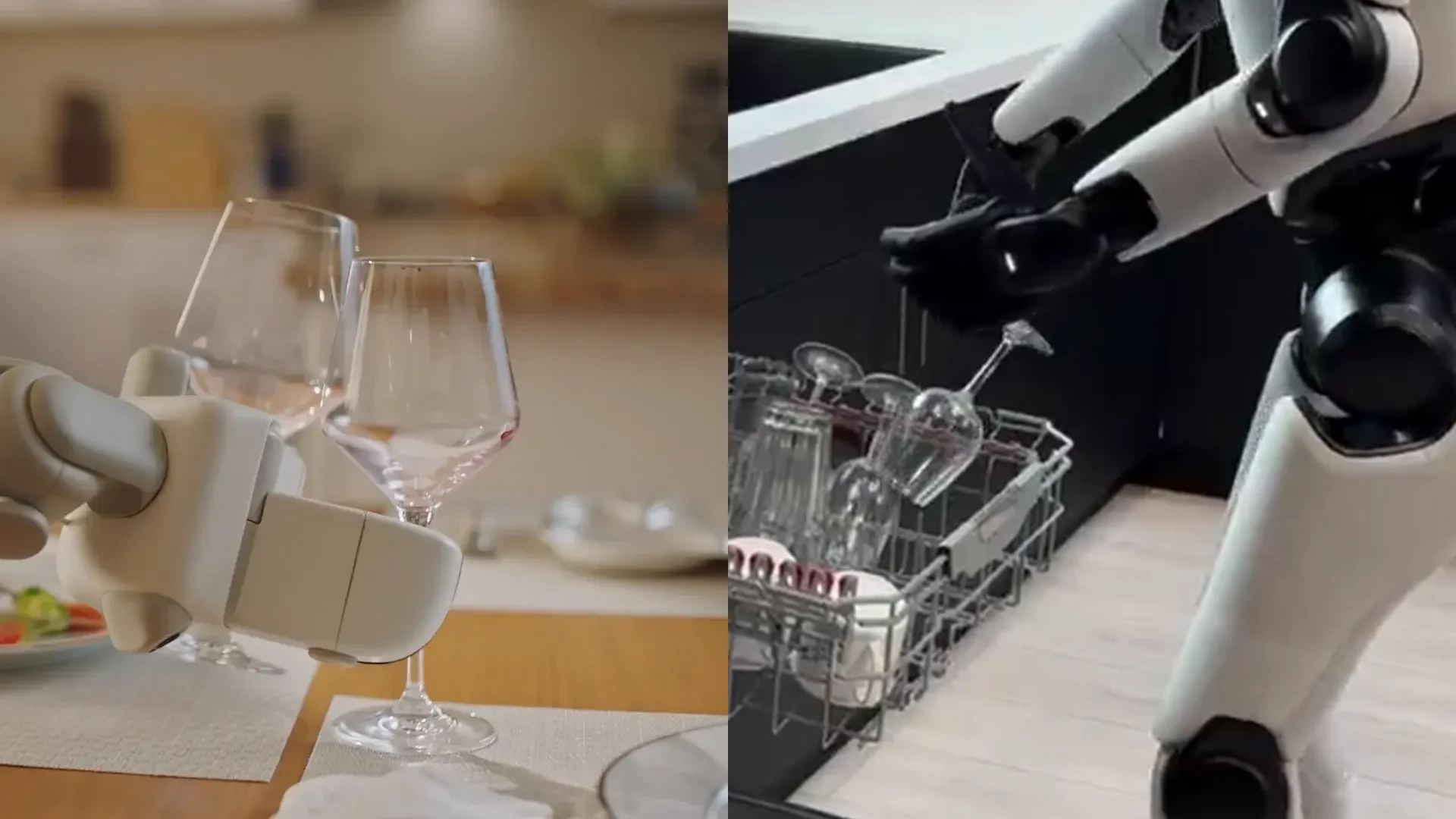
The Dishwasher Wars: Figure Fires Back at Sunday Robotics with Glassware Demo