- Published on
Agility's Numbers Are In: $1.8M in Sales, a $138M Loss, and a Backlog Owed to an Insider
One tap, and our reporting appears more often in your Google Top Stories. It makes a real difference to a small newsroom.


Your guide
Rich Robinson
Jee Chee Ren · Executive tour
See China’s AI and robotics ecosystem first-hand.
Six days exploring AI, robotics and advanced manufacturing.
With Rich Robinson, Clinical Professor of Entrepreneurship at Peking University
Beijing · Guangzhou · Shenzhen
29 November–4 December 2026
Referral partnership · We earn a commission on referred bookings.
- Agility recorded $1.78 million in total net sales for 2025 against a net loss of $138.1 million — and 64% of that revenue came from related parties.
- The headline $300 million backlog is a single contract: 1,000 Digit v5 units on a three-year RaaS term, placed by a customer the filing identifies as a related party, sweetened with 453,000 warrants that vest as robots are deployed. Agility is still deciding how to account for it.
- Auditors' notes describe Agility as a development stage company whose deployments are "still largely considered to be research and development," and management concludes substantial doubt exists about its ability to continue as a going concern.
- Digit v4 is deployed or committed for deployment across nine customer facilities, with more than 65,000 hours of real-world operation.
- The competition section names eight rivals and not one Chinese manufacturer — five weeks after an FCC action, which Agility publicly championed, barred new foreign-produced humanoids from the US market.
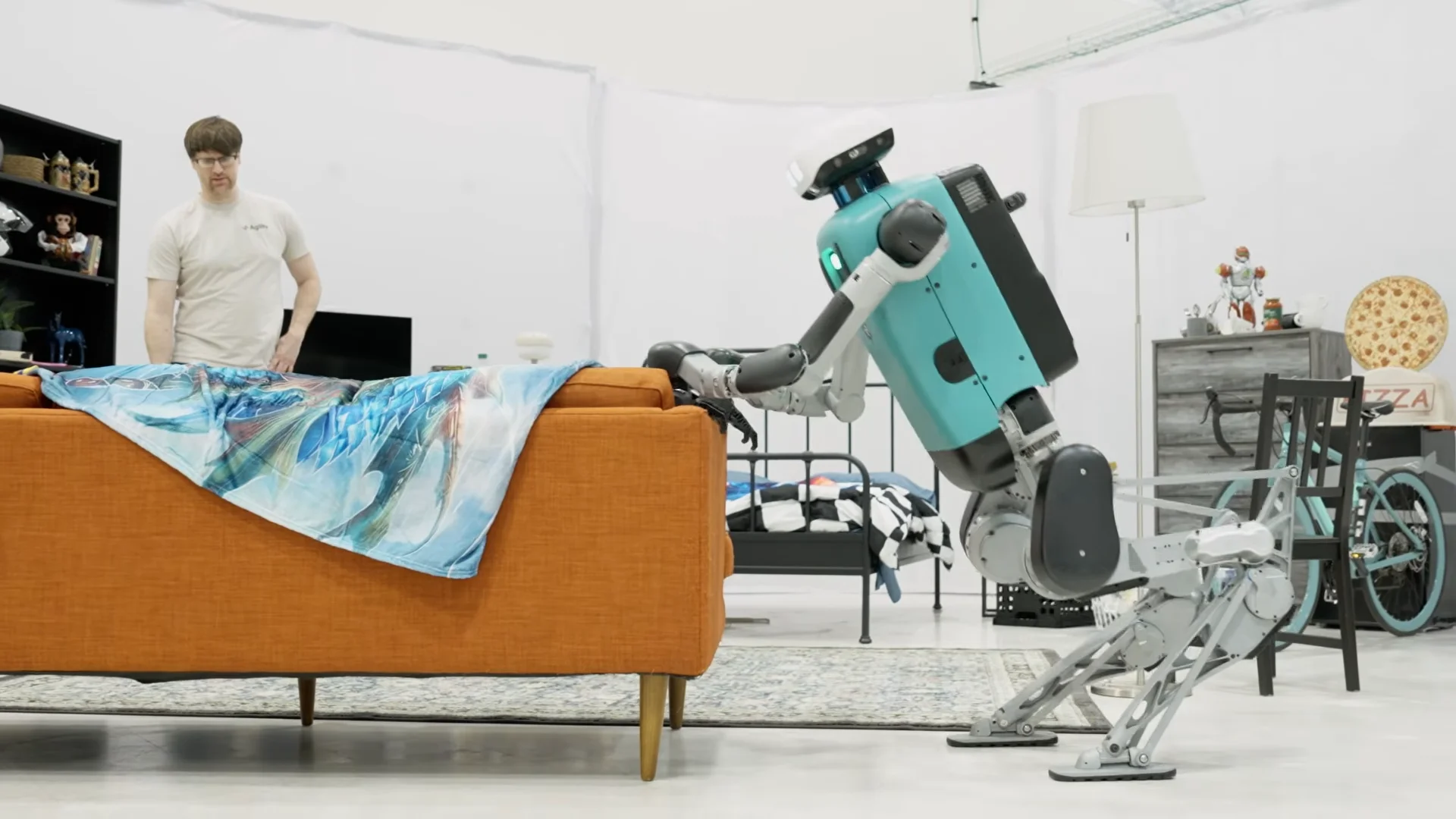
When Agility announced its plans to go public in a $2.5 billion SPAC merger with Churchill Capital Corp XI, the move promised to deliver the public markets their first US-listed pure-play humanoid robotics developer. The joint Form S-4 registration statement, filed September 4, converts years of venture-backed optimism into standardized accounting.
What the prospectus shows is a company with real robots doing real work in real facilities — and a commercial architecture that rests, at almost every load-bearing point, on parties who are already invested in Agility's success.
The Ledger: Modest Top-Line, Rising Burn
For the fiscal year ended December 31, 2025, Agility generated $1,781,967 in total net sales, up from $310,301 in 2024. Of that, $650,107 came from trade customers and $1,131,860 from related parties — roughly 64% of the year's revenue.
┌──────────────────────────────┬───────────────┬────────────────┐
│ Metric                       │ FY 2024       │ FY 2025        │
├──────────────────────────────┼───────────────┼────────────────┤
│ Net sales — trade            │    $276,393   │      $650,107  │
│ Net sales — related parties  │     $33,908   │    $1,131,860  │
│ Total net sales              │    $310,301   │    $1,781,967  │
│ Cost of goods sold           │    $462,555   │    $4,473,234  │
│ Gross loss                   │   ($152,254)  │   ($2,691,267) │
│ Research & development       │ $53,367,536   │   $91,643,691  │
│ Selling, general & admin.    │ $16,199,517   │   $45,841,052  │
│ Loss from operations         │($69,719,307)  │ ($140,176,010) │
│ Net loss                     │($70,549,619)  │ ($138,086,332) │
│ Cash & equivalents (YE)      │ $34,838,398   │  $103,043,146  │
└──────────────────────────────┴───────────────┴────────────────┘
(Data source: Agility Form S-4 Registration Statement)
The weekly humanoid robotics briefing
One email a week: the launches, funding and research that mattered, with context from Humanoids Daily.
Read recent issuesCost of goods sold reached $4.47 million — two and a half times revenue — leaving gross profit at -$2.69 million, a gross margin of roughly -151%. Research and development climbed to $91.6 million and selling, general and administrative expenses to $45.8 million. Loss from operations was $140.2 million; $1.95 million of interest income narrows the net loss to $138.1 million.
Agility closed the year with $103.0 million in cash and cash equivalents, up from $34.8 million (plus $7.3 million in short-term investments) a year earlier, following its Series C. Total liabilities more than tripled to $56.6 million, driven almost entirely by an "award liability" that grew from $3.7 million to $38.2 million.
The going-concern disclosure is not boilerplate. Management determined that existing cash will not be sufficient to fund operations for at least one year from issuance, and that substantial doubt exists regarding the company's ability to continue as a going concern. Agility has since raised approximately $87.9 million in gross cash proceeds through SAFEs entered into in July 2026, ahead of the roughly $620 million in gross proceeds expected at closing — $414 million deposited in Churchill's trust plus a $201.0 million PIPE at $10 per share. The merger's minimum cash condition is $200 million.
The $300 Million Order Is One Customer, and That Customer Is an Insider
The commercial centerpiece of the filing is $300 million of committed multi-year orders for Digit v5, subject to the satisfaction of contractual milestones, product features and specifications. As of May 2026, that figure relates to 1,000 Digit v5 robots under a single three-year term RaaS contract.
Two disclosures in the financial statement notes change how that number reads.
First, the counterparty is not arm's-length. In May 2026, Agility entered into an agreement with a customer that is also a related party, under which the company will issue 453 common stock purchase warrants per robot sourced, should the customer source a minimum of 1,000 robots — an aggregate commitment of 453,000 warrants vesting proportionately as robots are deployed.
Second, the accounting is unresolved. The filing states plainly that the company is still evaluating the accounting for this transaction. Warrants issued to a customer in connection with a sales arrangement are frequently treated as a reduction of the transaction price. If that treatment applies here, the revenue Agility ultimately books against its marquee order could be lower than $300 million.
The customer is not named. What the structure tells us is that Agility's largest commercial commitment was secured, at least in part, with equity in the company about to go public — and by the same category of counterparty that already accounts for most of its current revenue.
Enterprise Deployments and the Development-Stage Problem
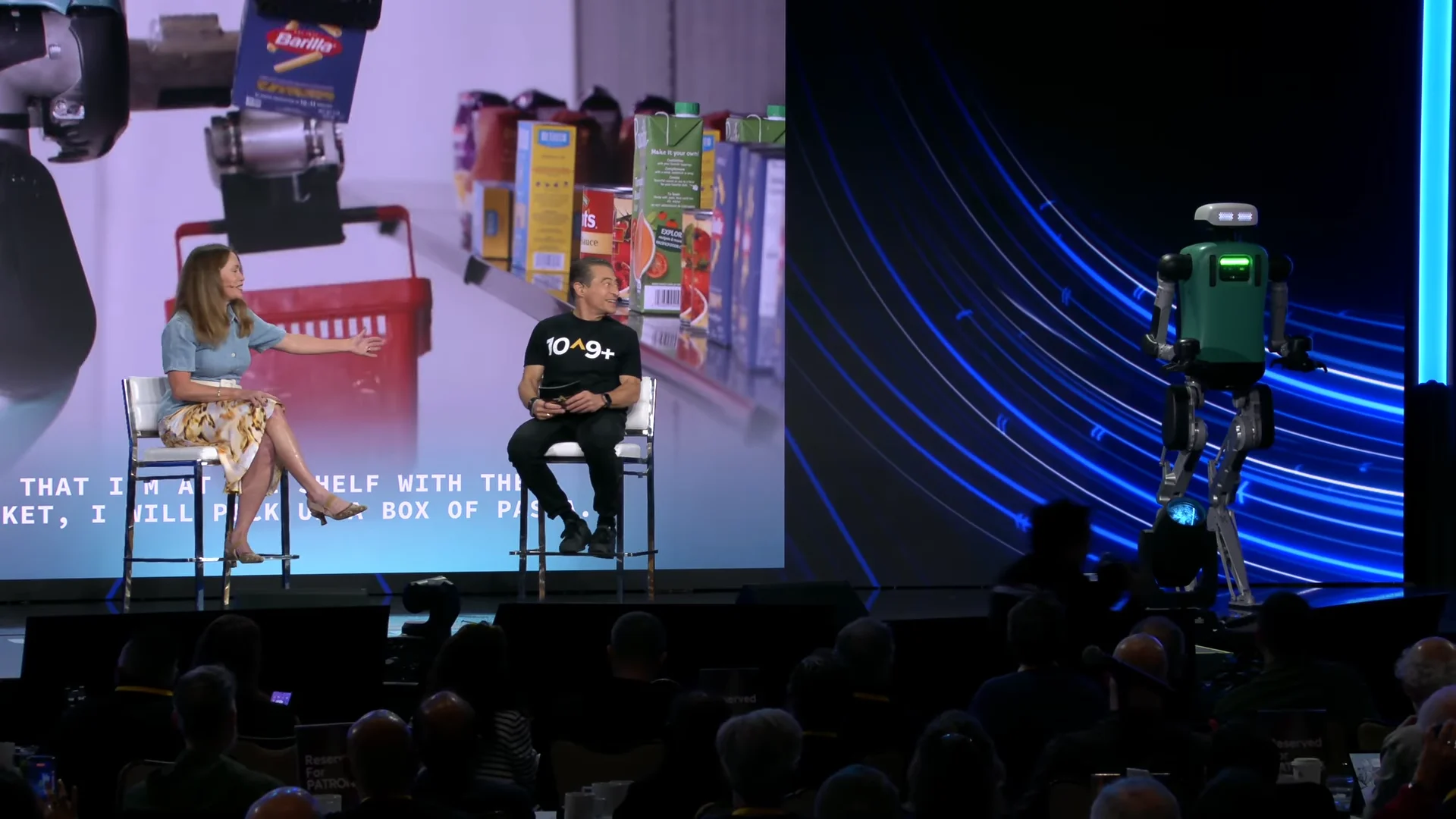
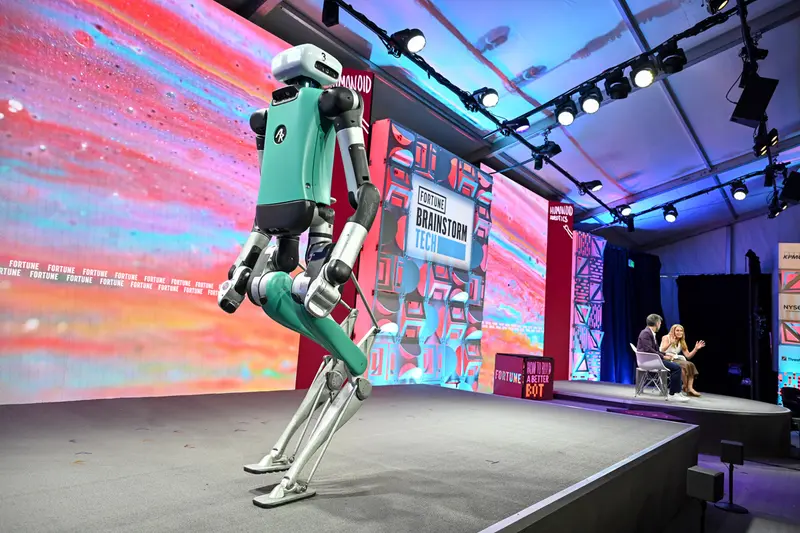
The operational record is the strongest part of the document. Digit v4 is deployed or committed for deployment across nine customer facilities — a phrasing worth keeping intact, since some of the nine are commitments rather than live sites — and has accumulated more than 65,000 hours of operation in real customer environments. Customers named include Schaeffler, GXO, Toyota Motor Manufacturing Canada, Amazon and Mercado Libre. Deployments have passed OSHA-recognized Nationally Recognized Testing Laboratory field evaluations.
At GXO, Digit units moved more than 100,000 totes; at Schaeffler, Digit has handled automotive parts across multiple sites.
Set against that, Note 1 of the audited financials is startling. It states that Digit sales, deployment arrangements and customer acceleration engagements "are still largely considered to be research and development," and that Agility "is currently considered to be a development stage company." The company's own accountants and its own marketing describe two different businesses.
The bridge between them is the Customer Acceleration Program, established in late 2025, which requires participants to pay a program fee of approximately $500,000 to move from proof of technology through on-site proof of concept to commercial RaaS deployment. As of May 2026, four new customers had signed and more than 30 prospects were engaged. Two caveats travel with it: the filing notes that Agility's other current commercial deployments predate the program, and CAP is introduced under a risk-factor heading warning that it "may not result in commercial deployments or revenue."
The Unit Economics Blueprint, and What the Footnotes Say
Agility's profitability model depends on RaaS. Under the illustrative economics, a Digit rents for roughly $8,500 per month — about $102,000 a year — plus a one-time deployment fee of approximately $25,000, producing on the order of $535,000 in cumulative revenue over an assumed five-year useful life. Under outright purchase, roughly $200,000 upfront plus a $20,000 deployment fee and about $36,000 a year in software and maintenance yields approximately $400,000 over the same period. Customers buying outright are modeled to reach breakeven in approximately 1.1 years.
Two numbers in this section need their definitions attached.
The sub-one-year payback Agility cites is the time before RaaS subscription fees exceed the bill of materials — not full cost recovery. It excludes deployment costs of roughly $15,000 and annual delivery costs of roughly $15,000 per unit.
The "in excess of 70%" margin is calculated over five years as cumulative revenue minus cumulative cost, divided by cumulative revenue, and excludes corporate SG&A and R&D. It is a unit contribution figure, not a GAAP (Generally Accepted Accounting Principles) gross margin. The GAAP gross margin Agility actually reported in 2025 was -151%.
The hardware side of that bridge is real progress: engineering iterations and supplier sourcing have cut the Digit v4 bill of materials to approximately $125,000 per unit, with management describing a path toward roughly $30,000 over time. Digit v5 prototypes are built, with initial release expected in late 2026, and RoboFab in Salem, Oregon is designed for up to 10,000 units annually. The S-4's deployment trajectory runs to roughly 800 Digit v5 units in 2027, 7,000 by 2030 and up to 25,000 by 2035.
The Competitor List, and the Rule That Shortened It
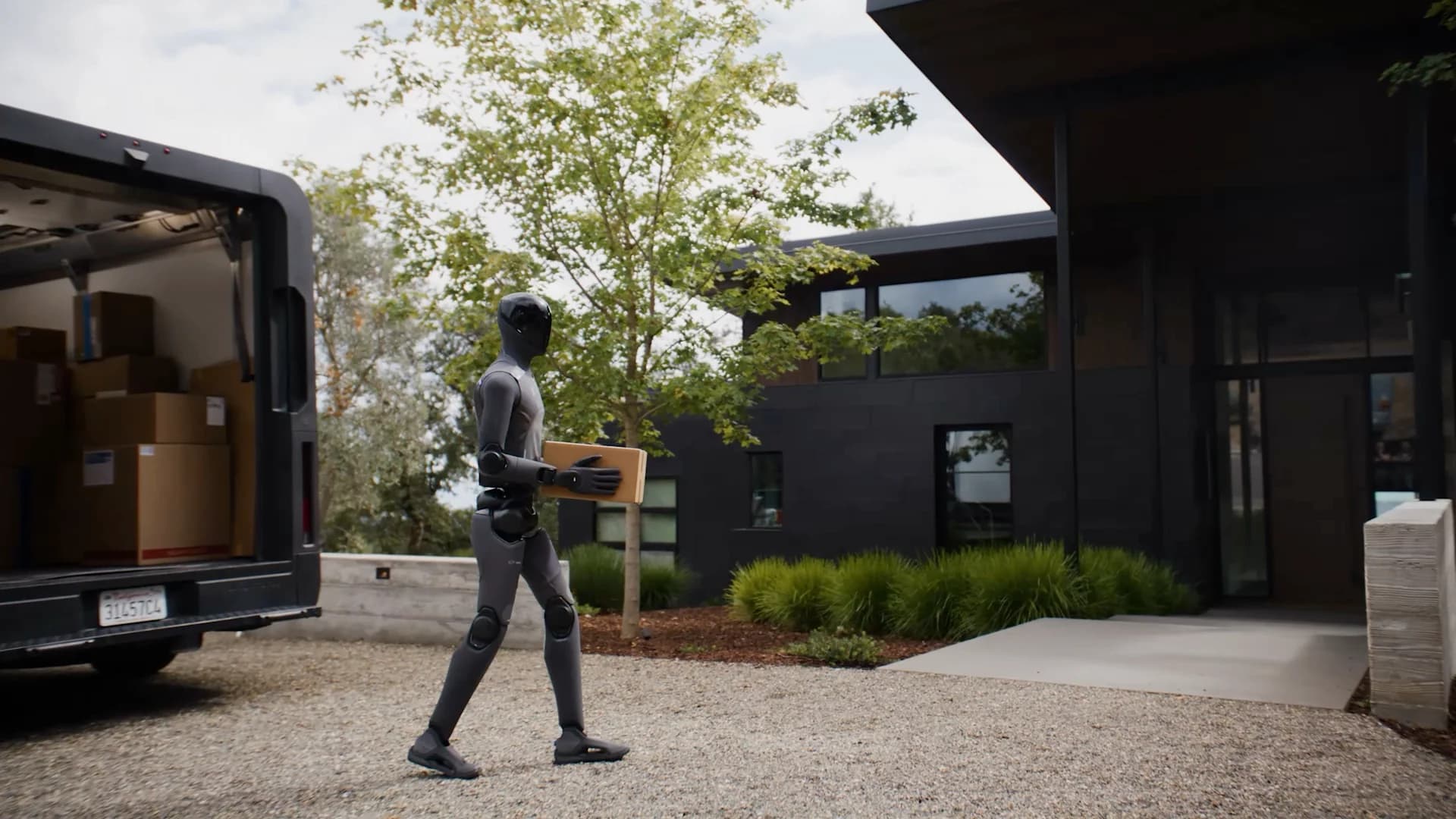
Agility's competition section names eight humanoid rivals: Boston Dynamics, Tesla, Apptronik, Figure AI, 1X Technologies, Sanctuary AI, Hexagon and NEURA Robotics. The same eight recur across two separate risk factors, so this is a settled list rather than a drafting slip.
Every one of them is American, Canadian, Swedish or German. No Chinese manufacturer appears anywhere in it — not Unitree, not UBTech, not AGIBOT. That is a striking absence in a document filed weeks after Unitree's Shanghai STAR Market listing valued it at multiples of Agility's $2.5 billion, and with UBTech already trading in Hong Kong.
There is an explanation, and Agility helped write it. On July 28, the FCC added foreign-produced advanced robotic devices to its Covered List, barring new covered models from the equipment authorization required to import, market or sell hardware in the United States. Unitree — which by most counts holds close to a third of the global humanoid market and supplies much of the US research base — was the most exposed company in the industry. Agility welcomed the decision publicly, arguing it rewards firms that built domestic supply chains and noting that Digit is "engineered and assembled here in the US," while publishing a policy white paper, Safeguarding America's Humanoid Future, and pledging to keep advocating in Washington. The position drew criticism from parts of the US robotics community, which argues that cutting off affordable Chinese hardware strands academic labs and slows domestic research more than it protects it.
On that reading, the omission is internally consistent: companies that cannot legally sell new models into the US are not competitors for US warehouse contracts.
Beijing's threatened response points straight at Agility's cost curve. China's commerce ministry has urged Washington to reverse the decision, and analysts expect any retaliation to run through rare earth minerals. Agility's own risk factors flag single-source exposure across semiconductors, batteries, sensors, actuators and specialty alloys, and warn that tariffs, trade restrictions and "Buy American" requirements may force more expensive domestic supply chains. The path from a $125,000 bill of materials toward $30,000 runs through exactly those components. The policy that clears Agility's competitors from the field is the same policy that could make its robots harder to build cheaply.
What to Watch
Four things determine whether the $300 million becomes revenue: cooperative safety certification for Digit v5, RoboFab's production ramp, the milestones embedded in that single anchor contract — and the durability of a trade rule that is barely a month old. The filing is specific about the first two, silent on the third, and, so far as the competition section shows, quiet on the fourth. For a company whose entire equity story is the distance between $1.8 million and $300 million, the terms of the contract that closes that gap, the identity of the shareholder on the other side of it, and the policy that keeps the field clear are the disclosures that matter most.
Share this article
Read next
- Published on
- Reading time
- 2 min read
AGCO Signs Agility Deal to Bring Humanoid Robots to Its Kansas Factory
- Published on
- Reading time
- 2 min read
Agility Moves Closer to Nasdaq as Merger Vote Is Set for November 2
- Published on
- Reading time
- 7 min read
Agility's Investor Day: Digit 5 Launches at a $150,000 Bill of Materials, and Its $300M Order Unlocks Skill by Skill
- Published on
- Reading time
- 5 min read
Breaking the Cage: Agility CEO Peggy Johnson Outlines Vision for "Unconstrained" Humanoids at Abundance Summit 2026
- Published on
- Reading time
- 3 min read
Agility Robotics Reportedly Nearing $400M Funding Round to Mass Produce Digit Humanoid
- Published on
- Reading time
- 10 min read
The Great Valuation Chasm: A 2025 Guide to the Humanoid Robotics Capital Race
The weekly humanoid robotics briefing
One email a week: the launches, funding and research that mattered, with context from Humanoids Daily.
Read recent issues