- Published on
Unitree’s G1-D Swaps Legs for Wheels to Solve the AI Data Bottleneck
One tap, and our reporting appears more often in your Google Top Stories. It makes a real difference to a small newsroom.


Your guide
Rich Robinson
Jee Chee Ren · Executive tour
See China’s AI and robotics ecosystem first-hand.
Six days exploring AI, robotics and advanced manufacturing.
With Rich Robinson, Clinical Professor of Entrepreneurship at Peking University
Beijing · Guangzhou · Shenzhen
29 November–4 December 2026
Referral partnership · We earn a commission on referred bookings.
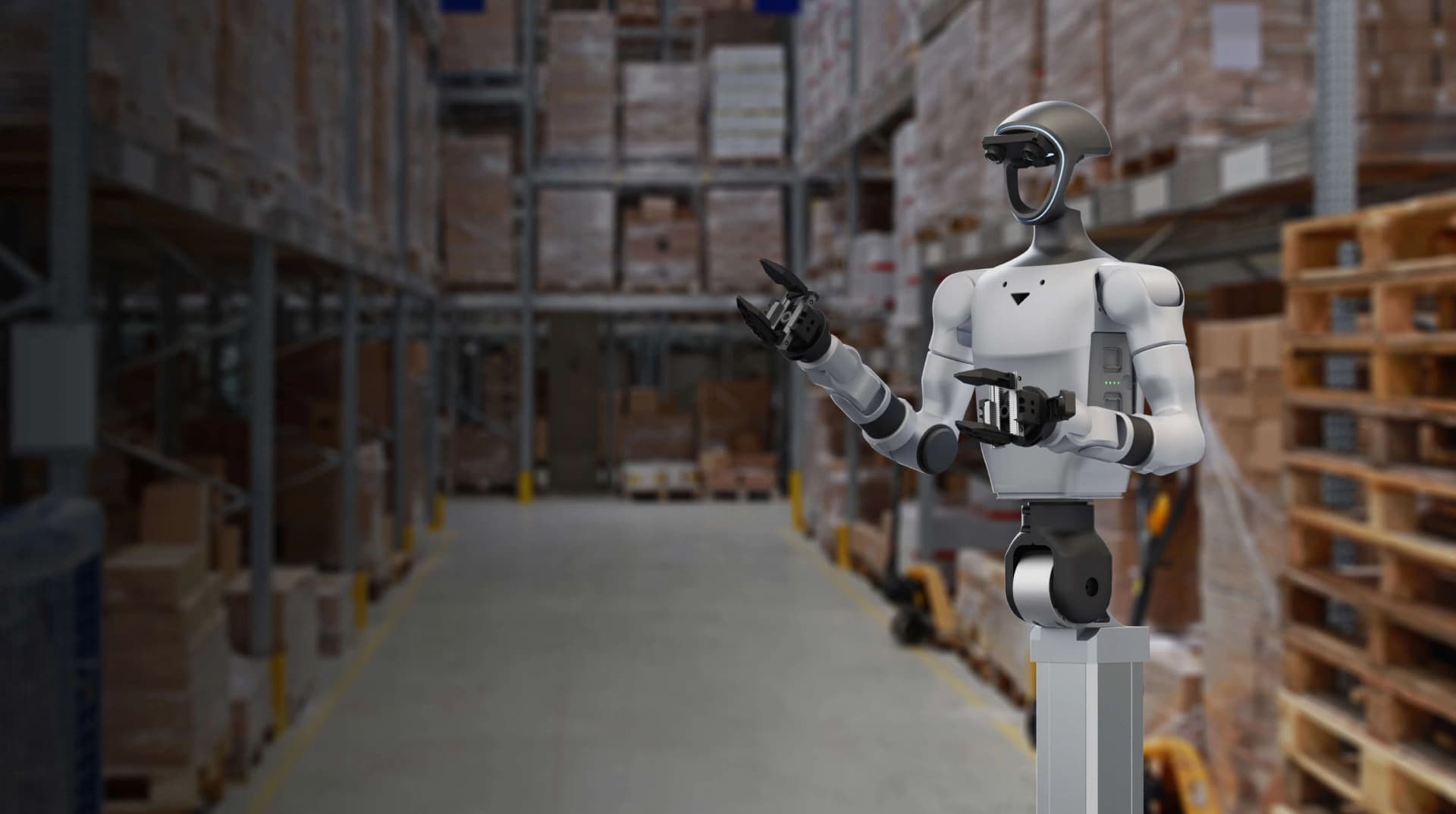
Unitree Robotics unveiled the G1-D today, a wheeled variation of its G1 humanoid platform.
While the hardware change—swapping legs for a differential drive chassis—is the most visible difference, the real news lies in the software ecosystem launching alongside it. Unitree is positioning the G1-D not just as a robot, but as the hardware anchor for a new "end-to-end" data acquisition and training solution, aiming to solve the generalization bottleneck that currently plagues the embodied AI industry.
Stability Over Stunts
The G1-D abandons the complex bipedal locomotion of its siblings for a wheeled base, a trade-off that sacrifices terrain adaptability for stability, payload capacity, and drastic improvements in battery life.
The robot is available in two configurations: a standard model and a "Flagship" edition. The Flagship model features a telescoping column that allows the robot to adjust its height between 1.26 meters and 1.68 meters (roughly 4'1" to 5'6"), giving it a vertical workspace range of nearly two meters.
The weekly humanoid robotics briefing
One email a week: the launches, funding and research that mattered, with context from Humanoids Daily.
Read recent issues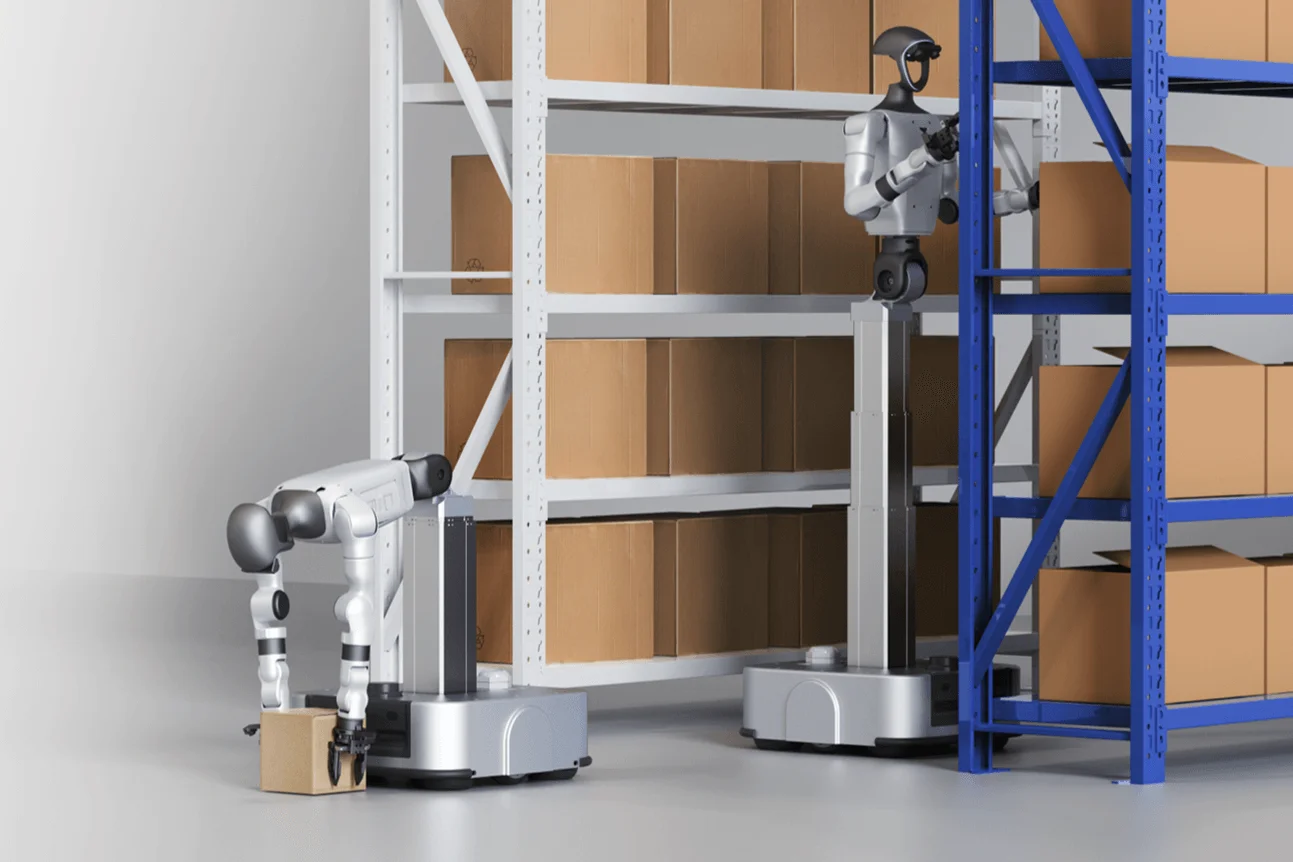
Crucially for researchers, the wheeled base allows for significantly longer operation times. While bipedal humanoids often struggle to last an hour on a charge due to the energy required for balancing, the Flagship G1-D claims a battery life of approximately 6 hours. This extended runtime is vital for the repetitive, long-duration data collection tasks required to train modern AI models.
Key Specifications (Flagship):
- Height: 1260–1680 mm (adjustable)
- Weight: ~80 kg
- Degrees of Freedom: 19 total (7 per arm, 2 waist, 1 column, 2 base)
- Compute: NVIDIA Jetson Orin NX 16GB (~100 TOPS)
- Sensors: LiDAR, depth cameras, and wrist-mounted HD cameras for manipulation.
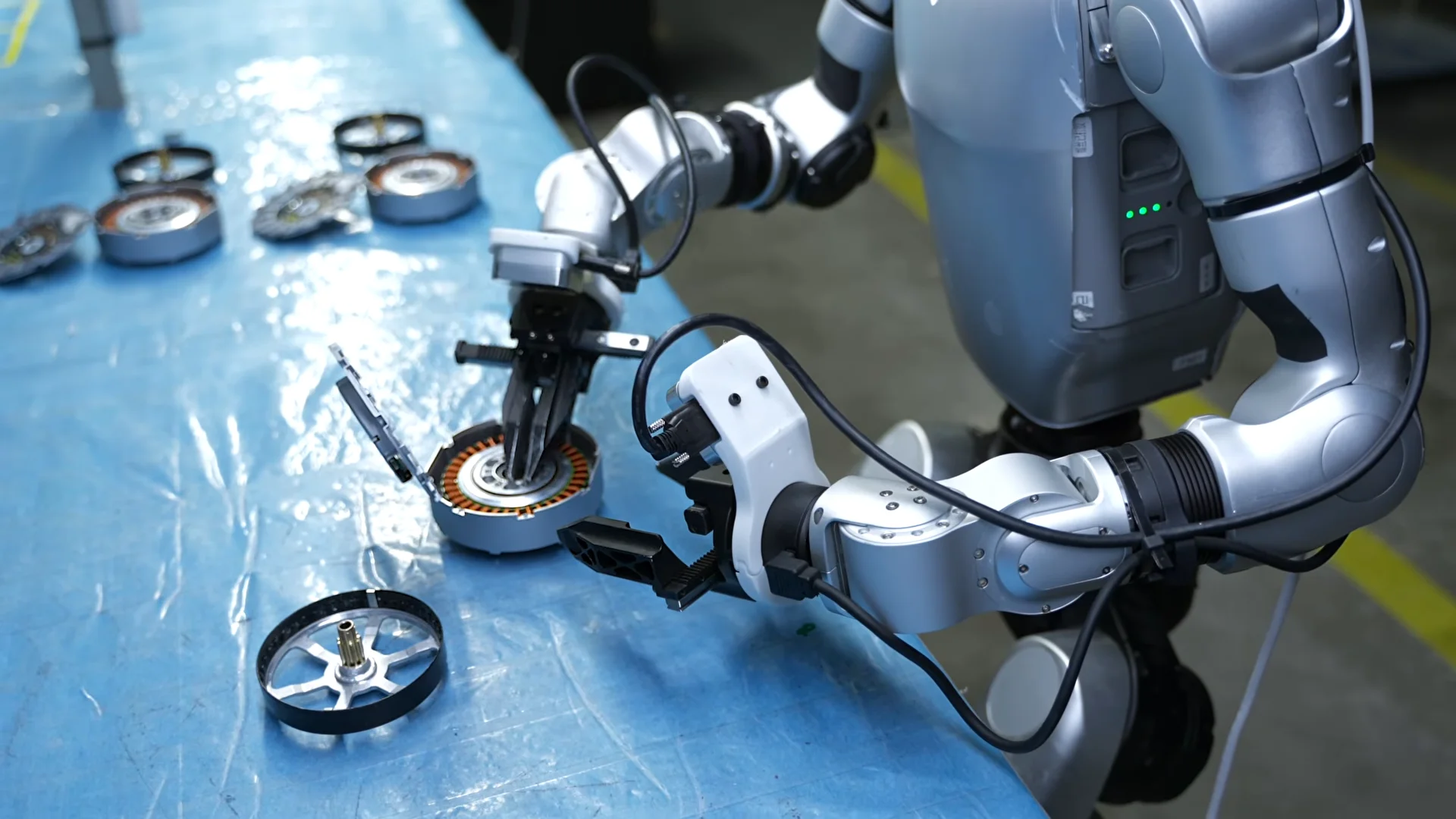
The robot retains the dexterous upper body of the original G1, featuring 7-DOF arms capable of lifting about 3kg each. It supports various end-effectors, including three-finger and five-finger dexterous hands with optional tactile sensing.
The "Data Engine" Strategy
The launch of the G1-D reinforces a strategic pivot Unitree hinted at earlier this month with its "Embodied Avatar" teleoperation suit. The company is moving beyond simply building hardware to providing the "shovels" for the AI gold rush: data generation tools.
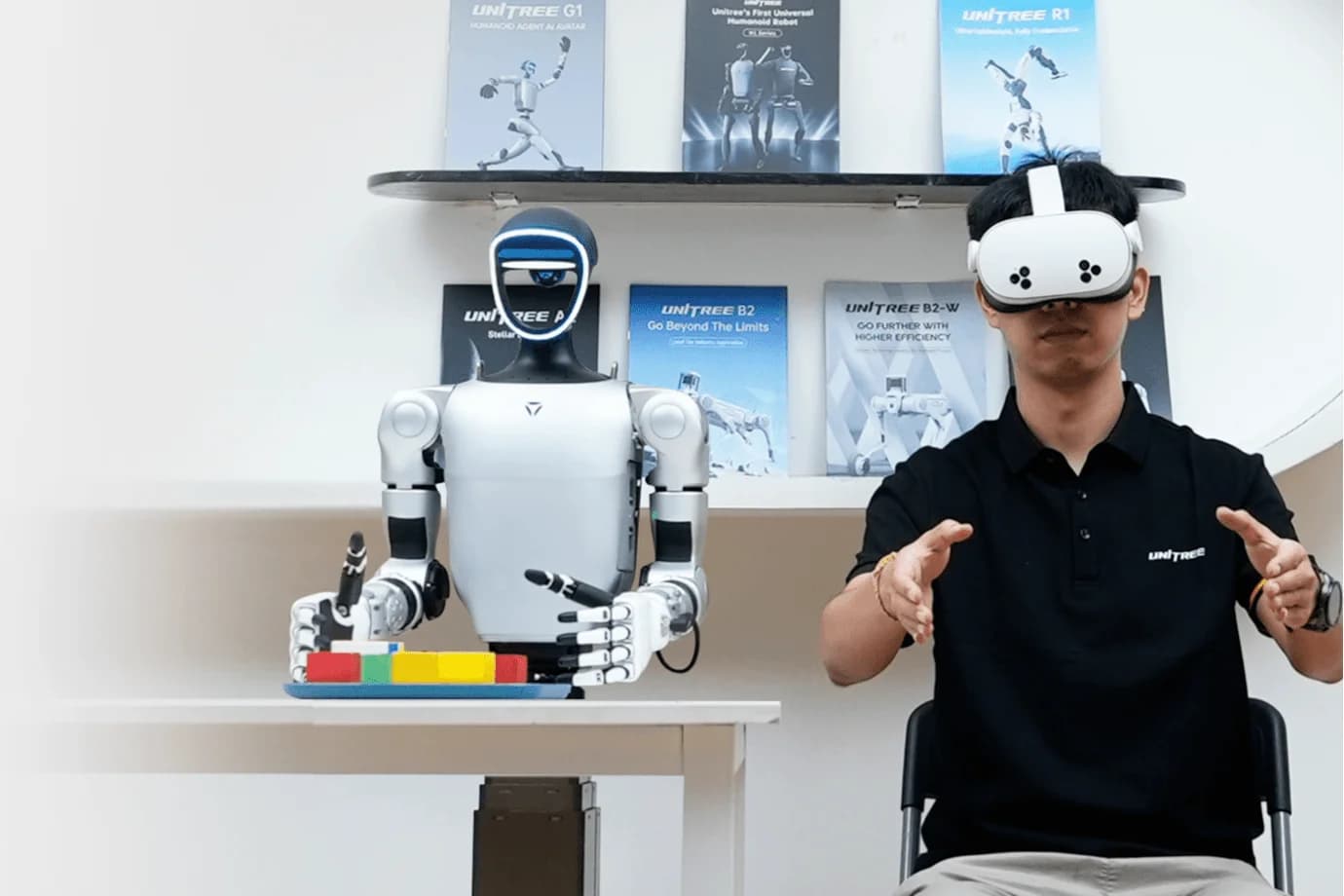
Alongside the robot, Unitree introduced a comprehensive software suite labeled "UnifoLM." The platform promises to streamline the messy pipeline of robotic learning:
- Acquisition: Standardized tools for teleoperating the robot to collect data.
- Processing: Automated labeling and reviewing of that data.
- Training: Integration with open-source frameworks (like PI and GROOT) and a proprietary world model called UnifoLM-WMA-0.
- Sim2Real: A digital twin environment to validate models before deploying them back to the physical robot.
This approach directly addresses the concerns raised by Unitree CEO Wang Xingxing at the recent Hongqiao Forum, where he noted that fragmented data standards and poor generalization are holding the industry back. By selling a standardized hardware-software package, Unitree is attempting to create a consistent format for embodied AI research.
A Practical Alternative?
The G1-D enters a market that is increasingly dividing into two camps: bipedal generalists aiming to replace human labor entirely (like the Unitree H2 or Figure 03), and specialized form factors that prioritize function over anthropomorphism.
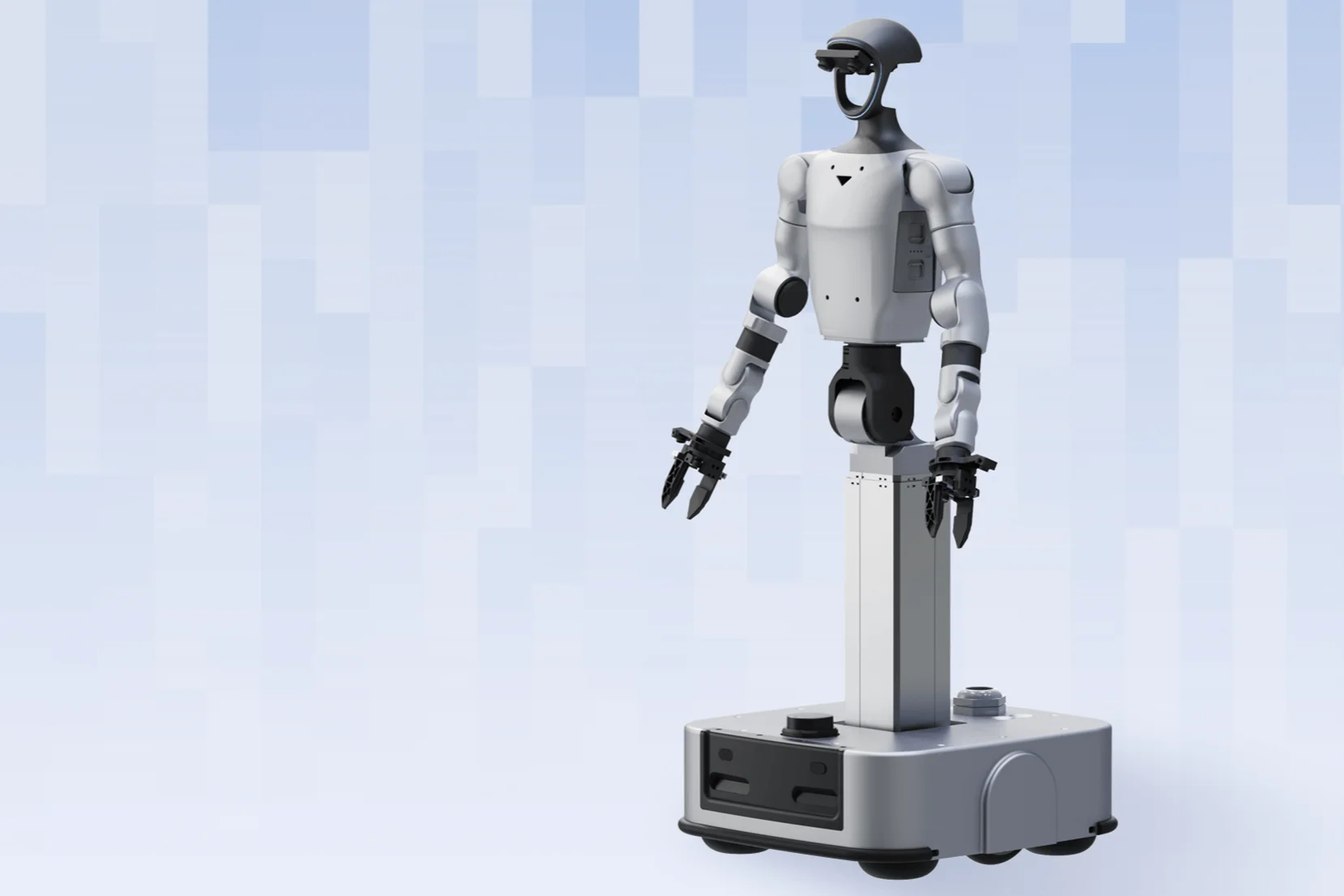
By putting a humanoid torso on wheels, Unitree is betting that for many manipulation tasks—folding laundry, factory assembly, or mobile tending—legs are currently more trouble than they are worth. Wheels provide a stable, vibration-free platform that simplifies the "navigation" part of the equation, allowing researchers to focus entirely on the harder problem: hand-eye coordination and object manipulation.
While the promise of "one-click training" and "out-of-the-box" deployment should always be viewed with a degree of skepticism in the robotics world, the G1-D represents a mature, pragmatic step. It offers labs a way to gather the massive datasets needed for the "80/80" reliability target without worrying about their robot falling over every few minutes.
Share this article
Read next
- Published on
- Reading time
- 5 min read
BitRobot and Hugging Face Drop HIW-500: A Massive 10TB Real-Home Humanoid Dataset
- Published on
- Reading time
- 3 min read
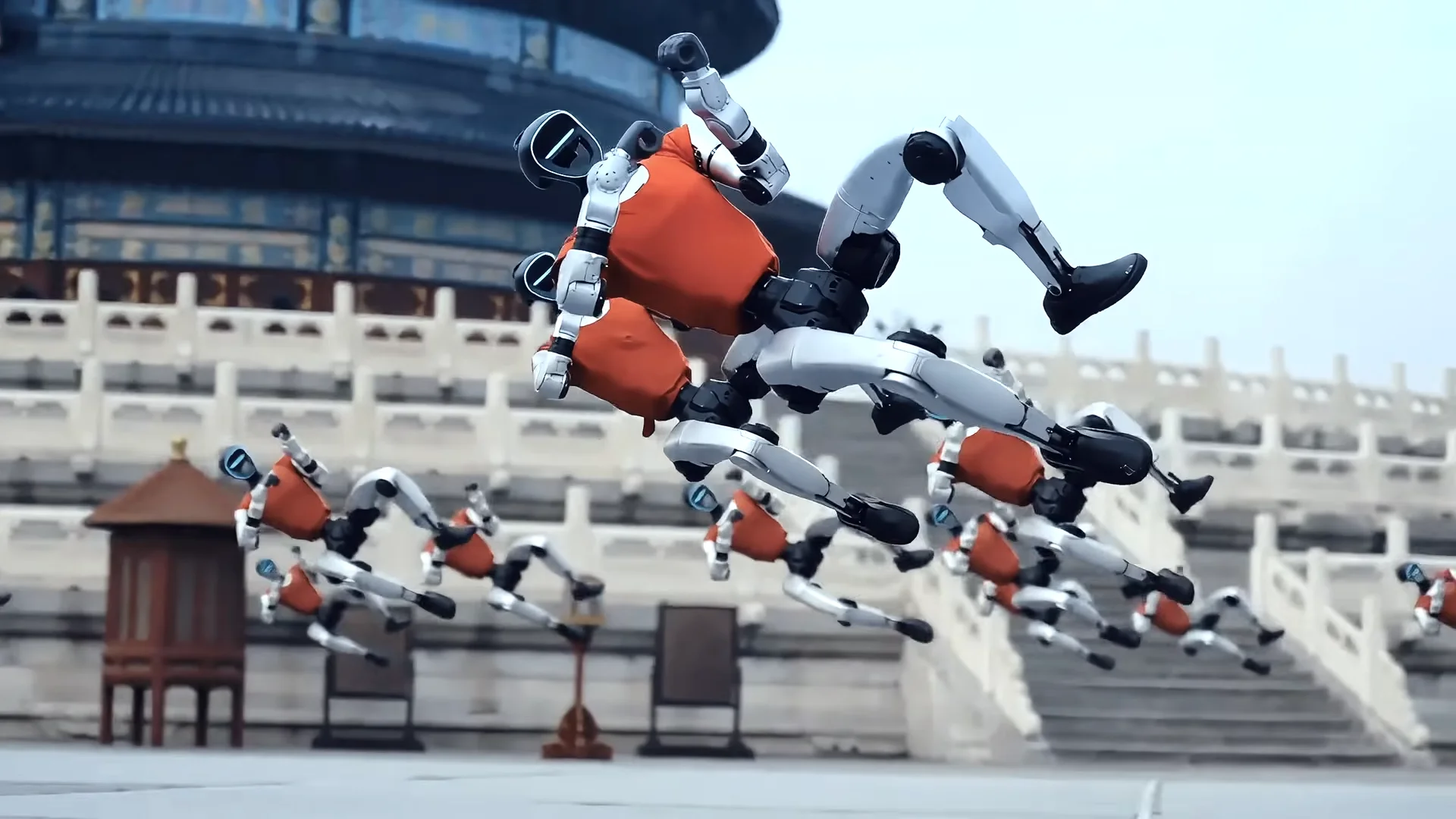
Sacred Ground, Silicon Swarm: Unitree’s G1 Fleet Performs at the Temple of Heaven
- Published on
- Reading time
- 3 min read
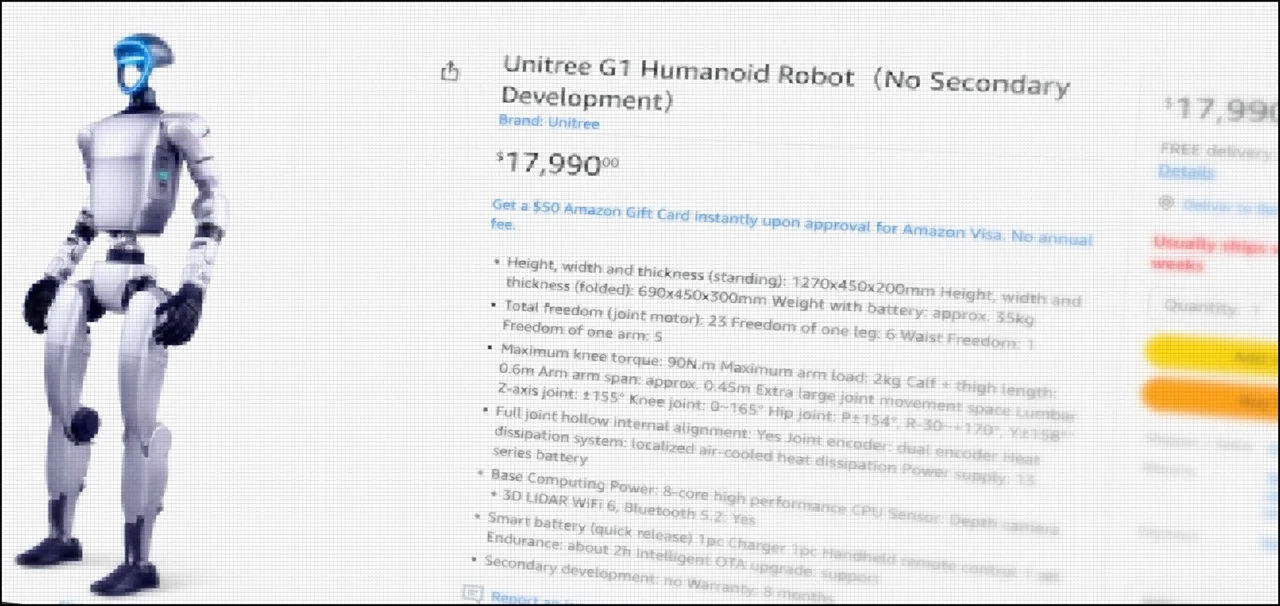
One-Click Humanoid: Unitree G1 Hits Amazon US with a 'Convenience Premium'
- Published on
- Reading time
- 4 min read
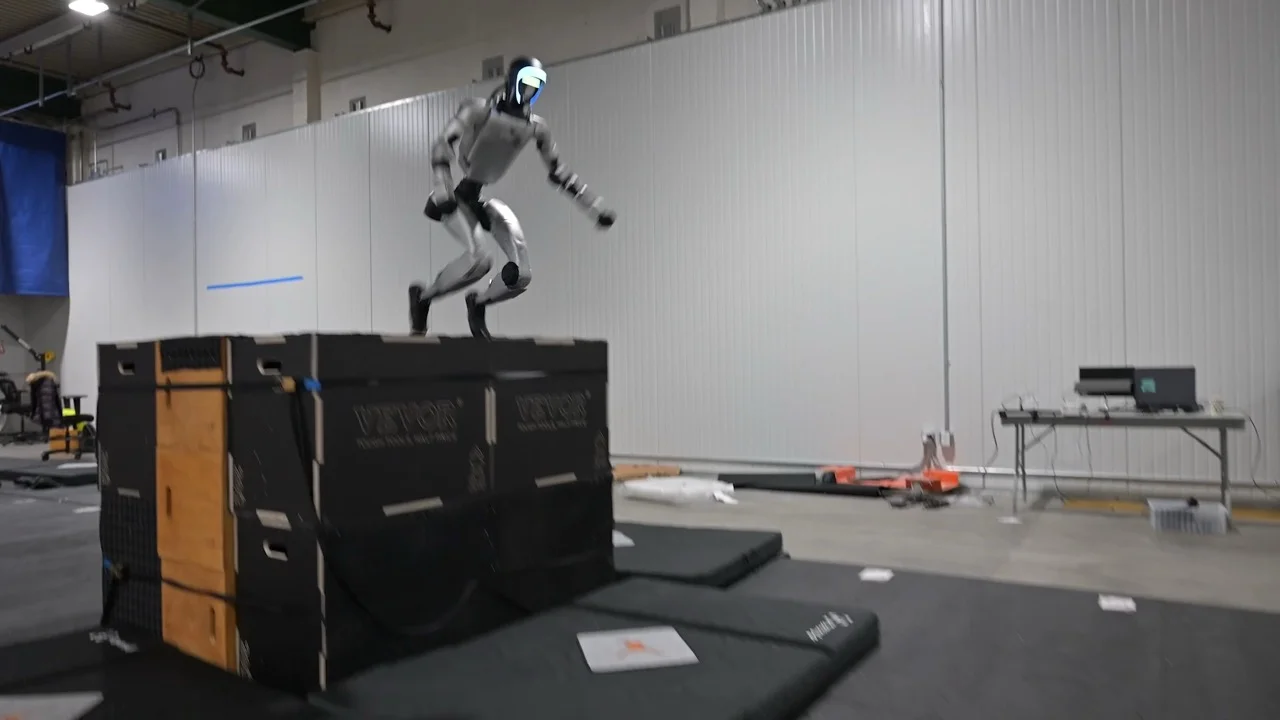
Parkour for Humanoids: Amazon’s PHP Framework Masters Agile Traversal
- Published on
- Reading time
- 2 min read
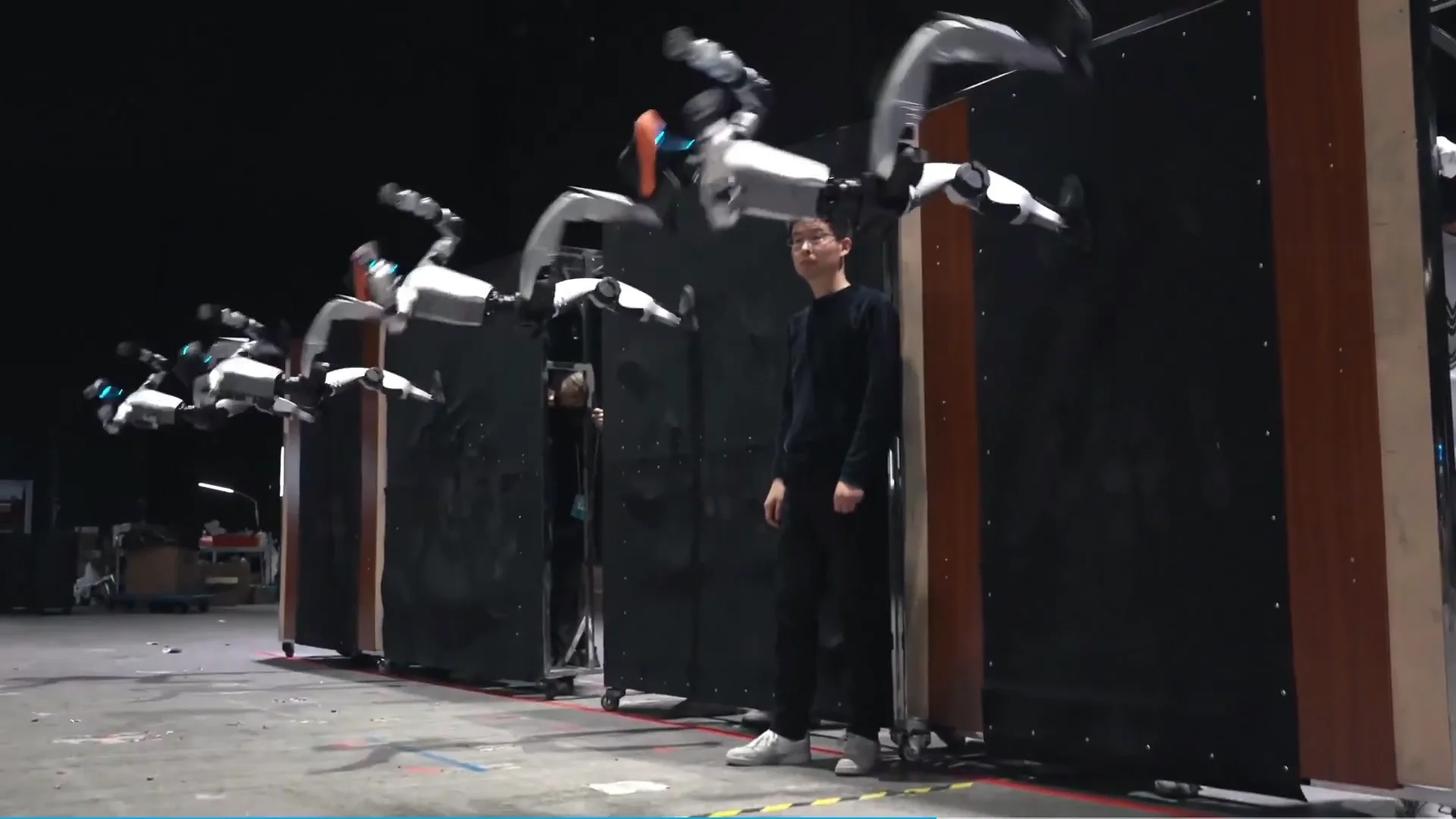
Watch: Unitree Previews "Cluster Cooperative" Tech with Mass Humanoid Performance
- Published on
- Reading time
- 3 min read
Video: Unitree Deploys G1 Humanoids to Manufacture Robot Parts
The weekly humanoid robotics briefing
One email a week: the launches, funding and research that mattered, with context from Humanoids Daily.
Read recent issues