- Published on
Global Humanoid Shipments Surpass 22,000 in H1 2026 as AGIBOT Leads and Form-Factor Debates Intensify
One tap, and our reporting appears more often in your Google Top Stories. It makes a real difference to a small newsroom.


- Global humanoid robot shipments reached over 22,000 units in H1 2026, marking a near 300% year-over-year surge, according to Counterpoint Research.
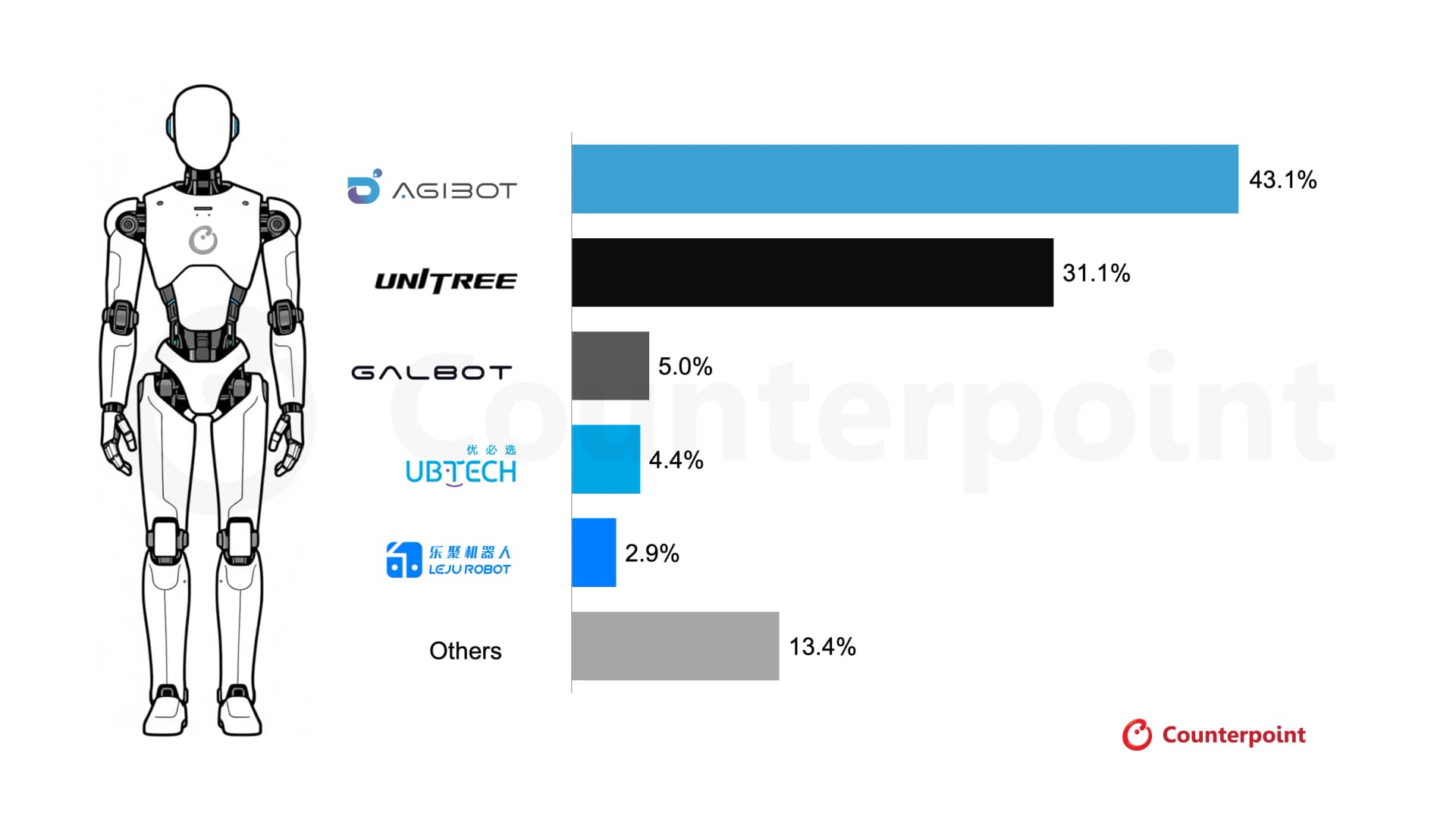
- AGIBOT ranked first globally with 9,700 shipments (43.1% market share), followed by Unitree at 7,000 units (31.1%), with the top five vendors controlling over 86% of the market.
- Entertainment, performance, and data-collection research still account for over 60% of all deliveries, though industrial manufacturing and logistics shares rose to 12.8% and 4.9%, respectively.
- The shipment hierarchy highlights an ongoing definitional divide between multi-form portfolios spanning wheeled task units and pure bipedal platforms.
- Counterpoint forecasts full-year 2026 global shipments will exceed 50,000 units as commercial pilots transition to mass factory deployments and VLA world models mature.
The commercialization curve for humanoid robotics is steepening rapidly. According to a new market analysis by Counterpoint Research, global humanoid robot shipments exceeded 22,000 units in the first half of 2026—a near 300% surge compared to the same period last year.
The findings reinforce earlier indications that global humanoid shipments surged dramatically in 1H 2026, while underscoring an increasingly top-heavy market landscape. The top five manufacturers accounted for roughly 86% of total global deliveries in H1, with Shanghai-based AGIBOT securing the top spot with 9,700 units (43.1% market share), followed closely by Unitree Robotics with more than 7,000 units (31.1%).
Yet beneath the explosive headline growth lies an ongoing industry debate over taxonomy: what constitutes a "humanoid robot," and how do vendor product strategies shape shipment crowns?
| Vendor | H1 2026 Shipments | Market Share | Primary Product Focus |
|---|---|---|---|
| AGIBOT | ~9,700 | 43.1% | Multi-tier: A-series (biped), X-series (compact/rental), G-series (industrial/wheeled) |
| Unitree | >7,000 | 31.1% | Bipedal focus: G1 compact biped, H1 general-purpose biped |
| Galbot | >1,100 | 5.0% | Wheeled dual-arm logistics platforms (G1/S1), emerging biped (ET1) |
| UBTECH | ~1,000 | 4.4% | Industrial bipeds (Walker S) and home-oriented platforms (UWORLD) |
| Leju Robotics | ~650 | 2.9% | Bipedal research and data-training platforms (Kuavo series) |
| Others | ~2,550 | 13.4% | Specialized enterprise, laboratory, and prototype hardware |
The Form-Factor Divide: Multi-Platform vs. Pure Bipedal
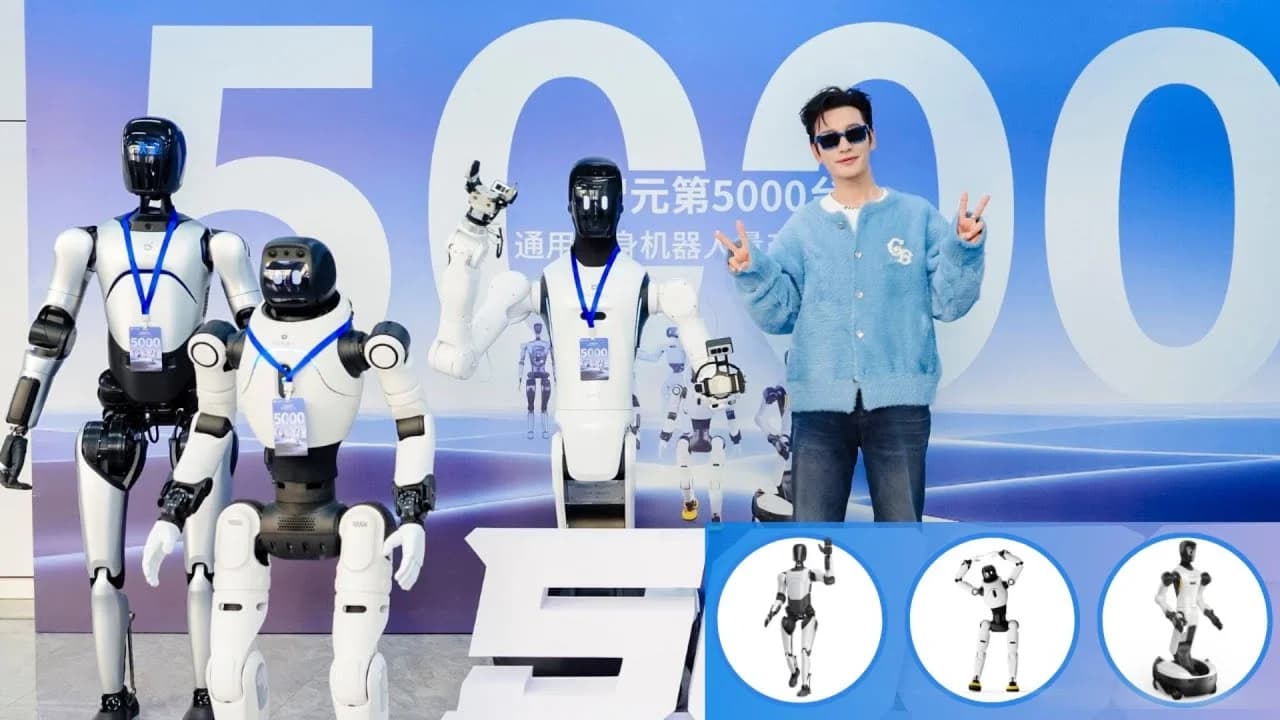
AGIBOT's ascent to the top of Counterpoint's shipment table reflects the success of its broad-spectrum product strategy. Rather than committing solely to full-sized bipedal machines, AGIBOT has deployed a tiered hardware lineup across its bipedal A-series, modular half-sized X-series, and wheeled industrial G-series. Commercial variations of the X2 have found wide adoption in commercial performance rentals, educational institutions, and embodied AI data collection, while the G2 has secured clustered factory floor deployments with partners like Longcheer Technology and Joyson Electronics following AGIBOT's milestone of manufacturing its 15,000th cumulative unit.
The weekly humanoid robotics briefing
One email a week: the launches, funding and research that mattered, with context from Humanoids Daily.
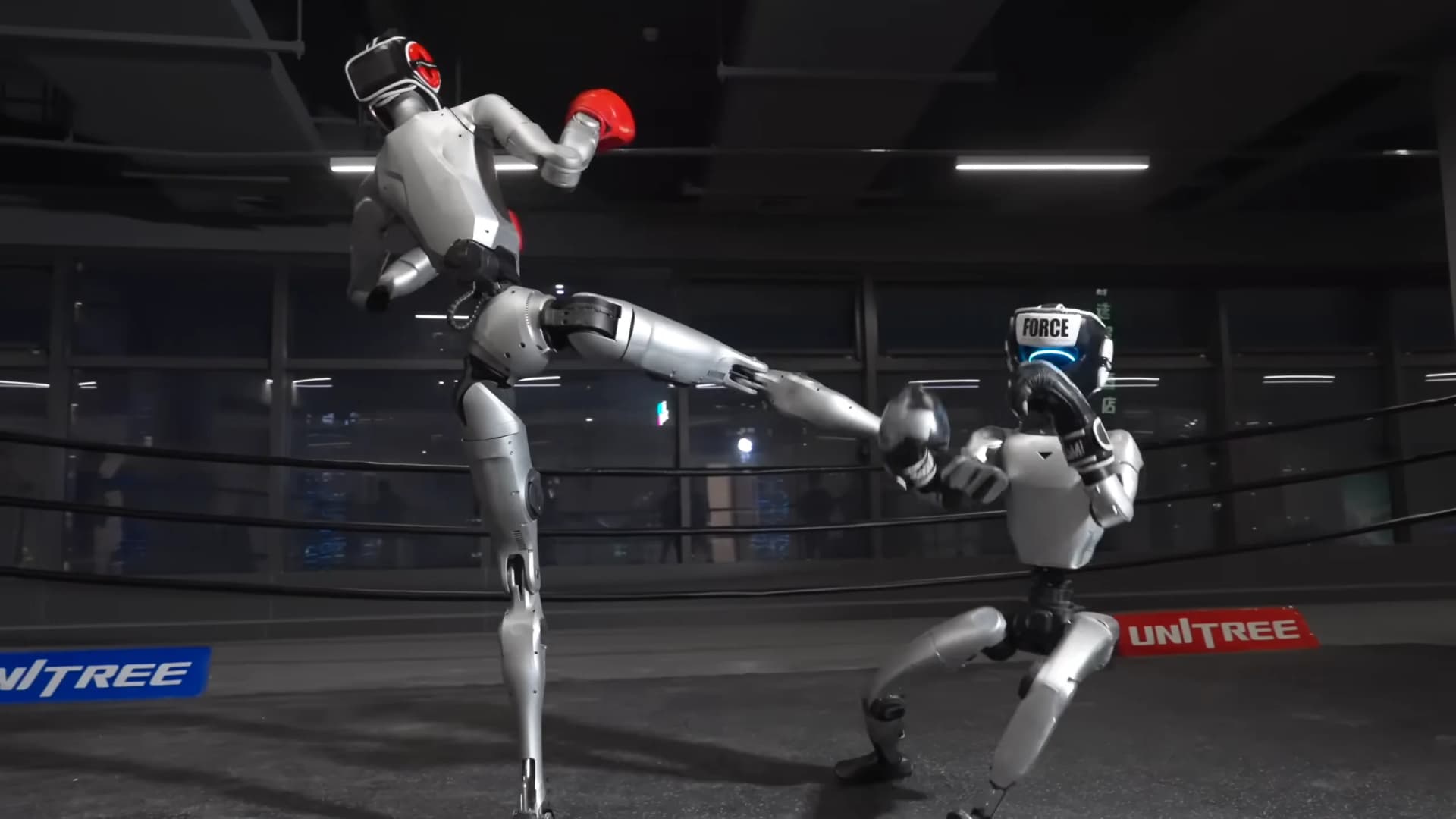
Read recent issuesHowever, AGIBOT’s top ranking comes with an asterisk for industry purists. Unitree has consistently challenged multi-form aggregation, maintaining that hybrid and wheeled form factors should not be counted alongside true legged machines. Just weeks ago, Unitree announced it had reached 18,000 cumulative bipedal humanoids produced, explicitly excluding wheeled systems from its accounting.
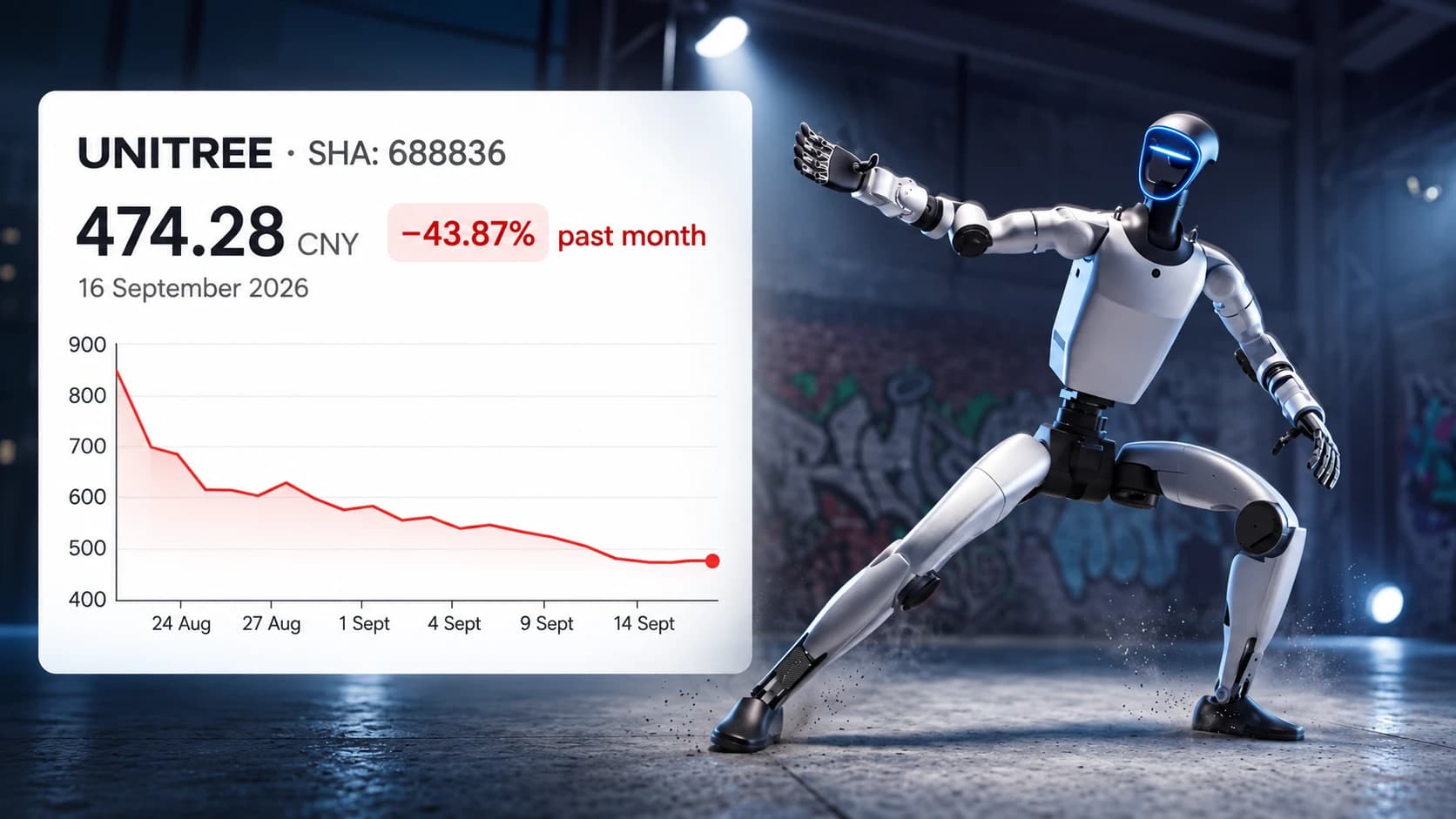
Unitree's volume in H1 was driven primarily by its compact G1 bipedal platform, which continues to dominate university robotics laboratories and AI research hubs. Flush with fresh capital following its blockbuster Shanghai STAR Market IPO, Unitree is doubling down on high-volume, low-cost bipedal hardware while partnering with DeepSeek to address foundation-model software bottlenecks.
Wheeled Logistics and Expanding Contenders
The tension between pure bipedal agility and pragmatic wheeled mobility is also visible among the remaining market leaders.
Third-place Galbot shipped over 1,100 units in H1 2026 (a 5.0% share), driven largely by structured commercial deployments. The company has rolled out its wheeled dual-arm G1 and S1 platforms into automated retail settings—including Meituan smart pharmacies—and industrial pilot lines with battery maker CATL. Even so, competitive pressure to prove dynamic locomotion capability has prompted Galbot to diversify, recently teasing its first dedicated bipedal humanoid, the ET1, ahead of the World Robot Conference.
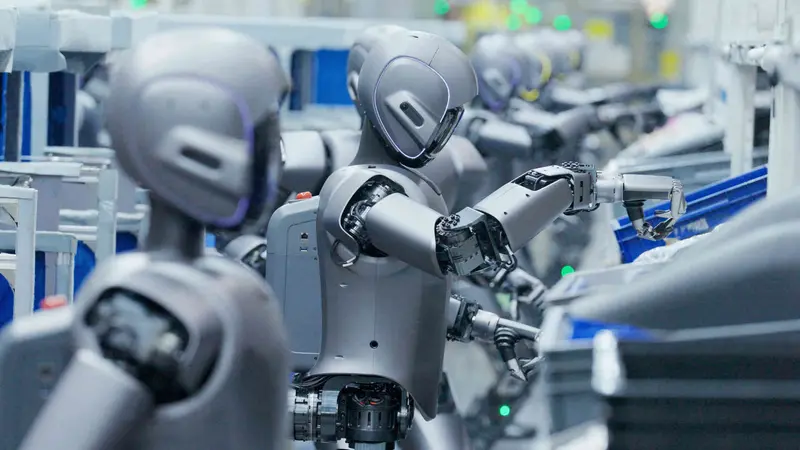
Meanwhile, fourth-place UBTECH captured 4.4% of the market with roughly 1,000 deliveries. Concentrated heavily in automotive assembly and electronics manufacturing, UBTECH’s management recently raised its full-year 2026 shipment target for the industrial Walker S series from 2,000–3,000 units to 5,000 units, while introducing its consumer-focused UWORLD sub-brand. Leju Robotics rounded out the top five with 650 shipments (2.9% share), deploying its Kuavo bipeds primarily into data collection and training facilities.
Where the Hardware Goes: The Application Shift
While industrial automation dominates public relations messaging, Counterpoint’s deployment data reveals that the bulk of shipments are still concentrated in non-industrial sectors:
- Entertainment & Performance (33.6%): Small-form and rental humanoids deployed in exhibitions, media productions, and live promotional events represent the largest single use case.
- Data Production & Research (27.0%): Teleoperated and autonomous platforms used to capture real-world sensorimotor data for training embodied AI models remain the backbone of institutional hardware sales.
- Service & Guidance (19.0%): Unmanned retail, hospitality, and public facility guidance have emerged as high-visibility testbeds.
- Intelligent Manufacturing (12.8%): Inspection, material transfer, and sorting in automotive and 3C electronics assembly are transitioning from small-scale pilots to cluster trials.
- Warehousing & Logistics (4.9%): Palletizing, sorting, and tote handling in structured fulfillment centers.
- Others (2.7%): Experimental domestic trials and bespoke enterprise tasks.
Although entertainment and data collection still account for over 60% of total volume, Counterpoint notes that industrial manufacturing and logistics shares grew noticeably in H1.
World Models and the 50,000-Unit Horizon
Counterpoint forecasts that full-year global humanoid shipments will surpass 50,000 units in 2026, representing 210% year-over-year growth. Over the next five years, the research firm expects industrial and commercial service applications to overtake research and entertainment as the primary volume drivers.
To support that transition, robotics makers are turning toward hybrid AI architectures. The integration of world models with Vision-Language-Action (VLA) systems is emerging as a critical technical frontier, enabling end-to-end Transformers to predict physical dynamics and continuous states during complex, long-horizon tasks.
As AGIBOT prepares to launch its proprietary GO-3 embodied foundation model and Robot-as-a-Service (RaaS) SHAREBOT program this autumn, the humanoid race is moving past initial hardware feasibility. Over the coming quarters, the differentiator won't just be how many chassis roll off assembly lines, but whether those machines can deliver repeatable, autonomous productivity in real-world environments.
Share this article
Read next
- Published on
- Reading time
- 10 min read
The Great Valuation Chasm: A 2025 Guide to the Humanoid Robotics Capital Race
- Published on
- Reading time
- 5 min read
Unitree’s Stock Slump Puts China’s Robot IPOs Under Scrutiny
- Published on
- Reading time
- 4 min read
The "Robot Super Bowl": Humanoids Dominate China’s 2026 Spring Festival Gala
- Published on
- Reading time
- 4 min read
Morgan Stanley Survey: Chinese Companies Want Humanoids, But the Products Aren't Ready
- Published on
- Reading time
- 4 min read
Humanoid Robots Approaching Cost Parity, Poised for Wider Adoption Within 5 Years, Bain Suggests
- Published on
- Reading time
- 4 min read
The Shipment Wars: AgiBot Claims Top Spot in Five Industry Sectors as Global Market Surges

The weekly humanoid robotics briefing
One email a week: the launches, funding and research that mattered, with context from Humanoids Daily.
Read recent issues