- Published on
Unitree Soars Over 600% in Shanghai IPO, Cements China’s Lead in Humanoid Hardware
One tap, and our reporting appears more often in your Google Top Stories. It makes a real difference to a small newsroom.


- Unitree Robotics debuted on the Shanghai STAR Market on Wednesday, with its shares soaring by up to 629% amid immense investor demand.
- The hardware manufacturer is highly vertically integrated, producing 86% of its bill of materials in-house, which currently enables margins of around 60%.
- A strategic partnership with AI developer DeepSeek aims to solve the industry's software bottlenecks by co-developing embodied intelligence models.
- The public listing underscores a deepening global divide, as Unitree's rapid growth contrasts with recent sweeping US import bans targeting Chinese robotics.
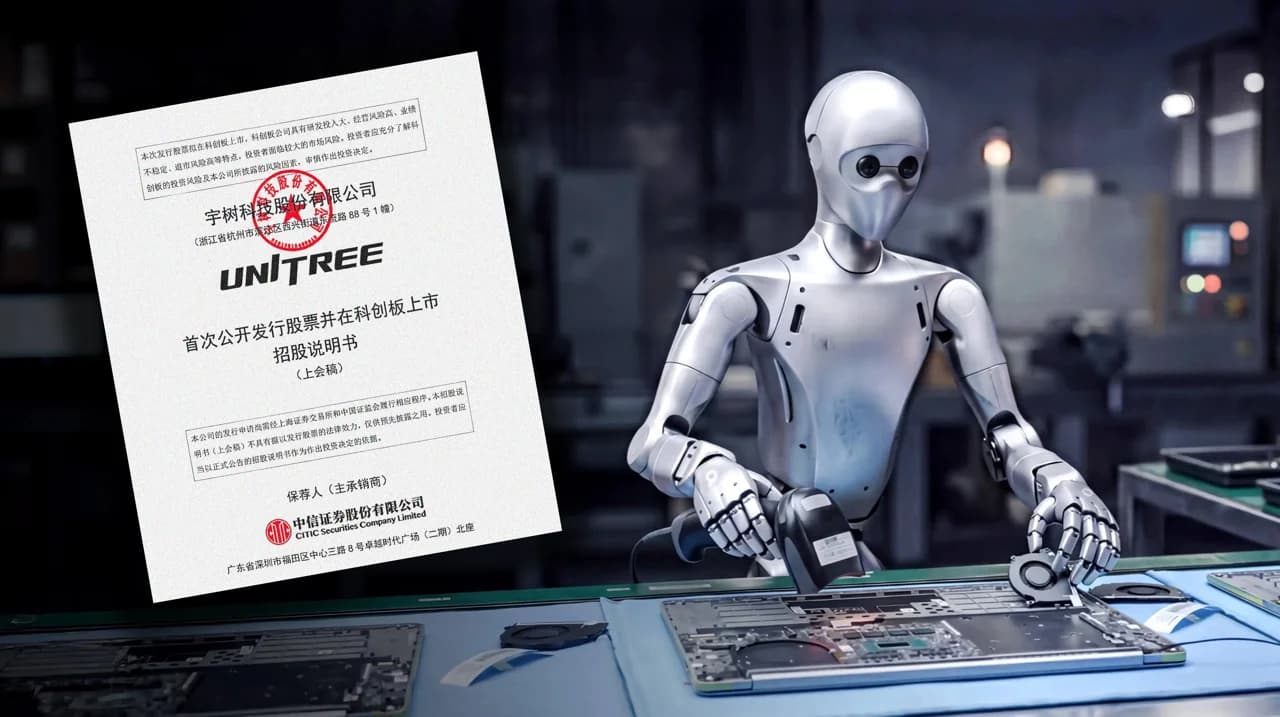
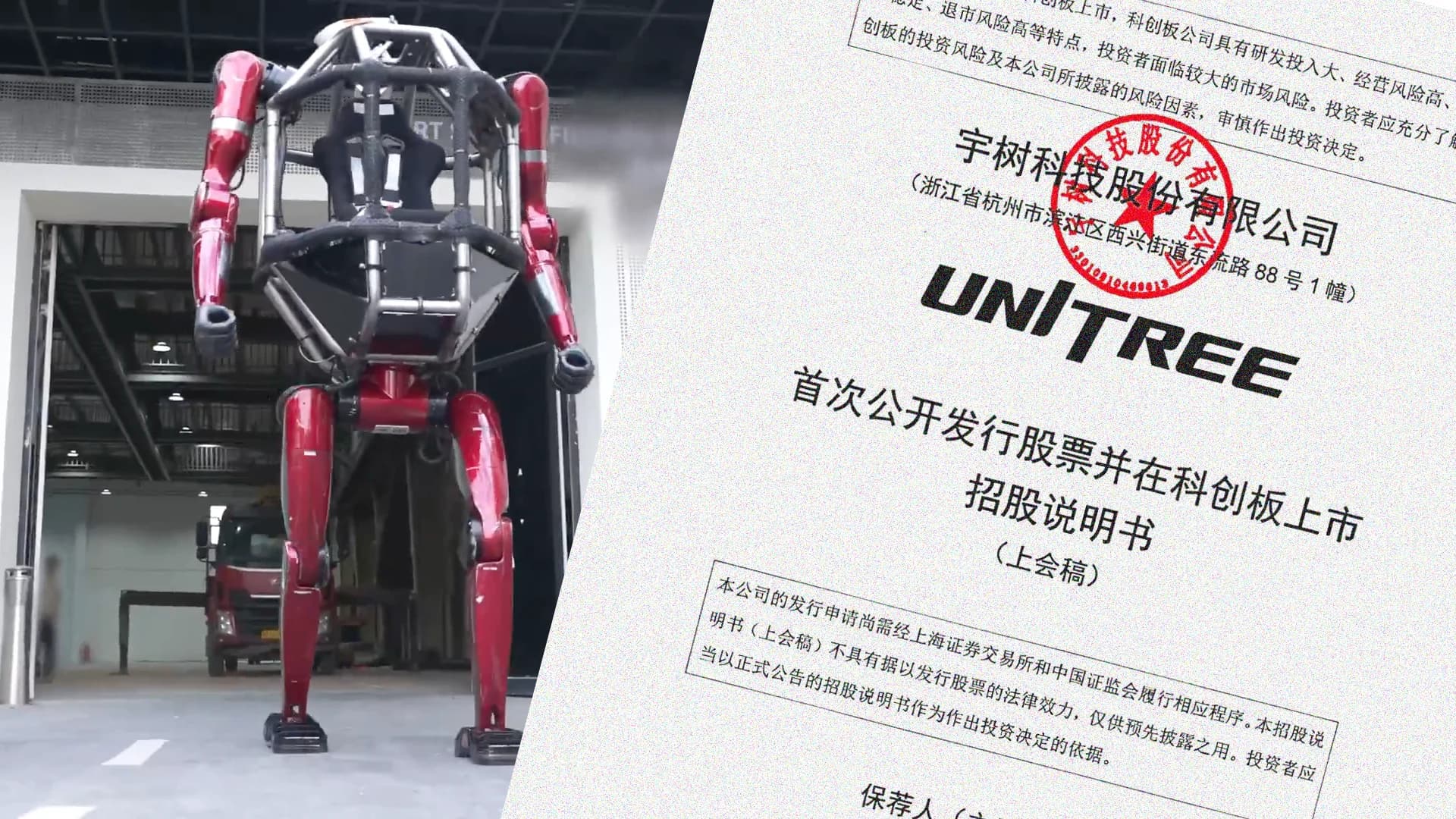
The global race for humanoid robotics just entered a new phase of capitalization. Unitree Robotics, officially known as Yushu Technology Co Ltd, made its highly anticipated initial public offering (IPO) on the Shanghai STAR Market on Wednesday. The company's shares opened at 1,100 yuan (approximately $163.12) and skyrocketed by as much as 629% in early trading, reflecting immense appetite from both retail and institutional investors.
The public debut highlights China's aggressive push to dominate the convergence of physical automation and artificial intelligence. This massive capital injection follows our previous reporting on the IPO's strategic implications, reinforcing Unitree's position as a heavyweight in the embodied intelligence sector.
The "Fantastic Four" and Hardware Dominance
Founded a decade ago by Wang Xingxing, Unitree has grown from focusing on quadruped robot dogs to leading the global bipedal market. The company is increasingly viewed as part of a new generation of Chinese tech leaders—dubbed the "Fantastic Four" alongside DJI, DeepSeek, and ByteDance—which are entirely educated, funded, and scaled within the domestic ecosystem.
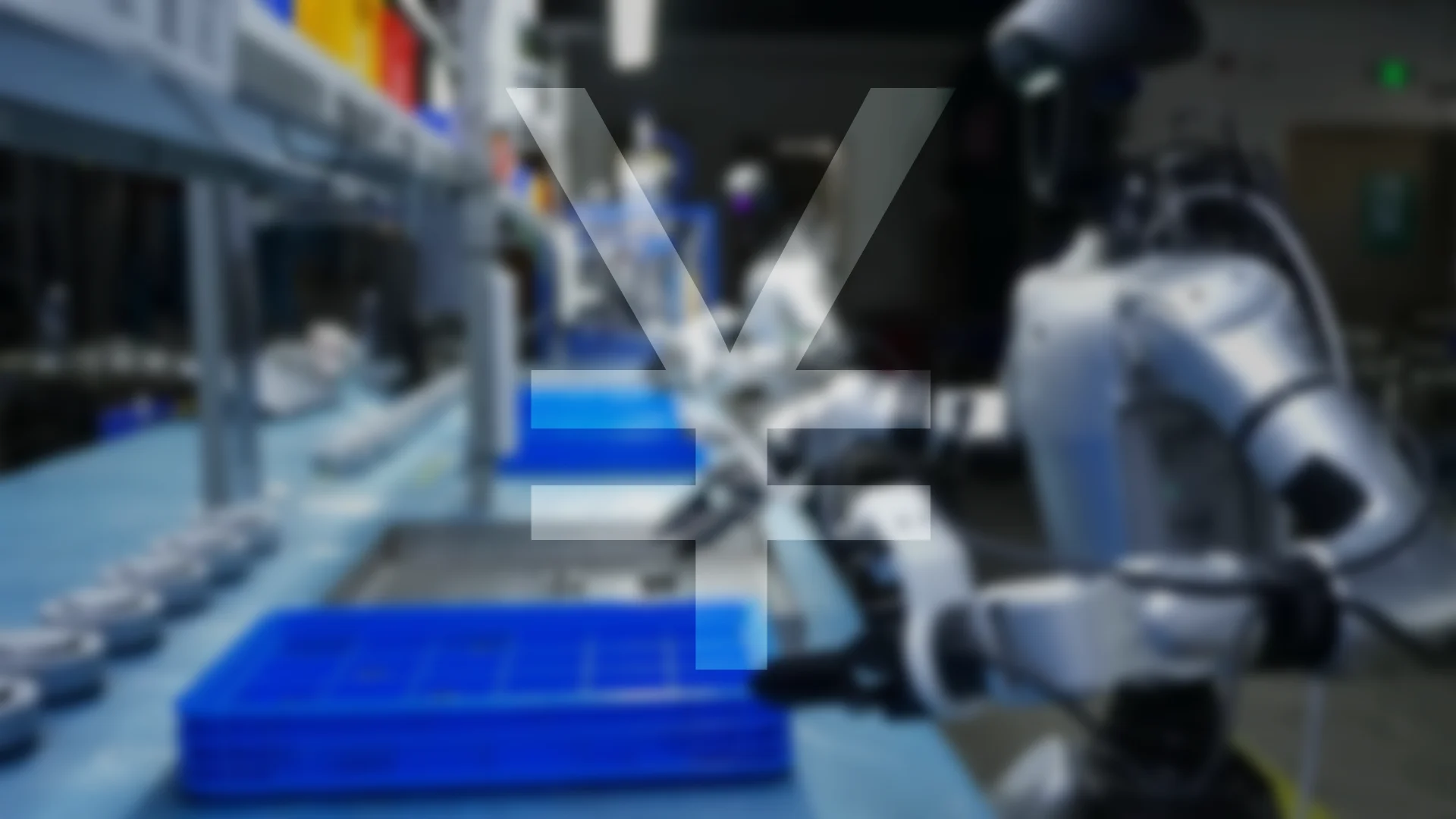
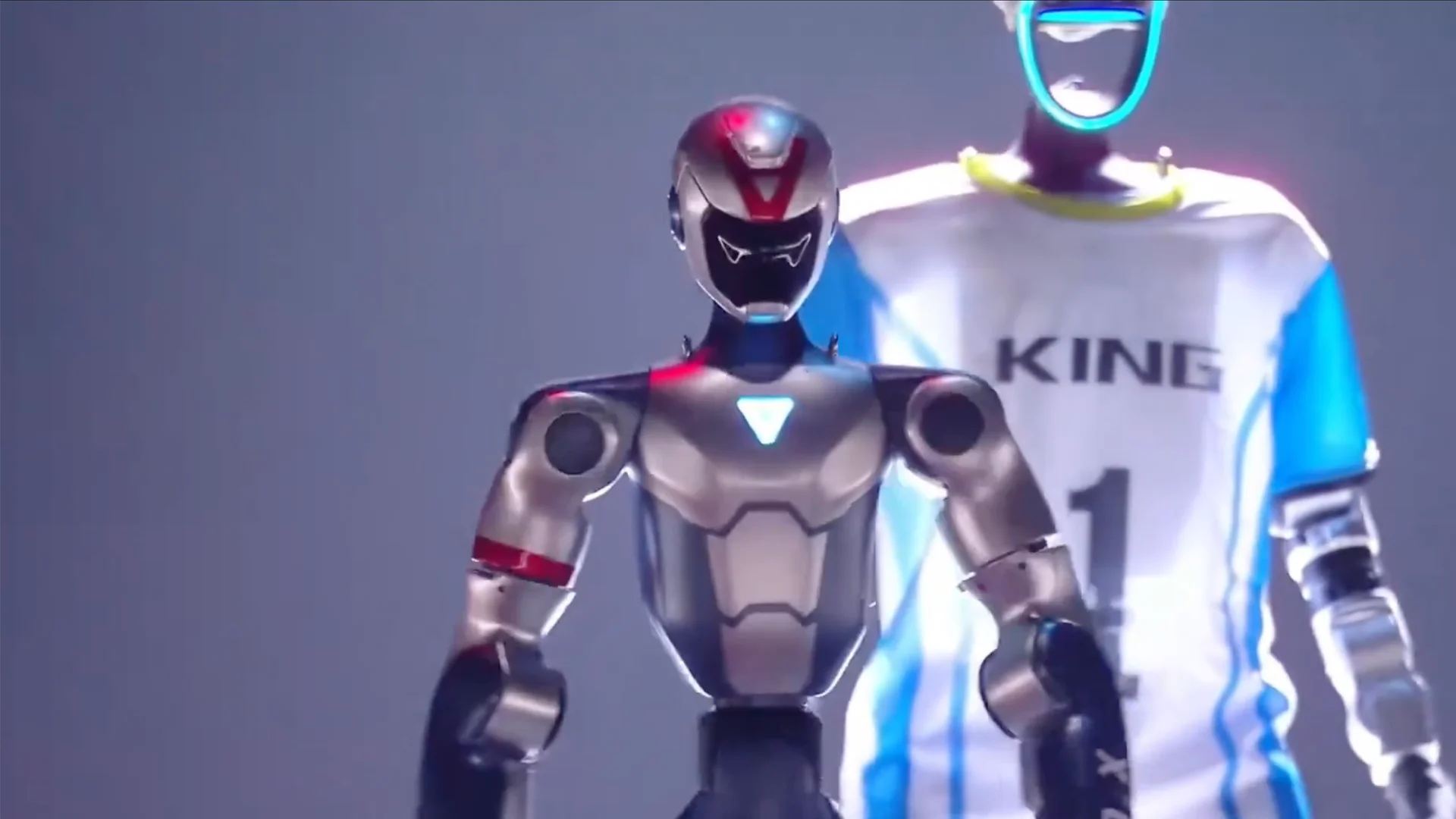
This local integration is the engine behind Unitree's production volume. The company shipped more than 5,500 humanoid robots and 33,000 quadrupeds in 2025, making it one of the few profitable companies in the sector with a reported net profit of 278 million yuan that year. By executing what industry watchers call the DJI playbook, Unitree produces 86% of its bill of materials in-house. This deep vertical integration currently affords the company luxury-level profit margins of around 60% on its humanoids.
The weekly humanoid robotics briefing
One email a week: the launches, funding and research that mattered, with context from Humanoids Daily.
Read recent issuesHowever, as the domestic market matures, analysts expect a wave of "involution"—a hyper-competitive environment that will drive down margins and prices, similar to the trajectory of the Chinese electric vehicle industry. This pricing pressure, combined with Unitree recently hitting 18,000 cumulative bipedal humanoids produced, positions the company to flood global commercial sectors with highly capable, low-cost hardware.
DeepSeek and the AI Bottleneck
While Unitree dominates in manufacturing, producing a machine that can reliably navigate dynamic environments remains a formidable challenge. The industry's current bottleneck is not the hardware itself, but the artificial intelligence models required to control it.
To bridge this gap, Unitree has secured strategic investments from a consortium that includes state-owned enterprises and, critically, the AI startup DeepSeek. This partnership aims to integrate DeepSeek's advanced models with Unitree's physical platforms to develop true embodied intelligence. State-backed investors, including China National Petroleum Corp and China Southern Power Grid, are simultaneously expected to drive real-world deployment across refineries and power systems.
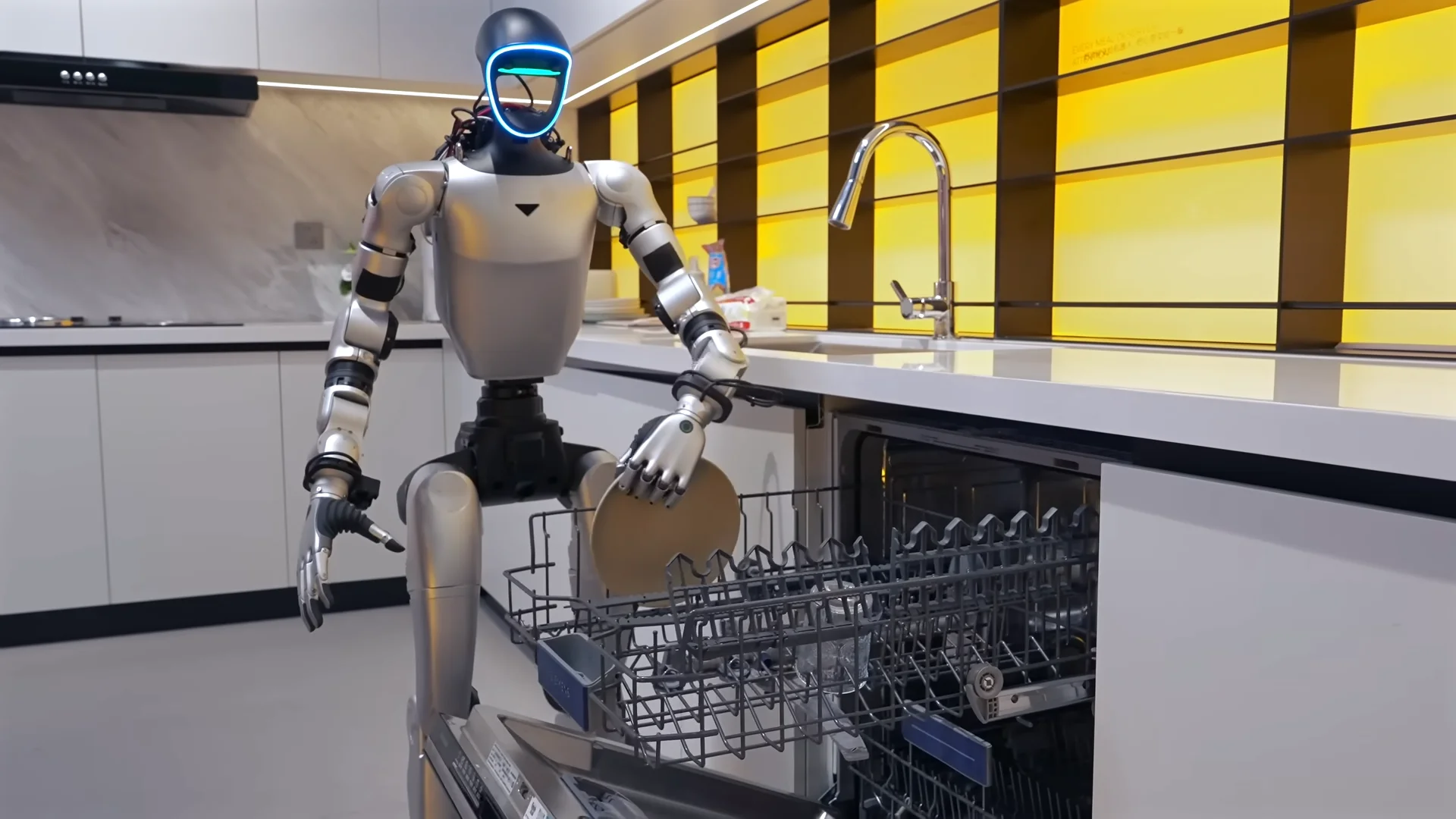
Despite this progress, general-purpose household robots remain distant. While Unitree's machines have gained fame through highly choreographed routines—such as martial arts displays during the Spring Festival Gala—approximately 70% of current deployments are still restricted to university research and AI lab testing. The company expects factory and household utility to require at least another three to five years of development.
A Fractured Global Market
Unitree's financial triumph on the STAR Market unfolds against a backdrop of intensifying geopolitical friction. As China consolidates its robotics supply chain, the US has moved to aggressively block these platforms from its shores.
The Trump administration and the FCC recently enacted sweeping bans on foreign-made autonomous mobile and humanoid robots, citing national security and manufacturing protection. This effectively shuts out high-volume Chinese platforms, forcing US developers—who often rely on overseas hardware—to rebuild their supply chains from scratch.
As Western firms scramble to adapt to these new import restrictions, China's grip on the hardware layer appears absolute. With 97% of global humanoid sales currently originating from Chinese suppliers, Unitree's blockbuster IPO signals that the next phase of the robotics race will be fought on the factory floor, and Beijing is heavily backing its champions.
Share this article
Read next
- Published on
- Reading time
- 5 min read
Unitree’s Blockbuster IPO Highlights the Scramble for Embodied AI Supremacy
- Published on
- Reading time
- 4 min read
Unitree Kicks Off STAR Market IPO Amid Deepening US-China Robotics Rivalry
- Published on
- Reading time
- 6 min read
Unitree Clears Major Hurdle with Fast-Track STAR Market IPO Approval
- Published on
- Reading time
- 5 min read
Inside Unitree’s Prospectus: Revenue Climbs and Profits Dip as Star Market IPO Hearing Approaches
- Published on
- Reading time
- 6 min read
Unitree Files for $580M IPO: Humanoid Sales Surpass Robot Dogs as Profits Soar
- Published on
- Reading time
- 4 min read
Unitree Completes IPO Tutoring, Clearing Key Hurdle for A-Share Listing

The weekly humanoid robotics briefing
One email a week: the launches, funding and research that mattered, with context from Humanoids Daily.
Read recent issues