- Published on
China’s Universities Launch "Embodied Intelligence" Majors to Feed a Hungry Robot Workforce

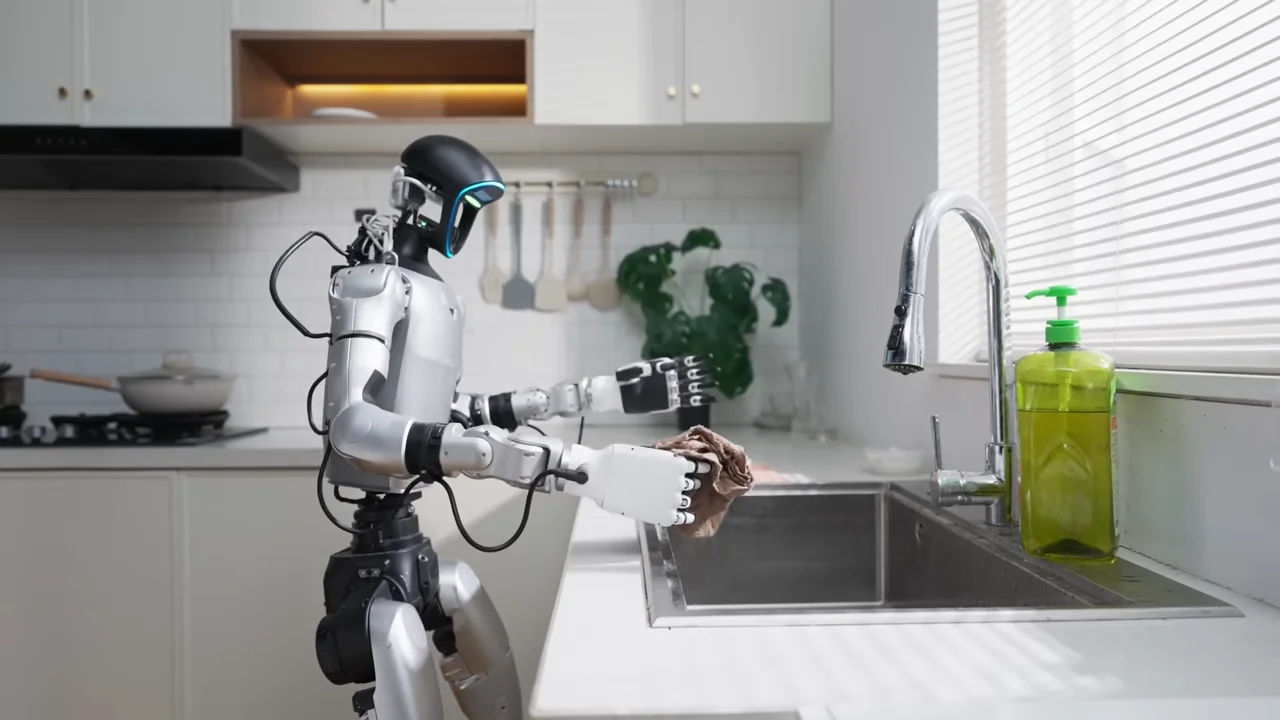
The race to dominate the humanoid robotics sector has moved from the factory floor to the lecture hall.
Facing a critical shortage of engineers capable of bridging the gap between artificial intelligence and mechanical hardware, major Chinese universities are launching dedicated undergraduate majors in "Embodied Intelligence." The move represents a significant institutionalization of the sector, signaling that Beijing views humanoid robotics not as a passing trend, but as a permanent fixture of its economic future.
According to a new report from China Daily, institutions including Shanghai Jiao Tong University (SJTU), Beihang University, and the Beijing Institute of Technology (BIT) are rolling out specific curricula designed to produce the "full stack" engineers required to build the next generation of robots.
The Million-Engineer Gap
The academic pivot comes in response to a glaring disparity between capital investment and human capital. While China’s humanoid sector has seen aggressive capacity building and a rush of financing events—accounting for 80% of the global total in 2025—the talent pool has not kept pace.
The Beijing Institute of Technology estimates a current talent shortage of roughly one million professionals in the industry.
This scarcity has driven salaries well above the industry average. Data from Liepin’s Big Data Research Institute indicates that the average annual salary for embodied intelligence roles is 333,400 yuan (approx. $46,000), significantly outpacing the broader AI sector. Specialized algorithm engineers are reportedly commanding monthly salaries between 25,000 and 90,000 yuan.
Breaking Down Academic Silos
The core argument for these new majors is that traditional engineering degrees are too fragmented to serve the needs of modern robotics companies.
SJTU, which is housing its new major within its School of AI, noted that current curricula are often "detached from real-world scenarios." The development of a humanoid robot requires a synthesis of mechanical engineering (the body), computer science (the brain), and sensor technology (the nervous system)—disciplines that have historically been siloed in different departments.
Leading the charge at SJTU is Lu Cewu, who serves as the academic lead for the major. Crucially, Lu is also the co-founder of Noematrix, a Shanghai-based embodied intelligence startup that recently secured funding led by Alibaba.
This appointment mirrors a broader trend we have tracked of blurring the lines between academia and industry leadership. Just last month, the Ministry of Industry and Information Technology tapped the founders of Unitree and AgiBot to lead the national standardization committee, emphasizing that active practitioners are now steering the sector's technical direction.
From Campus to Assembly Line
The new programs are explicitly designed as pipelines for industry employment.
The Beijing Institute of Technology revealed that its inaugural cohort of 120 undergraduates will be split, with 70 expected to pursue advanced research degrees and 50 targeted for immediate entry into the workforce. The university listed state-owned space technology groups, auto manufacturers, and tech giants like Huawei and Tencent as primary destinations for these graduates.
This alignment supports the government's designation of embodied intelligence as a "new engine" of economic growth, alongside quantum technology and 6G. The Development Research Center of the State Council projects the market scale of China's embodied intelligence industry will reach 400 billion yuan (approx. $56.5 billion) by 2030.
A Correction to the "Bubble"?
The focus on education may also serve as a stabilizer for a market that regulators fear is overheating.
Earlier this week, Beijing warned of "bubbles" and "repetitive clones" in the robotics sector, criticizing the influx of low-quality hardware that lacks differentiation. By shifting resources toward "embodied AI"—the cognitive software that makes robots useful—universities aim to move the industry past simple hardware replication.
As we noted in previous coverage, industry leaders like Unitree’s Wang Xingxing have warned that hardware has vastly outpaced AI development. These new university majors appear to be the long-term answer to that imbalance, attempting to train the workforce that will eventually give China's robot army a brain to match its brawn.
Share this article
Stay Ahead in Humanoid Robotics
Get the latest developments, breakthroughs, and insights in humanoid robotics — delivered straight to your inbox.