- Published on
1X CEO Bernt Børnich Predicts "Hard Takeoff" in 3 Years, Details NEO Platform and Data Strategy
One tap, and our reporting appears more often in your Google Top Stories. It makes a real difference to a small newsroom.

Supported by RoboStrategySupport for Humanoids Daily comes from RoboStrategy
Sponsored
Investing involves risk, including possible loss of principal. Read the prospectus before investing.
- 1X CEO Bernt Børnich believes a "hard takeoff"—where robots autonomously build other robots, data centers, and chip fabs—could happen in as few as three years, and at most ten.
- The company is positioning the NEO humanoid as an open platform, allowing businesses to fine-tune operations or even run third-party foundation models from competitors like OpenAI and Claude.
- Børnich outlined a four-tier "data pyramid" that relies on leveraging internet-scale human video to train its models, rather than relying solely on teleoperated robot data.
- To support this video-to-action strategy, NEO is designed to mirror human biomechanics and friction as closely as possible, making the human body its primary cross-embodiment target.
- Initial consumer shipments remain on track for 2026, with early adopters able to purchase the NEO outright for $20,000 or via a $499 monthly subscription.
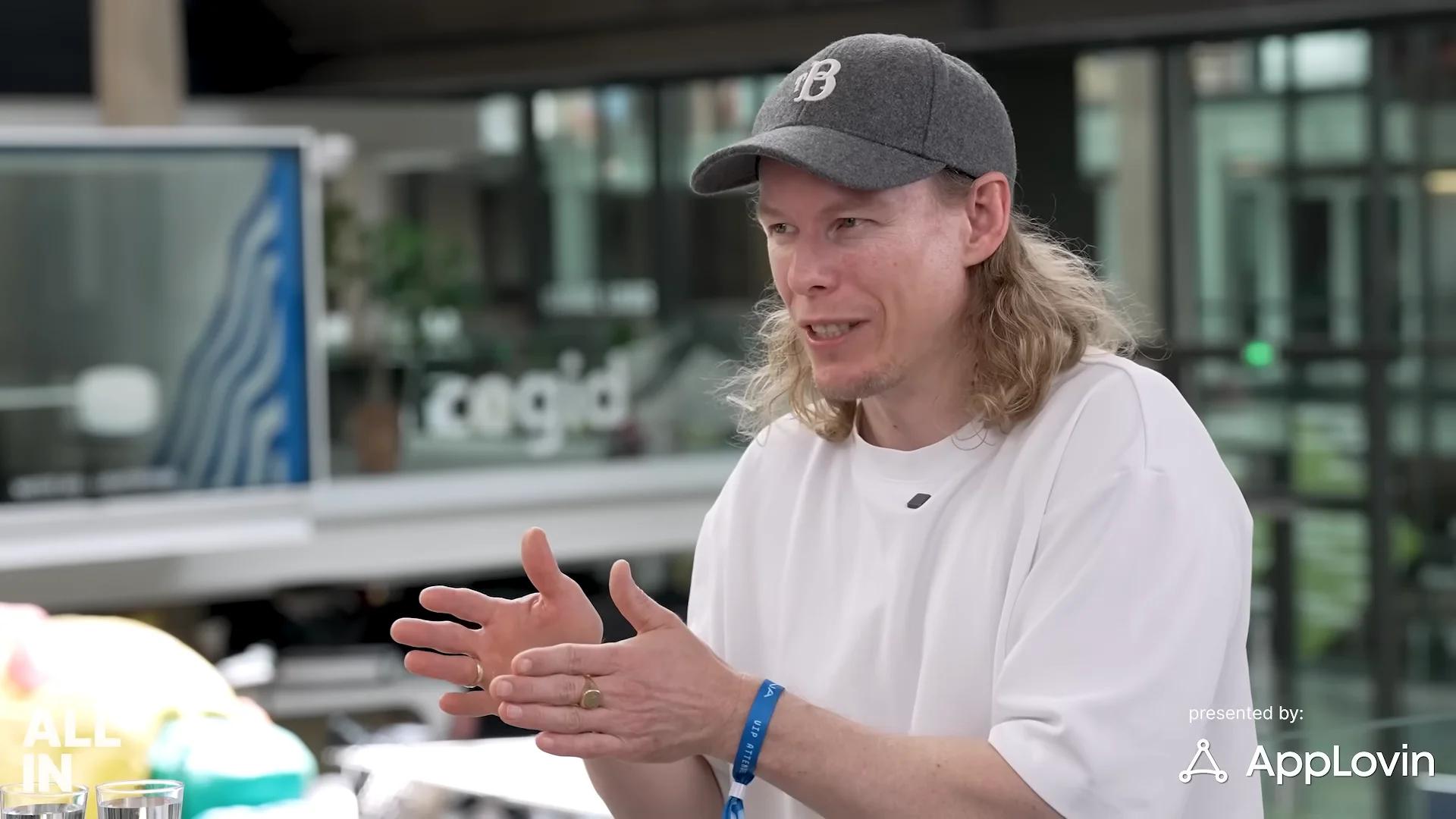
The timeline for general-purpose robotic labor might be shorter than the industry anticipates. In a recent appearance on the All-In Podcast, 1X Technologies Founder and CEO Bernt Børnich delivered a highly optimistic forecast for the robotics sector, predicting that a "hard takeoff" for physical artificial intelligence is less than a decade away.
While discussions around the $20,000 NEO platform often center on household chores, Børnich's interview revealed a much broader commercial strategy. By opening NEO up as a developer platform and leaning heavily into internet-scale video training, 1X is betting that flexibility and massive data ingestion will be the keys to achieving early autonomy.
The Three-Year Countdown to "Hard Takeoff"
When pressed on when robots might become recursive—learning, improving, and building themselves without human intervention—Børnich offered an aggressive timeline.
"I am extremely sure that we're less than a decade away from hard takeoff," Børnich stated. He defined this threshold as a self-sufficient system where robots are actively building other robots, constructing data centers, operating chip fabs, and refining raw materials to create a true abundance of labor.
The weekly humanoid robotics briefing
One email a week: the launches, funding and research that mattered, with context from Humanoids Daily.
Read recent issuesWhile ten years is his absolute upper bound, his internal timeline is much faster: "Under 10 years, my current bet would be three years". He noted that physical hardware is an absolute necessity for this progression, as digital intelligence cannot generate its own physical substrate without embodied machines.
NEO as an Open Platform: The "Orange Juice Shop" Model
To accelerate this timeline, 1X is shifting away from a closed ecosystem. Børnich elaborated on the company’s previously announced accelerated developer platform, confirming that NEO will operate as an open platform capable of supporting an "app store" of specific skills.
Børnich illustrated this with a hypothetical automated retail scenario: an orange juice shop. A business owner could purchase a fleet of NEOs, utilize 1X's data collection gloves and vision systems to capture specific in-store tasks, and then fine-tune a model deployed via 1X's fleet management software.
Crucially, 1X will accommodate multiple layers of autonomy and control:
- Full Autonomy: The fine-tuned model manages the shop independently.
- Shared Autonomy: Human operators intervene occasionally via teleoperation to handle edge cases, simultaneously generating high-quality correction data.
- Full Teleoperation: For highly complex or low-frequency tasks, businesses can rely entirely on remote human workers operating the robots.
Børnich also confirmed that 1X will allow foundation labs to run their own third-party world models on NEO's hardware, acting as a "headless" physical API for companies like OpenAI or Anthropic. "If we... can't make the best model, then we kind of failed," Børnich admitted, while maintaining that an open robotics ecosystem benefits the entire industry.

The Data Pyramid and Human Cross-Embodiment
The interview provided deep insight into how 1X plans to train its 1X World Model (1XWM). While the broader AI sector is quickly shifting its consensus away from traditional Vision-Language-Action (VLA) architectures toward world models, the bottleneck remains physical data collection.
Børnich outlined a four-tier "data pyramid" that dictates 1X's training strategy:
- Teleoperation Data (Top): High-quality, highly specific data used sparingly to align the model.
- Sensor Data: Humans wearing robot sensors to perform tasks.
- Egocentric Video: First-person video captured from a human's point of view.
- General Video Data (Base): The "ludicrously immense" volume of general human video available on the internet (e.g., YouTube).
To solve the robotics data "Catch-22," 1X relies heavily on that bottom layer. However, translating human internet video into robot action requires hardware that perfectly mimics human biomechanics.
"Our cross-embodiment is the human," Børnich explained. This design philosophy dictates why NEO features soft tissue, realistic skin friction, and highly compliant 22-DoF hands. The closer the hardware resembles human anatomy, the more efficiently the 1X World Model Lab can extract useful policies from standard internet footage without suffering from an embodiment gap.
Børnich noted that NEO's physical hands have actually surpassed the capabilities of basic teleoperation. The fidelity of the hardware is now greater than what a remote operator can effectively leverage without clunky, high-latency haptic feedback suits, reinforcing the need to train models via passive human video rather than active remote piloting.
2026 Deliveries and Pricing
Despite the lofty goals for AGI, 1X remains focused on its immediate consumer roadmap. Børnich reaffirmed that the company will ship its first NEO units in 2026, though he cautioned that the initial rollout will be slow and "rough around the edges".
For early adopters, the hardware will require a significant investment. The NEO is currently priced at a $20,000 upfront payment, or a $499 monthly subscription model.
"Getting a home humanoid in 2026 is going to be rough," Børnich noted, acknowledging that the robots will occasionally fall. Yet, he remains confident that the systems shipping next year will be capable of delivering a genuinely useful, fully autonomous experience right out of the box.
Watch the interview here:
Or here:
Share this article
Read next
- Published on
- Reading time
- 4 min read
One Roof, Four Weeks: Inside 1X’s Vertical Speed Hack as NEO Ramps for 2026 Deliveries
- Published on
- Reading time
- 4 min read
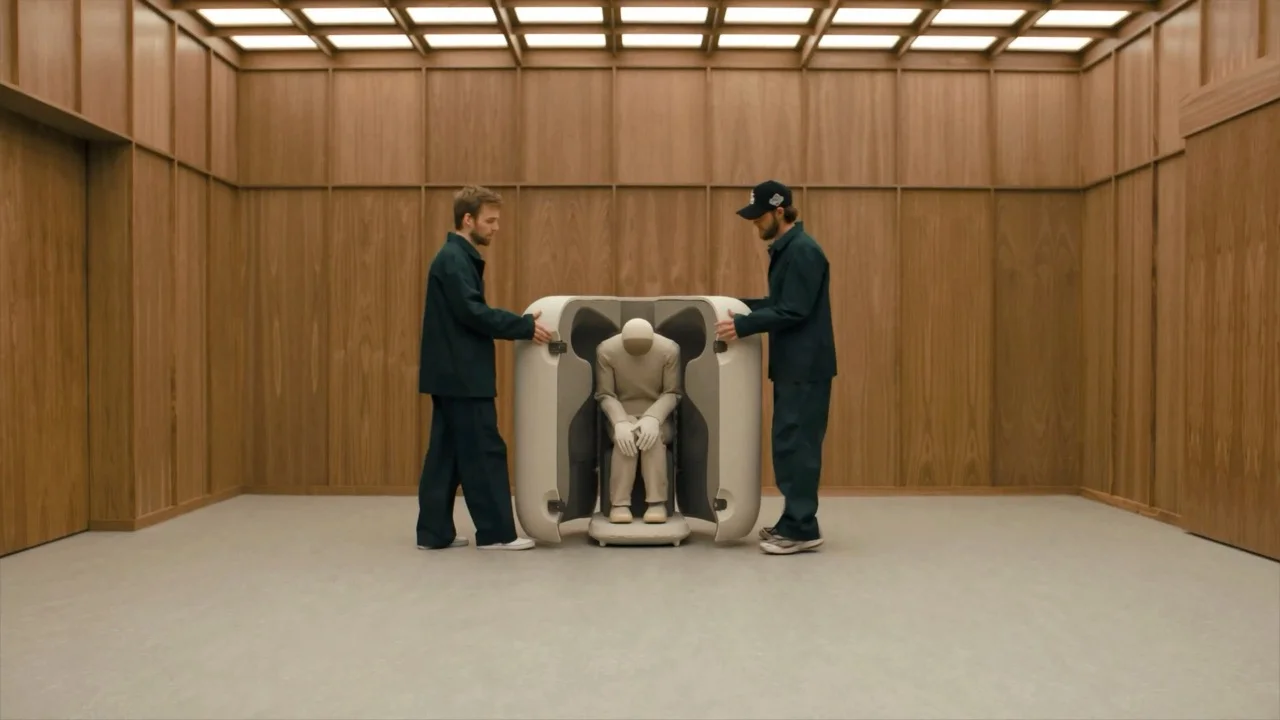
The Robot in the Box: 1X Teases NEO Delivery Logistics as Humanoid Production War Heats Up
- Published on
- Reading time
- 5 min read
1X Unveils 1XWM: The Video-to-Action "Brain" That Lets NEO Imagine Its Chores
- Published on
- Reading time
- 6 min read
1X's Human-in-the-Loop Plan Isn't a Pivot, It's a Decade-Old Bet
- Published on
- Reading time
- 4 min read
1X CEO Opens Up on the 'Magical' and 'Hard' Realities of Bringing Humanoid Robots Home
- Published on
- Reading time
- 3 min read
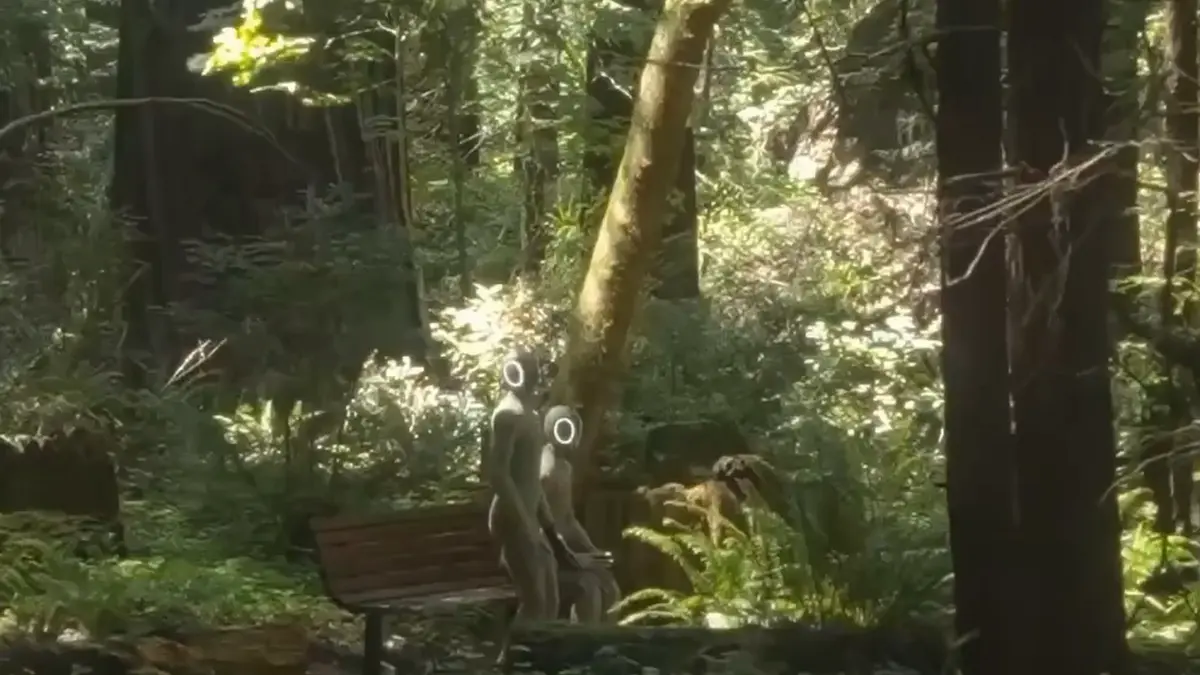
1X Teases "Incredible" Reveal Amidst Redwoods; Foundation Robotics Launches "Skynet Junior" Training Cluster



The weekly humanoid robotics briefing
One email a week: the launches, funding and research that mattered, with context from Humanoids Daily.
Read recent issues