- Published on
Google DeepMind Unveils Gemini Robotics 2, Bringing Whole-Body Intelligence and Multi-Robot Teams to Physical AI
One tap, and our reporting appears more often in your Google Top Stories. It makes a real difference to a small newsroom.

Supported by RoboStrategySupport for Humanoids Daily comes from RoboStrategy
Sponsored
Investing involves risk, including possible loss of principal. Read the prospectus before investing.
- Google DeepMind has officially released Gemini Robotics 2, introducing a three-model stack comprising a primary VLA model, an updated Embodied Reasoning engine (ER 2), and a low-latency On-Device 2 model.
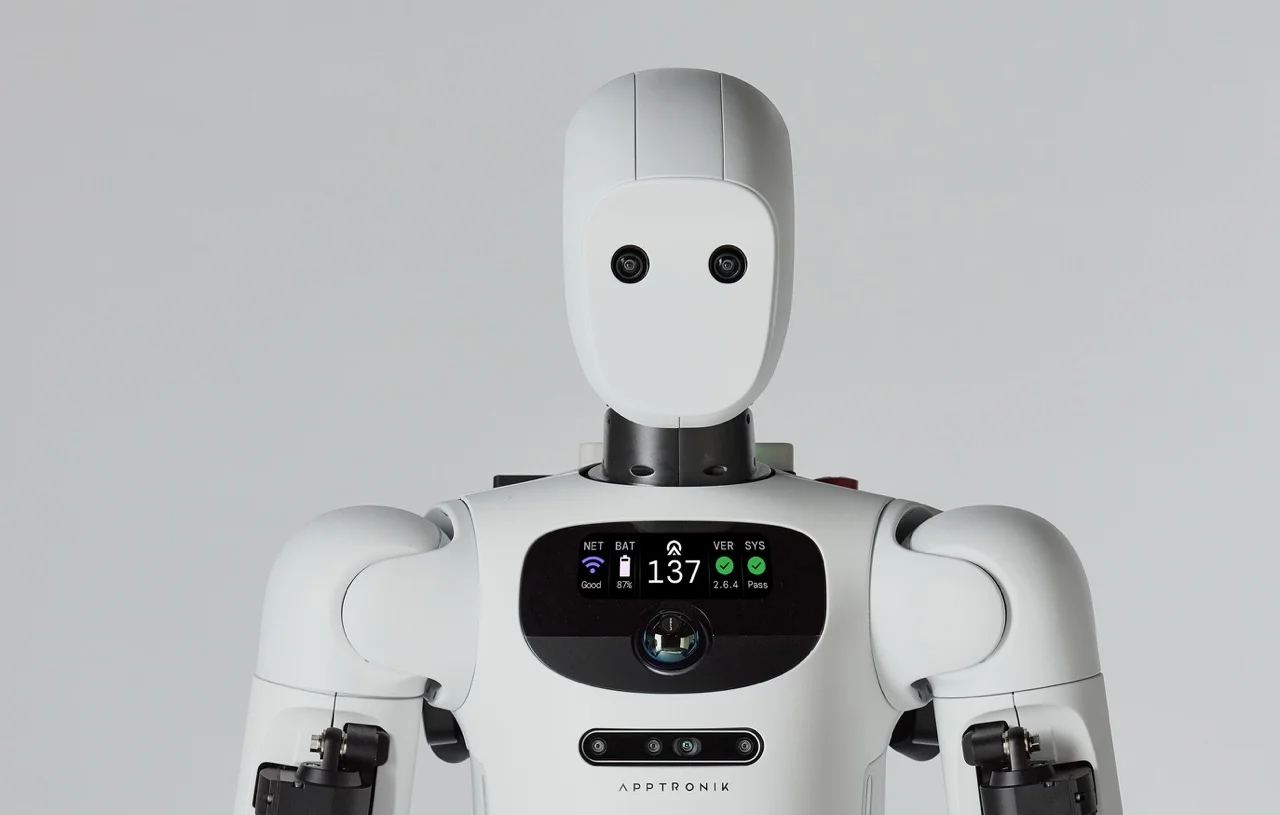
- The framework moves physical AI beyond tabletop tasks to intelligent whole-body control, enabling bipedal humanoids like Apptronik’s Apollo 2 to sequence walking, crouching, reaching, and placement in a single prompt.
- DeepMind is expanding its hardware support to high-degree-of-freedom end effectors, demonstrating complex knot-tying and fine motor tasks using Sharpa’s 22-DoF SharpaWave tactile hand—a hardware platform also featured in NVIDIA’s Isaac GR00T reference design.
- Gemini Robotics ER 2 adds multi-robot team coordination and multi-minute progress tracking, while On-Device 2 allows new hardware embodiments to be adapted in hours using fewer than 200 demonstration samples.
- Safety updates feature the ASIMOV-Agentic benchmark for agentic tool refusal alongside automated human proximity detection for collaborative environments.
MOUNTAIN VIEW, CA — Just months after iterating on its spatial reasoning systems with Gemini Robotics-ER 1.6, Google DeepMind has launched Gemini Robotics 2, marking one of its most expansive architectural updates to date.
Where previous iterations focused predominantly on tabletop manipulation and high-level task planning, Gemini Robotics 2 expands the lab's software footprint across the entire physical frame. The new release introduces full-body movement control for bipedal humanoids, fine-motor manipulation for complex multi-fingered hands, multi-robot team collaboration, and rapid on-device adaptation for unfamiliar hardware embodiments.
"To take on the hardest problems at scale, robots of every shape and size need AI models giving them the ability to think, act, and interact intelligently to safely complete tasks," wrote Carolina Parada, Head of Robotics at Google DeepMind, in the launch announcement.
A Three-Tiered Intelligence Stack
Building on the two-part brain framework established in late 2025, DeepMind is formalizing its robotics portfolio into three specialized models:
The weekly humanoid robotics briefing
One email a week: the launches, funding and research that mattered, with context from Humanoids Daily.
Read recent issues- Gemini Robotics 2 (VLA): The core Vision-Language-Action model that directly translates visual perception and natural language commands into motor control outputs. Unlike prior VLAs limited to upper-body arms or static mounts, this flagship model manages full bipedal humanoids from "feet to fingertips."
- Gemini Robotics ER 2 (Embodied Reasoning): The high-level strategic brain powered by a specialized Vision-Language Model (VLM). ER 2 handles multi-step task decomposition lasting several minutes, tracks progress across hundreds of intermediate decisions, orchestrates multi-robot collaboration, and communicates with human operators.
- Gemini Robotics On-Device 2: The ultra-efficient VLA model optimized to execute directly on local robot silicon. Designed for environments with high latency or intermittent network connectivity, it enables rapid motion transfer to entirely new physical bodies with just a few hours of data collection.
Gemini Robotics ER 2 is available starting today via Google AI Studio and in private preview on the Gemini Enterprise Agent Platform, while the core VLA and On-Device 2 models are rolling out to early-access hardware partners.
Moving Beyond Tabletop Limits: Whole-Body Control
A persistent limitation in learning-based robotics has been the structural decoupling of locomotion and manipulation. Typically, navigation models steer a robot to a coordinate, handing control over to a secondary manipulation policy once stationary.
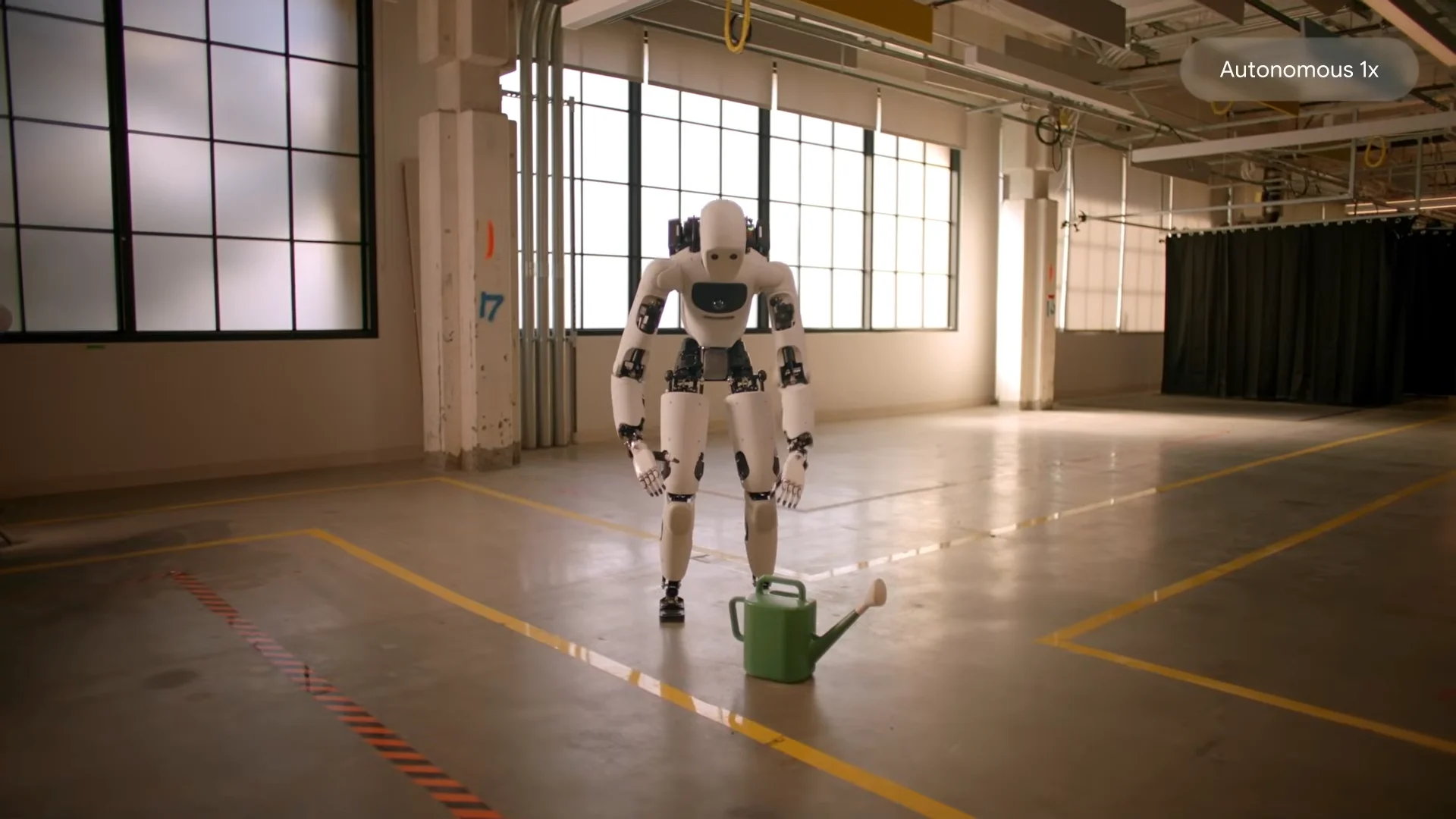
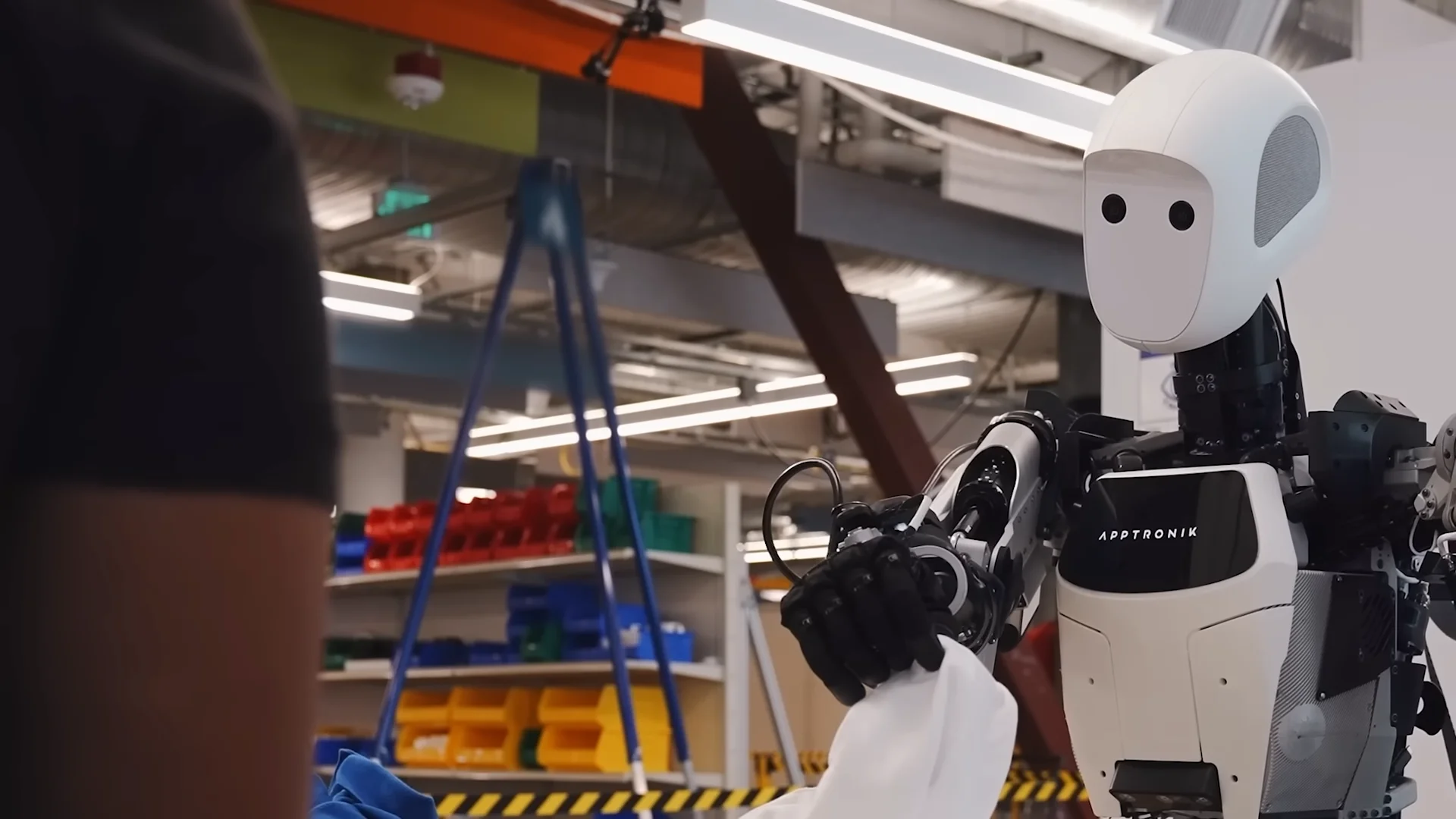
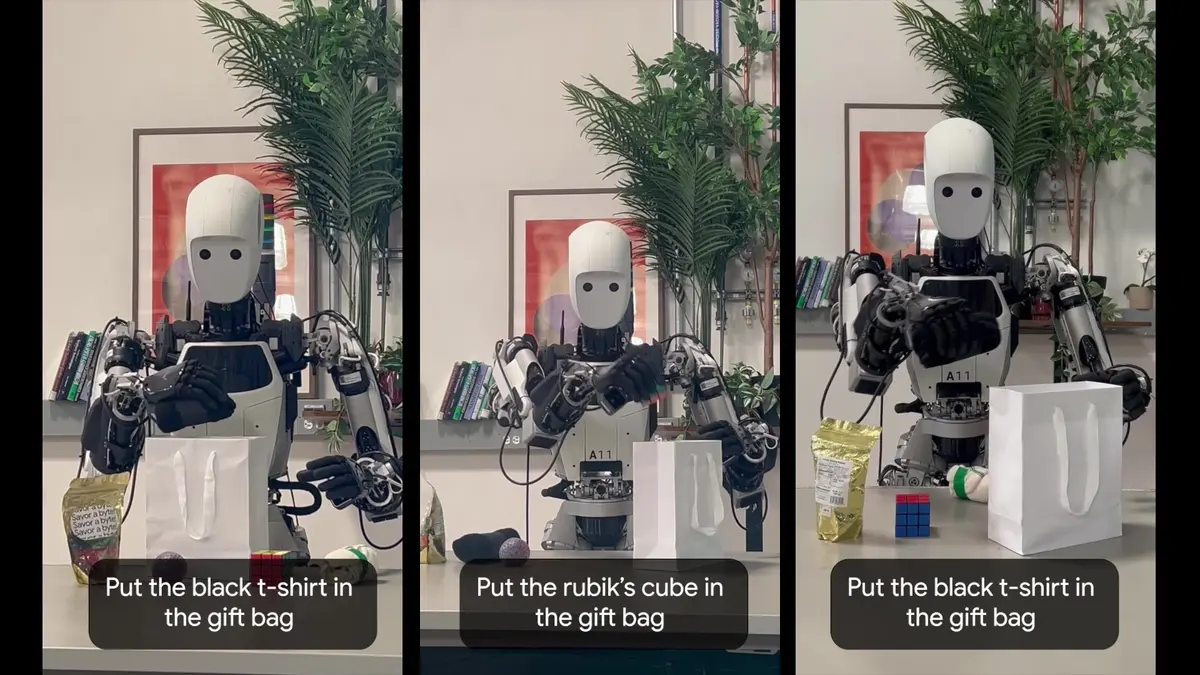
Gemini Robotics 2 attempts to bridge this gap by unifying whole-body dynamics under a single VLA model. In demonstrations shared by DeepMind, the software controls the newly updated Apptronik Apollo 2 humanoid. Given a single natural language instruction—"put the watering can into the green bin in the bottom shelf"—the Apollo 2 platform evaluates the scene, walks across the room, picks up the object, crouches low to clear shelf height, and positions the item into the designated container without requiring fragmented sub-routines.
While operational speeds remain cautious compared to human pacing, the seamless transition between dynamic balance, walking, and spatial reaching represents a tangible step toward handling unstructured real-world environments.
Dexterity Across Embodiments: The Sharpa Wave Integration
Alongside whole-body locomotion, DeepMind is placing heavier emphasis on complex end-effectors. While standard industrial two-fingered parallel grippers (such as those on the Franka Duo platform) remain supported for high-density packing, Gemini Robotics 2 natively scales to five-fingered, high-degree-of-freedom hands.
In its primary showcase, DeepMind integrated the model with the 22-DoF SharpaWave tactile hand mounted on Apollo 2. The combined system demonstrated delicate, contact-rich manipulation tasks, including tying knots in cordage and sealing flexible Ziplock bags.
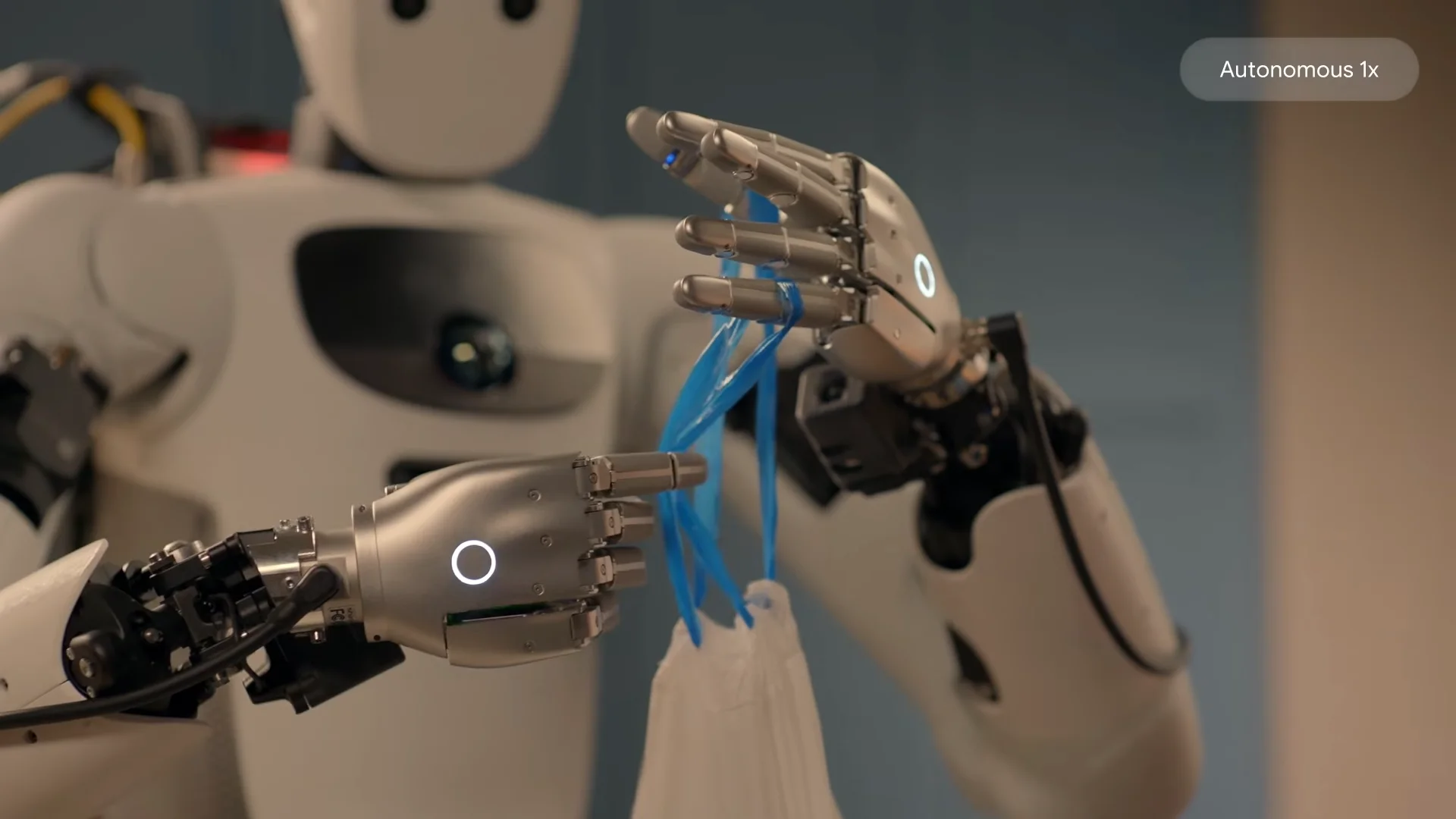
The inclusion of the SharpaWave hand underscores a broader cross-industry pattern. The Singapore-based tactile hardware firm recently partnered with chipmaker NVIDIA to serve as the end-effector layer for the Isaac GR00T reference architecture. DeepMind's decision to leverage the exact same hand architecture indicates that high-resolution visuo-tactile end-effectors are rapidly emerging as a standardized benchmark for frontier physical AI models.
Multi-Robot Collaboration and Rapid On-Device Tuning
For complex enterprise workflows, Gemini Robotics ER 2 introduces explicit multi-agent coordination. Rather than relying on a centralized central control script, heterogeneous robot teams—comprising different form factors, such as mobile manipulators and bipedal humanoids—can communicate, divide sub-tasks, and dynamically hand off materials based on real-time spatial conditions.
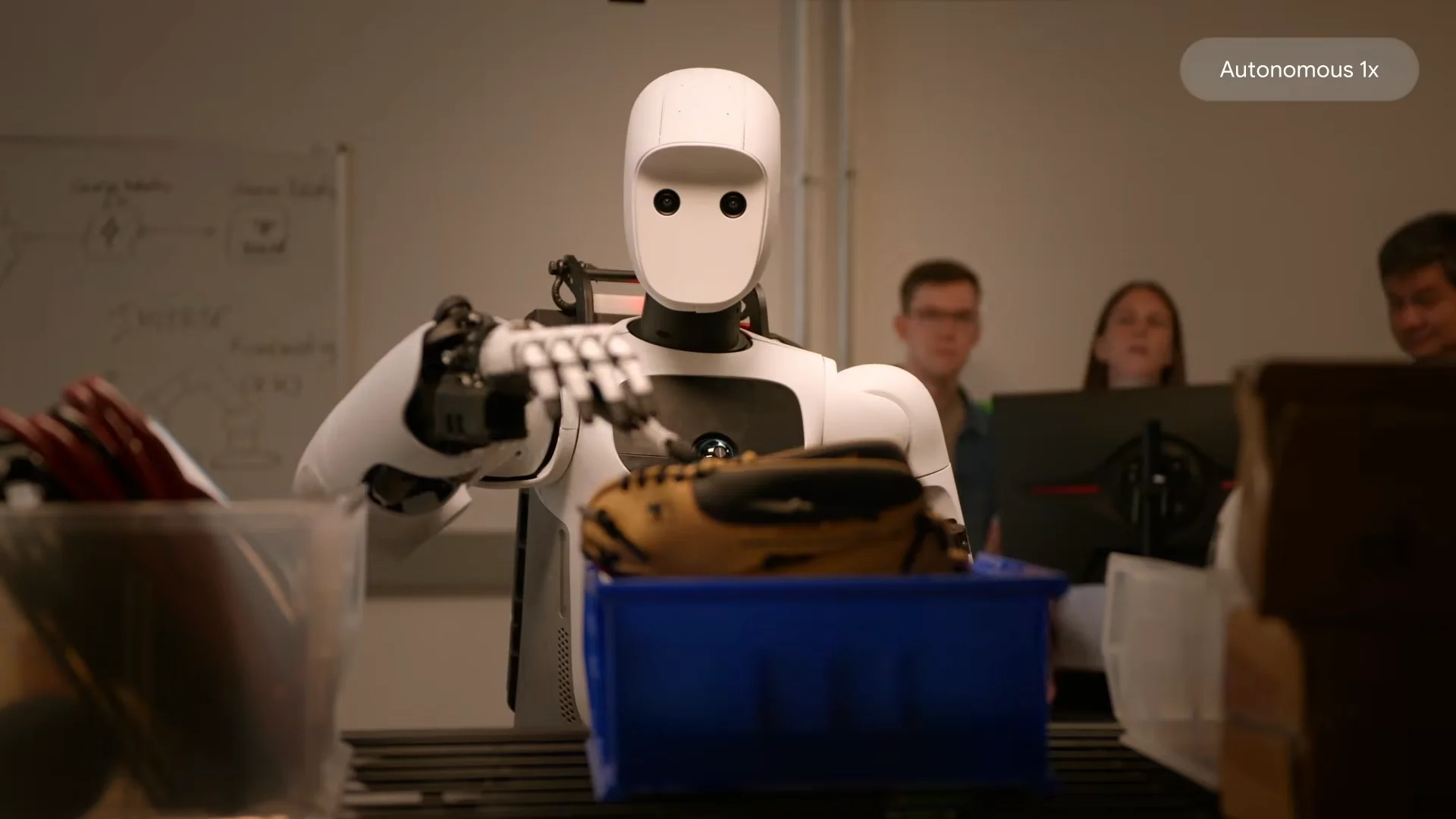
Simultaneously, the release advances DeepMind’s hardware-agnostic ambitions. Leveraging the "motion transfer" techniques introduced in the first-generation On-Device release, Gemini Robotics On-Device 2 allows developers to port the model to brand-new robot embodiments with less than 200 demonstration examples—requiring only a few hours of fine-tuning. DeepMind showcased successful adaptation across a diverse range of third-party platforms, including the Dexmate, SO101, and Trossen systems.
Safety Frameworks and the Road to Physical AGI
As physical AI models gain autonomy over heavy multi-joint hardware, safety considerations become critical. Accompanying the model release, DeepMind published its Gemini Robotics 2: Safety Technical Report alongside a new benchmark named ASIMOV-Agentic.
The benchmark measures an embodied agent’s ability to resolve operational uncertainty. Specifically, it tests whether the high-level reasoning agent (ER 2) can successfully intervene and refuse unsafe tool calls requested by the underlying VLA model, estimate task feasibility prior to execution, and halt motion to proactively request human intervention when confidence drops. On physical safety benchmarks, ER 2 reportedly features improved human-proximity detection, automatically triggering safety loops to decelerate or stop motion when human co-workers enter its operational radius.
By unifying whole-body locomotion, high-DoF tactile dexterity, and rapid embodiment adaptation, DeepMind continues to assemble the pieces for its overarching ambition: building an "Android operating system" for physical machines. However, as the lab works to close the gap between controlled demonstrations and unstructured real-world deployment, the true test for Gemini Robotics 2 will lie in how reliably these multi-step, multi-agent workflows perform outside the lab floor.
Share this article
Read next
- Published on
- Reading time
- 4 min read
Agile Robots and Google DeepMind Partner to Bring Gemini to the Factory Floor
- Published on
- Reading time
- 6 min read
Substance Over Hype: Apptronik Quietly Unveils Apollo 2 Humanoid via Website Update
- Published on
- Reading time
- 5 min read
Waymo Leverages Genie 3 to Launch "Waymo World Model" for Hyper-Realistic Simulation
- Published on
- Reading time
- 5 min read
Google DeepMind Robotics Director: We Need "One More Big Breakthrough" to Solve General Purpose Robots
- Published on
- Reading time
- 5 min read
Google DeepMind Unveils On-Device Gemini Robotics, Pushing AI Closer to Autonomous Dexterity
- Published on
- Reading time
- 4 min read
The Human Scale: NVIDIA’s EgoScale Unlocks High-Dexterity Robotics via 20,000 Hours of Human Video
The weekly humanoid robotics briefing
One email a week: the launches, funding and research that mattered, with context from Humanoids Daily.
Read recent issues