- Published on
1X Partners with EQT to Deploy Up to 10,000 Humanoid Robots Across Global Industry
One tap, and our reporting appears more often in your Google Top Stories. It makes a real difference to a small newsroom.


Your guide
Rich Robinson
Jee Chee Ren · Executive tour
See China’s AI and robotics ecosystem first-hand.
Six days exploring AI, robotics and advanced manufacturing.
With Rich Robinson, Clinical Professor of Entrepreneurship at Peking University
Beijing · Guangzhou · Shenzhen
29 November–4 December 2026
Referral partnership · We earn a commission on referred bookings.
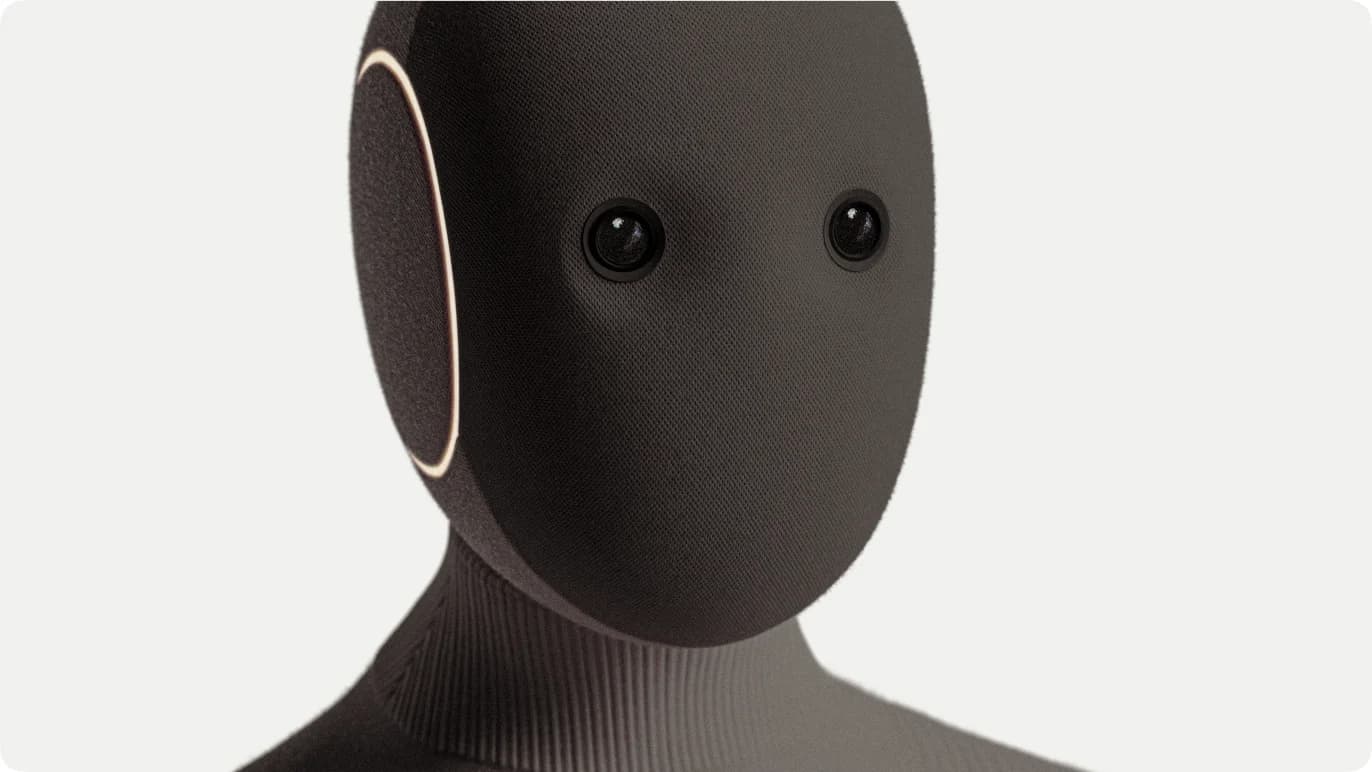
Just weeks after capturing public attention with a consumer-focused pre-order launch for its NEO android, 1X Technologies is pivoting its focus back to the industrial sector with a potentially massive commercial agreement.
The Norway- and U.S.-based robotics firm announced today a strategic partnership with EQT, the global private equity firm and a key investor in 1X. The deal outlines a framework to deploy up to 10,000 NEO humanoid robots across EQT’s extensive portfolio of companies between 2026 and 2030.
If fully realized, the deployment would represent one of the largest commercial rollouts in the nascent humanoid robotics industry, moving the hardware from pilot programs to widespread operational use.

A "Keep It in the Family" Strategy
The agreement leverages the massive scale of EQT, which manages €267 billion in assets and owns over 300 portfolio companies employing roughly 700,000 people. EQT Ventures was a lead investor in 1X’s Series B round, making this partnership a synergistic move that benefits both the robotics startup and the investment firm’s broader holdings.
The weekly humanoid robotics briefing
One email a week: the launches, funding and research that mattered, with context from Humanoids Daily.
Read recent issuesHowever, the phrasing of the announcement suggests this is an enabling agreement rather than a guaranteed purchase order. 1X states there is a "shared intent to facilitate the rollout," but notes that "any potential implementation decision [is] ultimately taken by each portfolio company."
In essence, 1X has secured a preferred vendor pathway to hundreds of potential industrial customers—from healthcare and logistics to manufacturing and facility operations—without having to sell to each one cold.
"This partnership brings humanoid robotics into the real economy," said 1X CEO Bernt Børnich in a statement. "EQT’s global reach and operational expertise make them the ideal partner to help deploy our technology safely, responsibly, and at scale."
Balancing the Home and the Warehouse
This announcement marks a notable shift in tone from 1X’s recent marketing blitz. Over the past month, the company has heavily promoted NEO as a domestic "companion", showcasing its ability to bake cakes with celebrity chefs and fold laundry in the home.
The EQT partnership reaffirms that 1X is not ceding the industrial ground to competitors like Figure, which has explicitly targeted commercial applications like automotive manufacturing first.
The targeted use cases for the EQT rollout—industrial software, logistics, warehousing, and healthcare—will likely demand different capabilities than the domestic sphere. While the home requires handling unstructured chaos and delicate objects, industrial environments often require repeatability, endurance, and integration with existing workflows.
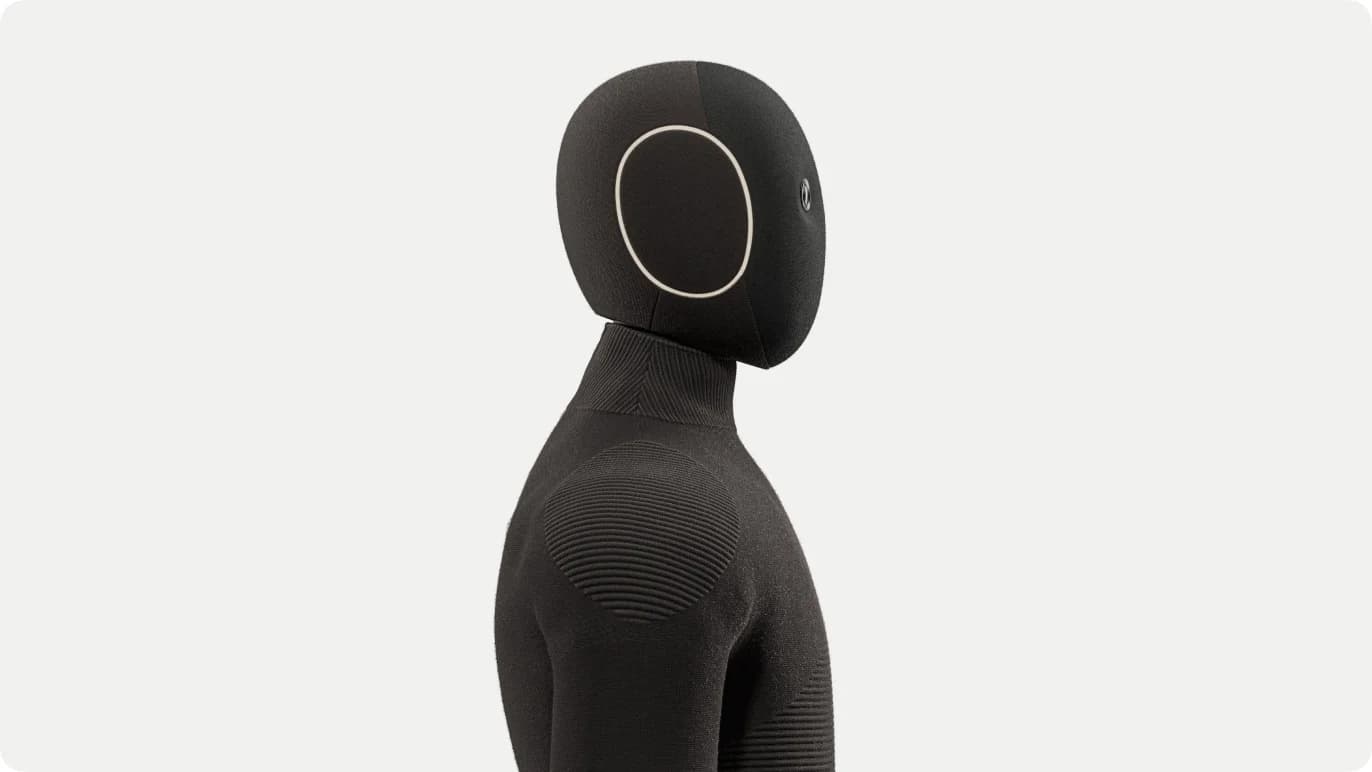
The Timeline and the Tech
According to the announcement, 1X plans to launch pilots within EQT’s U.S. portfolio in 2026, followed by scaling into Europe and Asia.
This timeline aligns with the company's previously stated goals for shipping NEO units to consumers. It also raises questions about how 1X’s core human-in-the-loop strategy will be adapted for enterprise.
1X relies on "Expert Mode"—remote human teleoperation—to handle edge cases and train its AI. In a high-throughput warehouse or a sensitive healthcare setting, the latency and reliability of this teleoperation layer will be tested differently than in a living room. EQT’s Ted Persson, a partner at EQT Ventures, framed the deployment as an augmentation of the workforce rather than a replacement.
"This isn’t about replacing people, it’s about giving them superpowers," Persson said. "By making 1X’s technology available to our portfolio companies, we help them tackle labor shortages, improve safety, and unlock new levels of productivity."
Fueling the Valuation Narrative
The timing of this announcement is likely no coincidence. 1X is reportedly in the midst of seeking up to $1 billion in new funding at a valuation that could exceed $10 billion.
Demonstrating a clear path to commercializing thousands of units is critical to justifying such a valuation, especially as investors scrutinize the gap between viral robot videos and revenue-generating products. A deal of this magnitude—even if it is a "soft" commitment dependent on individual portfolio companies—provides a powerful narrative of scalability that 1X can take to the bank.
Share this article
Read next
- Published on
- Reading time
- 5 min read
Eric Jang Steps Down as VP of AI at 1X Technologies
- Published on
- Reading time
- 5 min read
1X Aims to Ship 50,000 Robots—But Keeping Them Working Is the Test
- Published on
- Reading time
- 6 min read
1X CEO Bernt Børnich Predicts "Hard Takeoff" in 3 Years, Details NEO Platform and Data Strategy
- Published on
- Reading time
- 4 min read
One Roof, Four Weeks: Inside 1X’s Vertical Speed Hack as NEO Ramps for 2026 Deliveries
- Published on
- Reading time
- 5 min read
1X Goes Vertical: Inside the Hayward Factory Aiming for 100,000 Humanoids
- Published on
- Reading time
- 4 min read
The Robot in the Box: 1X Teases NEO Delivery Logistics as Humanoid Production War Heats Up


The weekly humanoid robotics briefing
One email a week: the launches, funding and research that mattered, with context from Humanoids Daily.
Read recent issues