- Published on
Unitree Teases an "App Store" for Humanoids to Crowdsource Robot Skills
One tap, and our reporting appears more often in your Google Top Stories. It makes a real difference to a small newsroom.

Supported by RoboStrategySupport for Humanoids Daily comes from RoboStrategy
Sponsored

Investing involves risk, including possible loss of principal. Read the prospectus before investing.
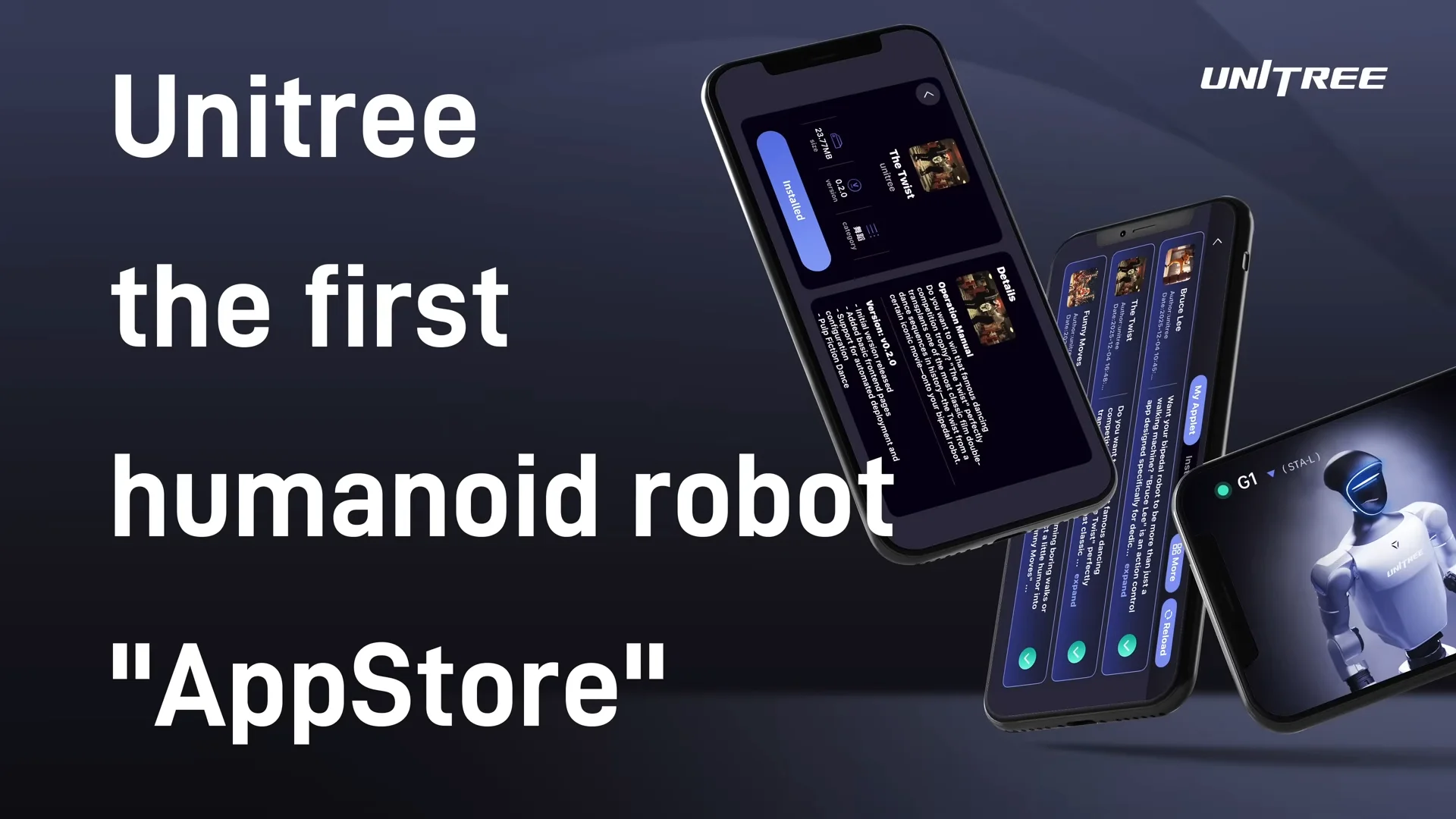
The humanoid robotics race has always been about more than just hardware specifications. While the industry continues to compete on price tags and joint torque, the defining battleground has increasingly become utility—proving exactly what these machines are capable of in the real world. Now, Unitree Robotics is attempting to accelerate that capability curve by shifting the focus to software ecosystems.
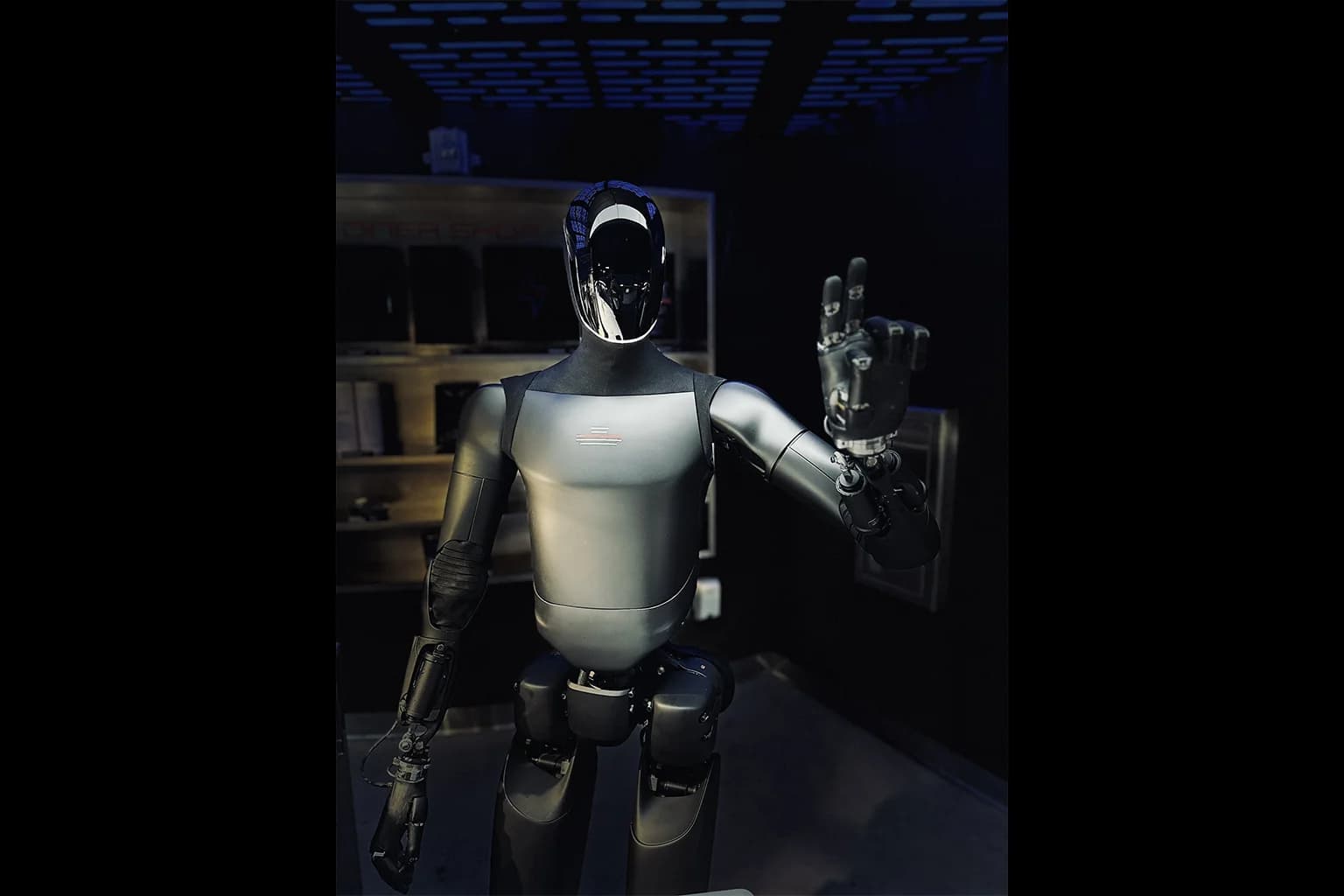
In a video released on social media today, the Hangzhou-based company debuted what it calls the "world's first humanoid robot App Store." officially dubbed the Unitree Robotics Developer Platform. The system promises to be a centralized hub where users can upload, share, and download specific "actions" and training datasets for Unitree's robots, effectively trying to replicate the smartphone app model for embodied intelligence.
While Unitree has not yet released a public link to the platform, the video walkthrough suggests a polished, user-facing marketplace designed to solve one of the industry's most persistent headaches: the fact that most robots, out of the box, don't know how to do very much.
"One Click" to Dance
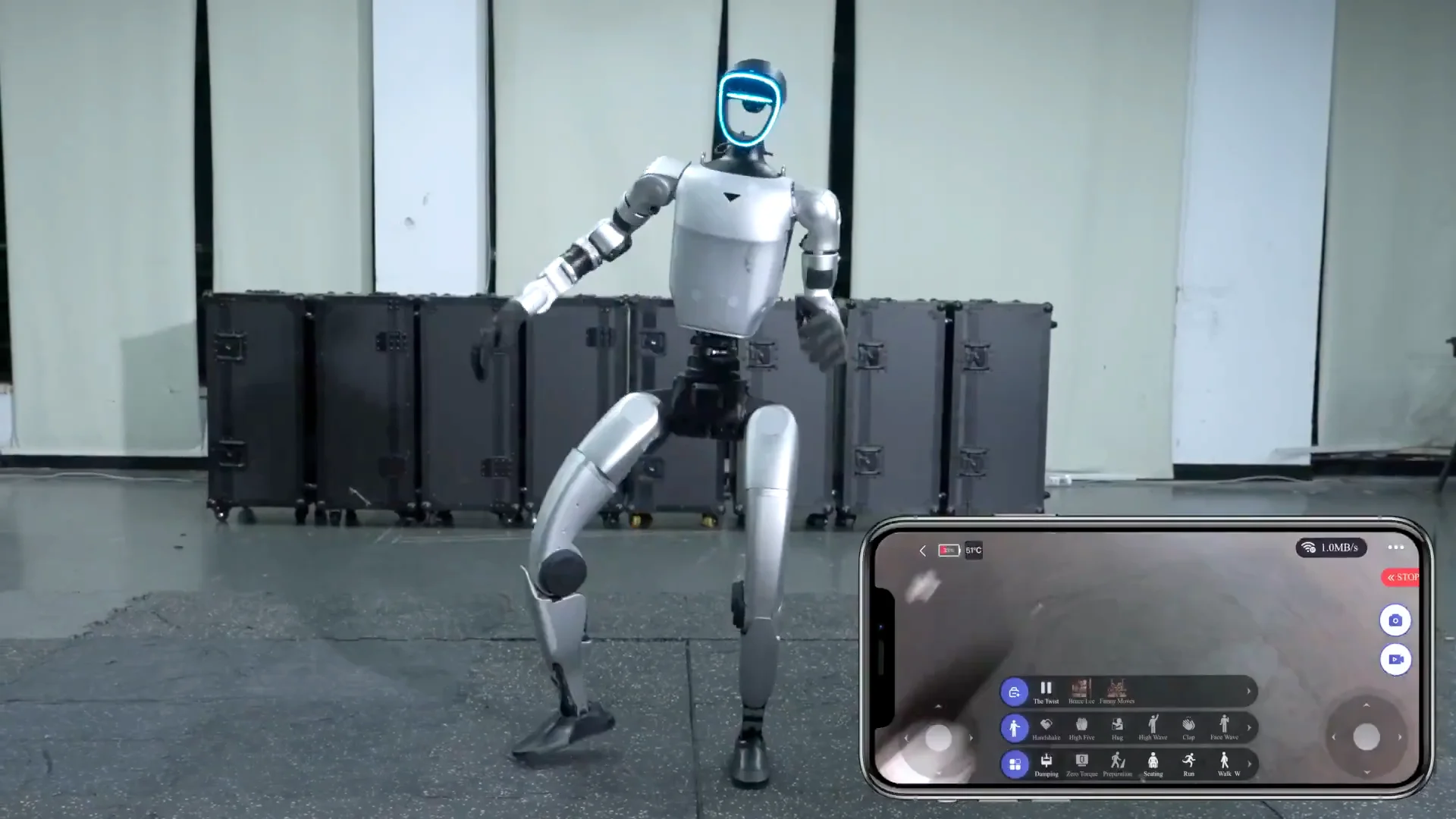
The core of the new platform is the Action Library. According to the demonstration, developers can upload custom-trained movements—ranging from dances to martial arts—which other users can then browse and "Get" with a single click.
The weekly humanoid robotics briefing
One email a week: the launches, funding and research that mattered, with context from Humanoids Daily.
Read recent issuesOnce acquired on the web platform, these skills automatically sync to the user's mobile app under a new "Applet Library" tab. A screenshot from the demo shows a G1 owner’s phone populated with "applets" like The Twist (a dance routine), Bruce Lee (martial arts moves), and Funny Moves.
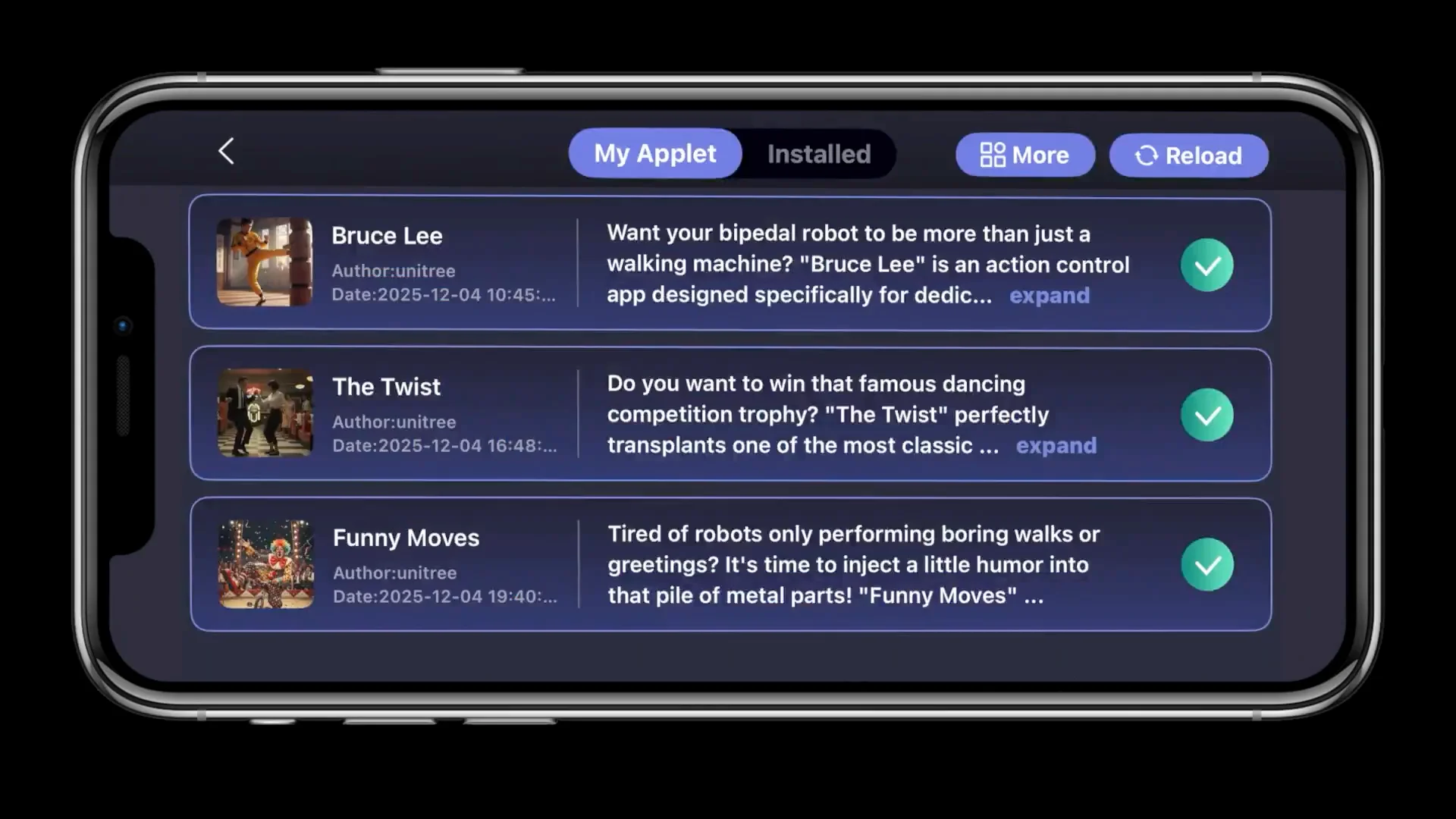
The interface implies a move toward modularity that consumer robotics has sorely lacked. Rather than waiting for a firmware update to get new capabilities, a user could theoretically download a specific "folding laundry" or "wave hello" skill developed by a third party.
This approach parallels the strategy of domestic rival AgiBot, though with a different focus. While AgiBot recently launched LinkCraft, a "zero-code" tool designed to help users create robot movements, Unitree’s platform seems focused on the distribution and sharing of those skills once created.
Solving the Data Bottleneck
Perhaps more significant for the research community is the inclusion of a Datasets section. The video highlights categories like "Taekwondo Actions" and "Ballet Demonstration," which users can download to train their own algorithms.
This directly addresses the "data bottleneck" that Unitree CEO Wang Xingxing has previously identified as the primary hurdle for embodied AI. Training a robot to generalize—to perform a task in any environment—requires massive amounts of diverse data. By incentivizing users to upload their own motion capture data (the video mentions rewards for "exceptional developers"), Unitree is effectively trying to crowdsource the training material needed to make its robots smarter.
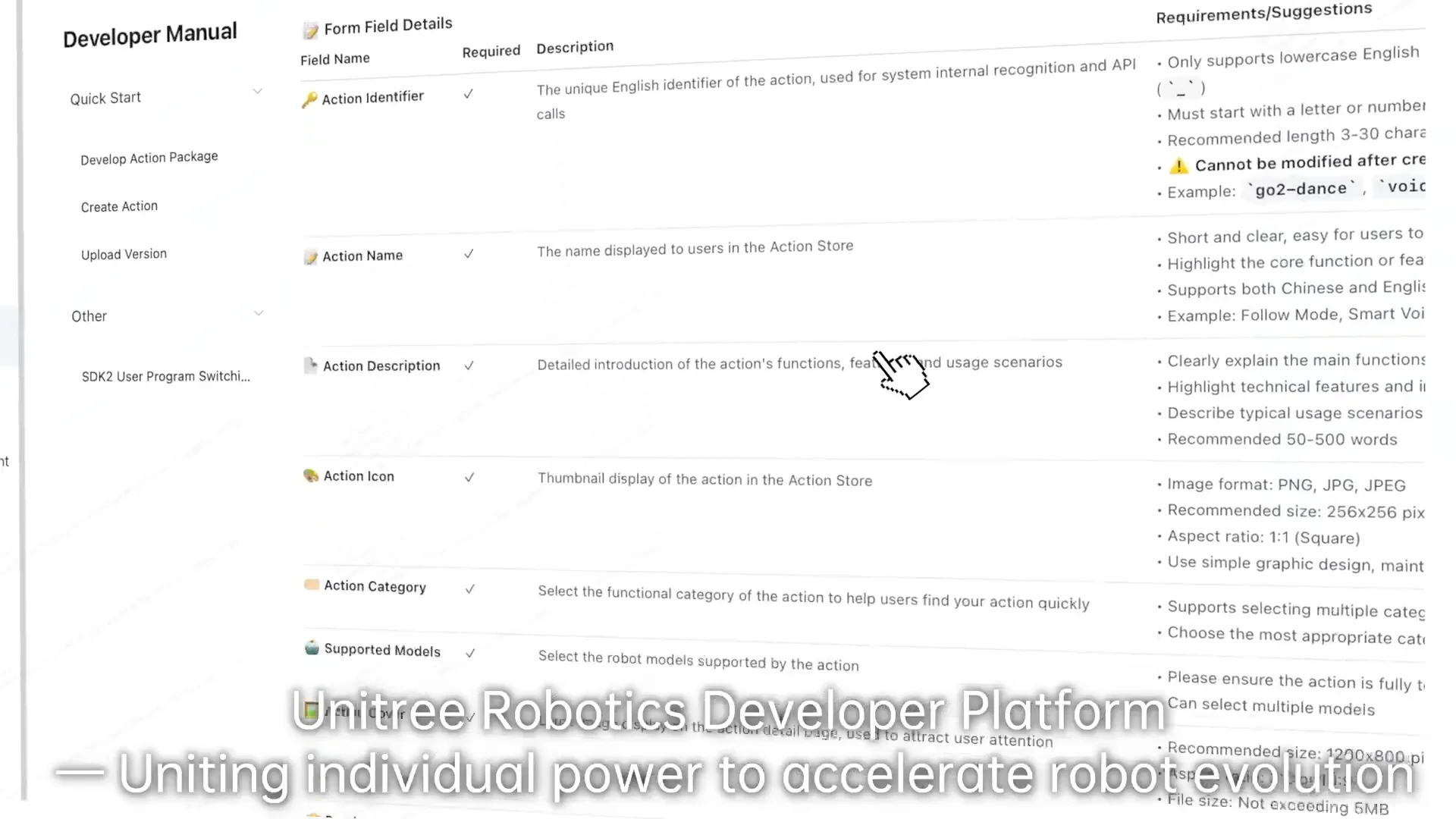
The platform appears to include strict submission guidelines. The "Developer Manual" visible in the video details requirements for "Action Identifiers" and descriptions, ensuring that the uploaded code is compatible with the system’s internal recognition API.
The Ecosystem Play
This launch comes at a critical time for Unitree. The company is reportedly preparing for an IPO and is aggressively pushing its hardware into the mainstream.
However, hardware ubiquity brings security risks. The introduction of an "App Store" where users execute code written by third parties will likely invite scrutiny, especially given recent reports of security flaws in Unitree’s existing systems. Ensuring that a downloaded "Kung Fu" action doesn't contain malicious code will be a major challenge for the platform's moderators.
As of this writing, the platform URL has not been made public. But the intent is clear: Unitree wants to stop just selling the iPhone of robots, and start owning the App Store, too.
Share this article
Read next
- Published on
- Reading time
- 4 min read
Beyond the Gala: OmniXtreme Breaks the Generality Barrier for Humanoid Agility
- Published on
- Reading time
- 4 min read
HumanX: The AI Framework Turning Unitree’s G1 into a Basketball Pro
- Published on
- Reading time
- 4 min read
Modularizing the Last Mile: AGIBOT Unveils Genie Studio Agent to Scale Robot Deployment
- Published on
- Reading time
- 4 min read
Serving an Ace: LATENT Framework Teaches Unitree G1 Athletic Tennis Skills
- Published on
- Reading time
- 4 min read
China’s Universities Launch "Embodied Intelligence" Majors to Feed a Hungry Robot Workforce
- Published on
- Reading time
- 6 min read
Unitree Open-Sources UnifoLM-WLA-1.0 to Tackle Humanoid Generalization


The weekly humanoid robotics briefing
One email a week: the launches, funding and research that mattered, with context from Humanoids Daily.
Read recent issues