- Published on
ASUS Unveils Gallop, Its First Humanoid Robot, Already Packing Parts on Its Own Production Line
One tap, and our reporting appears more often in your Google Top Stories. It makes a real difference to a small newsroom.

Supported by RoboStrategySupport for Humanoids Daily comes from RoboStrategy
Sponsored
Investing involves risk, including possible loss of principal. Read the prospectus before investing.
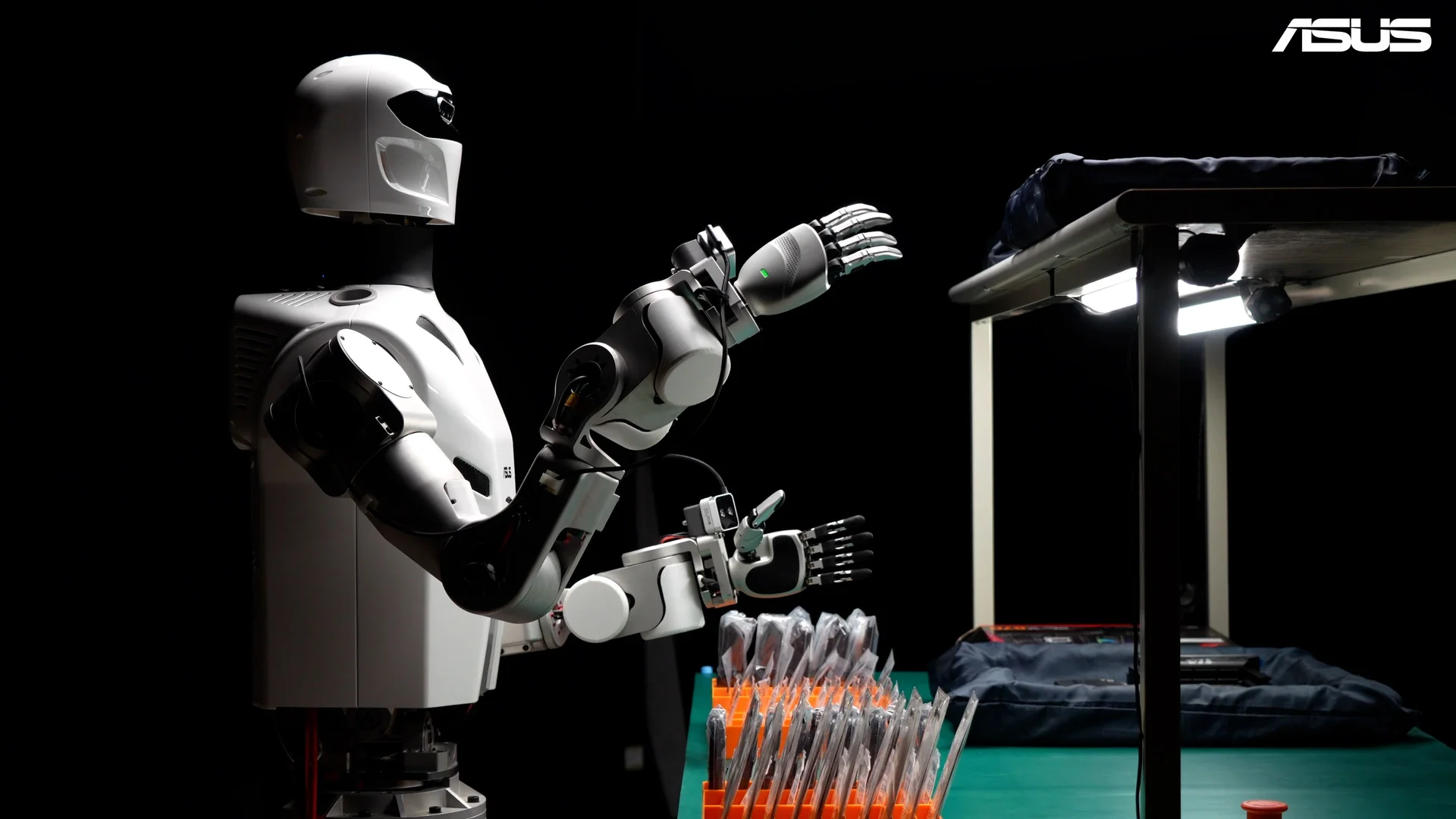
ASUS has introduced Gallop, its first humanoid robot, and put it to work packing motherboard accessories on a production line at one of the ASUS group's own electronics factories. Co-CEO S.Y. Hsu presented the robot on CNBC on November 13, saying ASUS will release Gallop to partners in the second half of 2027 and plans to launch it commercially in the second half of 2028.
- Gallop is a two-armed humanoid on a fixed base, built by the Humanoid Robotics business unit inside ASUS's Physical AI Solutions Business Group. A wheeled version is planned next.
- Its first job is packing motherboard accessories at an ASUS group plant: 15 small parts per board, many in thin plastic bags, with a cycle time of about 20 seconds. ASUS has set a 99.5% success target but has not published a measured rate.
- The robot runs on a single NVIDIA Jetson AGX Thor computer. ASUS starts from open AI models rather than training its own, and teaches tasks with head-camera footage from its factory workers, simulation and VR teleoperation.
- Customer pilots are planned for 2027 and market availability for the second half of 2028. ASUS has released no specifications or pricing.
A real job first
ASUS started the Gallop program in early 2026. Instead of building a general-purpose demo, the company picked one station on an existing line and trained the robot on it. In a blog post published alongside the announcement, ASUS's Albert Chang describes the task: Gallop packs the accessories that ship in a motherboard box. The station has 15 small parts, many sealed in thin, clear bags, and a board passes roughly every 20 seconds.
The bar ASUS has set is 99.5% success within that 20-second window, which the company says is "the same standard we hold a person to." The post says the full loop now works on the line, but it does not say how close Gallop has come to that number.
Many of the accessories "are very small and put in a plastic bag, so it needs some special training to handle those kinds of parts well," Hsu said on CNBC. He argued that a humanoid fits into workstations and workflows designed for people, and can use tools made for human hands. That, he said, makes it suited to low-volume, high-mix production, where lines are reconfigured often and dedicated automation is hard to justify.
Follow humanoid robotics without following every announcement.
Get the week’s most important launches, funding and research—and why they matter—in one email from Humanoids Daily.
Once a week. Unsubscribe anytime.
Read recent issuesHow Gallop is trained
ASUS does not train its own large AI model. Gallop starts from "leading open models," which the company does not name, and is then taught each task in four further steps:
- Experienced workers wear a small head camera, with their consent, while they do the job.
- Simulation generates variations of each recorded example.
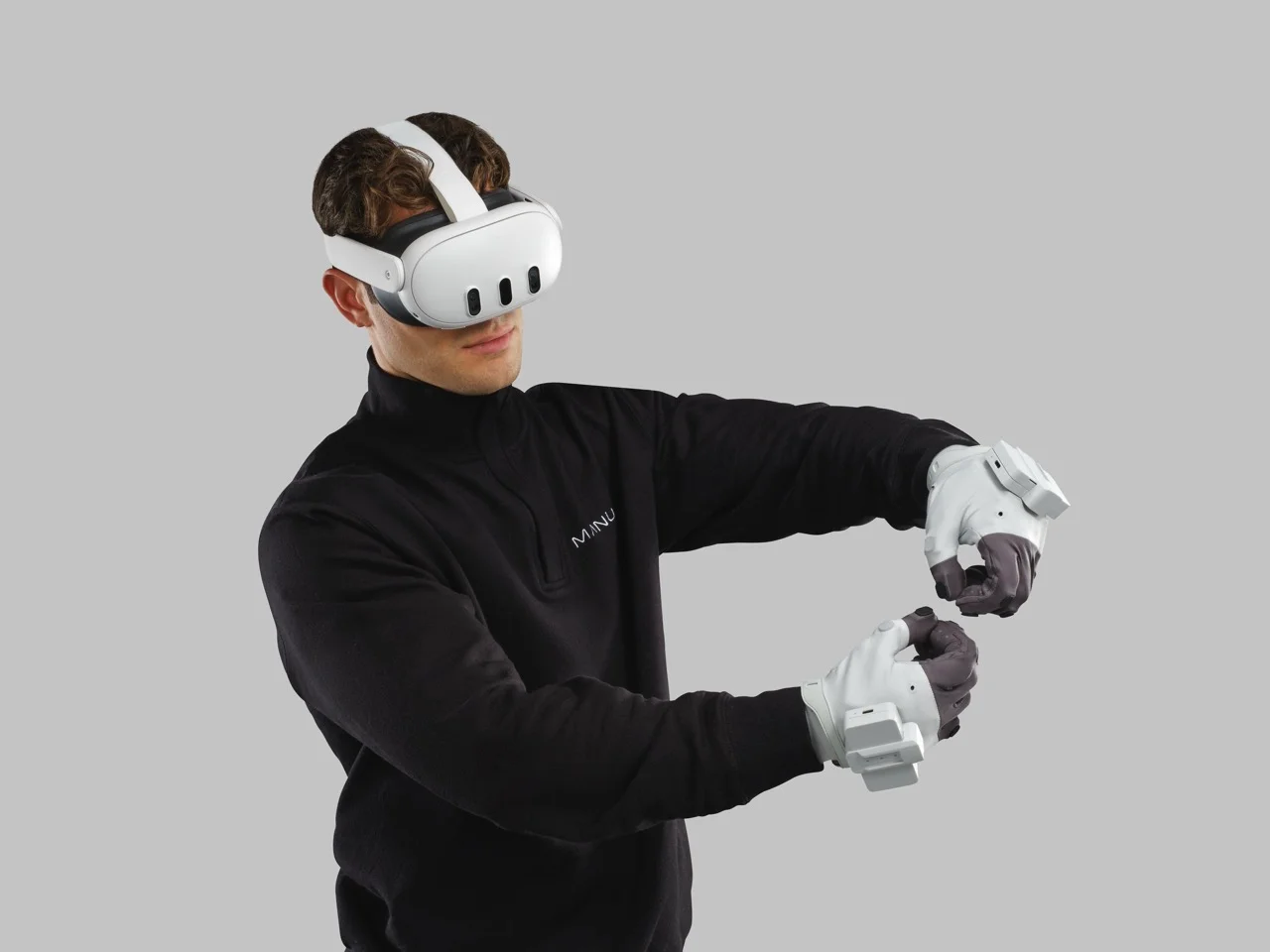
- An operator wearing a VR headset and gloves guides the robot through the task, using the same parts and cameras as the real station.
- Once deployed, the robot keeps recording data that feeds back into training.
The software is split into four layers. A planner looks at the scene and breaks the job into steps, and a second model acts as a supervisor that checks each step and re-plans when something goes wrong. Below them sit a skills layer for reaching, grasping and placing, and a control layer that moves the arms and hands and stops the robot if anything is off. The layers connect through fixed interfaces, so ASUS can drop in a newer model, which it expects to happen every few months, without rebuilding the robot.
According to the blog post, workers who teach Gallop move into setting up, supervising and improving the robots, and the company describes the robot as a replacement for repetitive, physically demanding stations rather than for people. ASUS also points to an advantage in owning its factories: it can test on live lines that most robotics companies would have to rent.
Jetson Thor, and a hand still to come
Everything on board runs on one NVIDIA Jetson AGX Thor computer using standard robotics software. When the CNBC anchor asked Hsu whether ASUS's partnership with NVIDIA was intact, a day after Jensen Huang resigned as NVIDIA's CEO, Hsu said ASUS is working with NVIDIA on Gallop and building it on Jetson Thor. He said Jetson Thor makes it easy to load new AI models, and each more capable model improves what the robot can do. UK robot maker Humanoid made a similar choice in October, replacing two onboard computers with one Jetson Thor.
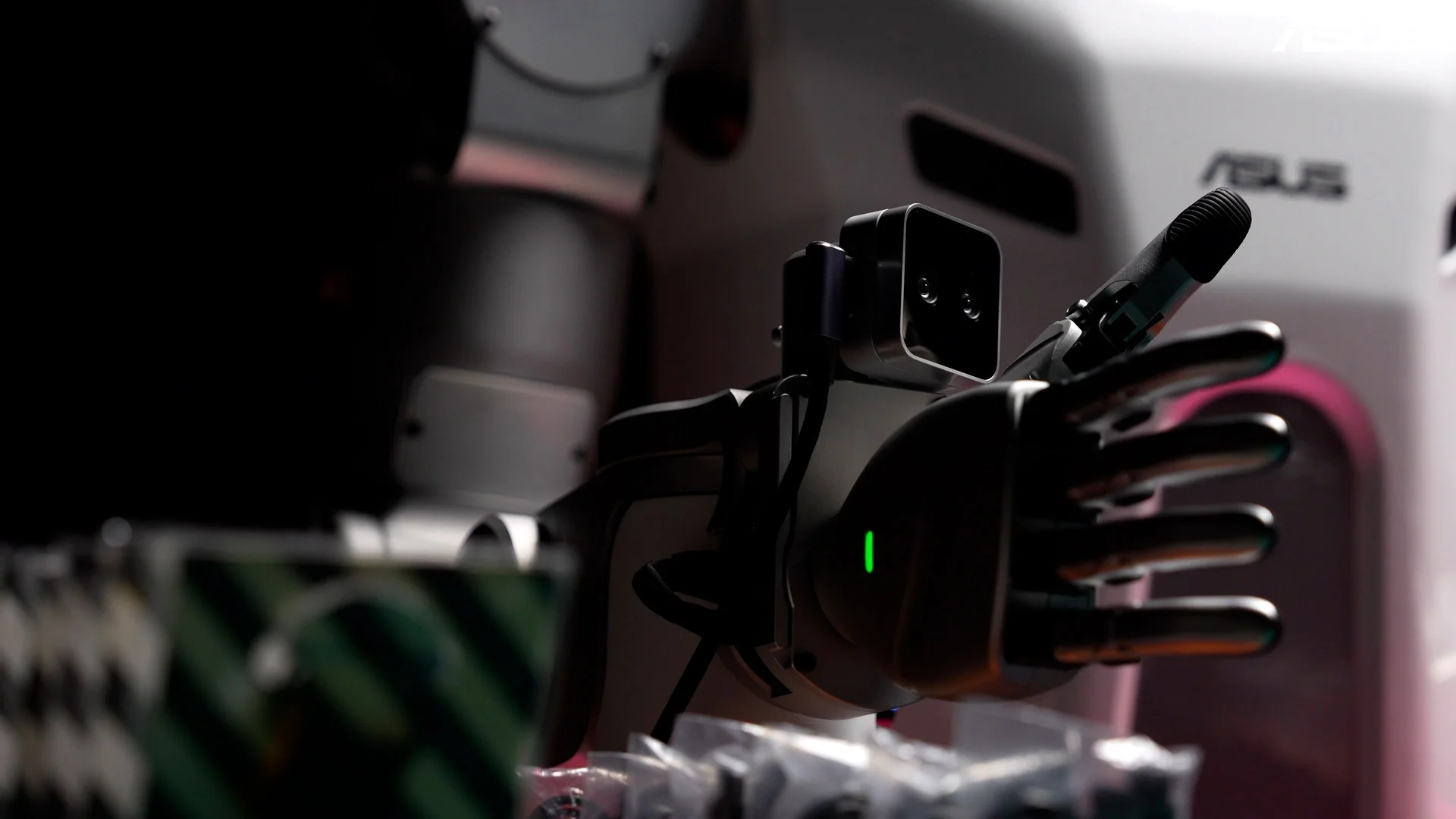
ASUS designs the robot's body and its dexterous hand in-house, and says the hand has a sense of touch. It calls the hand the hardest part of any humanoid. Motors and other standard components come from suppliers ASUS does not name. Its plans for the coming year include bringing its own hand into the robot, putting Gallop on wheels and showing it at Computex 2027 in Taipei.
ASUS has not published Gallop's height, weight, degrees of freedom, payload or battery life, and has not given a price.
Pilots in 2027, sales in 2028
Hsu said ASUS is using Gallop on its own lines for validation, testing and training before releasing it to partners in the second half of 2027. The commercial launch is targeted for the second half of 2028. Electronics manufacturing comes first, and ASUS expects the skills Gallop learns there to carry over to hospitals and service sites over time.
Share this article
Follow humanoid robotics without following every announcement.
Get the week’s most important launches, funding and research—and why they matter—in one email from Humanoids Daily.
Once a week. Unsubscribe anytime.
Read recent issuesRead next
- Published on
- Reading time
- 3 min read
Foxconn to Deploy NVIDIA-Powered Humanoid Robots in Houston AI Server Plant
- Published on
- Reading time
- 6 min read
NVIDIA Keynote: Cosmos 3 Realizes the "World Action Model" End Game
- Published on
- Reading time
- 6 min read
NVIDIA GTC: NVIDIA and Sharpa Unveil Isaac GR00T Reference Humanoid Robot
- Published on
- Reading time
- 6 min read
NVIDIA Advances Humanoid AI with GR00T N1.5, Eyeing a Future of Simulated Realities
- Published on
- Reading time
- 5 min read
Manus Metagloves Pro Haptic: Closing the Feedback Loop for Humanoid Teleoperation
- Published on
- Reading time
- 4 min read
From Prosthetics to Pixels: PSYONIC and NVIDIA Bridge the Robotics "Data Gap" with Real-to-Real Transfer