- Published on
Benioff Stress-Tests Figure 03: Faster Throughput and Reactive Autonomy
One tap, and our reporting appears more often in your Google Top Stories. It makes a real difference to a small newsroom.

Supported by RoboStrategySupport for Humanoids Daily comes from RoboStrategy
Sponsored
Investing involves risk, including possible loss of principal. Read the prospectus before investing.
A Surprise Look at Figure 03
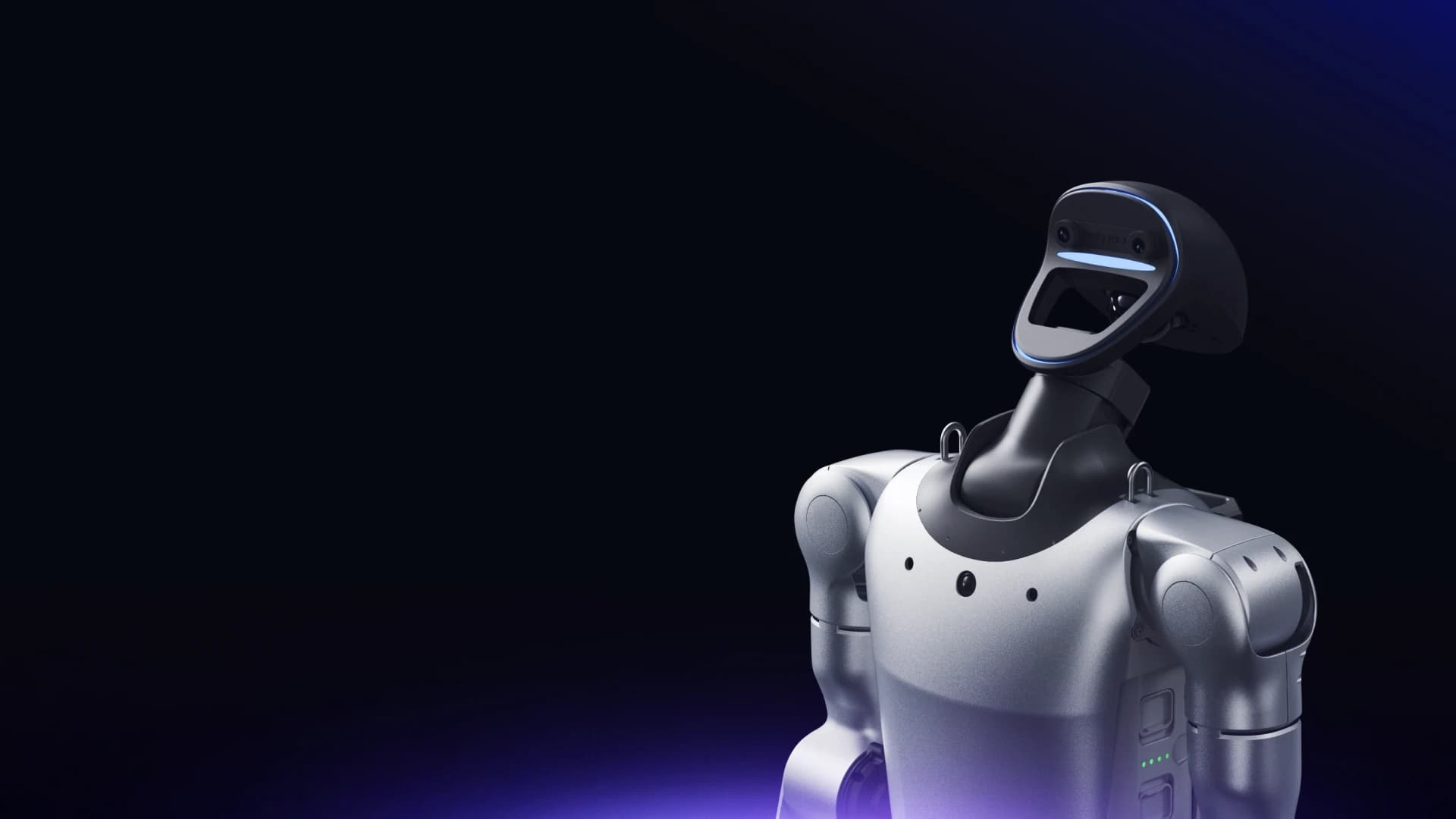
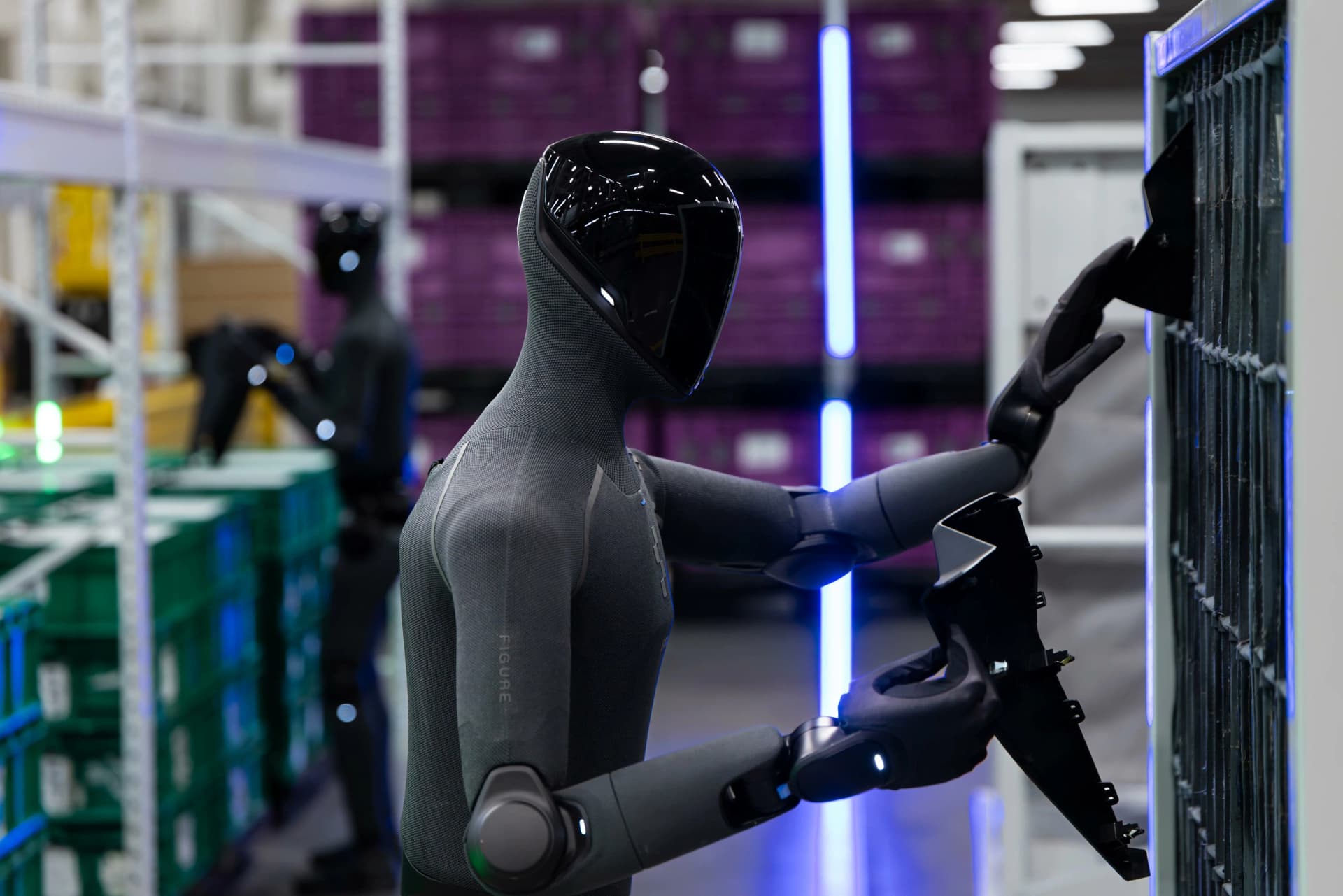
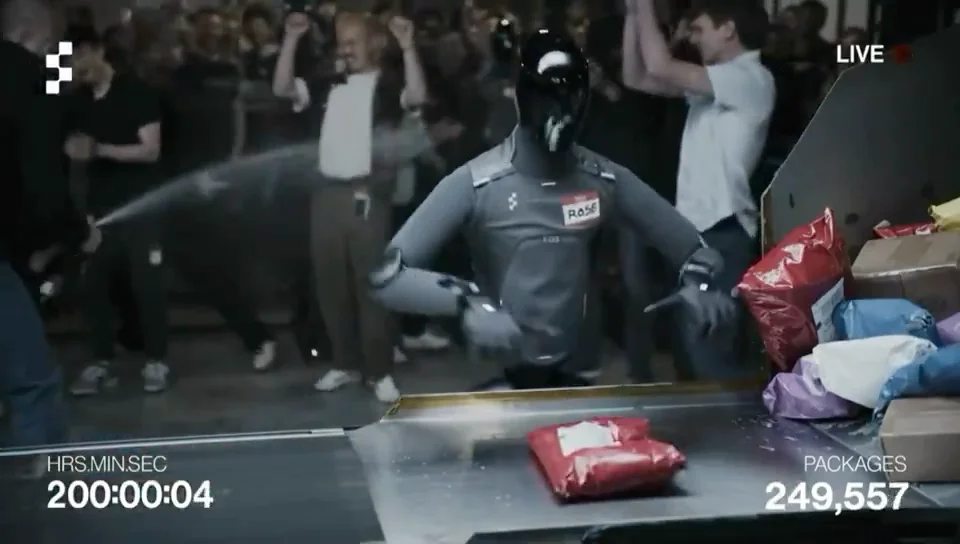
In a candid video shared on X, Salesforce CEO Marc Benioff provided the public with a look at Figure’s newest hardware iteration: the Figure 03. The footage, apparently captured during a visit to the Sunnyvale-based robotics company, depicts the humanoid performing a logistics task that has become a benchmark for Figure—autonomous package sorting and orientation.
The demonstration comes less than a year after Figure released what it called its "most boring video," an unedited 60-minute sequence designed to prove the long-term endurance of the Figure 02 model. While that previous milestone focused on the robot's ability to operate without interruption for an hour, this new footage highlights a significant leap in speed and reactive intelligence.
Testing the "Flipping" Algorithm
The specific task shown involves the Figure 03 identifying packages and flipping them upside down to ensure correct orientation before passing them on. Benioff, narrating the video himself, decided to "stress-test" the robot’s autonomy by grabbing packages the robot had already correctly handled and tossing them back to the robot.
The Figure 03 reacted with notable fluidity, immediately re-evaluating the scene to handle the returned packages. "It’s really impressive," Benioff noted as the robot adjusted its grip and continued the task despite the interference. This behavior suggests a more robust implementation of the adaptive behaviors first seen in Figure 02.
The weekly humanoid robotics briefing
One email a week: the launches, funding and research that mattered, with context from Humanoids Daily.
Read recent issuesTechnical Evolution: Pixels to Torque
Following the video’s release, Figure CEO Brett Adcock clarified the technical underpinnings of the performance. According to Adcock, the Figure 03 is operating "fully autonomously," utilizing an end-to-end neural network to reason directly from camera pixels.
Key technical details of the Figure 03 revealed in the exchange include:
- High Degrees of Freedom: The robot now utilizes more than 30 motors for precise control of its limbs and extremities.
- Direct Control: The AI computes torque directly to control these motors, bypassing traditional, rigid motion planning.
- Enhanced Speed: While the Figure 02 achieved an average throughput of approximately 4.05 seconds per package , the Figure 03 appears to operate at a slightly higher cadence, moving with a snappiness that suggests further optimization of its state history and temporal memory systems.
Closing the Gap to Commercial Readiness
By moving from the endurance-focused demonstrations of the Figure 02 to the high-speed, reactive performance of the Figure 03, the company is addressing two of the most critical hurdles for warehouse automation: throughput and reliability in dynamic environments. While the Figure 02 had already improved barcode scanning accuracy to 95%, the Figure 03’s ability to handle human interference in real-time brings the technology closer to the chaotic reality of a live logistics floor.
Share this article
Read next
- Published on
- Reading time
- 6 min read
Figure CEO Brett Adcock Claims Humanoids Are Already Delivering ROI Amid Severe Labor Shortages
- Published on
- Reading time
- 4 min read
Stepping Up: Figure 03 Achieves Autonomous Ladder Climbing, Reigniting the Bipedal Debate
- Published on
- Reading time
- 4 min read
A Golden Milestone: Figure Manufactures Its 1,000th Figure 03 Humanoid
- Published on
- Reading time
- 6 min read
Back to Spartanburg: Figure 03 Deploys at BMW for Complex Logistics Sequencing
- Published on
- Reading time
- 4 min read
Figure Inks Commercial Deal with Catalyst Brands for Large-Scale Humanoid Deployment
- Published on
- Reading time
- 4 min read
Figure AI Pops Champagne as Autonomous Marathon Crosses 200 Hours Without Hardware Failure

The weekly humanoid robotics briefing
One email a week: the launches, funding and research that mattered, with context from Humanoids Daily.
Read recent issues