- Published on
Wuji Tech Confirmed as Hardware Partner for Genesis AI’s Human-Level Dexterity Breakthrough
One tap, and our reporting appears more often in your Google Top Stories. It makes a real difference to a small newsroom.

Supported by RoboStrategySupport for Humanoids Daily comes from RoboStrategy
Sponsored

Investing involves risk, including possible loss of principal. Read the prospectus before investing.
This article has been updated to reflect a corrected statement from Wuji Tech. In a revised announcement on X, Wuji Tech clarified that it acted as a manufacturing collaborator for the proprietary Genesis Hand 1.0, rather than Genesis AI using an off-the-shelf Wuji Hand as originally suggested.
- Wuji Tech has clarified its role as a manufacturing partner for the proprietary Genesis Hand 1.0 used in the viral GENE-26.5 demos.
- The hardware is a unique version co-developed to meet Genesis AI’s 1:1 human-scale and back-drivable design requirements.
- Genesis AI’s "full-stack" strategy focuses on bridging the embodiment gap by tightly coupling proprietary hardware design with AI foundation models.
- While based on Wuji’s foundational technology, the Genesis Hand 1.0 features specific optimizations for low-latency, human-centric data collection.
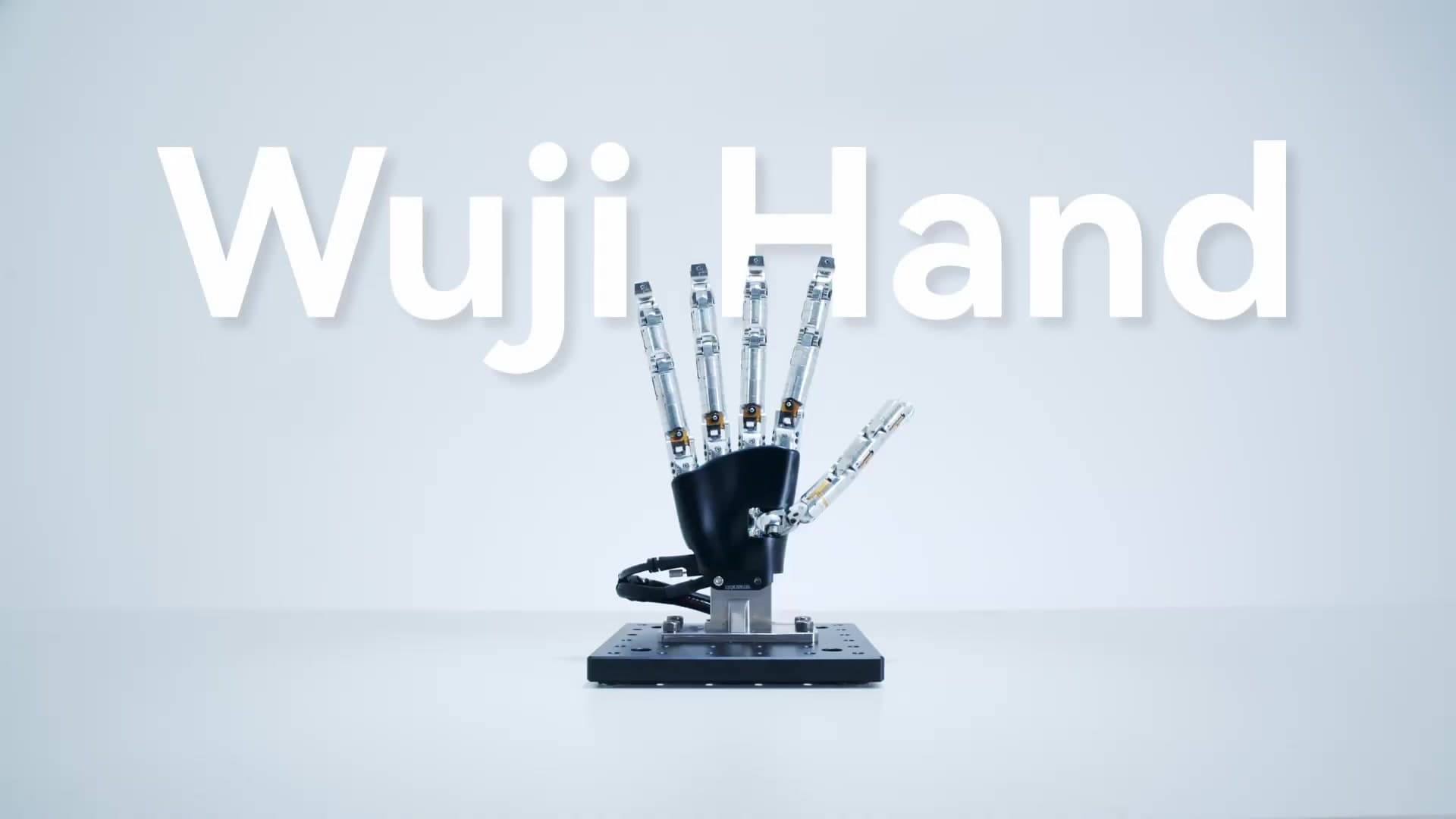
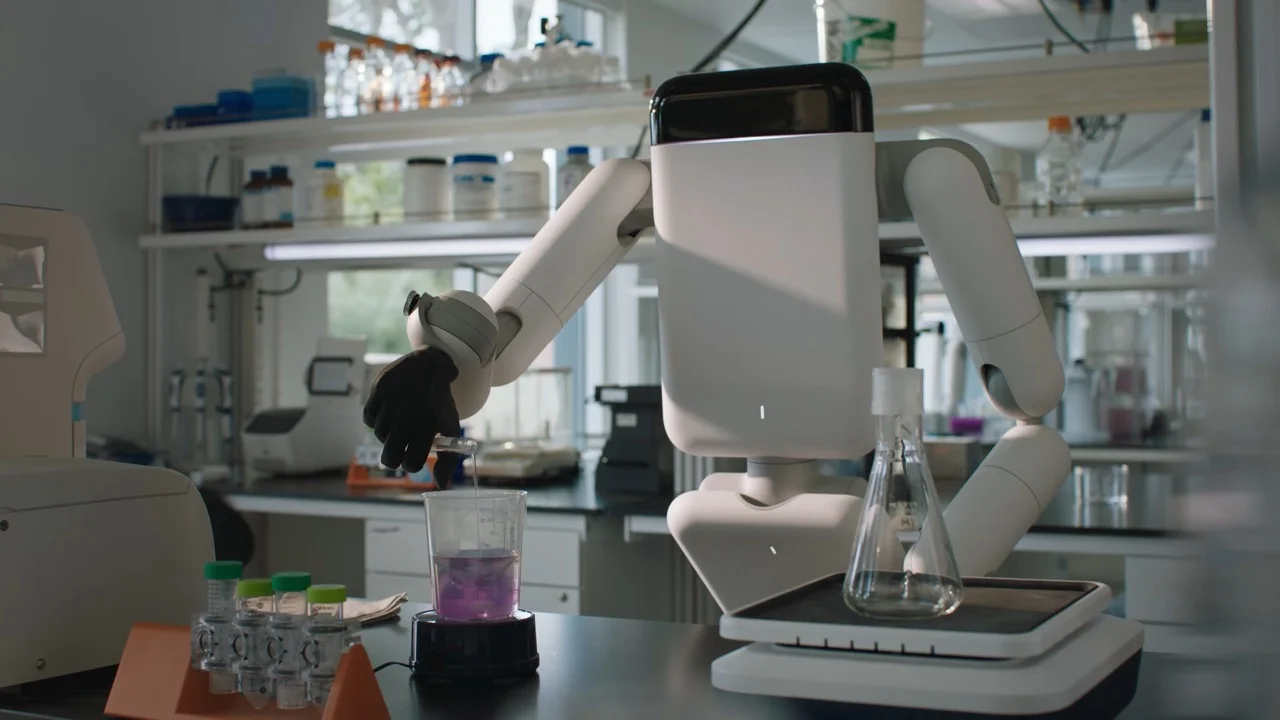
The mystery surrounding the hardware in Genesis AI’s viral robotics demonstrations has been clarified. Shenzhen-based Wuji Tech confirmed that while its high-performance technology provided the foundation, the hands shown are the Genesis Hand 1.0—a proprietary version unique to Genesis AI's system.
In a revised statement, Wuji Tech described itself as a collaborator, noting it helped manufacture the Genesis Hand 1.0 based on Genesis AI’s specific "1:1 human proportions and back-drivable design principles" to support human-level physical manipulation. This follows an earlier, now-deleted post that had initially suggested the GENE-26.5 reveal was powered by a standard Wuji Hand.
A "Unique Version" for Human-Level Dexterity
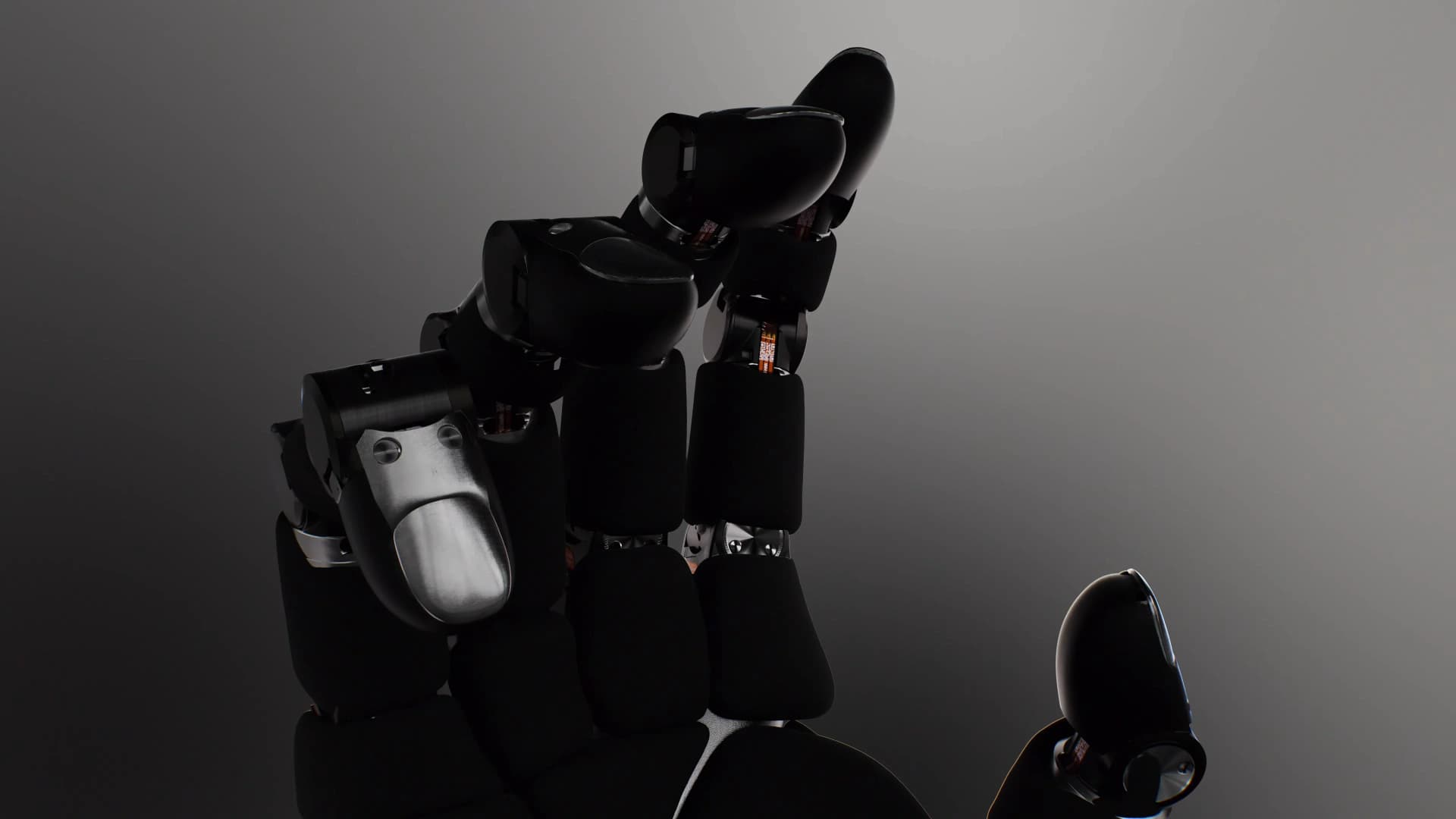
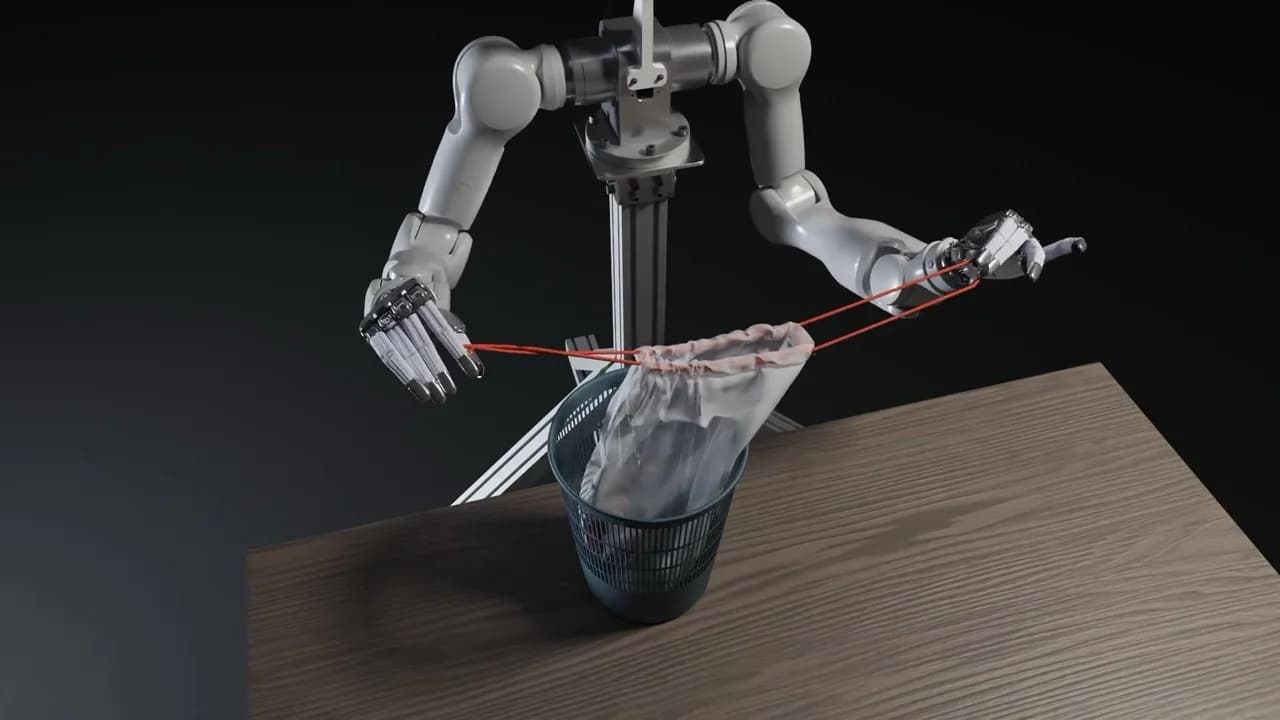
The Genesis Hand 1.0 represents a deep hardware-software integration designed to minimize the "embodiment gap" between humans and machines. Genesis AI argues that robotic manipulation is a full-stack problem that cannot be solved through models alone; it requires a physical interface capable of expressing rich contact.
By owning the design and partnering with Wuji Tech for manufacturing, Genesis AI has produced a hand that achieves a true 1:1 size match with the human hand. This biomimetic design allows for "near-lossless information transfer" from human demonstrations to the robot, effectively eliminating the need for complex motion retargeting.
The weekly humanoid robotics briefing
One email a week: the launches, funding and research that mattered, with context from Humanoids Daily.
Read recent issuesGenesis Hand 1.0 Core Principles:
- 1:1 Human Scale: A size match designed to map human hand motions directly to the robotic hardware.
- Back-Drivability: 20 active degrees of freedom (DOF) that allow for the delicate force control required for tasks like single-handed egg cracking.
- Soft-Contact Dynamics: A palm and finger covering made of soft material to mimic human skin physics.
Synergy of Design and Manufacturing
The collaboration leverages Wuji Tech’s established expertise in high-dexterity actuators. Wuji’s original product specifications showcase a robust platform featuring direct-drive rotary joints and FOC vector control, achieving a fingertip force of 15 Newtons and up to 1000Hz data feedback frequency.
However, the Genesis Hand 1.0 is distinct from the standard Wuji Hand. While the standard model is marketed for broad scientific research, the Genesis iteration is custom-tuned for the GENE foundation model stack. This includes a proprietary control middleware that achieves end-to-end latency as low as 3ms, allowing the model to learn from human motion rather than robot-specific teleoperation artifacts.
The Scaling Path for Manipulation
Genesis AI’s decision to develop proprietary hardware reflects a shift from its early software-centric strategy. The company now views hardware as a critical component of its "data engine," which has already collected over 200,000 hours of multimodal interaction data.
By utilizing the Hand 1.0 as a standardized interface across its training pipeline, Genesis aims for "instant deployment"—where a robot can enter a new environment and perform useful work with minimal manual tuning. Wuji Tech’s role as a manufacturer provides the industrial scale necessary for this vision, as the Shenzhen firm has already established high-volume production protocols for its own direct-drive systems.
Share this article
Read next
- Published on
- Reading time
- 5 min read
Wuji Tech Teases Wuji Hand 2: High Engineering Ambitions Behind a CGI Veil
- Published on
- Reading time
- 4 min read
Experts Weigh In on Wuji Tech’s Robotic Hand: A “Remarkably Robust” Direct-Drive Contender
- Published on
- Reading time
- 3 min read
Wuji Tech Reveals High-Dexterity Robotic Hand for Humanoid Applications
- Published on
- Reading time
- 5 min read
Genesis AI Unveils Eno: The Minimalist Robot Making an "Opposite Bet" on Humanoid Design
- Published on
- Reading time
- 5 min read
Genesis AI Launches Genesis World 1.0, Turning the "Sim-to-Real" Gap into a Compute Problem
- Published on
- Reading time
- 4 min read
Genesis AI Bolsters Leadership with Former X and Tesla Execs Ahead of Hardware Reveal
The weekly humanoid robotics briefing
One email a week: the launches, funding and research that mattered, with context from Humanoids Daily.
Read recent issues