- Published on
Breaking the Cage: Agility CEO Peggy Johnson Outlines Vision for "Unconstrained" Humanoids at Abundance Summit 2026
One tap, and our reporting appears more often in your Google Top Stories. It makes a real difference to a small newsroom.

Supported by RoboStrategySupport for Humanoids Daily comes from RoboStrategy
Sponsored
Investing involves risk, including possible loss of principal. Read the prospectus before investing.
- Agility will release a safety-certified version of Digit by late 2026, allowing the robot to operate outside protective "work cells" alongside human staff.
- The company is preparing for a new funding round later this year to scale production at its Salem, Oregon "Robofab" facility, which maintains an annual capacity of 10,000 units.
- CEO Peggy Johnson confirmed Digit’s current valuation at approximately $2 billion, positioning the firm as a leader in "industrial-first" robotics.
- The fifth-generation Digit, slated for a broader 2027 rollout, will feature a 50-pound lift capacity to meet OSHA-standard manual labor limits.
- Agility remains "LLM-agnostic," utilizing various AI models including Claude and Gemini to facilitate verbal instructions and autonomous reasoning.
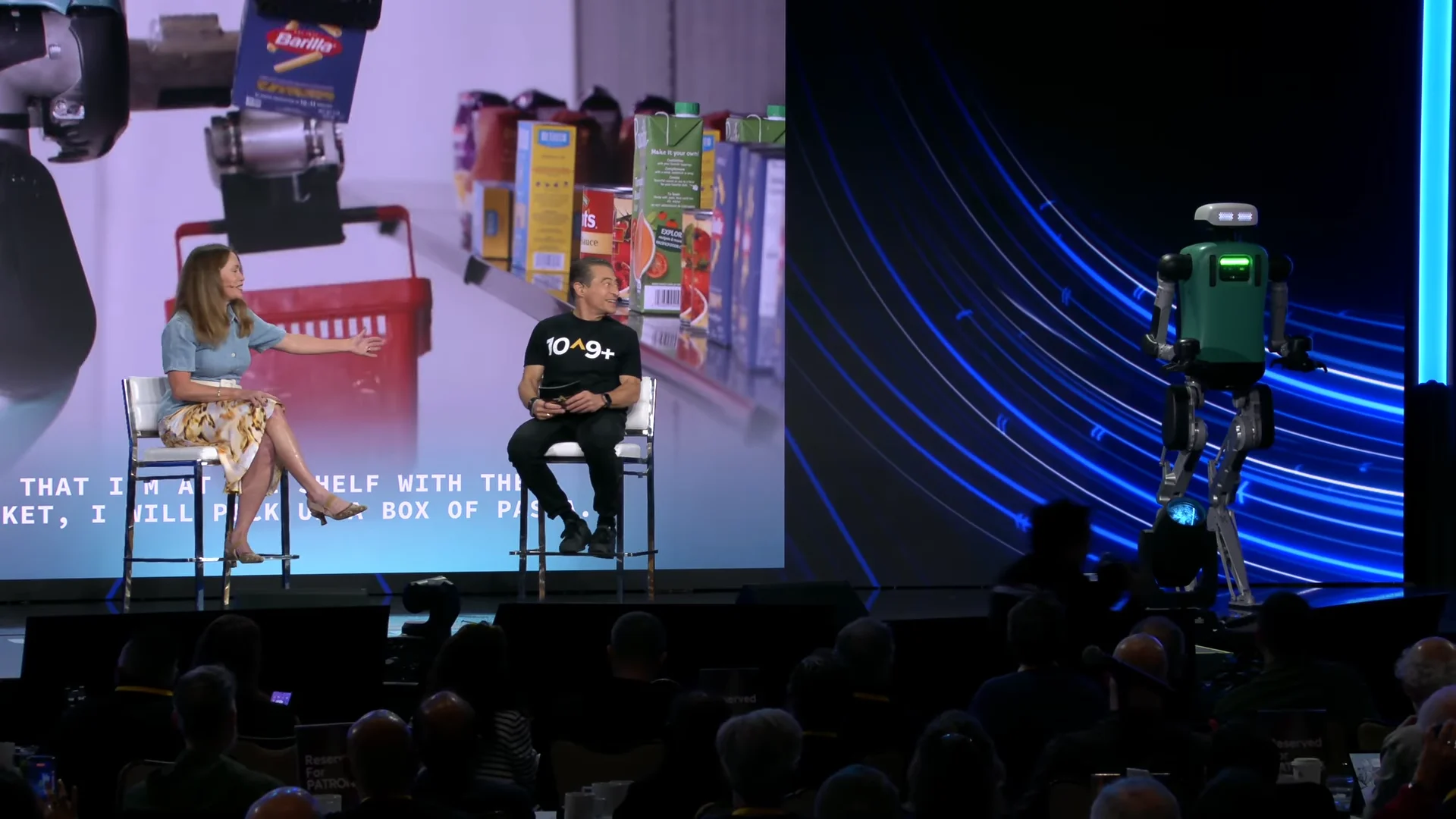
In a newly released fireside chat from the Abundance Summit 2026, Agility CEO Peggy Johnson signaled a pivotal shift in the deployment of humanoid labor: the end of the safety cage. Speaking with Peter Diamandis, Johnson outlined a roadmap where the company’s bipedal robot, Digit, transitions from isolated "work cells" to fluid interaction across the factory floor, backed by a significant new capital raise planned for later this year.
The "Cooperative" Milestone
For much of its early commercial life, Digit has operated behind Plexiglas barriers or within designated safety zones to comply with federal regulations. This has been a central feature of recent deployments, such as the ongoing pilot at a Schaeffler auto-parts plant in South Carolina. However, Johnson confirmed that by the end of 2026, Agility will deploy a version of Digit that is "cooperatively safe."
"If a human approaches the humanoid, it has to take action to bring itself down to the ground and ensure that no harm is done," Johnson explained. This "breakout" from the work cell is critical for tasks that require mobility across facilities, such as moving material from loading docks to internal storage. This regulatory milestone builds on Agility’s previous success in securing OSHA-recognized safety approval, a credential that has already helped the company secure high-profile deals with Toyota and Mercado Libre.
Scaling the "Truth Teller" Strategy
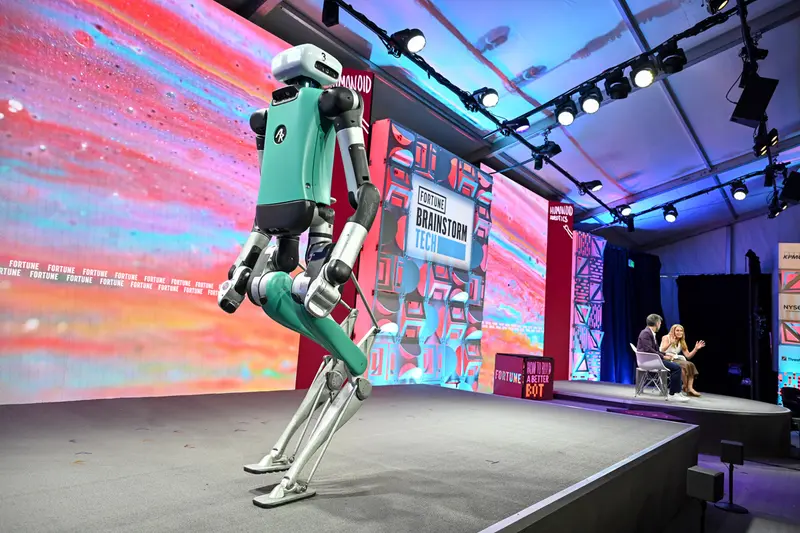
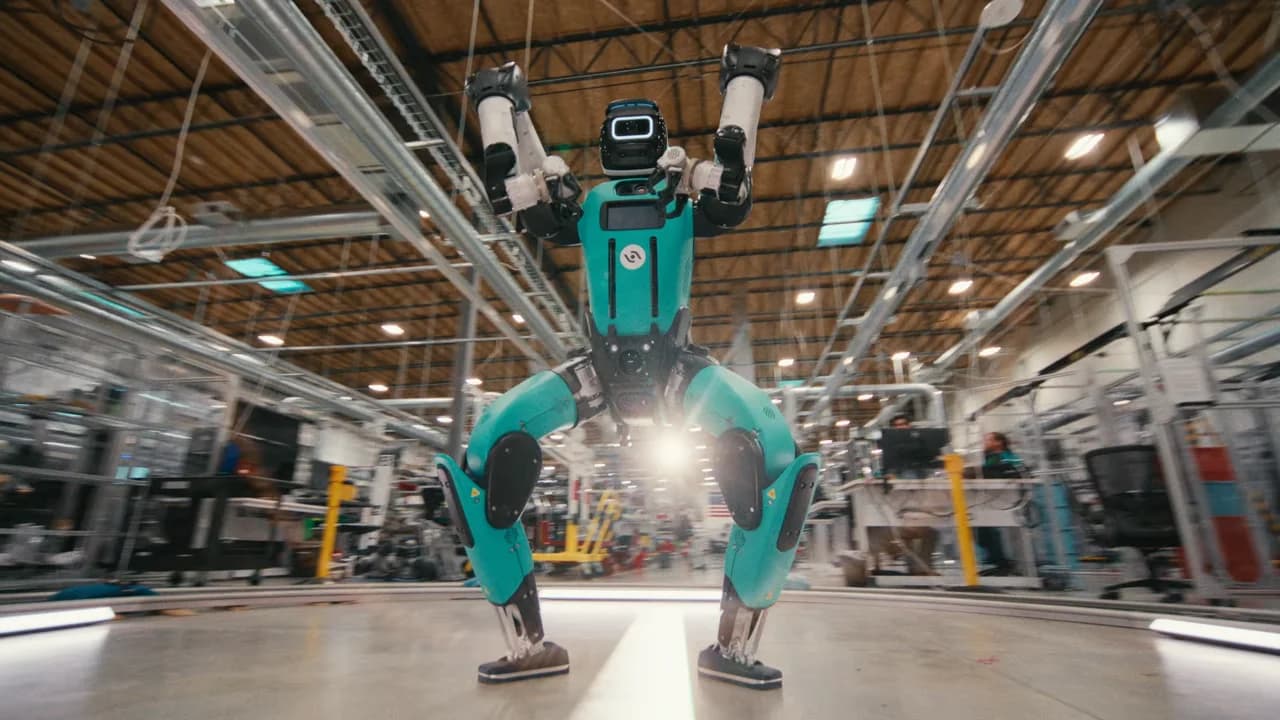
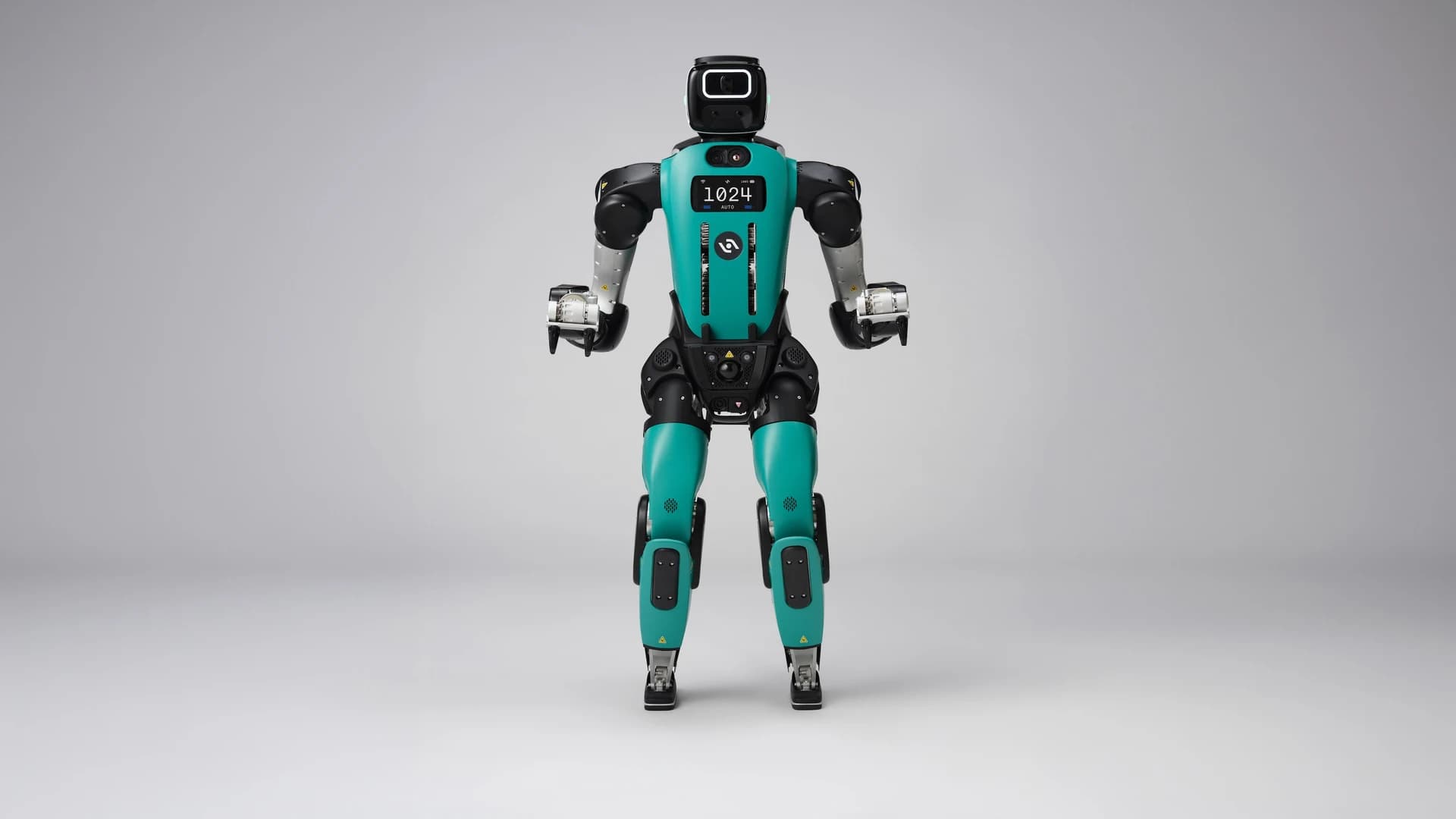
Addressing the company's hardware design, Johnson defended Digit’s unconventional "bird legs"—a reverse-knee configuration that often draws curiosity. The design is purely functional; it allows the robot to bend deeply to reach low shelves without its knees striking the racking, a common failure point for robots that mimic human anatomy too closely.
The weekly humanoid robotics briefing
One email a week: the launches, funding and research that mattered, with context from Humanoids Daily.
Read recent issuesThis "built for work" philosophy aligns with the company's recent rebranding, which dropped "Robotics" from its name to focus on mature automation solutions. Johnson emphasized that while competitors often chase viral acrobatic demos, Agility has focused on the "boring" consistency of material handling. This focus has already resulted in the fleet moving over 100,000 totes in live production environments like GXO Logistics.
Economics and the Next Generation
Johnson revealed that the fifth-generation Digit—the version expected to drive massive scale—will feature a 50-pound lift capacity. This specific weight limit is designed to align with OSHA’s recommended manual lifting limits for humans, allowing Digit to "literally step in" to the most physically taxing roles in warehousing.
The economic case for this transition is becoming increasingly stark. While human labor in many US manufacturing hubs starts at approximately $20 per hour, the operational cost of Digit currently sits between $10 and $25 per hour, with long-term projections suggesting a drop to as low as $2 or $3 per hour.
Funding and Geopolitics
To support this expansion, Johnson confirmed that Agility—currently valued at roughly $2 billion—will return to the capital markets for a new funding round later in 2026. The funds are expected to fuel the ramp-up of the company’s Salem, Oregon factory, which Johnson says is already capable of producing 10,000 units annually.
The push for domestic manufacturing also carries geopolitical weight. Johnson noted that the current US administration is actively working to ensure the humanoid industry does not follow the path of the drone sector, which largely moved offshore. "They want to ensure that this industry flourishes and thrives in the US," Johnson said, citing ongoing high-level meetings in Washington regarding supply chain resilience.
By combining "reliability-first" engineering with a pragmatic approach to safety and labor economics, Agility is attempting to prove that the fastest way to a humanoid future isn't through backflips, but through the rigorous, repetitive, and unglamorous work of the factory floor.
Watch the conversation in the player below:
Share this article
Read next
- Published on
- Reading time
- 3 min read
Agility Robotics Reportedly Nearing $400M Funding Round to Mass Produce Digit Humanoid
- Published on
- Reading time
- 4 min read
Agility’s Digit 5 Reveal Includes a Wheeled Robot Concept
- Published on
- Reading time
- 8 min read
Uncaged: Agility CEO Peggy Johnson and Co-Founder Jonathan Hurst Detail Digit 5 Architecture, AI Stack, and Supply Chains
- Published on
- Reading time
- 5 min read
Agility unveils Digit 5, designed to work closer to people
- Published on
- Reading time
- 5 min read
Beyond the Backflip: Agility’s Jonathan Hurst on the Pragmatic Path to a Humanoid Future
- Published on
- Reading time
- 4 min read
Beyond the Bot: Agility Robotics Rebrands to "Agility" to Signal Broader Ambitions


The weekly humanoid robotics briefing
One email a week: the launches, funding and research that mattered, with context from Humanoids Daily.
Read recent issues