- Published on
Genesis AI Unveils GENE-26.5: A Full-Stack Play for the “Human-Level” Holy Grail
One tap, and our reporting appears more often in your Google Top Stories. It makes a real difference to a small newsroom.

Supported by RoboStrategySupport for Humanoids Daily comes from RoboStrategy
Sponsored

Investing involves risk, including possible loss of principal. Read the prospectus before investing.
- Genesis AI has launched GENE-26.5, a purpose-built foundation model designed to enable robots to perform complex, long-horizon tasks with human-like dexterity.
- The company introduced a proprietary dexterous robotic hand and a tactile-sensing data glove that provides a 1:1:1 mapping between human movement and robotic action.
- To solve the robotics data bottleneck, Genesis AI’s new hardware is reportedly 100 times cheaper than existing teleoperation options and five times more efficient at data collection.
- The announcement includes a next-generation simulation system designed to narrow the "sim-to-real" gap, allowing AI to train AI in hyper-realistic virtual environments.
- Backed by $105 million in seed funding, the company is preparing to unveil its first general-purpose robot integrated with this full-stack technology.
The quest for "Physical AGI" just gained a formidable new contender. Genesis AI, a startup that recently emerged from the pack of highly-funded stealth ventures, has unveiled GENE-26.5, a robotic "brain" and foundation model designed to bring human-level physical manipulation to general-purpose machines.
The announcement, made today, May 6, 2026, marks a significant shift for the company. While previous reports suggested Genesis AI was primarily software-centric, today's reveal showcases a "full-stack" strategy that includes proprietary hardware designed to solve the industry’s most persistent hurdle: the data bottleneck.
Mastering the "Brain and Hand"
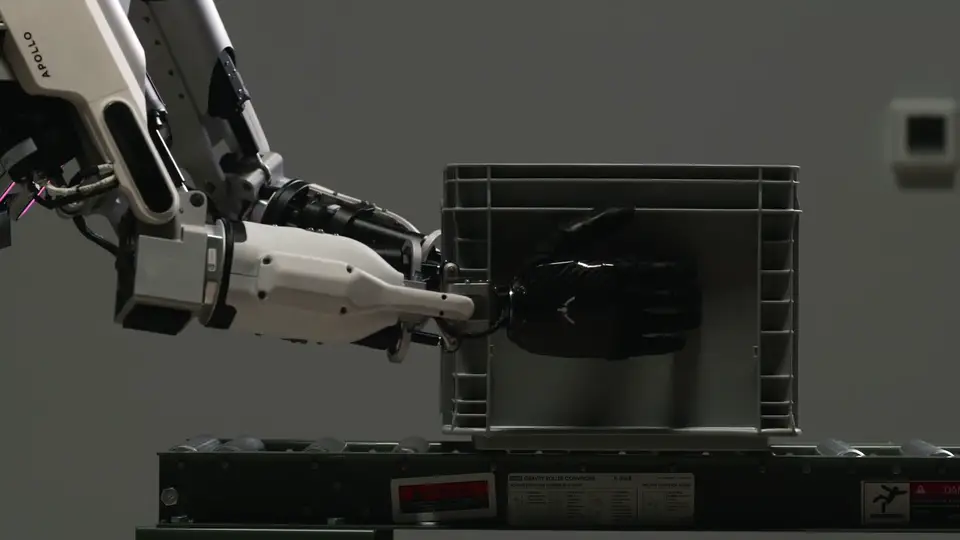
Genesis AI’s latest development centers on two core components: the GENE-26.5 AI foundation model and a human-scale dexterous robotic hand. According to CEO Zhou Xian, these represent the "two most valuable and complex pieces of robotics."
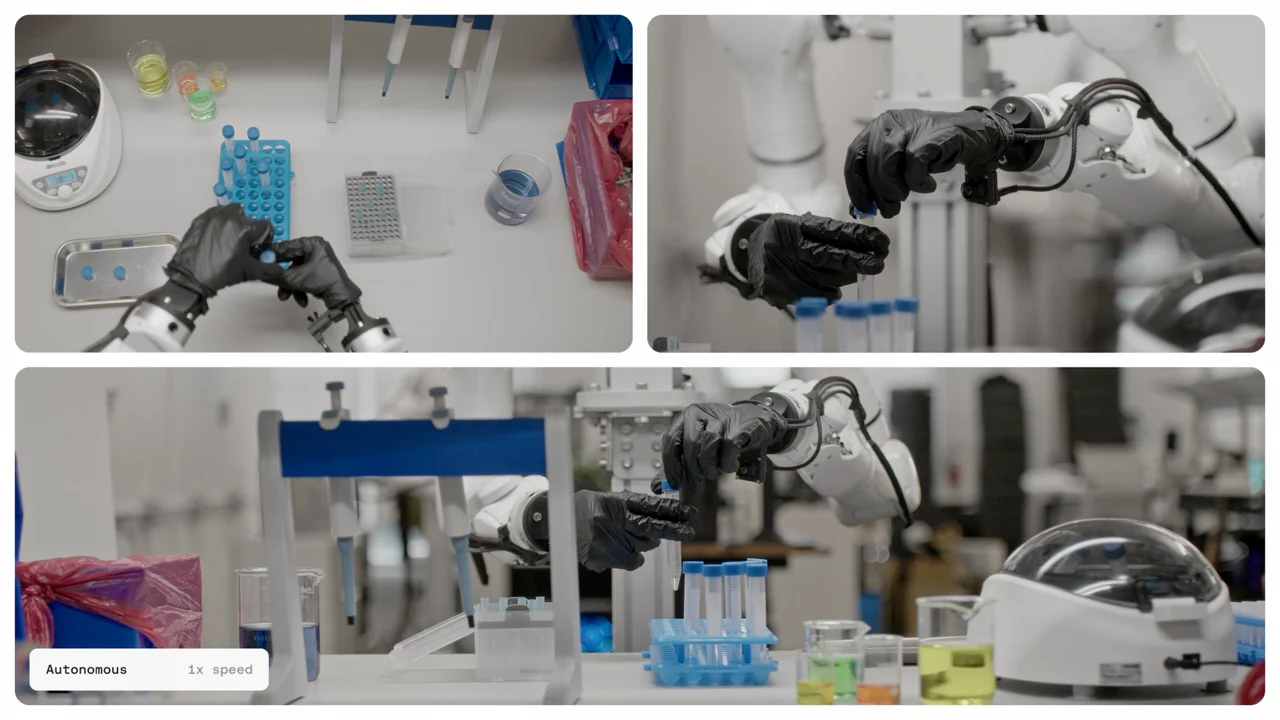
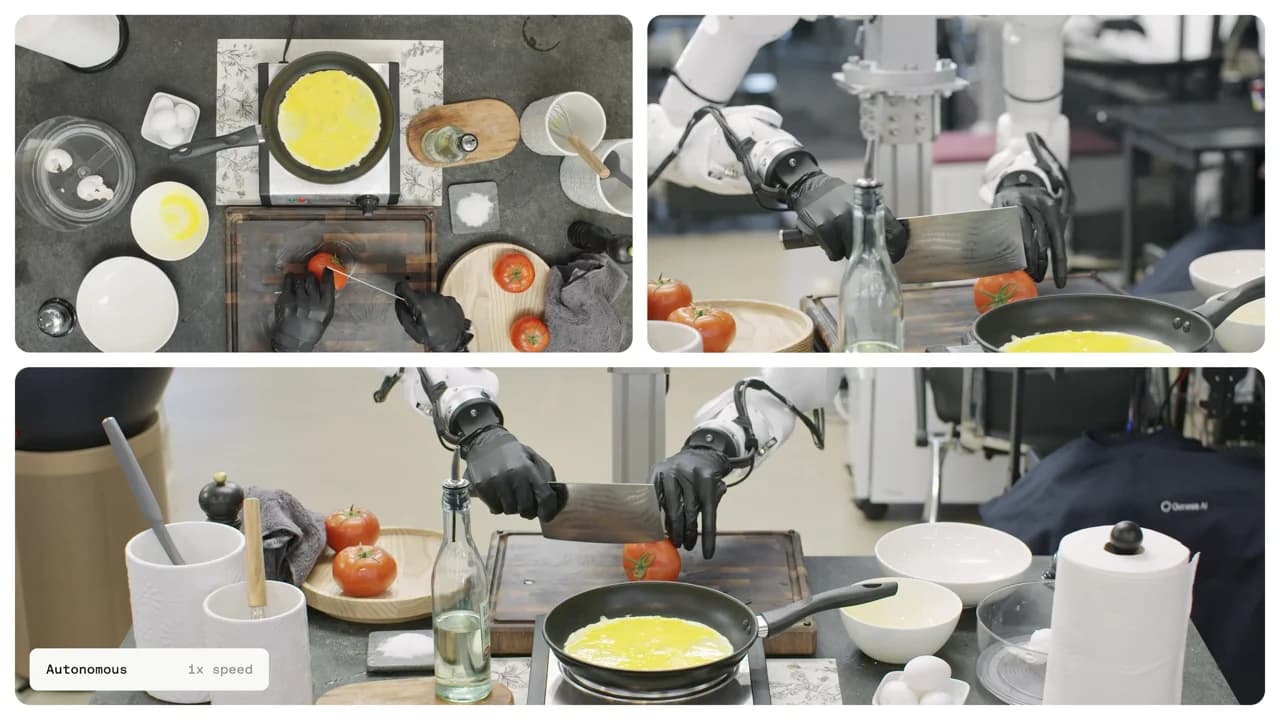
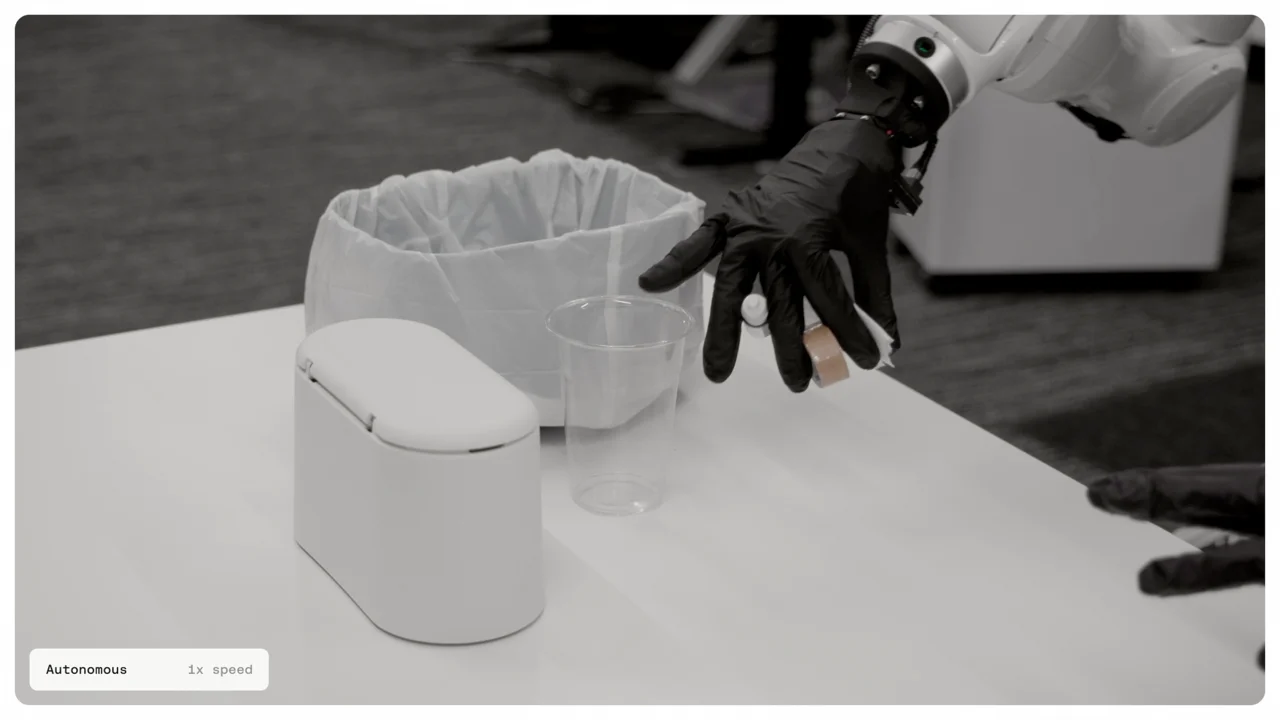
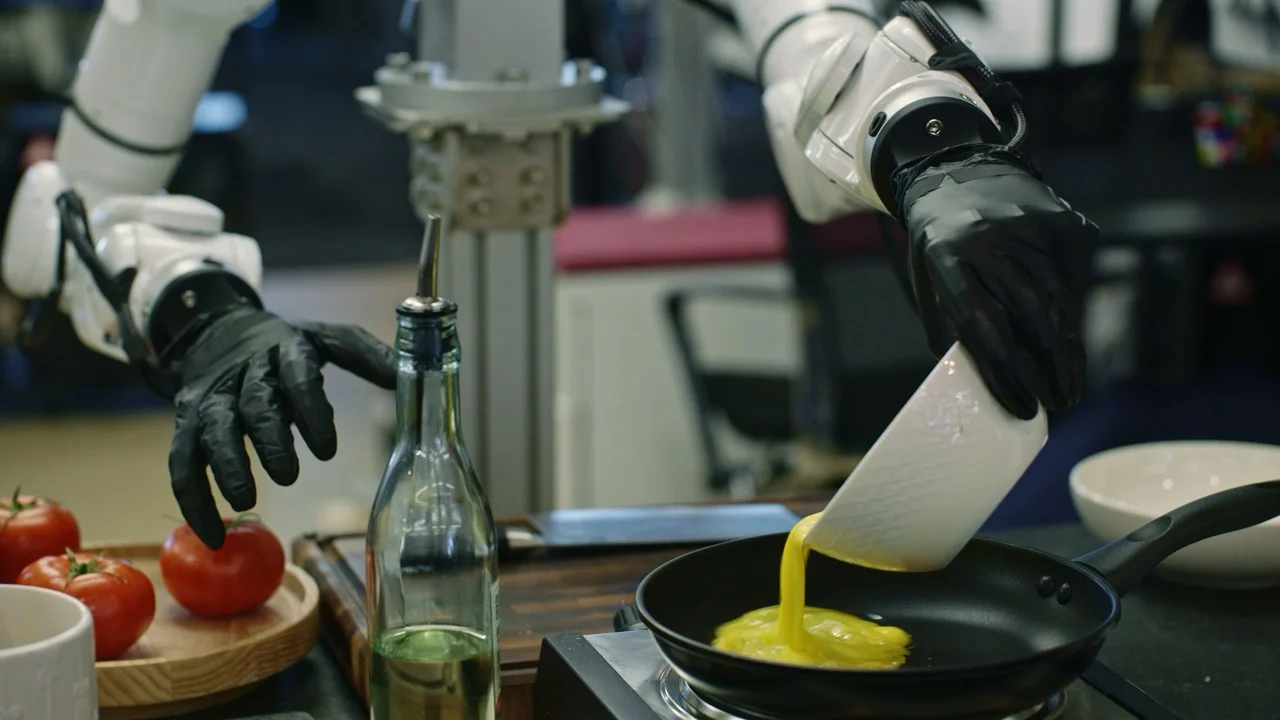
To prove the model's capabilities, the company released a video showcasing the system performing a series of tasks that have historically been considered "edge cases" for autonomous systems:
The weekly humanoid robotics briefing
One email a week: the launches, funding and research that mattered, with context from Humanoids Daily.
Read recent issues- Complex Culinary Tasks: A 20-step meal preparation, including one-handed egg cracking and fluid two-hand coordination.
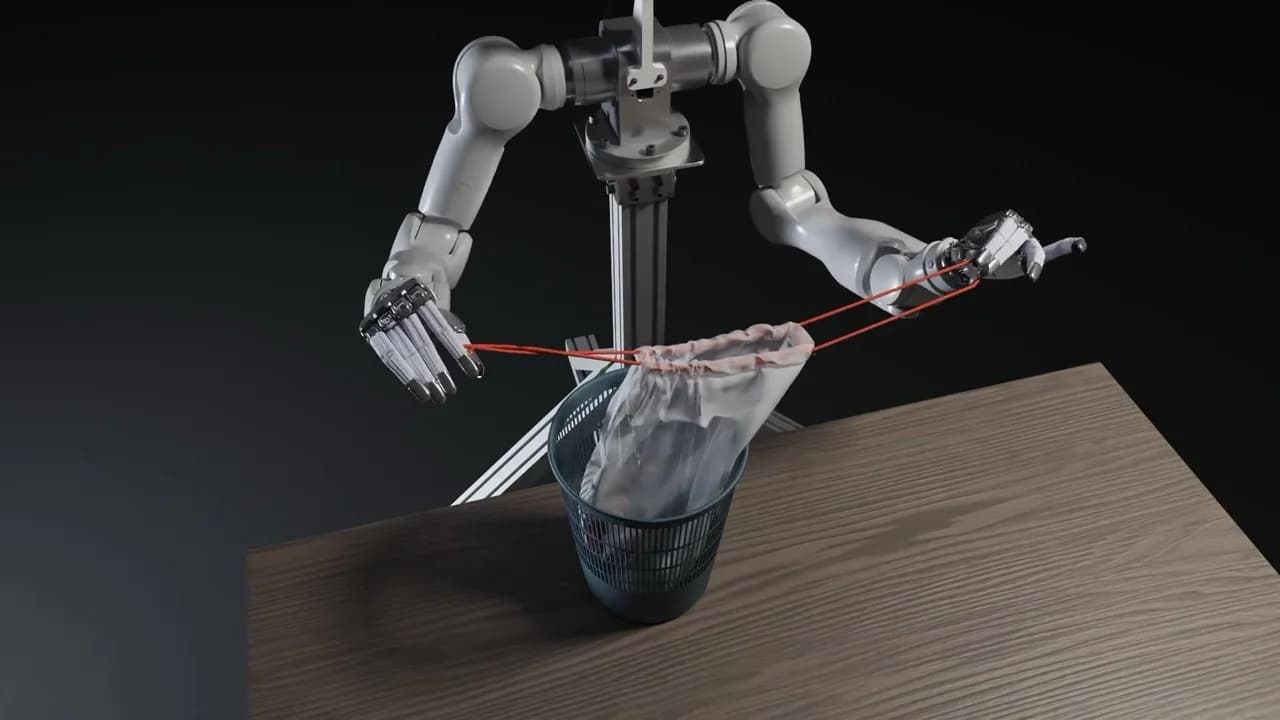
- Precision Engineering: Wire harnessing—organizing and securing bundles—a task that requires high-level reasoning and precise wrist control.
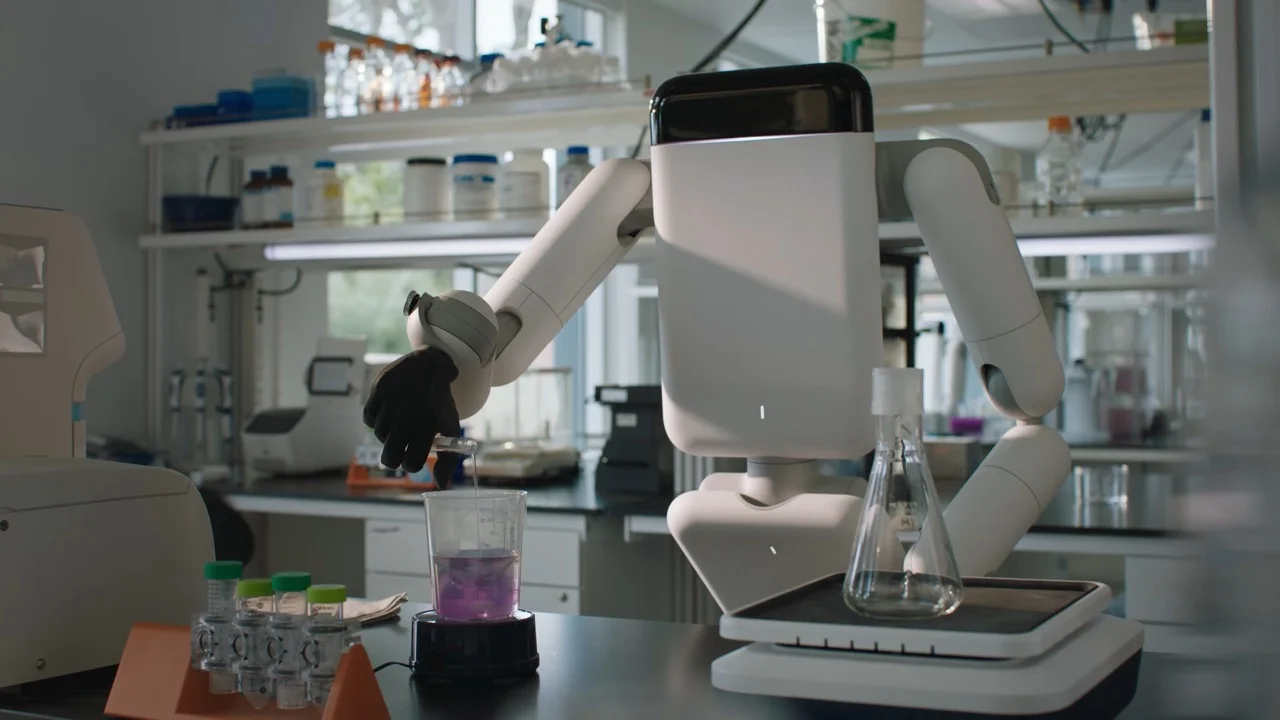
- Scientific Manipulation: Conducting high-precision lab experiments involving pipetting and liquid transfer.
- Artistic Dexterity: Playing a complex piano composition at a human-level tempo.
While companies like Generalist AI have focused on "physical commonsense" through large-scale interaction, Genesis AI is betting that achieving this level of dexterity requires a tighter loop between the digital brain and the physical hand.
Shattering the Embodiment Gap
The most significant technical claim from Genesis AI is its approach to the "embodiment gap"—the structural difference between human bodies and robotic frames that often garbles data transfer.
The company's solution is a proprietary data collection glove equipped with tactile-sensing electronic skin. This glove creates a 1:1:1 mapping between the human hand, the glove, and the robotic hand. This allows human operators to transfer skills directly to the robot by simply performing tasks as they usually would.
Genesis AI claims this hardware is 100 times cheaper than traditional teleoperation rigs and five times more efficient at data collection. This cost structure is designed to enable the continuous, large-scale training required to build what the company calls the "world's largest human skill library." This mirrors similar "data hand" strategies used by competitors like Sunday Robotics and Generalist AI to capture human reflexes and micro-corrections.
Sim-to-Real: The Self-Evolving Cycle
Beyond physical data collection, Genesis AI is leaning heavily into simulation. The company unveiled a next-generation simulation system that uses hyper-realistic rendering and physics to narrow the "sim-to-real" gap—the discrepancy that often causes virtual training to fail when applied to the physical world.
By creating a "self-evolving cycle" where AI can train AI within these high-fidelity environments, Genesis aims to develop and test its stack orders of magnitude faster than traditional physical testing. This methodology is becoming a standard in the 2026 robotics landscape, as firms like Eka Robotics and Rhoda AI debate the merits of simulation-heavy versus video-first training.
A Crowded Road to Commercialization
The announcement comes at a time of peak intensity for the humanoid sector. Backed by $105 million from investors including Khosla Ventures, Eclipse, and former Google CEO Eric Schmidt, Genesis AI is positioning itself alongside heavyweights like Figure and 1X Technologies, both of which are currently scaling their own manufacturing capabilities.
"Genesis is introducing a paradigm shift in robotics," Eric Schmidt noted in the release, emphasizing the potential for general-purpose machines to reshape the global economy.
While the controlled video demonstrations are impressive, the industry’s ultimate test will be "zero-shot" deployment—the ability for a robot to walk into an unfamiliar warehouse or home and begin working immediately. Genesis AI says it will soon unveil its first general-purpose robot to prove exactly that.
Share this article
Read next
- Published on
- Reading time
- 4 min read
Genesis AI Bolsters Leadership with Former X and Tesla Execs Ahead of Hardware Reveal
- Published on
- Reading time
- 5 min read
Genesis AI Unveils Eno: The Minimalist Robot Making an "Opposite Bet" on Humanoid Design
- Published on
- Reading time
- 5 min read
Genesis AI Launches Genesis World 1.0, Turning the "Sim-to-Real" Gap into a Compute Problem
- Published on
- Reading time
- 4 min read
Wuji Tech Confirmed as Hardware Partner for Genesis AI’s Human-Level Dexterity Breakthrough
- Published on
- Reading time
- 3 min read
Stealth Startups Emerge With Over $300 Million to Join Crowded Humanoid Robot Field
- Published on
- Reading time
- 4 min read
Agility’s Digit 5 Reveal Includes a Wheeled Robot Concept


The weekly humanoid robotics briefing
One email a week: the launches, funding and research that mattered, with context from Humanoids Daily.
Read recent issues