- Published on
The Complicated Dance: Security Anxieties Meet the Chinese Humanoid Influx
One tap, and our reporting appears more often in your Google Top Stories. It makes a real difference to a small newsroom.

Supported by RoboStrategySupport for Humanoids Daily comes from RoboStrategy
Sponsored


Investing involves risk, including possible loss of principal. Read the prospectus before investing.
- The Unitree G1 has become the de facto research platform in the US due to its $13,500 price point, despite mounting concerns over data exfiltration.
- Security researchers and industry leaders like Damion Shelton (Agility Robotics) warn that complex Chinese robots represent a unique threat for surveillance and remote takeover.
- US distributors like RoboStore attempt to mitigate risks by wiping Chinese software and using US-based cloud stacks, but hardware dependencies remain absolute.
- Lawmakers are responding with the American Security Robotics Act to ban Chinese humanoids from federal procurement.
- Unitree CEO Wang Xingxing predicts a "qualitative leap" in robotic intelligence, aiming for arbitrary motion generation within six months.
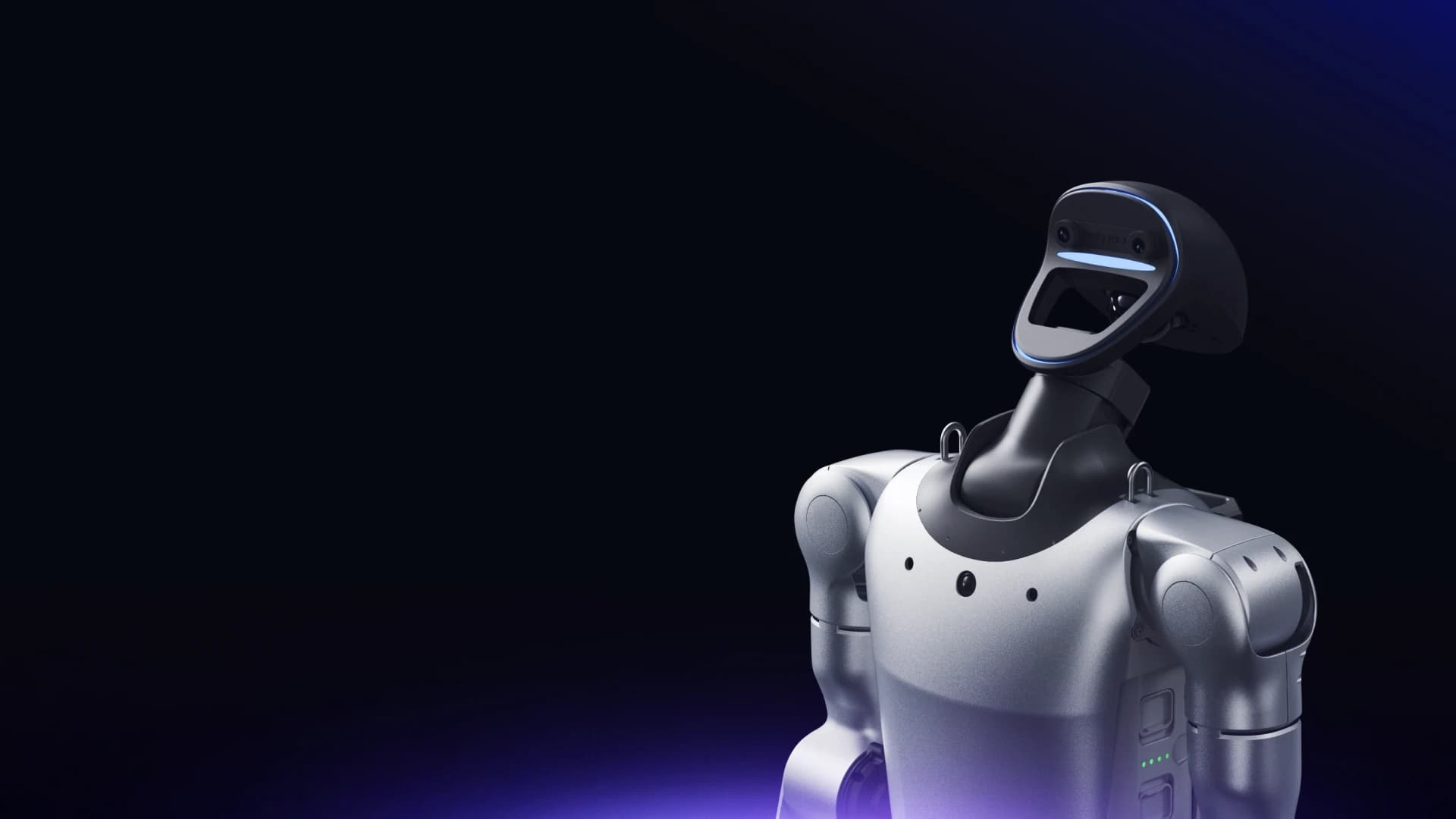
In a nondescript warehouse in Plainview, Long Island, thousands of humanoid robots are arriving from China. They aren’t coming to take over by force, but by price point. The Unitree G1, priced at a startlingly low $13,500, is currently being shipped to American AI companies, universities, and research institutes at a volume domestic manufacturers struggle, cannot, or simply do not want to match.
However, this influx is triggering a security debate. Unlike smartphones or electric vehicles—which face significant regulatory hurdles or outright bans—these highly mobile, internet-connected machines are "walking right in," as noted in a recent investigative report by Joanna Stern. The dilemma for the American robotics sector is clear: China currently builds the best, most affordable hardware, while the US aims to build the "brains."
Watch the video by Joanna Stern below:
The Data Exfiltration Dilemma
The primary concern is not just what these robots can do, but what they can see and hear. Damion Shelton, co-founder and chairman of Oregon-based Agility Robotics, has become a vocal critic of the security protocols—or lack thereof—surrounding imported hardware.
The weekly humanoid robotics briefing
One email a week: the launches, funding and research that mattered, with context from Humanoids Daily.
Read recent issues"There are concerns both around the technical advantage that you would get from having access to very large amounts of training data and then also the privacy and data security side," Shelton warned. He pointed to recent security research identifying vulnerabilities in Chinese humanoid systems that could allow for "phone home" data logging or even remote hijacking.
The threat is compounded by the complexity of the machines. Because humanoids are sophisticated "black boxes," performing a full security tear-down is nearly impossible for external buyers. This has led to a climate of skepticism even as firms like RoboStore claim to reassemble and "wipe" robots of their native Chinese software before shipping them to US customers, often shifting the backend to platforms like AWS.
A "Trojan Horse" in the Lab?
The FBI has already flagged economic espionage from the Chinese government as a grave threat, and lawmakers are beginning to move. The proposed American Security Robotics Act seeks to ban federal procurement of Chinese-made "unmanned ground vehicles," a move that could effectively lock firms like Unitree out of government-funded research.
Yet, for many in the US, the hardware dependency is a hard habit to break. Even as Unitree files for a $580 million IPO on the strength of its 5,500 units shipped in 2025, American labs remain among the biggest customers. The calculation is simple: why spend millions developing a proprietary chassis when a Unitree R1 or G1 can be purchased for a fraction of the cost to test American-made AI?
The View from Hangzhou: The Move to Pure AI
While the US worries about security, Unitree is focused on a "phase-shift" in capability. In a recent fireside chat with Siemens CEO Roland Busch, Unitree founder Wang Xingxing detailed the company's pivot from traditional math-based control to purely AI-driven, end-to-end reinforcement learning.
"Today the results might be terrible, but then I change one small parameter, train it overnight, and the next day... the results are incredibly good," Wang said. He believes the industry's "locomotion" problem—walking and running—is essentially solved. The next frontier is manipulation and "arbitrary motion generation." Wang predicts that within six months, Unitree robots will move with a richness of variation that makes them indistinguishable from human spontaneity, moving beyond the choreographed routines seen in promotional videos.
A Complicated Dance
The relationship between the two superpowers remains what Stern described as a "complicated dance." The hardware may be Chinese, but the chips are often from NVIDIA or Intel, and the solutions are increasingly localized by US developers.
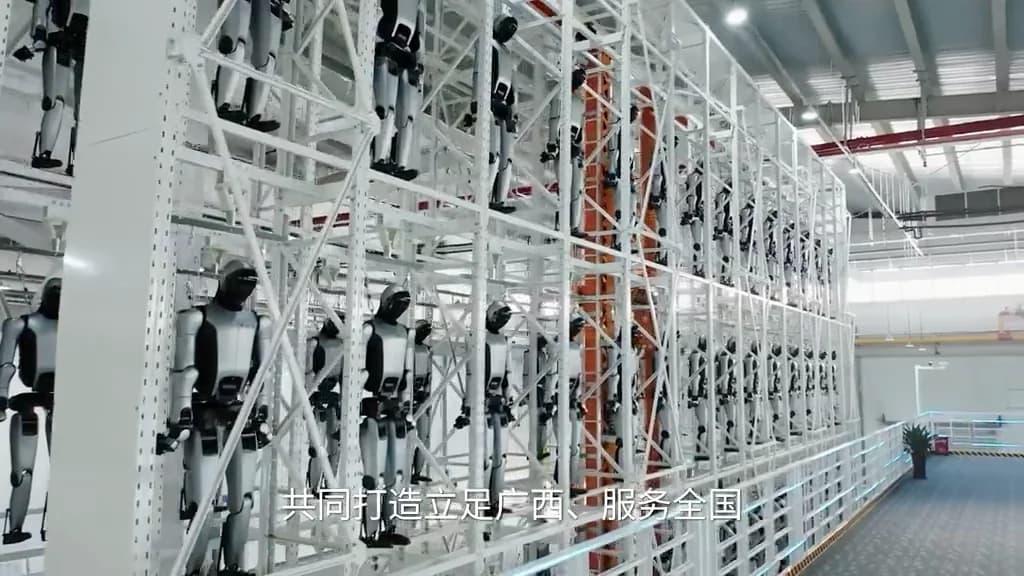
Unitree is already deploying G1 humanoids to manufacture its own robot parts in Hangzhou, aiming for a "robots building robots" loop that further drives down costs. For US companies the pressure to compete on price while maintaining a "clean" domestic supply chain is mounting.
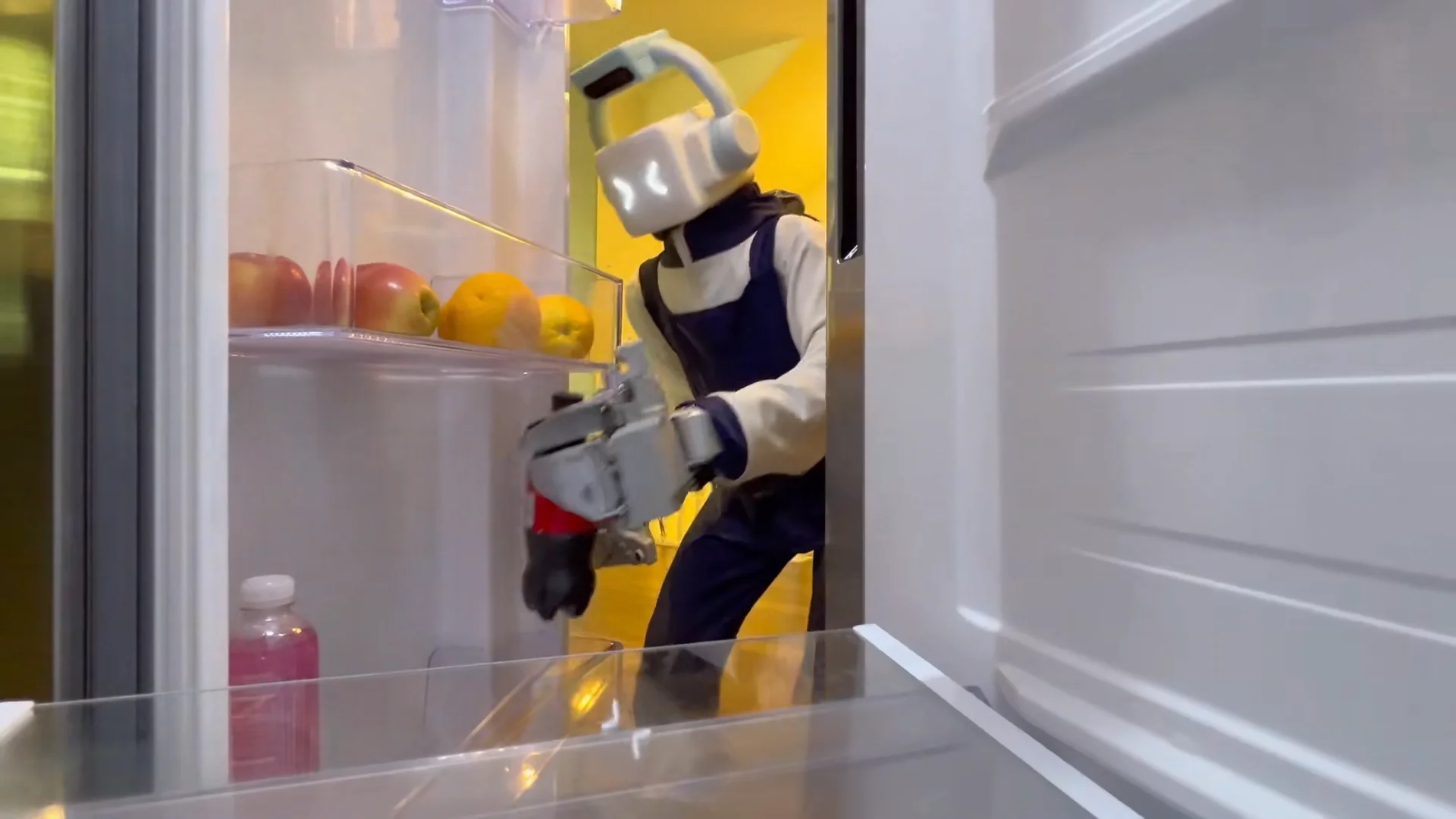
For now, the G1 remains a "fancy remote-controlled robot" in many settings, struggling with basic tasks like opening dishwashers without human intervention. But as the software catches up to the hardware, the question of who controls the "brain" and where the data goes will only become more urgent.
Share this article
Read next
- Published on
- Reading time
- 6 min read
The Battle Over Chinese Humanoids: As Congress Debates the GUARD Act, Industry Divides Over National Security vs. Research Reality
- Published on
- Reading time
- 4 min read
Humanoid Robotics Momentum: London and Shanghai Host Major Industry Summits Concurrently
- Published on
- Reading time
- 10 min read
The Great Valuation Chasm: A 2025 Guide to the Humanoid Robotics Capital Race
- Published on
- Reading time
- 4 min read
The Imminent Embodied AI Ban: FCC to Target Chinese Humanoids
- Published on
- Reading time
- 3 min read
Racing for the Future: The Complex Dynamics of Humanoid Robotics
- Published on
- Reading time
- 4 min read
Agility’s Digit 5 Reveal Includes a Wheeled Robot Concept




The weekly humanoid robotics briefing
One email a week: the launches, funding and research that mattered, with context from Humanoids Daily.
Read recent issues