- Published on
Faraday Future’s “Built in USA” Robot Plan Starts With Assembly—and Sourced Hardware
One tap, and our reporting appears more often in your Google Top Stories. It makes a real difference to a small newsroom.

Faraday Future is promoting a U.S. robotics manufacturing push, targeting a factory opening by the end of 2026 and a first new robot off the line in February 2027. But its current catalog also points to a business built on other manufacturers’ platforms, making the distinction between sourcing robots, assembling them locally and developing their underlying hardware central to understanding the plan.
- FF’s manufacturing roadmap starts with U.S. assembly and targets deeper localization through late 2028; these remain future milestones.
- Its Master Mini documentation explicitly names Booster technology, while specifications support an apparent AGIBOT connection for the All-New Futurist.
- A proposed transfer of the robotics business to FF EAI Robotics Ecosystem Inc. remains subject to a non-binding deal process.
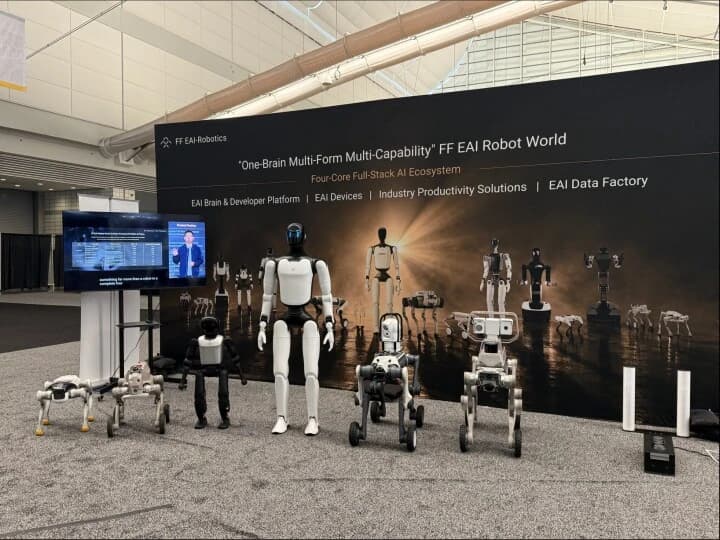
An October 1 company release highlighted FF’s IROS showcase, including the All-New Futurist and recruitment of developers and data partners. The manufacturing program itself predates that update: FF introduced its roadmap in August and expanded the execution plan in September.
What the U.S. manufacturing plan involves
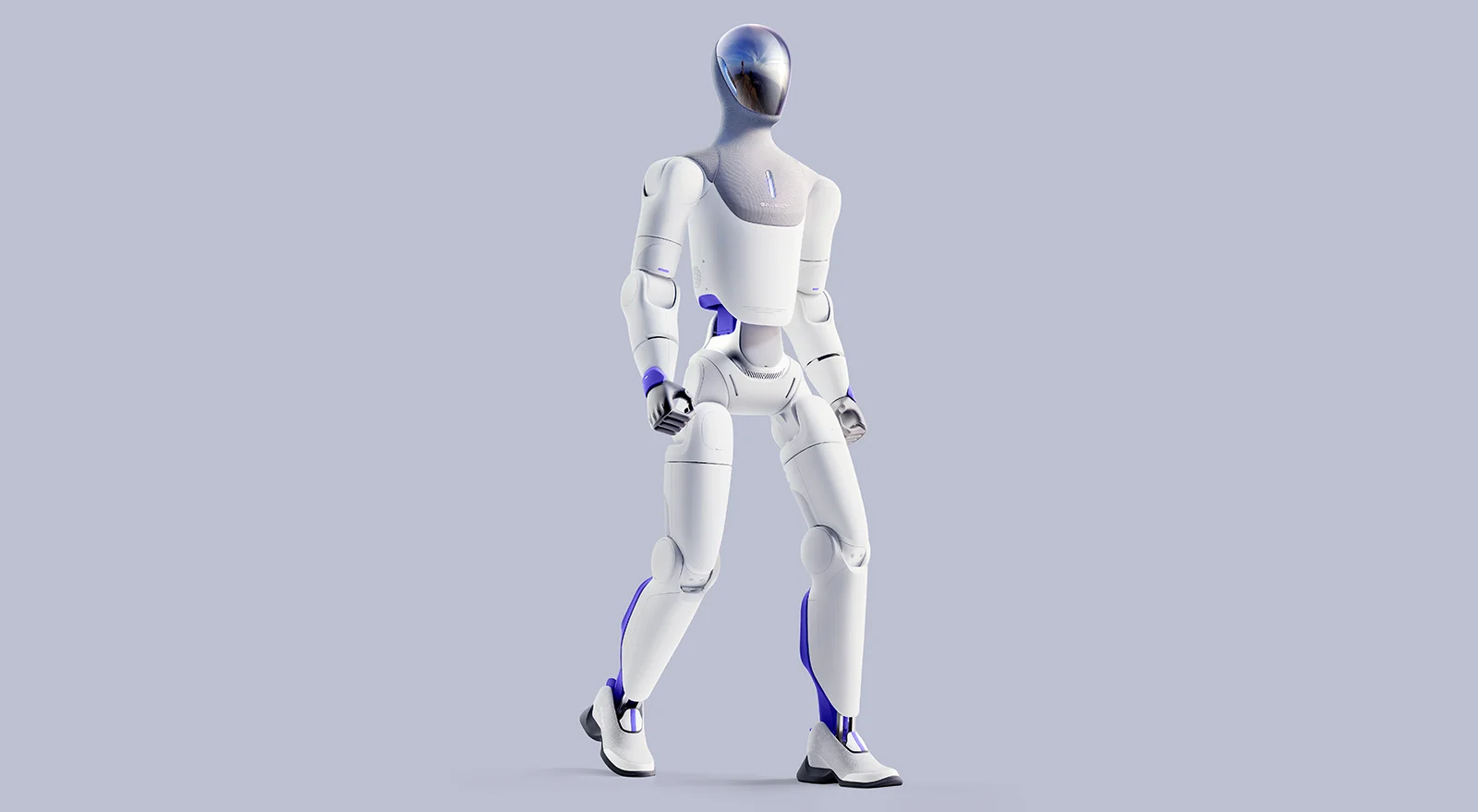
Under FF’s published roadmap, initial work involves upgrading production lines for final assembly and testing, alongside selecting a dedicated robotics site. Next Futurist, a full-size humanoid, and Next Aegis, a quadruped, are the first planned products.
FF aims to increase domestic sourcing and manufacturing through the fourth quarter of 2028. It also targets combined annual capacity of 50,000 robots on its own lines within five years. That is planned capacity, not current output.
The weekly humanoid robotics briefing
One email a week: the launches, funding and research that mattered, with context from Humanoids Daily.
Read recent issuesThe roadmap explicitly recruits outside robot manufacturers for U.S. adaptation, certification, assembly and market entry. This is consistent with an integration and localization business, rather than evidence that every FF-branded robot was designed internally.
Booster is named in FF’s own documentation
As we reported in our coverage of the Master Mini launch, the supplier connection goes beyond visual resemblance.
FF’s Master Mini product page names Booster SDKs, Booster Gym training tools and a Booster controller. Its stated height of 95 centimeters, weight of 19.5 kilograms and 22 degrees of freedom match Booster’s K1.
Those details strongly indicate a K1-based product sold under FF branding. The page does not explain the contractual arrangement, licensing terms or extent of FF-specific modifications.
The AGIBOT connection is less explicit. FF’s All-New Futurist specifications list a height of 173 centimeters and a 1,152 Wh battery, matching AGIBOT’s A3. Their listed weights are close—54 kilograms for FF’s model and 55 kilograms for the A3. Our earlier reporting also noted their similar physical design. Together, these support an apparent A3 relationship, but the linked product pages do not confirm a model-specific OEM agreement.
“White-label” is therefore a useful description of the apparent branding approach, with a qualification: the public evidence does not establish that FF contributes nothing beyond a badge. Nor does it establish the origin of every model in its catalog.
Software, services and a proposed business transfer
FF’s broader proposition includes a shared robot intelligence and developer platform, deployment data collection, industry applications and RoboShare, a robot-sharing and services platform. The IROS release describes interest from researchers and potential partners; it does not provide independent performance results for the proposed shared intelligence.
The same release says FF EAI Robotics Ecosystem Inc., formerly AIxCrypto Holdings, signed a non-binding term sheet to acquire FFAI’s robotics business at an estimated $200 million valuation. It describes a proposed transaction, not a completed acquisition, and identifies financing and liquidity among the risks.
For customers, sourced hardware can still be useful if local integration, software and support make deployment easier. The evidence to watch is what FF adds: documented capabilities, service delivery, the components actually assembled or manufactured in the United States, and progress against its February production target. A U.S. brand and a manufacturing roadmap alone do not answer those questions.
Share this article
Read next
- Published on
- Reading time
- 5 min read
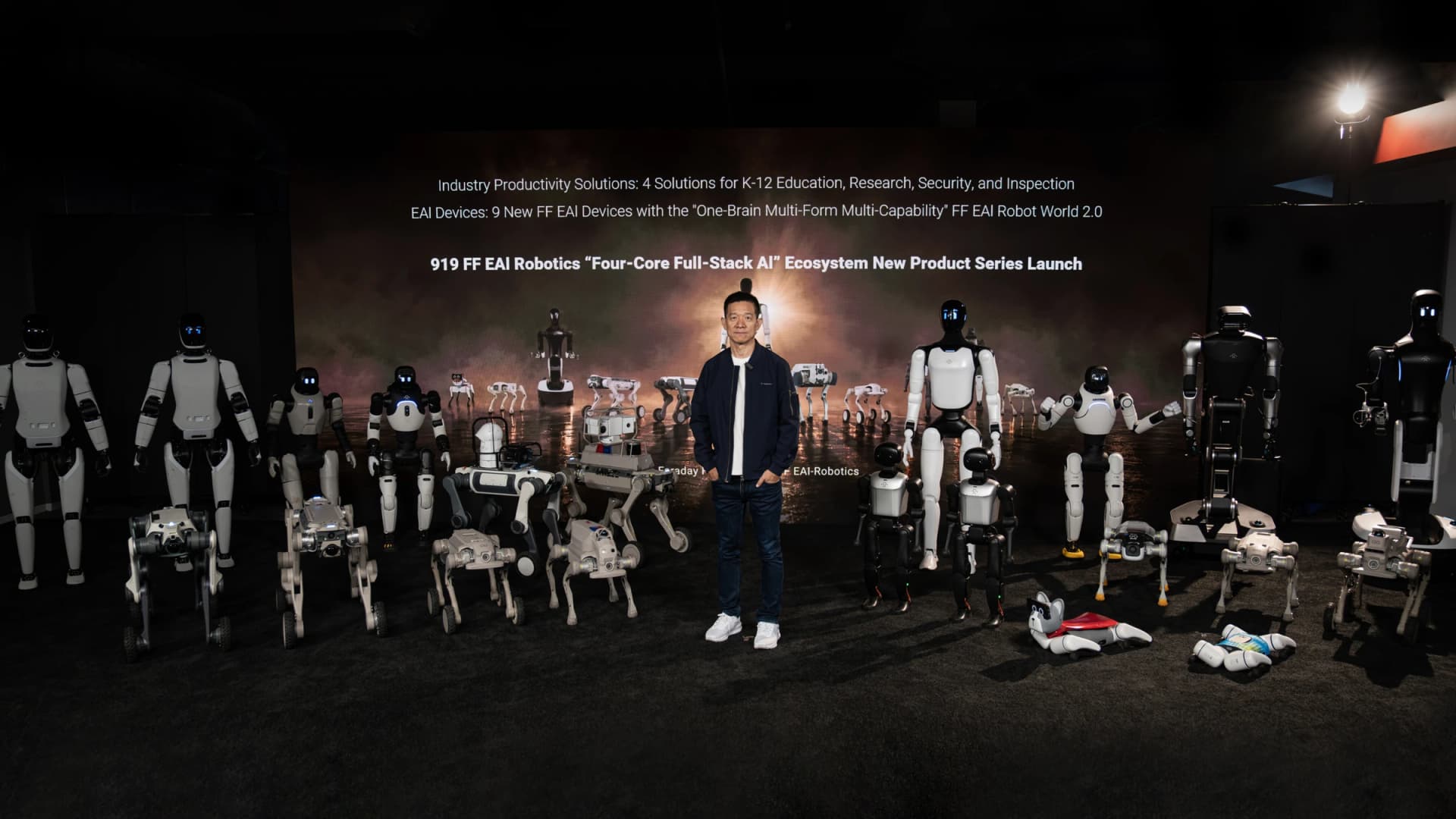
Faraday Future Expands Robot Lineup With $9,990 Master Mini
- Published on
- Reading time
- 4 min read
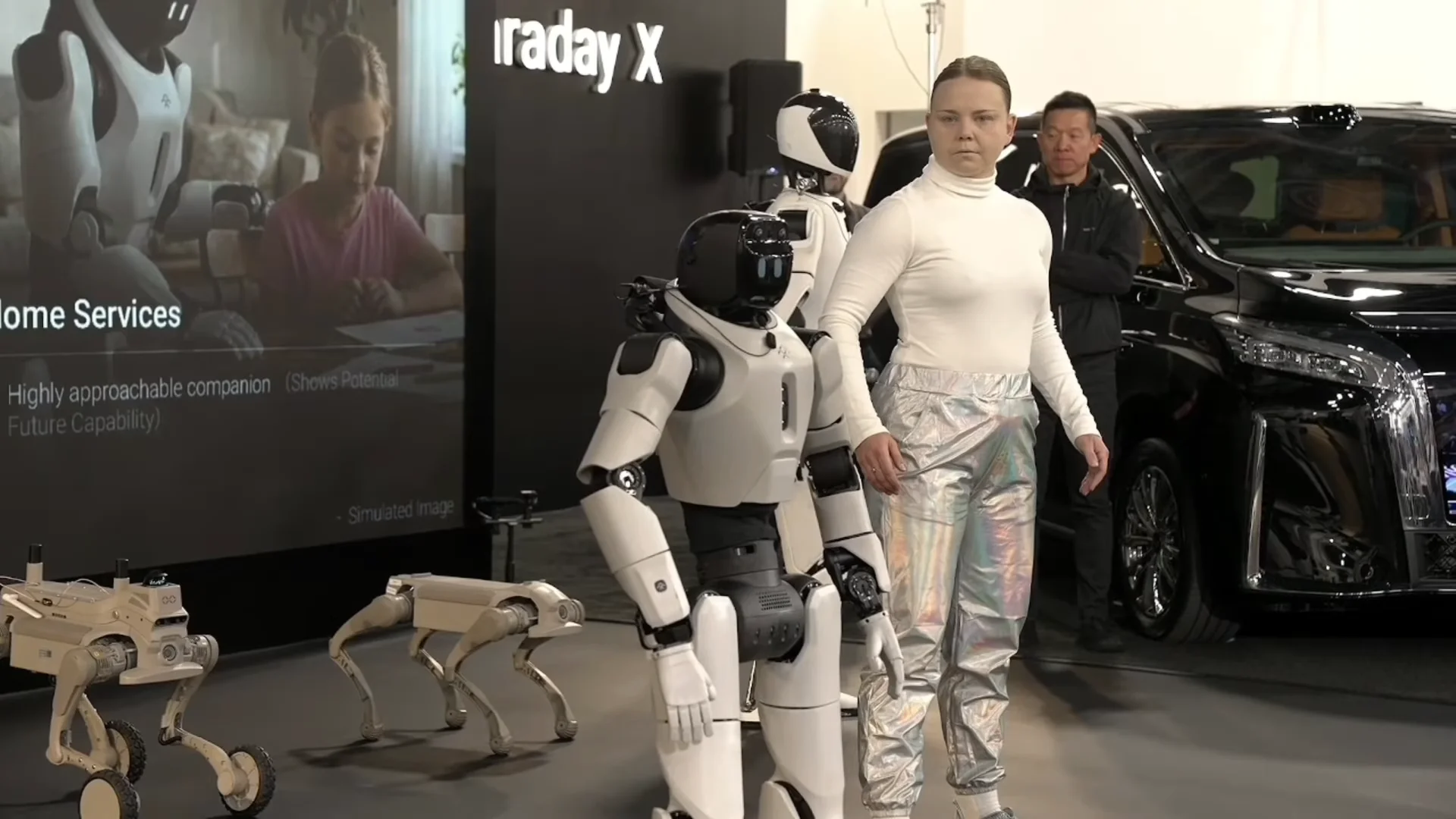
Faraday Future Pivots to Robotics with White-Labeled AgiBot Fleet
- Published on
- Reading time
- 2 min read
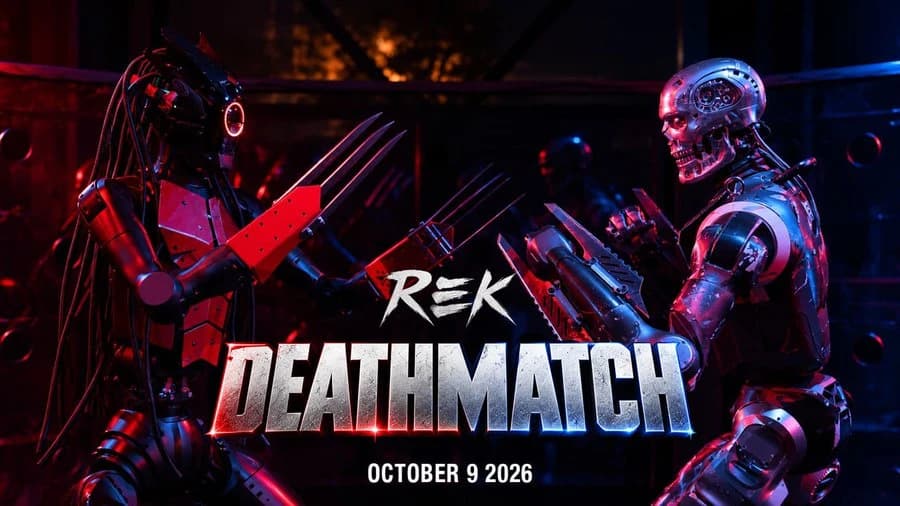
REK Adds Swords to Humanoid Robot Fights With “Deathmatch”
- Published on
- Reading time
- 3 min read
Mecka Raises $60M Series B to Expand Robot Training Data and Deployment
- Published on
- Reading time
- 2 min read
Boston Dynamics Names Former Amazon AI Leader Rohit Prasad as CEO
- Published on
- Reading time
- 7 min read
Agility's Investor Day: Digit 5 Launches at a $150,000 Bill of Materials, and Its $300M Order Unlocks Skill by Skill


The weekly humanoid robotics briefing
One email a week: the launches, funding and research that mattered, with context from Humanoids Daily.
Read recent issues