- Published on
Mecka Raises $60M Series B to Expand Robot Training Data and Deployment
One tap, and our reporting appears more often in your Google Top Stories. It makes a real difference to a small newsroom.

Supported by RoboStrategySupport for Humanoids Daily comes from RoboStrategy
Sponsored
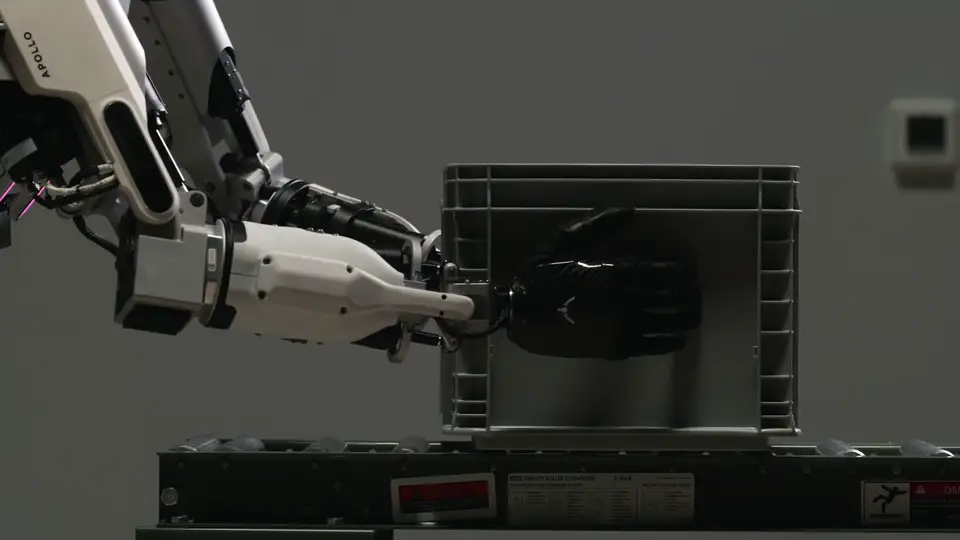
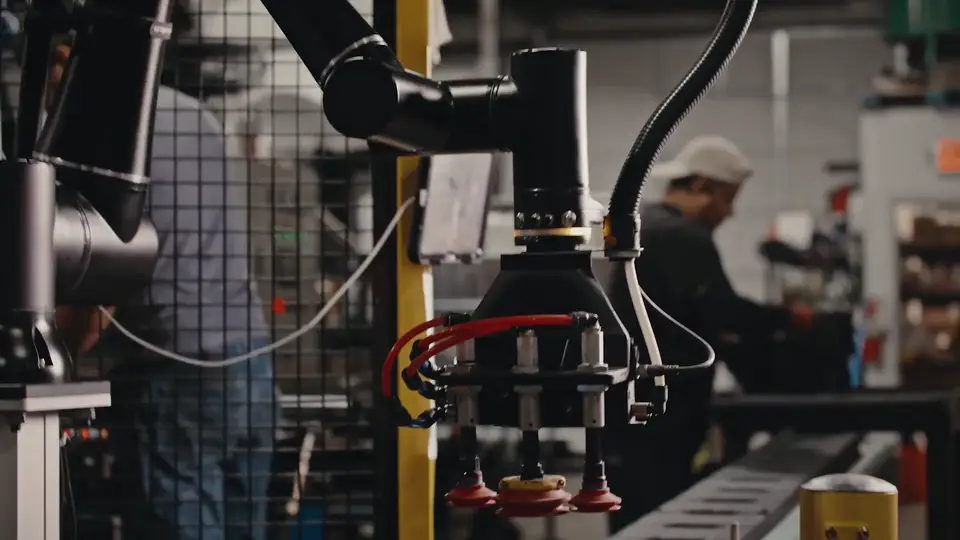

Investing involves risk, including possible loss of principal. Read the prospectus before investing.
Mecka has announced a $60 million Series B led by Sequoia Capital, with Nvidia, Microsoft’s M12, Qualcomm Ventures and Samsung joining as new investors. The October 7 announcement puts fresh funds behind a business focused on collecting human demonstrations for robot model training.
- Mecka says it raised $60 million in a Sequoia-led Series B, with Nvidia and M12 among the new backers.
- The company plans to expand data collection, research and commercial robot deployment.
- Human-to-robot transfer research offers evidence for the approach, but data volume alone does not guarantee better robot performance.

From human demonstrations to deployed robots
Mecka builds capture hardware and processes recordings into structured motion and 3D data. It says its enterprise offering also covers robot integration, on-site data collection, model training and ongoing operation.
According to the announcement, Mecka passed a $100 million revenue run rate in June and projects $300 million by year-end. This is company-reported figures: an annualized run rate is not equal to revenue already earned over a full year, and the year-end number remains a forecast. The release does not disclose a valuation or identify its major customers by name.
The research behind the data push
There is a public research connection to examine alongside the commercial claims. Mecka is a participant in EgoVerse, a consortium bringing together academic and industry contributors to study learning from first-person human demonstrations.
The EgoVerse paper describes experiments across multiple laboratories, tasks and robot types. Its authors report that more human data generally improved robot policy performance, while emphasizing that effective scaling depends on matching the data to the robot-learning objective. That supports investigating human demonstrations as a training resource; it does not independently validate Mecka’s revenue figures or every deployment claim.
For humanoid developers, the relevant question is how effectively recordings of people can be turned into reliable robot behavior. Figure is pursuing its own version of that effort through Index, its platform for collecting human activity video. Mecka’s funding adds another commercial approach to the same problem: supplying data and helping customers put trained robots to work.
Share this article
Follow humanoid robotics without following every announcement.
Get the week’s most important launches, funding and research—and why they matter—in one email from Humanoids Daily.
Once a week. Unsubscribe anytime.
Read recent issuesRead next
- Published on
- Reading time
- 5 min read
Apptronik's RL Lead Says Legs, Not Wheels, Make Robots Safe to Work Beside
- Published on
- Reading time
- 10 min read
1X Will Ship NEO to Developers in December, Plans Weekly Leaderboard and Live Robot Runs
- Published on
- Reading time
- 7 min read
NJIT's PHD-Hand Uses Linkages, Not Tendons, in a Humanoid Hand You Can Print for Under $650
- Published on
- Reading time
- 5 min read
GlobalFoundries Becomes First Chipmaker to Test Boston Dynamics' Atlas
- Published on
- Reading time
- 4 min read
Humanoids Summit Confirms Tesla Optimus for December Event, but Not Reservations
- Published on
- Reading time
- 6 min read
FORT Robotics, Safety Supplier to Agility, Posts 52% Revenue Growth in S-4 Ahead of Nasdaq Listing