- Published on
Apptronik's RL Lead Says Legs, Not Wheels, Make Robots Safe to Work Beside
One tap, and our reporting appears more often in your Google Top Stories. It makes a real difference to a small newsroom.

Supported by RoboStrategySupport for Humanoids Daily comes from RoboStrategy
Sponsored
Investing involves risk, including possible loss of principal. Read the prospectus before investing.
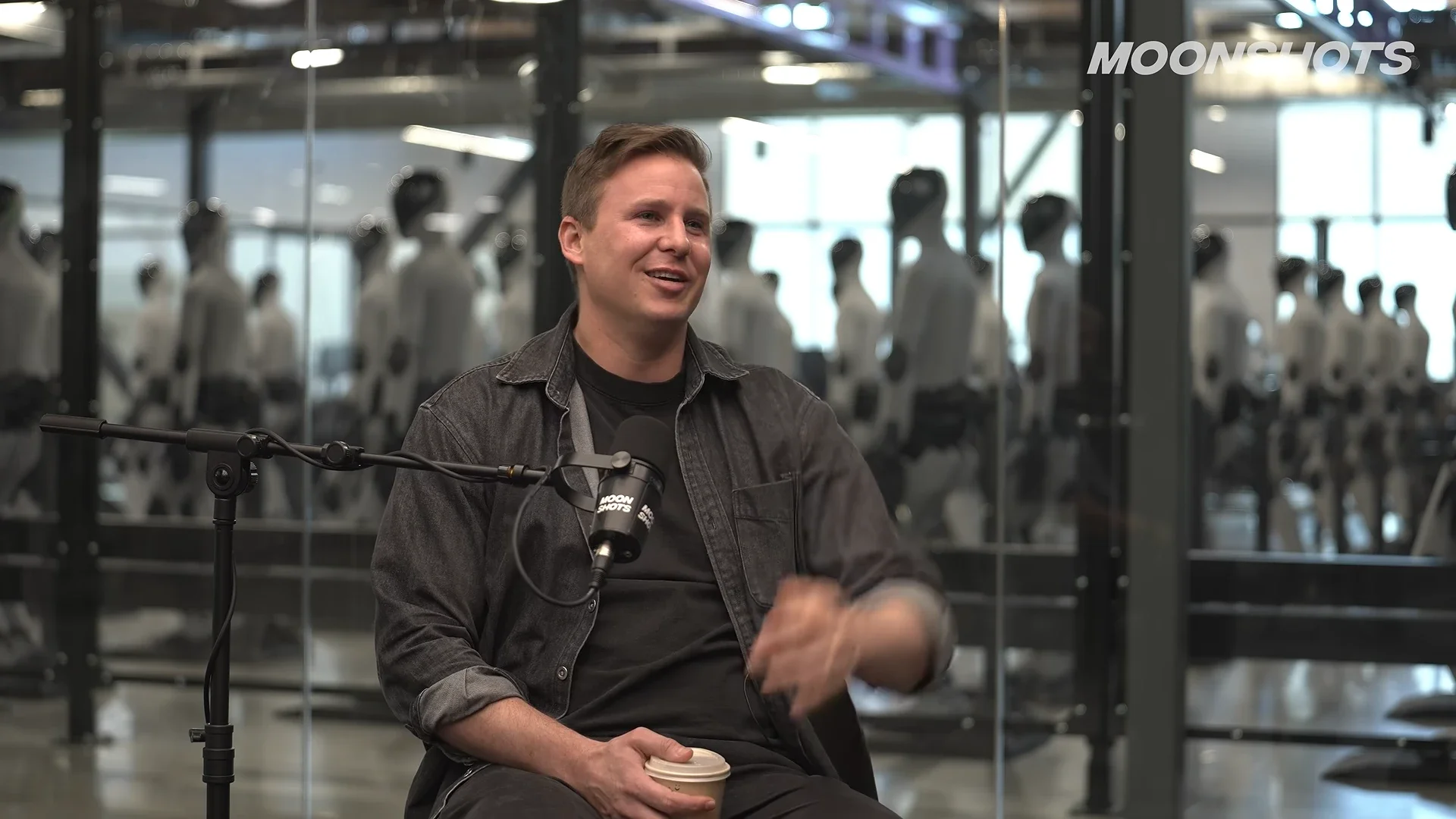
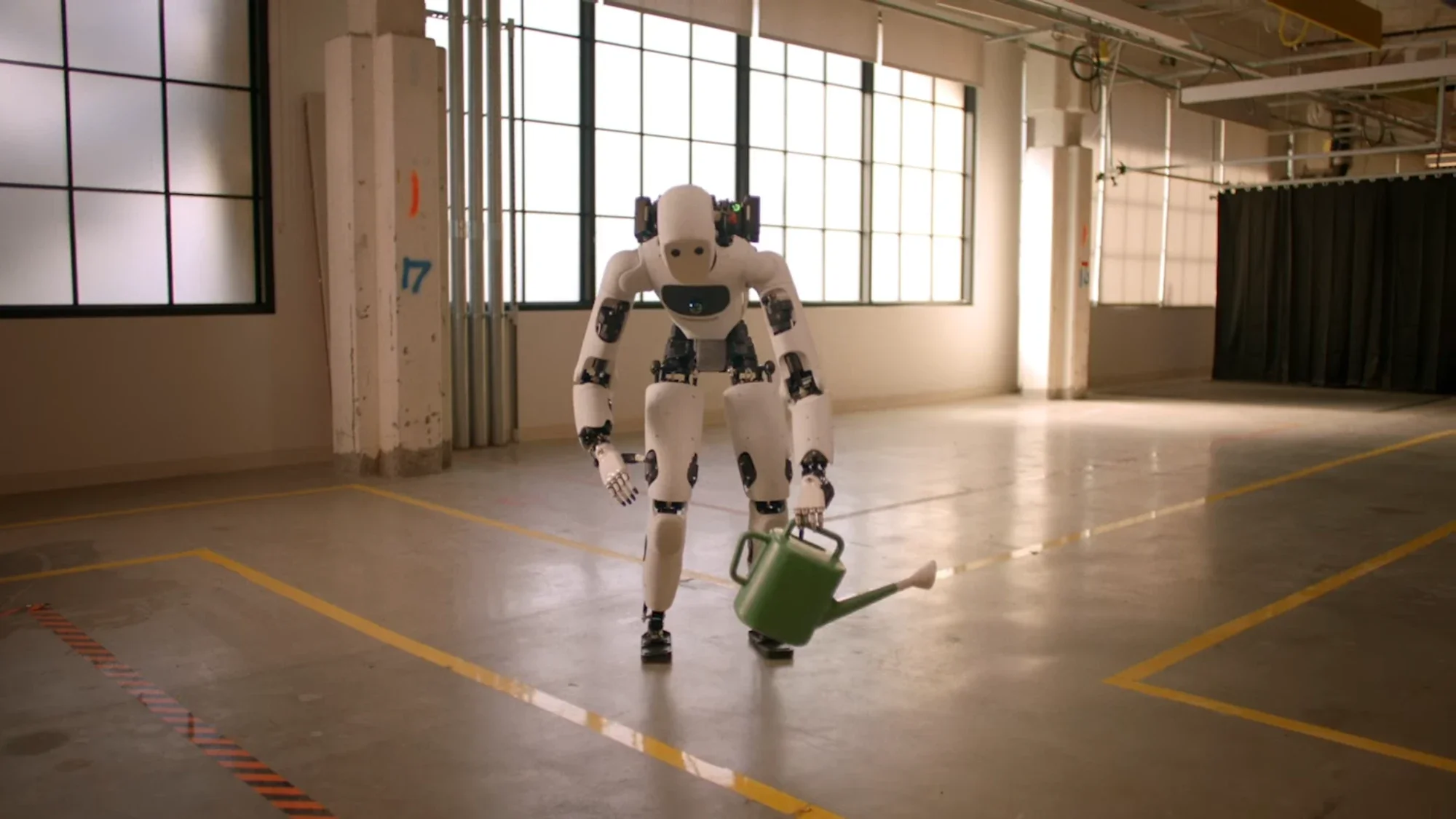
Humanoid companies often say the human form "fits into human spaces." Kyle Morgenstein, reinforcement learning (RL) lead at Apptronik, argues that the phrase is usually taken too literally. In a thread on X on November 19, he wrote that the case for legs is about safety rather than door frames and countertops.
- Apptronik RL lead Kyle Morgenstein says the real reason humanoids "fit in human spaces" is that the legged form is safer to work beside than a wheeled base.
- He argues wheeled bases carry large reflected inertia, while legs let a robot balance itself and stay compliant using small actuators.
- He grants that wheeled robots are safer in a catastrophic failure, because they can stop in place where a humanoid would fall.
- Morgenstein says humanoid safety has been "wildly under studied" and that it is the subject of the PhD thesis he has worked on for seven years.
Morgenstein was responding to roboticist Barrett Ames, who had posted that companies claiming the human form suits existing infrastructure "are full of it," and that people want humanoids because the form "grabs their attention."
Morgenstein said both sides of that debate were arguing "the weakest possible version" of it. Taken literally, he wrote, the claim means "I built my house for me so the robot shaped like me physically fits," and "that doesn't matter."
The kitchen problem
His alternative starts with an example: "industrial robots could easily do your dishes, but you wouldn't be allowed in your kitchen at the same time as the robot."
Follow humanoid robotics without following every announcement.
Get the week’s most important launches, funding and research—and why they matter—in one email from Humanoids Daily.
Once a week. Unsubscribe anytime.
Read recent issuesWheeled mobile bases, which many companies treat as the safer, simpler option, are "actually less safe" in his view, "because the reflected inertia of the base is huge." Reflected inertia is the effective mass a person feels when a robot hits them, including the inertia of its motors and gearing. A heavy base carrying batteries and drive motors brings all of it into a collision. 1X takes the same reasoning a step further inside the robot's joints. At Runtime 2026, CEO Bernt Børnich said NEO avoids harmonic drives and planetary gears in favour of high-torque motors pulling on tendons, so it does not carry "that much kinetic energy in motion when doing things, because there's no gears that are spinning very fast."
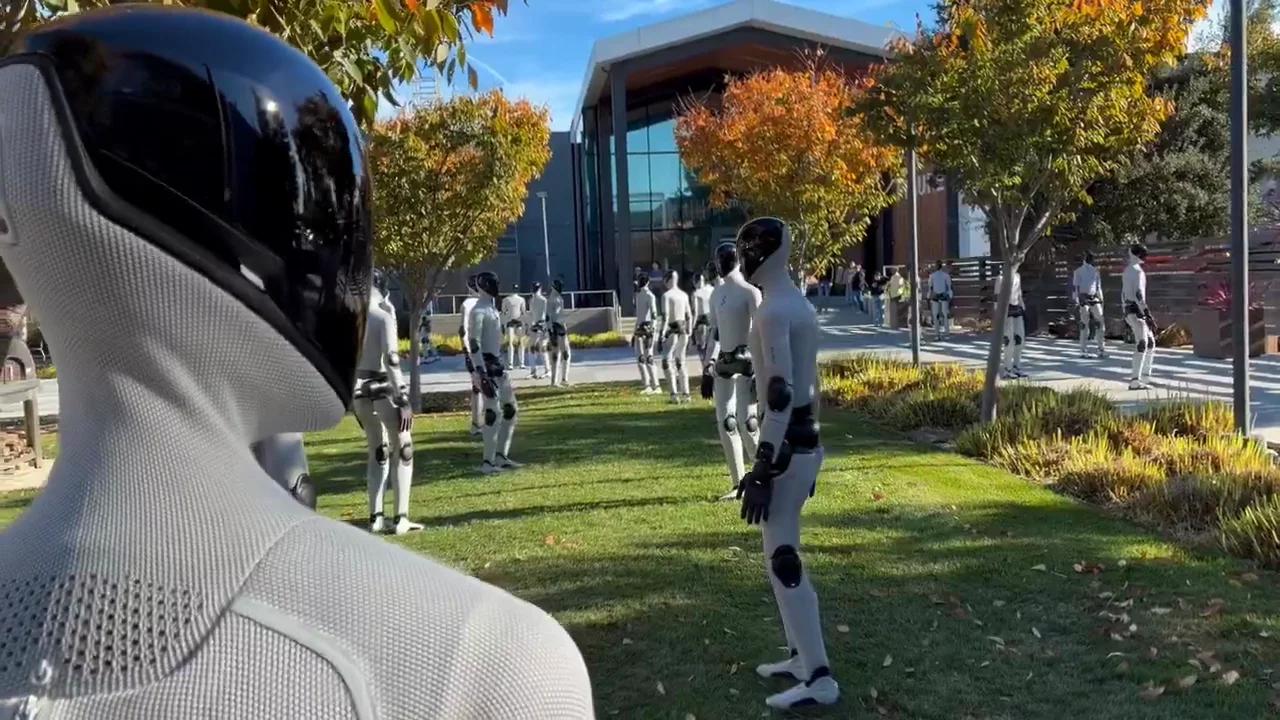
Morgenstein's answer to the inertia problem is legs. "Legs give you dynamic stability to catch yourself, and you can control your CoM with exponential acceleration even with small actuators," he wrote, referring to the robot's centre of mass. Getting the same control on wheels "would require giant dangerous motors and batteries."
The trade-off
Morgenstein did not claim legs win in every case. Wheeled bases "are safer in catastrophic failure because they're statically stable and can 'just stop' or e-brake," while a humanoid would fall. "But, in the much more frequent occurrence of bumping into people when working in close proximity, legs are safer."
He wrote that he "firmly believe[s] that humanoids will be safer than mobile bases," because "they can be compliant in a way a mobile base cannot be. That means they can work at higher rate in closer proximity to people with lower risk." That, he wrote, is "what it means to say humanoid robots fit in human spaces."
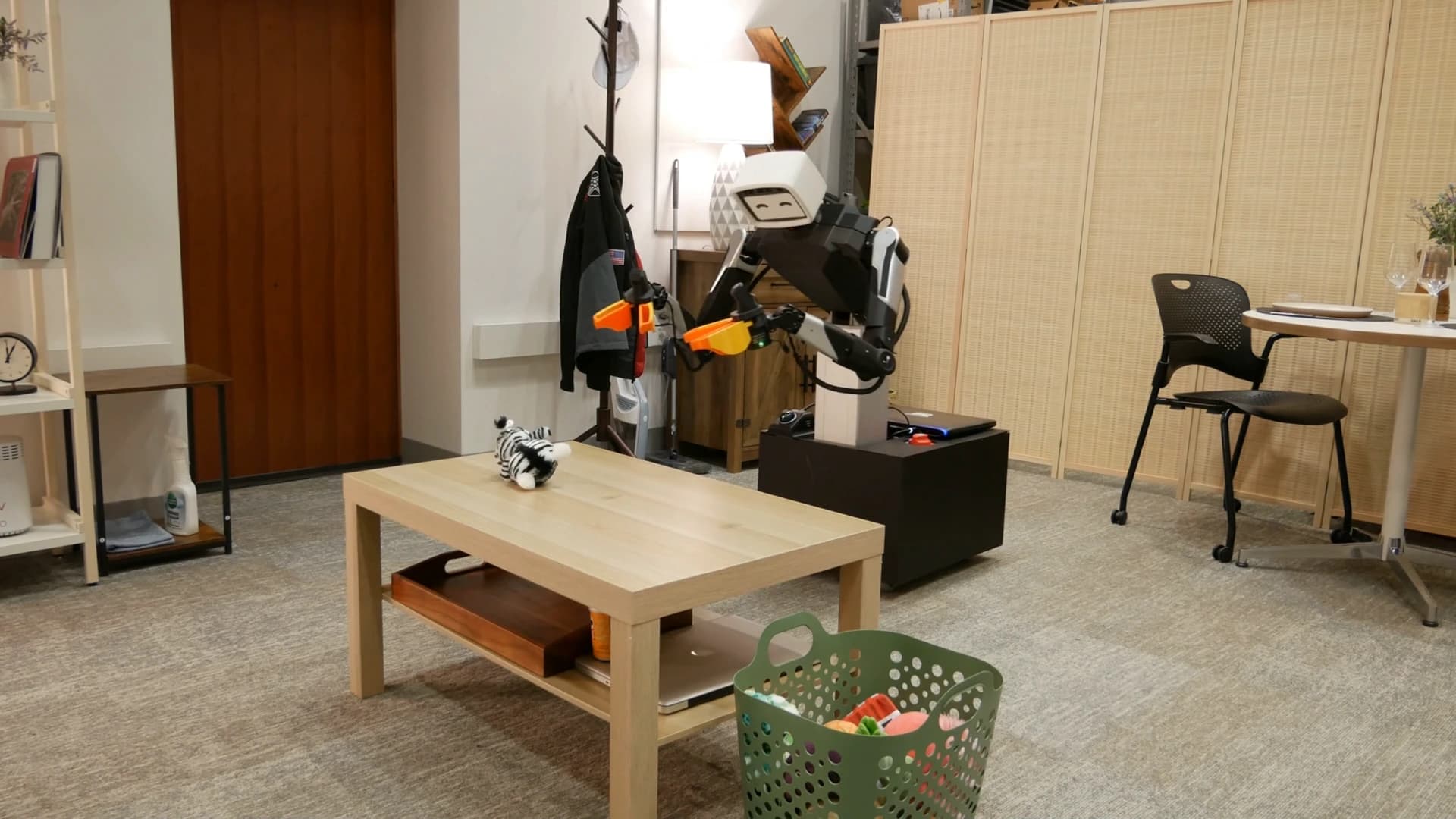
The argument runs against a growing group of wheeled designs. Swiss startup Embodied AI pitches its two-armed AIR robot as able to work beside factory staff without a cage, Feather sells a $30,000 wheeled humanoid to developers, and Agility Robotics lists a wheeled base concept alongside Digit 5.
Sunday Robotics makes the most direct claim against his reasoning. The company says its wheeled home robot Memo, which it has trained to fold laundry, was designed to be "compliant and passively safe," and that "if you bump into it, it naturally yields, and it remains stable even if power is cut at any configuration." That pairs the bump tolerance Morgenstein attributes to legs with the static stability he concedes to wheels.
A thesis in progress
Morgenstein said humanoid safety "has been wildly under studied" and that it is the topic of his PhD thesis. "I've spent the last 7 years working on this," he wrote, promising "much more to come soon."
He is a PhD candidate in the Human Centered Robotics Lab at the University of Texas at Austin, advised by Luis Sentis. Apptronik was spun out of the same lab. He has also worked as a researcher on the Ultra-Mobility Vehicles reinforcement learning team at the Boston Dynamics AI Institute. Before that he studied aerospace engineering at MIT and did research at NASA's Jet Propulsion Laboratory, Boeing and MIT Lincoln Laboratory.
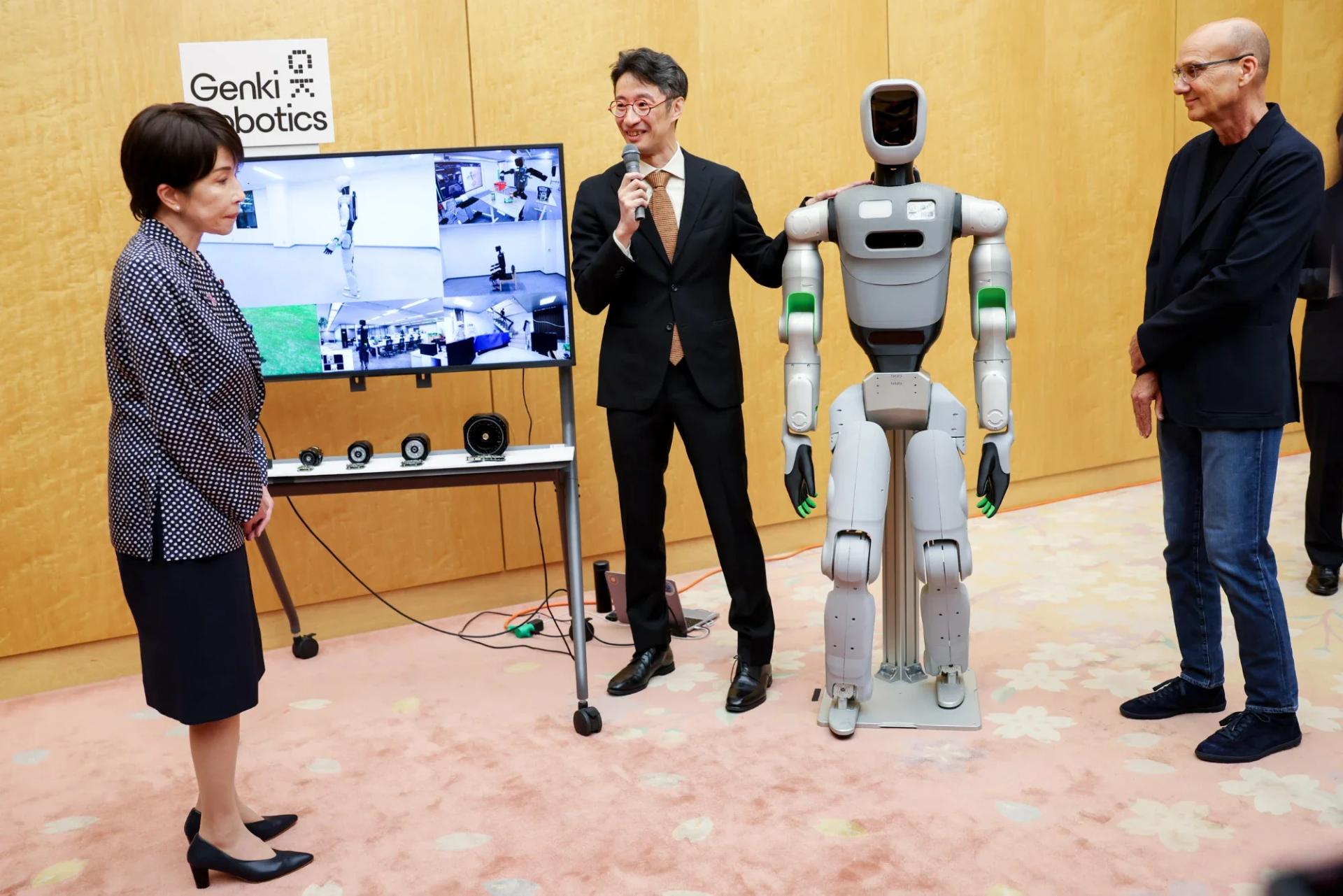
His employer is moving toward the kind of close-quarters work he describes. Logistics company GXO signed a letter of intent for up to 1,000 Apollo humanoids last week, with expanded warehouse trials starting in 2027. Formal standards are also starting to form: LG Electronics recently agreed to put its CLOiD robot through a pilot safety certification with Korea's robot certification agency.
Share this article
Follow humanoid robotics without following every announcement.
Get the week’s most important launches, funding and research—and why they matter—in one email from Humanoids Daily.
Once a week. Unsubscribe anytime.
Read recent issuesRead next
- Published on
- Reading time
- 12 min read
How Frontier Language Models Are Speeding Up Robotics Research
- Published on
- Reading time
- 10 min read
1X Will Ship NEO to Developers in December, Plans Weekly Leaderboard and Live Robot Runs
- Published on
- Reading time
- 4 min read
Agility Robotics Co-Founder Outlines a 25-Year Vision for Human-Robot Coexistence
- Published on
- Reading time
- 7 min read
NJIT's PHD-Hand Uses Linkages, Not Tendons, in a Humanoid Hand You Can Print for Under $650
- Published on
- Reading time
- 6 min read
Apple's HALO Teaches a Unitree G1 to Navigate Unseen Rooms With Simulation-Generated Data
- Published on
- Reading time
- 4 min read
CMU Introduces Pixel, a Sub-$15,000 Wheeled Robot Designed to Learn From Human Demonstrations