- Published on
From Pixels to Production: Texas Instruments and NVIDIA Partner to Harden Humanoid Safety
One tap, and our reporting appears more often in your Google Top Stories. It makes a real difference to a small newsroom.


Your guide
Rich Robinson
Jee Chee Ren · Executive tour
See China’s AI and robotics ecosystem first-hand.
Six days exploring AI, robotics and advanced manufacturing.
With Rich Robinson, Clinical Professor of Entrepreneurship at Peking University
Beijing · Guangzhou · Shenzhen
29 November–4 December 2026
Referral partnership · We earn a commission on referred bookings.
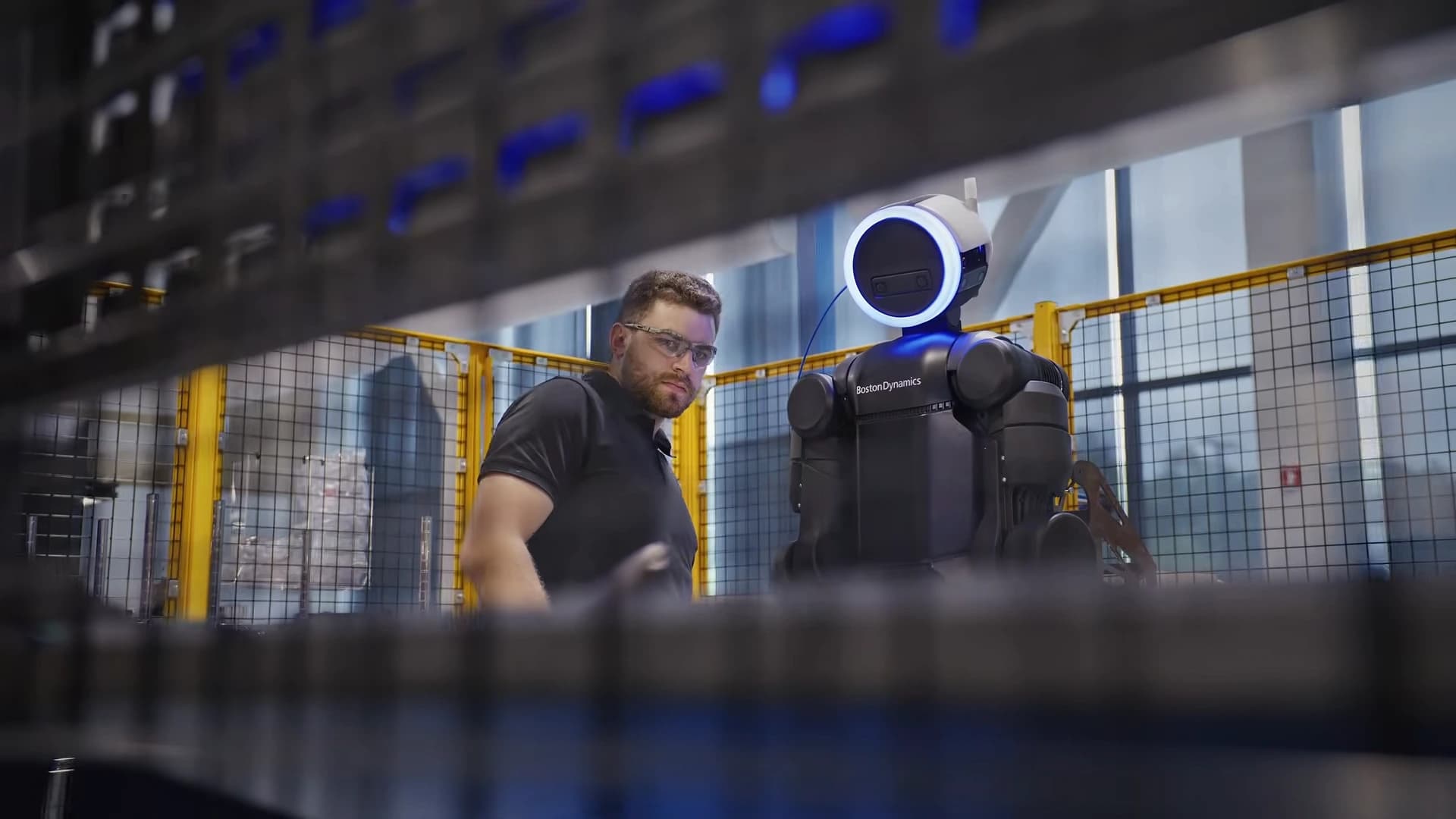
SAN JOSE — As the race to develop general-purpose humanoids shifts from digital "dreams" to factory floors, the focus is increasingly landing on the hardware that keeps these machines from crashing into their surroundings. Ahead of its GTC 2026 conference, NVIDIA has announced a deep technical collaboration with Texas Instruments (TI) aimed at hardening the safety and perception stacks of next-generation physical AI.
The partnership centers on the integration of TI’s mmWave radar technology with the NVIDIA Jetson Thor robotics computer and the NVIDIA Holoscan framework. By combining high-frequency sensing with massive AI compute, the companies aim to provide a "production-ready" foundation for humanoids to operate safely alongside humans in unpredictable environments.
Bridging the Perception Gap
While camera-based systems have seen massive improvements through models like DreamZero, they remain vulnerable to common environmental hazards such as blinding glare, thick dust, or transparent glass doors. TI’s IWR6243 mmWave radar sensors address these "edge cases" by providing 3D perception that is independent of lighting conditions.
According to the announcement, the sensors connect via Ethernet to NVIDIA Jetson Thor using the Holoscan Sensor Bridge. This configuration enables low-latency sensor fusion, allowing a robot to cross-reference visual data with radar pings in real time. This redundancy is critical for navigating complex settings like hospitals or retail spaces where glass partitions and reflective surfaces often "ghost" traditional computer vision systems.
The weekly humanoid robotics briefing
One email a week: the launches, funding and research that mattered, with context from Humanoids Daily.
Read recent issuesFrom Simulation to the Fab
This collaboration represents the physical counterpart to NVIDIA’s recent software breakthroughs. While tools like DreamDojo allow robots to learn intuitive physics in a 44,000-hour "dream" state, TI is providing the deterministic hardware required to translate those learned behaviors into the real world.
For Texas Instruments, the deal further cements its role as a key architect in the humanoid supply chain. The company recently established a strategic partnership with UBTECH, which saw TI’s components integrated into the Walker S2 humanoid. That deal was reciprocal, with TI deploying UBTECH machines into its own semiconductor manufacturing lines to handle sensitive material logistics.
Scaling Physical AI
The integration with Jetson Thor—NVIDIA’s specialized SoC for humanoids—signals a move toward standardized, functional safety-capable platforms. Deepu Talla, NVIDIA’s VP of robotics, noted that synchronizing complex AI models with real-time motor controls requires a "massive leap" in processing power.
By offloading environmental sensing to specialized radar and power management subsystems from TI, NVIDIA can dedicate more of its Blackwell-based architecture to high-level reasoning and whole-body control systems like SONIC.
The joint solution will be demonstrated live at NVIDIA GTC, March 16–19, featuring a sensor fusion processing chain developed in partnership with D3 Embedded. As the industry moves toward what researchers call the "GPT-2 moment" for robotics, the TI-NVIDIA tie-up suggests that the most reliable path to "Physical Turing Test" levels of grace isn't just better code, but a more robust sensory nervous system.
Share this article
Read next
- Published on
- Reading time
- 6 min read
NVIDIA GTC: NVIDIA and Sharpa Unveil Isaac GR00T Reference Humanoid Robot
- Published on
- Reading time
- 4 min read
Figure CEO Brett Adcock Says Company ‘Will Not Teleoperate’ Robots, Drawing Contrast with 1X Strategy
- Published on
- Reading time
- 7 min read
NVIDIA Buys Hugging Face for $12.9B as Open-Source Robotics Scales Up
- Published on
- Reading time
- 5 min read
LG to Unveil Next-Gen Humanoid Built on NVIDIA Isaac GR00T in Early 2027
- Published on
- Reading time
- 4 min read
NVIDIA and Hugging Face Standardize Open-Source Robotics Pipeline via LeRobot
- Published on
- Reading time
- 6 min read
NVIDIA and Agility Team Up on "Halos," the First Full-Stack Safety Architecture for Humanoids

The weekly humanoid robotics briefing
One email a week: the launches, funding and research that mattered, with context from Humanoids Daily.
Read recent issues