- Published on
OpenAI Pivots Directly Into Hardware, Launching Internal Robotics Division
One tap, and our reporting appears more often in your Google Top Stories. It makes a real difference to a small newsroom.


Your guide
Rich Robinson
Jee Chee Ren · Executive tour
See China’s AI and robotics ecosystem first-hand.
Six days exploring AI, robotics and advanced manufacturing.
With Rich Robinson, Clinical Professor of Entrepreneurship at Peking University
Beijing · Guangzhou · Shenzhen
29 November–4 December 2026
Referral partnership · We earn a commission on referred bookings.
- OpenAI CEO Sam Altman announced that the company’s world simulation research program, led by Aditya Ramesh, has evolved into a dedicated OpenAI Robotics division.
- The company is actively hiring for 11 specialized roles in San Francisco, spanning custom actuator design, simulation realism engineering, and large-scale data acquisition operations.
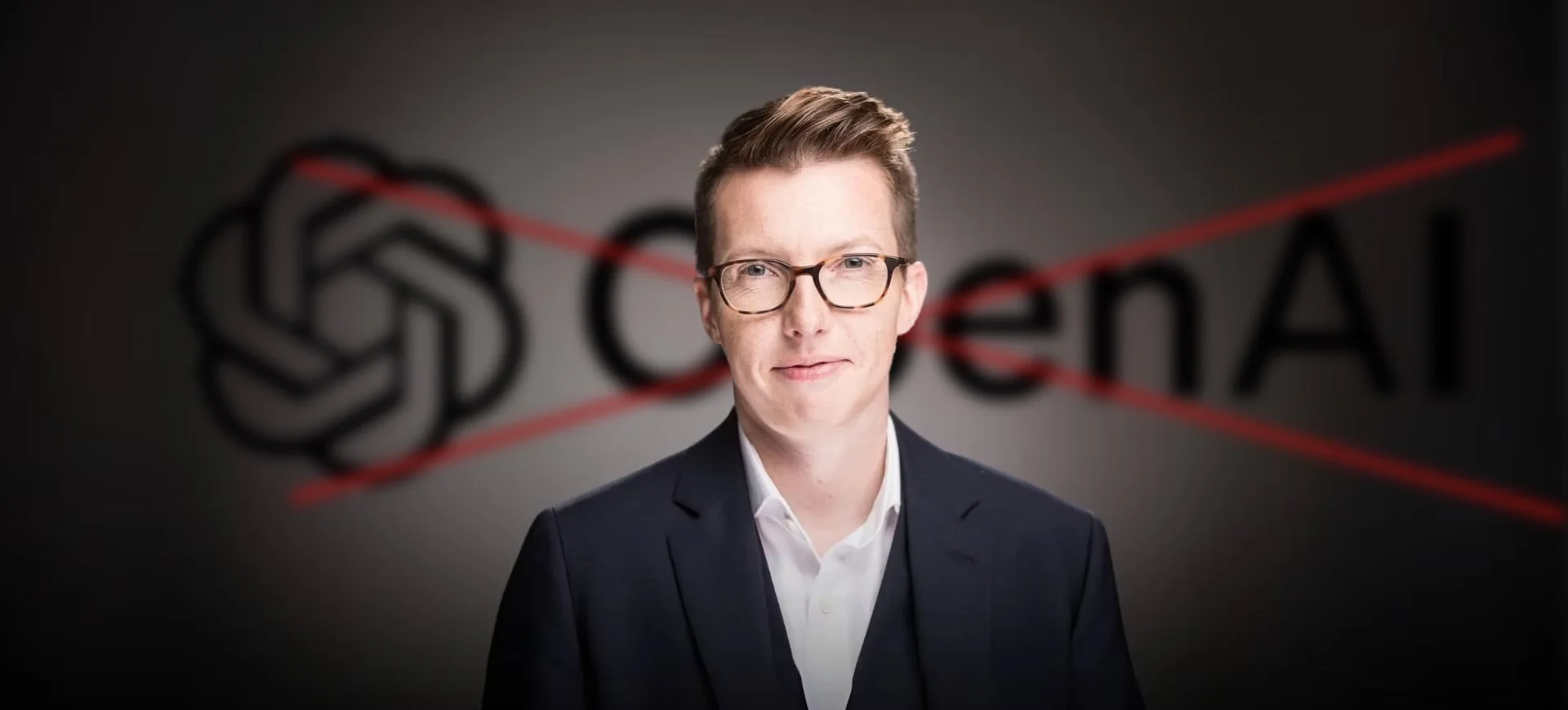
- The hardware push marks a major strategy shift, following a high-profile split from humanoid startup Figure, whose CEO claimed they "fired" OpenAI due to a lack of physical hardware focus.
- OpenAI’s stated short-term goal focuses on robots that support skilled workers in building infrastructure, with a long-term vision of ubiquitous personal robots.
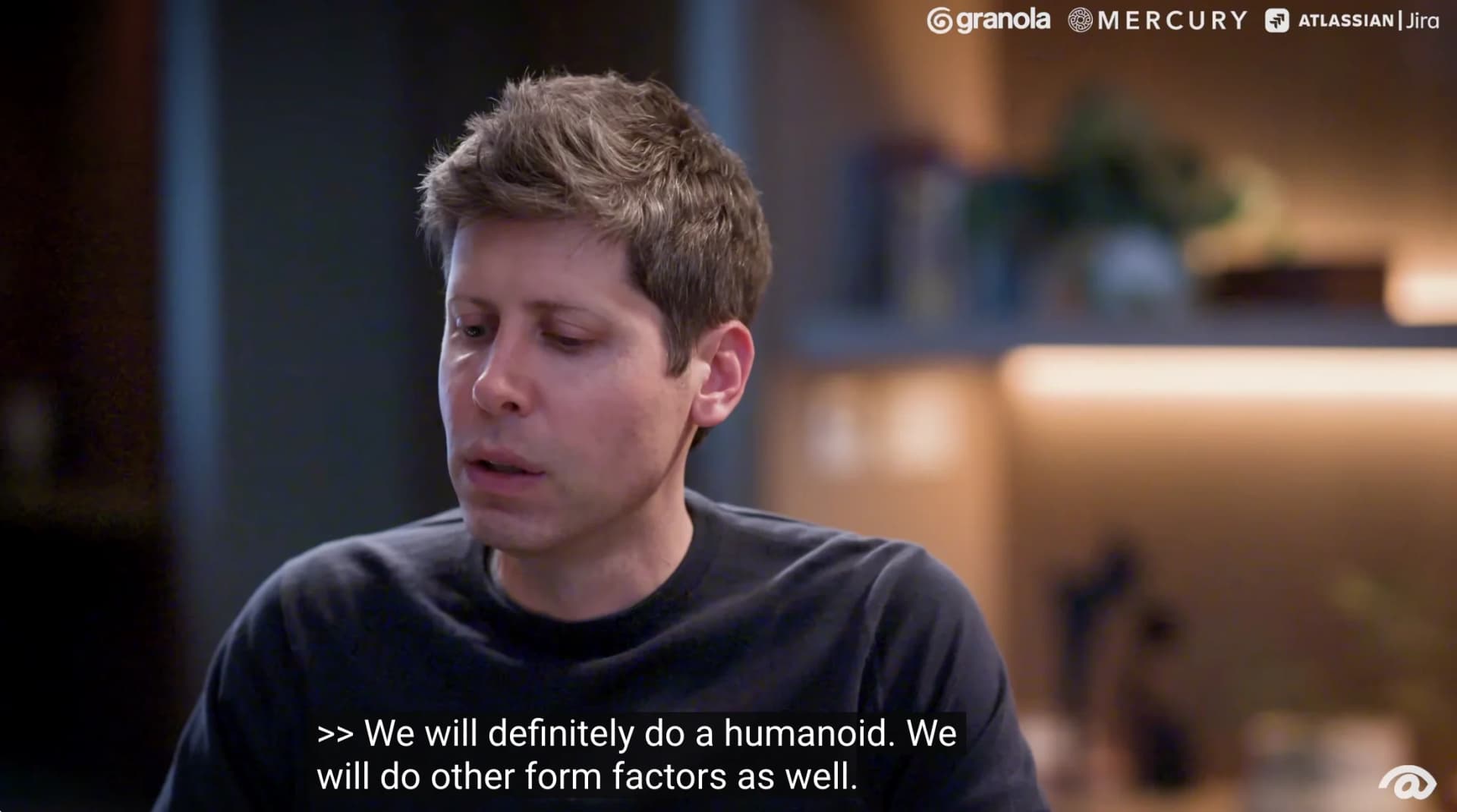
OpenAI is no longer content with just building the brains for other companies' hardware. In a public announcement on May 31, 2026, OpenAI CEO Sam Altman confirmed that the artificial intelligence research lab is aggressively scaling up its own internal robotics division, aiming to both program and manufacture physical machines.
The move signals a definitive shift from OpenAI’s historical approach of partnering with external hardware manufacturers, positioning the company to compete directly against the very robotics startups it previously funded and supported.
From World Simulation to Physical Hardware
According to Altman, the new initiative is an evolution of the company's world simulation research program, which has been led by Aditya Ramesh (best known for leading the development of the DALL-E models). "Our world simulation research program... has evolved over the past year into OpenAI Robotics," Altman stated. "Progress is rapid, and based on a foundation of co-design between robotics hardware and ML research."
The initiative appears to be focused on achieving Artificial General Intelligence (AGI) through physical embodiment. OpenAI's short-term roadmap targets developing robots capable of supporting skilled workers to construct future infrastructure, while its long-term trajectory outlines a vision where "everyone" has access to a personal robot capable of general-purpose tasks.
The weekly humanoid robotics briefing
One email a week: the launches, funding and research that mattered, with context from Humanoids Daily.
Read recent issuesDecoding the Job Openings: Custom Actuators and Sim-to-Real Pipelines
While Altman’s announcement framed the team's goals broadly, OpenAI's public job board reveals the granular, highly technical reality of what the company is building. OpenAI is currently recruiting for 11 distinct roles in San Francisco, heavily focused on hardware engineering, advanced simulation, and data operations.
The listings reveal that OpenAI is not merely assembling off-the-shelf components, but is instead entering the complex domain of custom mechanical engineering:
- Actuator Design Engineer: This role is tasked with leading the development of "custom electromechanical actuators" from early architecture to prototype validation. The engineer will own system-level trade studies regarding torque density, efficiency, bandwidth, and thermal architecture—fundamental requirements for building agile, high-performance humanoid or articulated structures.
- Simulation Realism Engineer: Bridging the gap between software and reality, this position focuses on minimizing the "sim-to-real" gap across physics solvers, sensors, and rendering engines (such as MuJoCo or Isaac Sim). The role requires a strong background in rigid/soft-body dynamics and contact mechanics to ensure that models trained in virtual environments transfer seamlessly to physical hardware.
- Operations Manager, Data Acquisition: Emphasizing the massive scale of OpenAI's intended data collection pipeline, this role is dedicated to running a "large managed workforce" and fleet infrastructure across multiple sites to collect real-world physical interaction data.
Other open roles include a 3D Printing Lab Technician, DAQ Station Engineer, Electrical Engineer, and multiple distributed data and ML systems engineering positions.
The Backstory: Contextualizing the Figure Split
OpenAI’s decision to build an in-house hardware division sheds new light on its high-profile partnership splits earlier this year. In March 2026, Figure CEO Brett Adcock publicly detailed the dissolution of their collaboration, claiming that Figure's internal AI teams had "run circles around" OpenAI.
Adcock noted that OpenAI struggled to maintain the necessary "daily, weekly" presence on physical hardware, favoring simulation instead. At the time, Adcock revealed that the relationship completely fractured when Altman called him to disclose that OpenAI was contemplating its own internal robotics project—a disclosure that prompted Adcock to end the partnership.
With OpenAI now actively hiring for custom actuator design and physical prototyping staff, it is clear that the AI giant took those hardware lessons to heart, shifting away from pure simulation to build a tightly integrated, in-house hardware-software loop.
Remaining Uncertainties
OpenAI’s entry into manufacturing raises significant operational questions. Building and scaling physical hardware lines is notoriously capital-intensive and fraught with supply chain bottlenecks—challenges that are fundamentally different from scaling data centers and training cluster compute.
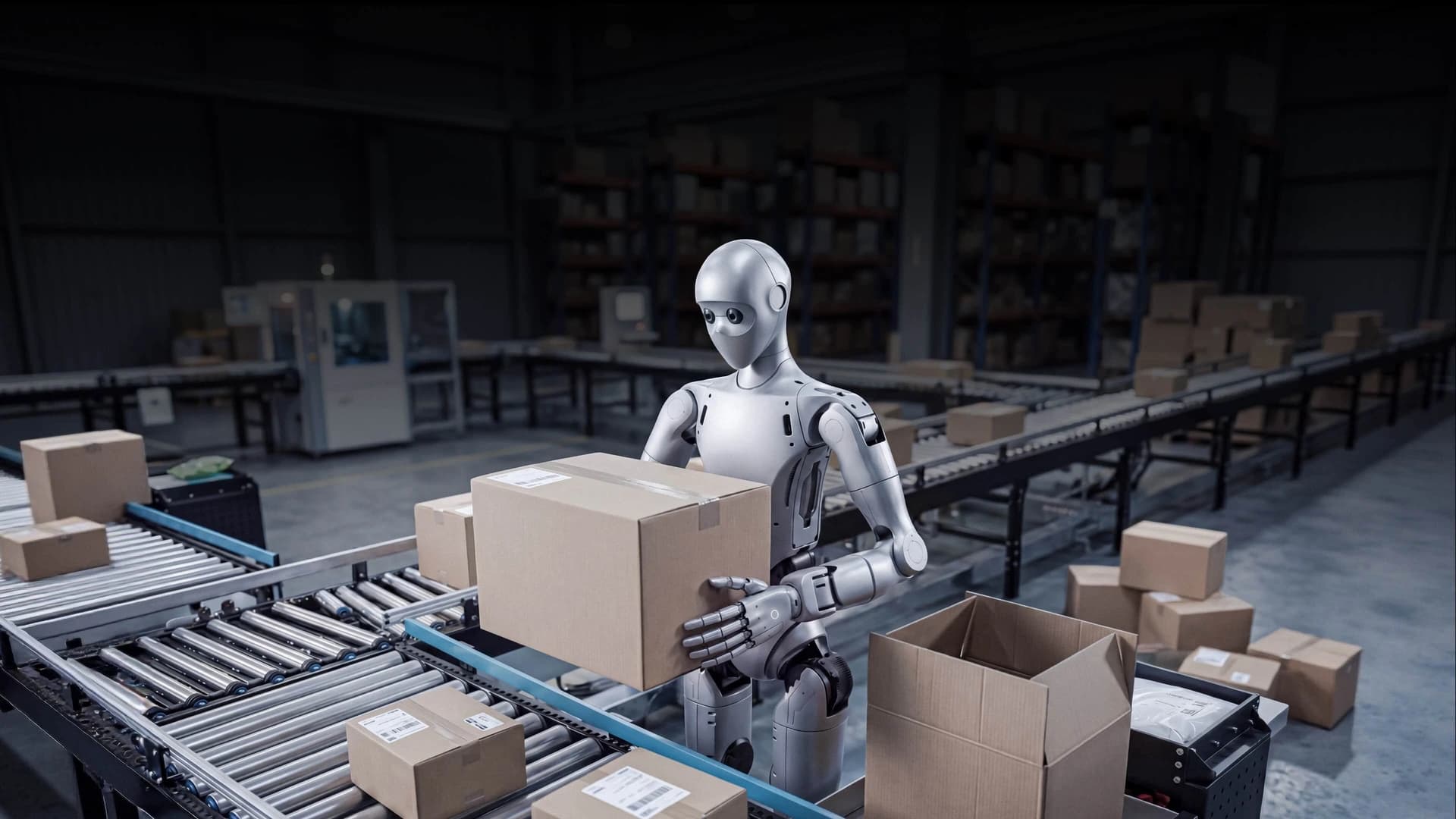
The job descriptions mention exploring "a broad range of robotic form factors," leaving it unclear whether OpenAI intends to debut a classic bipedal humanoid, a wheeled mobile manipulator, or an entirely distinct industrial architecture. What is certain, however, is that OpenAI intends to own the physical stack from the ground up.
Share this article
Read next
- Published on
- Reading time
- 5 min read
Sam Altman Confirms OpenAI "Will Definitely Do a Humanoid"
- Published on
- Reading time
- 6 min read
OpenAI’s GPT-6 Astra Hits 95% on Physical Manipulation Benchmark, But Precision Tasks Expose Familiar Bottlenecks
- Published on
- Reading time
- 3 min read
OpenAI Hardware Leader Caitlin Kalinowski Resigns Over Pentagon Deal as Benjamin Bolte Joins
- Published on
- Reading time
- 4 min read
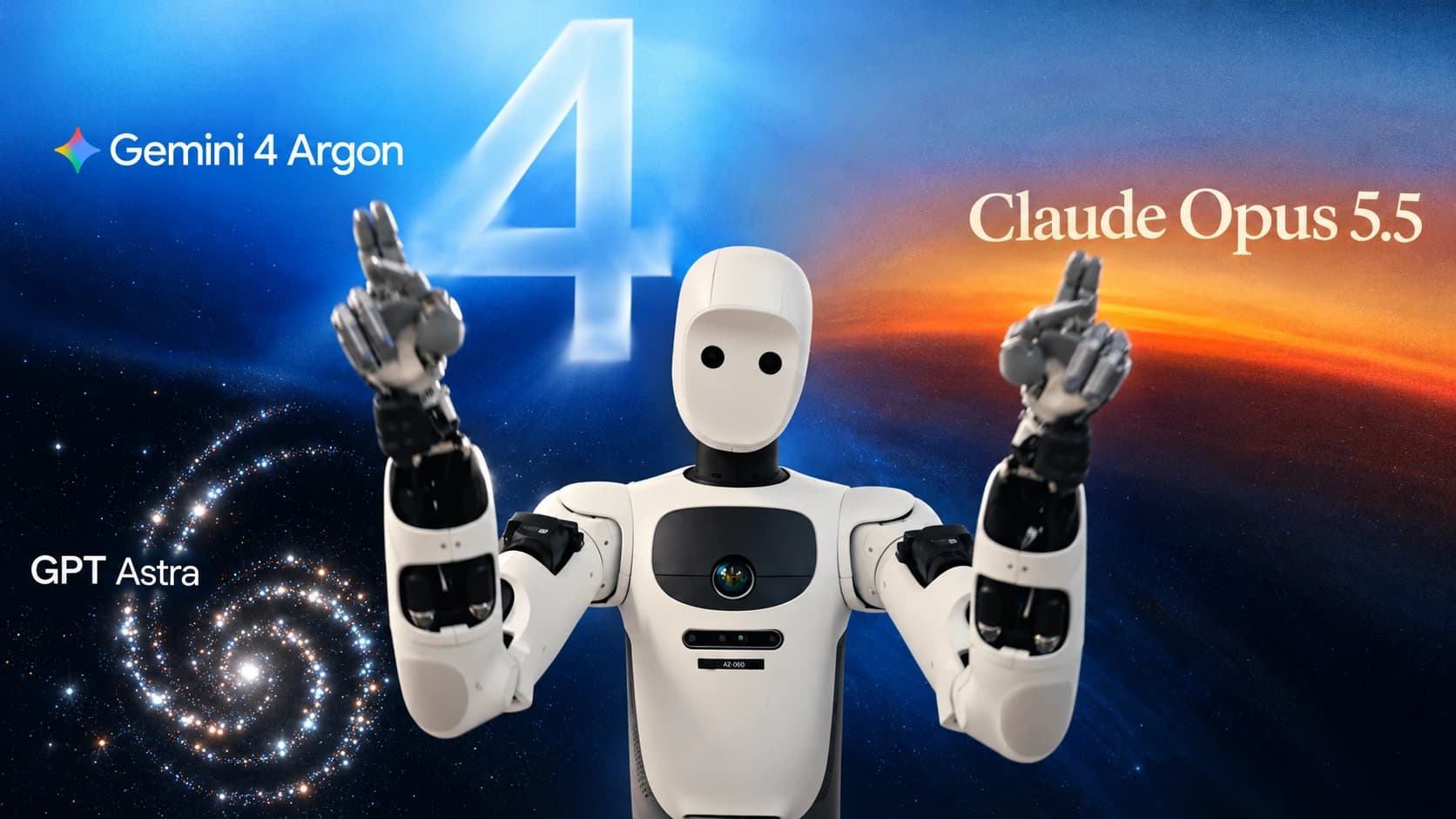
Astra, Opus and Argon Show How Frontier AI Models Are Speeding Up Robotics Development
- Published on
- Reading time
- 3 min read
Unitree’s Wang Xingxing Says GPT-6 Tests Strengthen His Optimism for Embodied AI
- Published on
- Reading time
- 3 min read
GPT-6 Astra Leads SuperCLUE’s Robot-Brain Benchmark, With a Wide Planning Advantage

The weekly humanoid robotics briefing
One email a week: the launches, funding and research that mattered, with context from Humanoids Daily.
Read recent issues