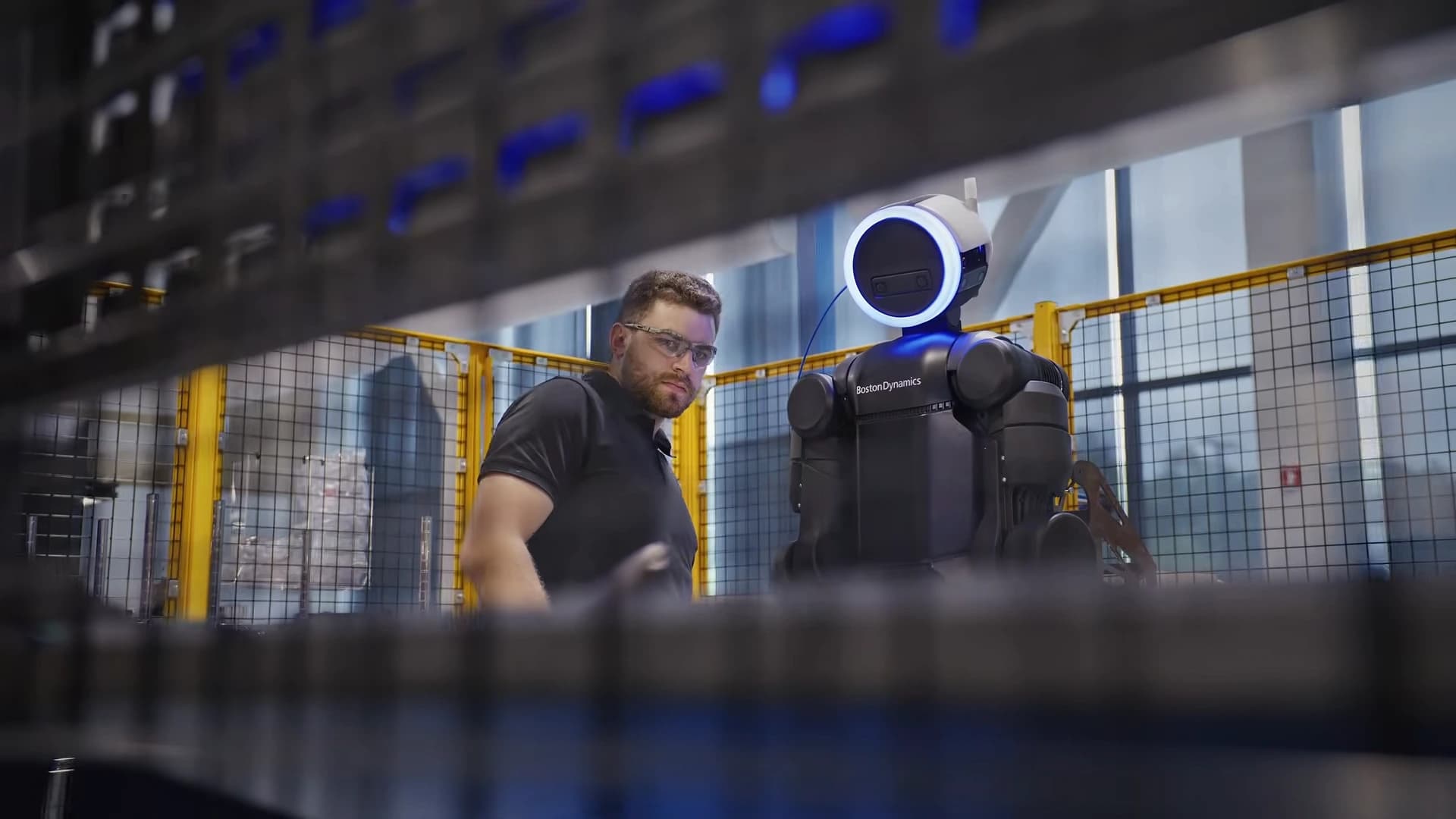
- Published on
Beyond the Backflip: Agility’s Jonathan Hurst on the Pragmatic Path to a Humanoid Future
One tap, and our reporting appears more often in your Google Top Stories. It makes a real difference to a small newsroom.


Your guide
Rich Robinson
Jee Chee Ren · Executive tour
See China’s AI and robotics ecosystem first-hand.
Six days exploring AI, robotics and advanced manufacturing.
With Rich Robinson, Clinical Professor of Entrepreneurship at Peking University
Beijing · Guangzhou · Shenzhen
29 November–4 December 2026
Referral partnership · We earn a commission on referred bookings.
- Agility co-founder Jonathan Hurst predicts the market for humanoid robots will double the size of the current automotive industry by 2050.
- Hurst highlighted a critical data gap between text-based large language models and embodied AI, noting that physical coordination data cannot simply be scraped from the internet.
- The company maintains its cautious stance on consumer deployment, warning that massive structural barriers like domestic chaos, high costs, and unproven safety will delay the arrival of the "robot butler."
- Before entering homes, humanoids will serve as industrial "lightbulbs," building foundational value in structured environments like Agility's ongoing deployments with Toyota and logistics providers.
In a robotics landscape dominated by aggressive timelines and viral demonstrations, Agility co-founder Jonathan Hurst is offering a distinctly pragmatic counter-narrative. Speaking at a recent TED Talk, Hurst mapped out the transition toward embodied AI, projecting that by 2050, the market for humanoid robots will be twice the size of today's automotive industry.
Hurst framed the current moment as the third era of robotics, following the advent of industrial arms in the 1960s and the rise of mobile warehouse automation in the 2000s. Unlike previous generations of automation, this new era is defined by embodied AI—machines capable of perceiving their environments and making autonomous decisions.
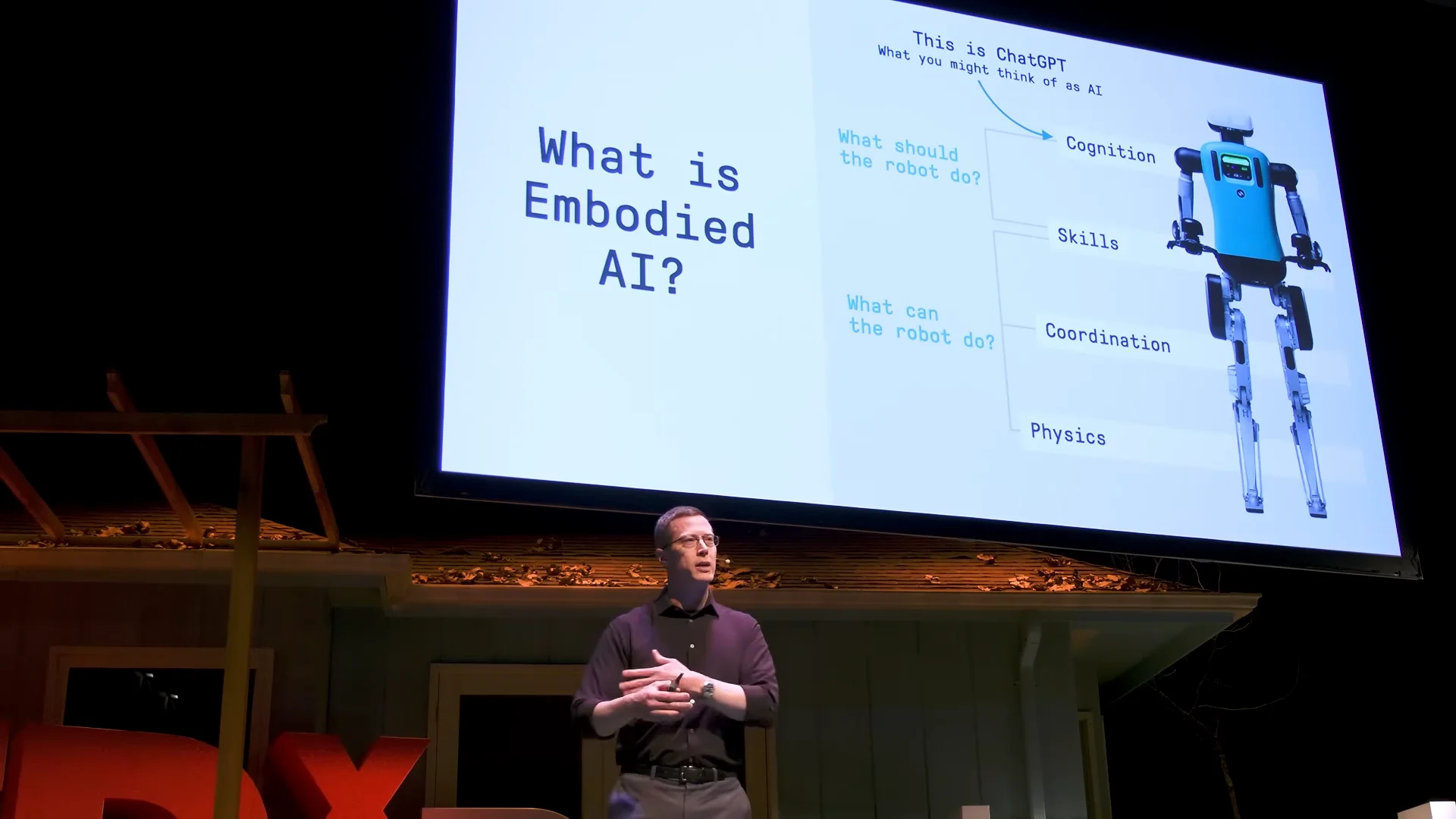
The "Brain in a Box" vs. Physical Reality
However, Hurst was quick to temper expectations regarding how soon these machines will fold our laundry. Addressing the immense technical challenge of translating digital intelligence into physical motion, Hurst noted that systems like Google Gemini or ChatGPT are essentially a "brain in a box."
While those text-based models train on the vast, pre-existing language and image data of the internet, physical coordination data for robots does not naturally exist. "There is no source of data for how you should coordinate all of the joints to work together," Hurst explained, adding that this data must be painstakingly generated through simulation, teleoperation, and reinforcement learning.
The weekly humanoid robotics briefing
One email a week: the launches, funding and research that mattered, with context from Humanoids Daily.
Read recent issuesThe Three Hurdles to the Home
This data deficit is a core reason why Agility has consistently pushed back against the industry's direct-to-home ambitions. Hurst outlined three primary blockers keeping humanoids out of the living room: the unstructured chaos of human dwellings, the necessity for cost-sensitive pricing, and the non-negotiable requirement for physical safety.
"It is completely unacceptable for a robot to fall on your child," Hurst said, emphasizing that robots strong enough to perform meaningful chores are inherently strong enough to cause injury.
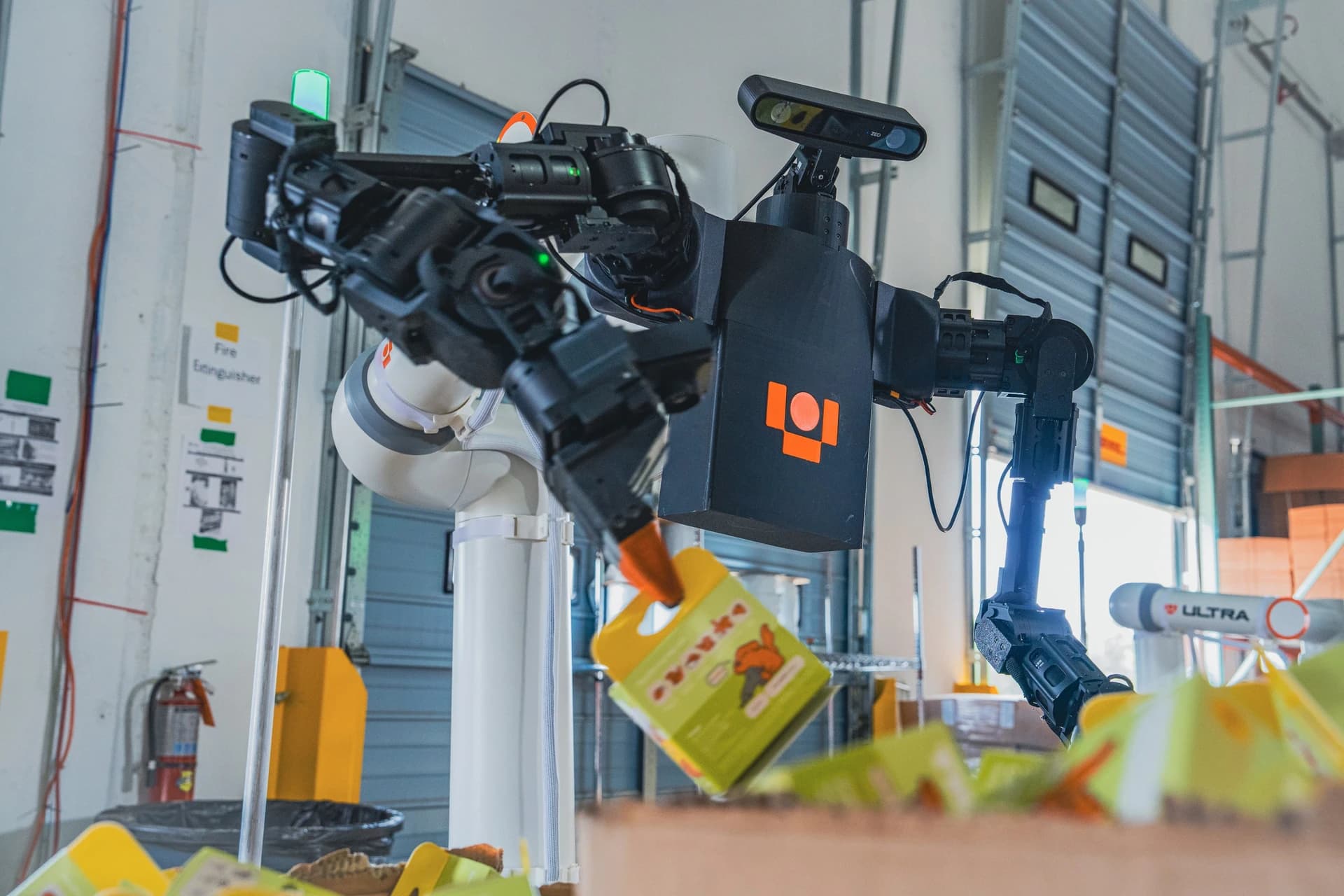
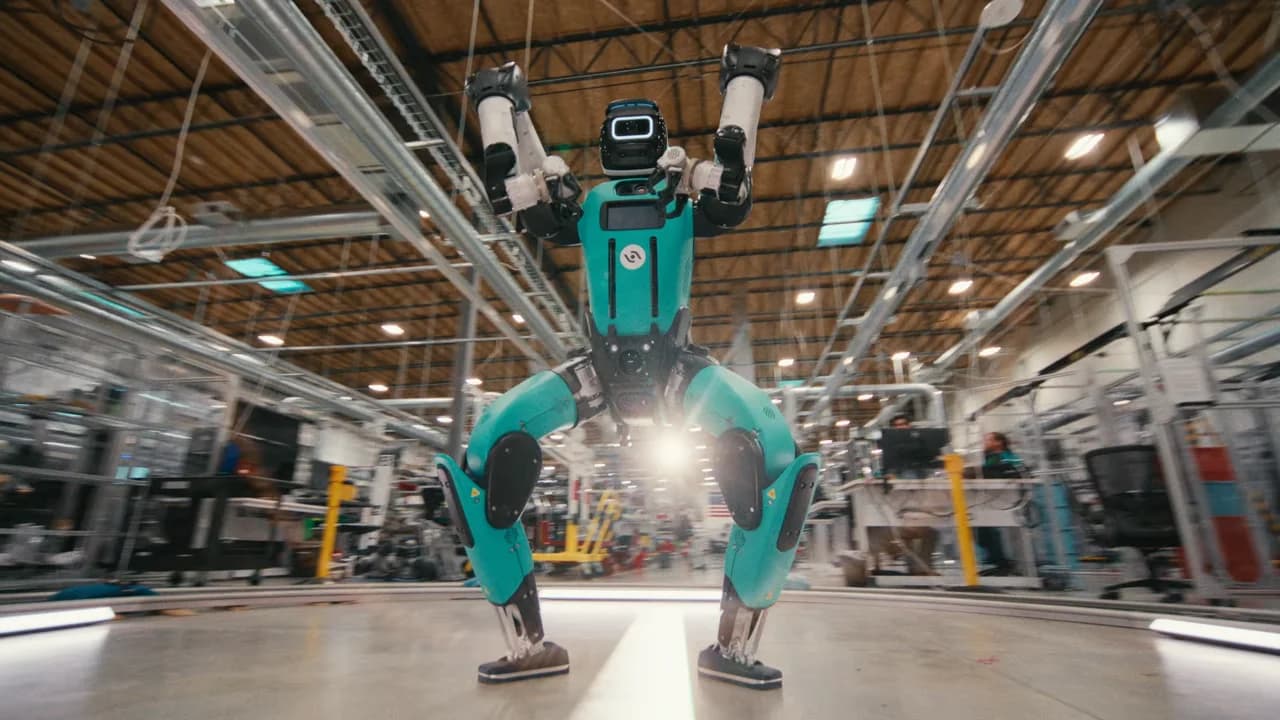
Instead of leaping straight to domestic applications, Agility is treating industrial environments as the necessary proving ground—a strategy that has seen Digit deployed with commercial partners like Toyota and handling bearing components for Schaeffler. Hurst compared this phased rollout to the adoption of electricity.
"You start with a light bulb," he noted, explaining that while electricity now powers massive data centers, its initial value was much simpler. For humanoids, the "light bulb" is repetitive, structured work like moving plastic bins in a warehouse, which already generates enough value to cover the cost of the hardware today.
Breaking Out of the Work Cell
Even in these controlled settings, safety remains the overriding bottleneck to scale. While competitors often prioritize complex autonomy—sometimes sparking public feuds over engineering choices—Agility has focused heavily on standardized, industrial compliance.
Currently, Digit frequently operates behind physical barriers in live environments, but Hurst indicated that the next immediate milestone is the deployment of certifiable safety sensors. These sensors will reliably detect humans with highly certified accuracy, allowing the robot to power down and safely fold itself to the ground if approached. This hardware-based safety approach aligns with the company's broader push, having recently secured an OSHA-recognized safety approval to justify its reported $2 billion valuation and widen the gap between prototype demonstrations and viable commercial deployments.
Form Follows Function
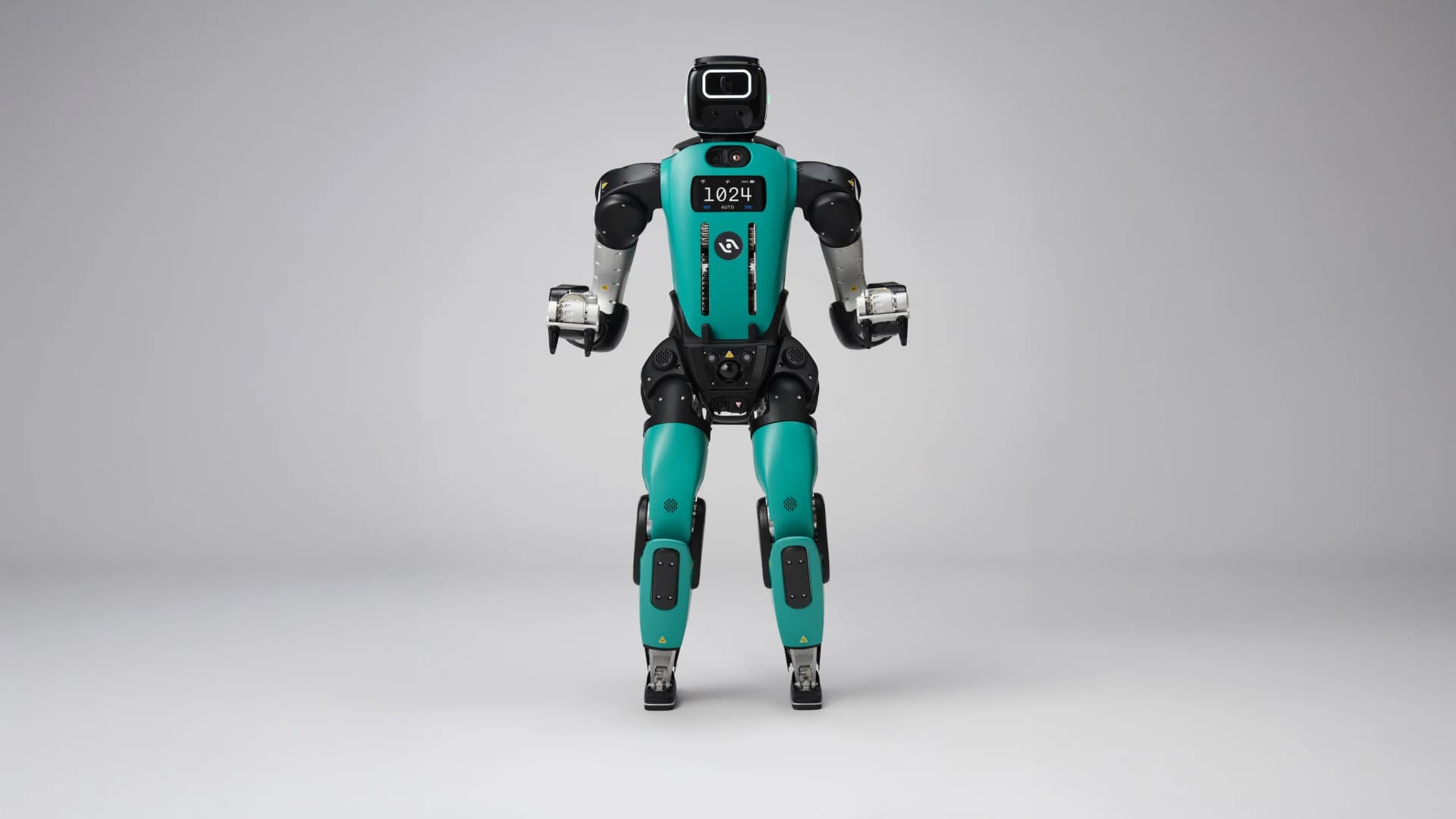
Bringing a Digit unit onto the TED stage, Hurst also defended the bipedal form factor itself. While a robot does not need to look exactly human, a "human-centric" environment dictates a specific physical architecture.
To navigate tight doorways and aisles without knocking objects over, a narrow, upright torso and two balancing legs provide dynamic stability and an optimal footprint that wheeled chassis cannot match. Meanwhile, two arms are essential for manipulating larger, unwieldy objects or handing items off from one hand to the other.
Ultimately, Hurst’s vision remains deeply optimistic, yet firmly rooted in a measured, 25-year timeline for human-robot coexistence. By starting with the "dull, dirty, dangerous" tasks of logistics and manufacturing, embodied AI will gradually refine its manipulation and safety systems to eventually serve society at large.
"We're going to be able to build things that we cannot create today with human hands," Hurst concluded, framing humanoids not merely as a replacement for human labor, but as a foundational technology to amplify human capability.
Watch the talk in the player below:
Share this article
Read next
- Published on
- Reading time
- 3 min read
Nine Minutes to Recharge: Agility Picks Nyobolt for Digit 5’s Long Working Day
- Published on
- Reading time
- 2 min read
Agility Moves Closer to Nasdaq as Merger Vote Is Set for November 2
- Published on
- Reading time
- 7 min read
Agility's Investor Day: Digit 5 Launches at a $150,000 Bill of Materials, and Its $300M Order Unlocks Skill by Skill
- Published on
- Reading time
- 4 min read
Agility’s Digit 5 Reveal Includes a Wheeled Robot Concept
- Published on
- Reading time
- 8 min read
Uncaged: Agility CEO Peggy Johnson and Co-Founder Jonathan Hurst Detail Digit 5 Architecture, AI Stack, and Supply Chains
- Published on
- Reading time
- 5 min read
Agility unveils Digit 5, designed to work closer to people

The weekly humanoid robotics briefing
One email a week: the launches, funding and research that mattered, with context from Humanoids Daily.
Read recent issues