- Published on
Isomorphism Over Imitation: X Square Unveils TwinDEX to Bridge the Robot-Free Data Gap
One tap, and our reporting appears more often in your Google Top Stories. It makes a real difference to a small newsroom.


Your guide
Rich Robinson
Jee Chee Ren · Executive tour
See China’s AI and robotics ecosystem first-hand.
Six days exploring AI, robotics and advanced manufacturing.
With Rich Robinson, Clinical Professor of Entrepreneurship at Peking University
Beijing · Guangzhou · Shenzhen
29 November–4 December 2026
Referral partnership · We earn a commission on referred bookings.
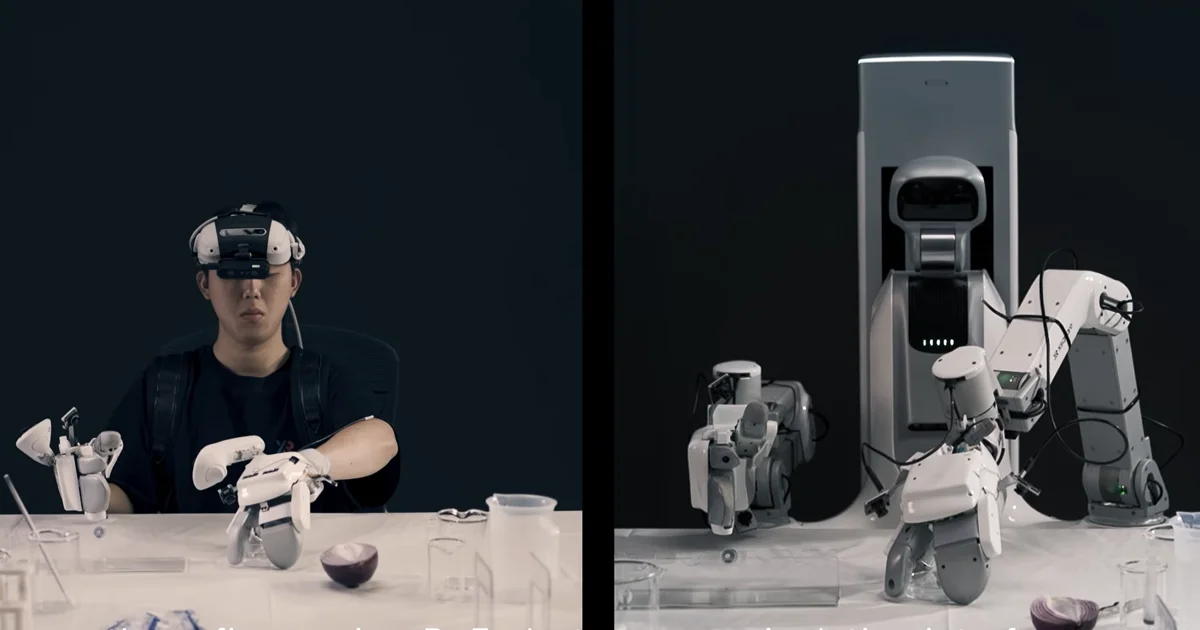
- X Square Robot unveiled TwinDEX, an isomorphic hardware-software platform pairing a wearable exoskeleton with a matched three-finger robotic end effector.
- By enforcing kinematic, tactile, and visual symmetry between the collection rig and robot, TwinDEX allows policies to be trained on robot-free human demonstrations without complex retargeting.
- In standardized benchmarks, TwinDEX achieved up to 5.3x the data collection throughput of conventional on-robot teleoperation.
- To demonstrate complex contact dynamics, the system completed an autonomous 24-step chemistry experiment with zero on-robot training data, requiring only a few hundred exoskeleton demonstrations.
- The shift marks a new front in the robotics data bottleneck debate, contrasting with Sunday Robotics' glove-first UMI model and Dyna's million-hour internet video scaling.
In the race to scale embodied artificial intelligence, developers keep hitting the same fundamental wall: data. While vision-language foundation models thrive on trillions of internet tokens, physical machines require high-density, force-calibrated interaction trajectories that simply do not exist on the web. Teleoperating full robots produces pristine data, but it is slow, cumbersome, and expensive. Robot-free data collection—such as handheld rigs or smart gloves—scales rapidly, but often stumbles across the "embodiment gap," where differences in geometry, timing, and contact mechanics corrupt transfer to the physical robot.
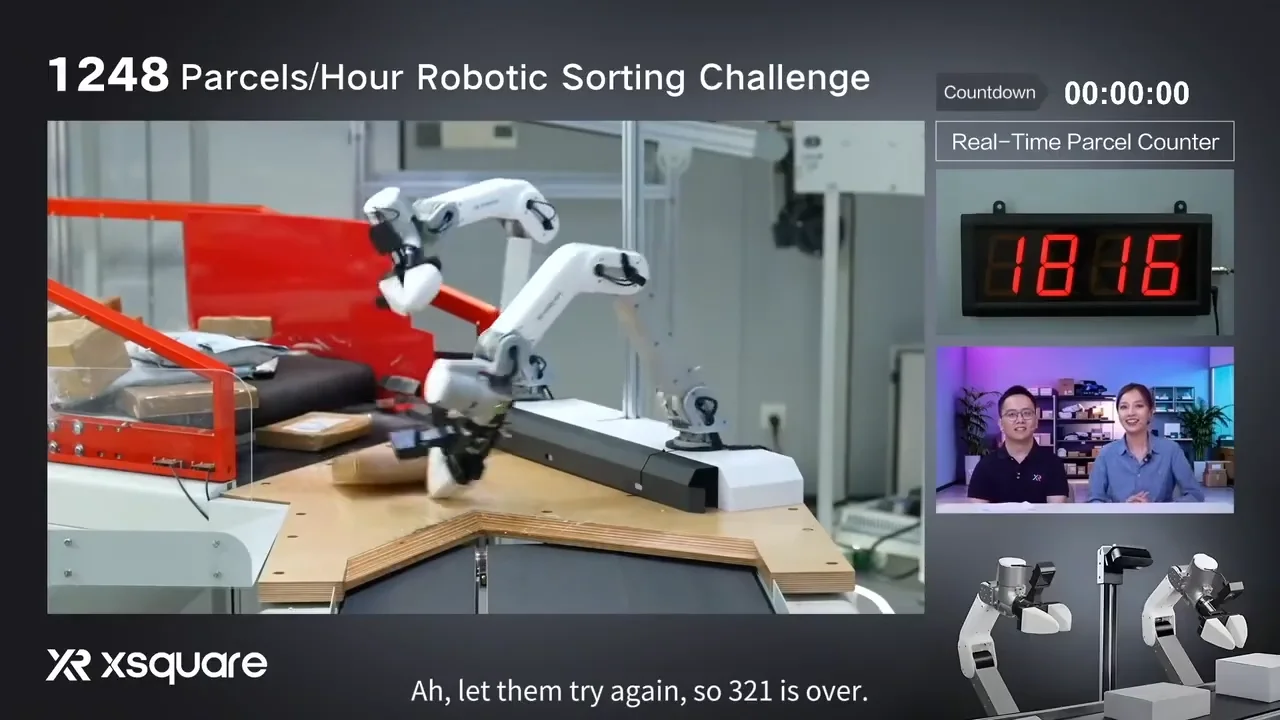
Shenzhen-based startup X Square Robot—fresh off showing that simple grippers could sort 1,816 parcels per hour—is offering a structural answer to this dilemma. Today, the company introduced TwinDEX, a paired, co-designed manipulation platform that ties a wearable exoskeleton directly to a robotic end effector through strict physical isomorphism.
The Architecture of Isomorphism
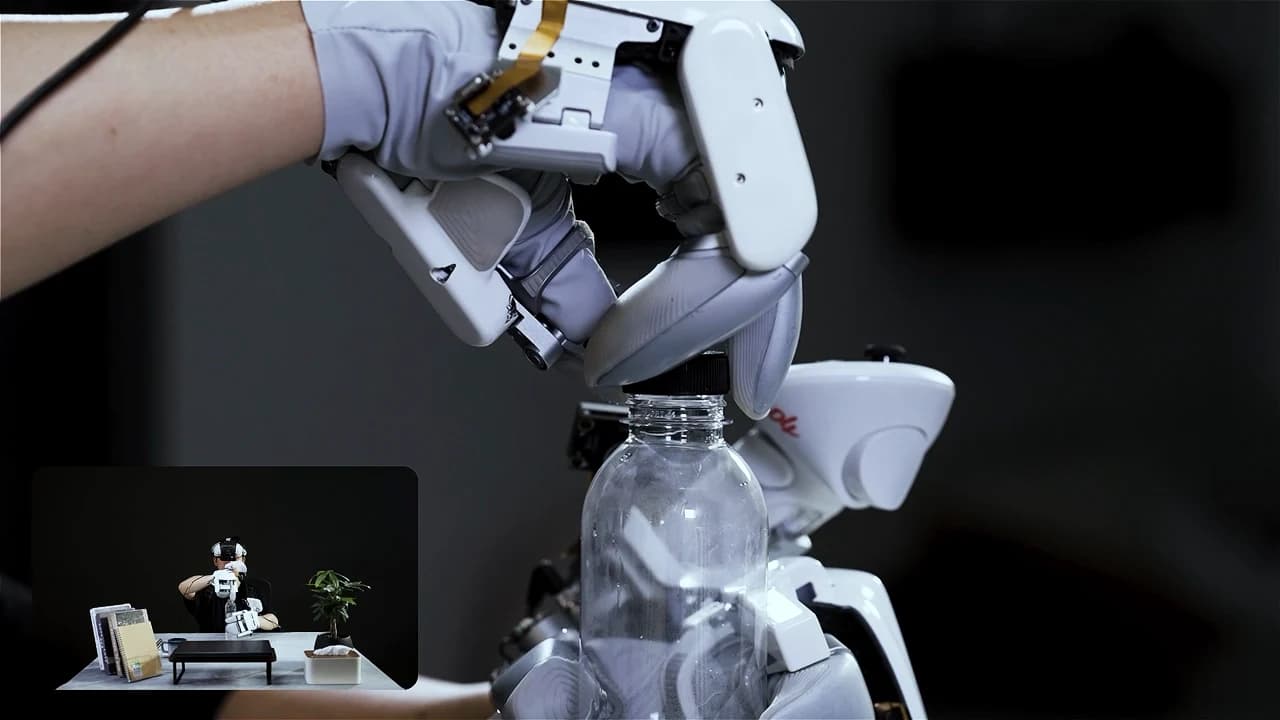
Rather than retrofitting existing robotic hands to mimic human kinematics or forcing human operators to use clunky puppet rigs, TwinDEX enforces identical geometry across both sides of the pipeline. Both the wearable operator rig and the target robotic end effector share the exact same three-finger, nine-degree-of-freedom (9-DoF) architecture, comprising seven active and two passive degrees of freedom.
According to X Square, this configuration emerged from exhaustive evaluations across manipulation primitives. While five-finger anthropomorphic hands theoretically offer the highest ceiling for dexterity, they impose severe penalties on actuator torque density, spatial packaging, mechanical reliability, and unit economics. X Square determined that a three-finger configuration provides sufficient grasping versatility—power grasps, precision pinches, multi-point contact, twisting, and tool manipulation—without introducing the reliability headaches that plague tendon-heavy humanoids.
The weekly humanoid robotics briefing
One email a week: the launches, funding and research that mattered, with context from Humanoids Daily.
Read recent issuesCrucially, TwinDEX is built around three core pillars:
- Dexterity: Seven active degrees of freedom balanced to handle delicate, contact-rich interactions like operating syringes and turning latches.
- Consistency: The exoskeleton and the robot hand share matching kinematic chains, joint axes, link proportions, tactile sensing, surface materials, and visual appearance. Measured finger states map directly into the robot's joint space, bypassing the algorithmic approximations and latency of hand-to-robot retargeting.
- Scalability: By eliminating the robot from the data-gathering loop, a single operator, a wearable rig, and an ordinary table form a standalone data collection station deployable in homes, kitchens, and offices.
X Square claims that this tight coupling allows TwinDEX to capture high-fidelity force and proprioceptive feedback directly from human intuition while achieving up to 5.3 times the effective data collection throughput of conventional on-robot teleoperation.
24 Steps in the Chemistry Lab
To demonstrate that robot-free data could reliably drive complex physical manipulation without real-world fine-tuning, X Square subjected TwinDEX to a continuous, uncut chemistry experiment.
The autonomous run spans 24 discrete sub-actions demanding millimeter-level accuracy and closed-loop force modulation:
- Twisting open specimen bottles and stabilizing fragile containers.
- Grasping and manipulating narrow spatulas and scooping precise quantities of solid powder.
- Operating a rubber-bulb pipette to transfer controlled liquid volumes.
- Guiding liquid pours along the side of a nearly transparent glass stirring rod to prevent splashing.
- Executing bi-manual handoffs, latch manipulation, and dynamic tool exchanges.
Remarkably, X Square reported that the policy executing the chemistry sequence was trained from scratch using only a few hundred demonstration episodes gathered exclusively on the wearable exoskeleton—with zero on-robot teleoperation data.
Divergent Paths to Embodied Scale
The release of TwinDEX highlights an intensifying architectural debate within the embodied AI sector over how best to conquer the data drought.
On one end of the spectrum, players like Dyna Robotics argue that hardware alignment is a distraction, asserting that scaling 1 million hours of raw human video through generative world-action models can naturally bridge any embodiment gap.
On the other end stands Sunday Robotics, which embraced a similar data-first philosophy with its Skill Capture Glove to power the wheeled Memo domestic robot and its ACT-2 foundation model. However, while Sunday's Universal Manipulator Interface (UMI) focused primarily on rigid two-jaw pincers to fold laundry and load dishwashers, TwinDEX pushes that wearable-first paradigm into genuine multi-finger articulation.
Supported by funding from tech giants like Xiaomi and Meituan, X Square is betting that data efficiency beats sheer data volume. If hundreds of operators wearing lightweight exoskeletons can generate native joint-level data without occupying physical robots, the bottleneck to fine motor skills could dissolve much faster than expected.
Whether X Square's three-finger balance holds up across chaotic consumer environments remains to be demonstrated, but TwinDEX proves that clever hardware-software co-design can bypass one of the most stubborn bottlenecks in physical AI.
Share this article
Read next
- Published on
- Reading time
- 9 min read
The UMI Effect: Why Robotics Companies Are Building the Data Collector First
- Published on
- Reading time
- 5 min read
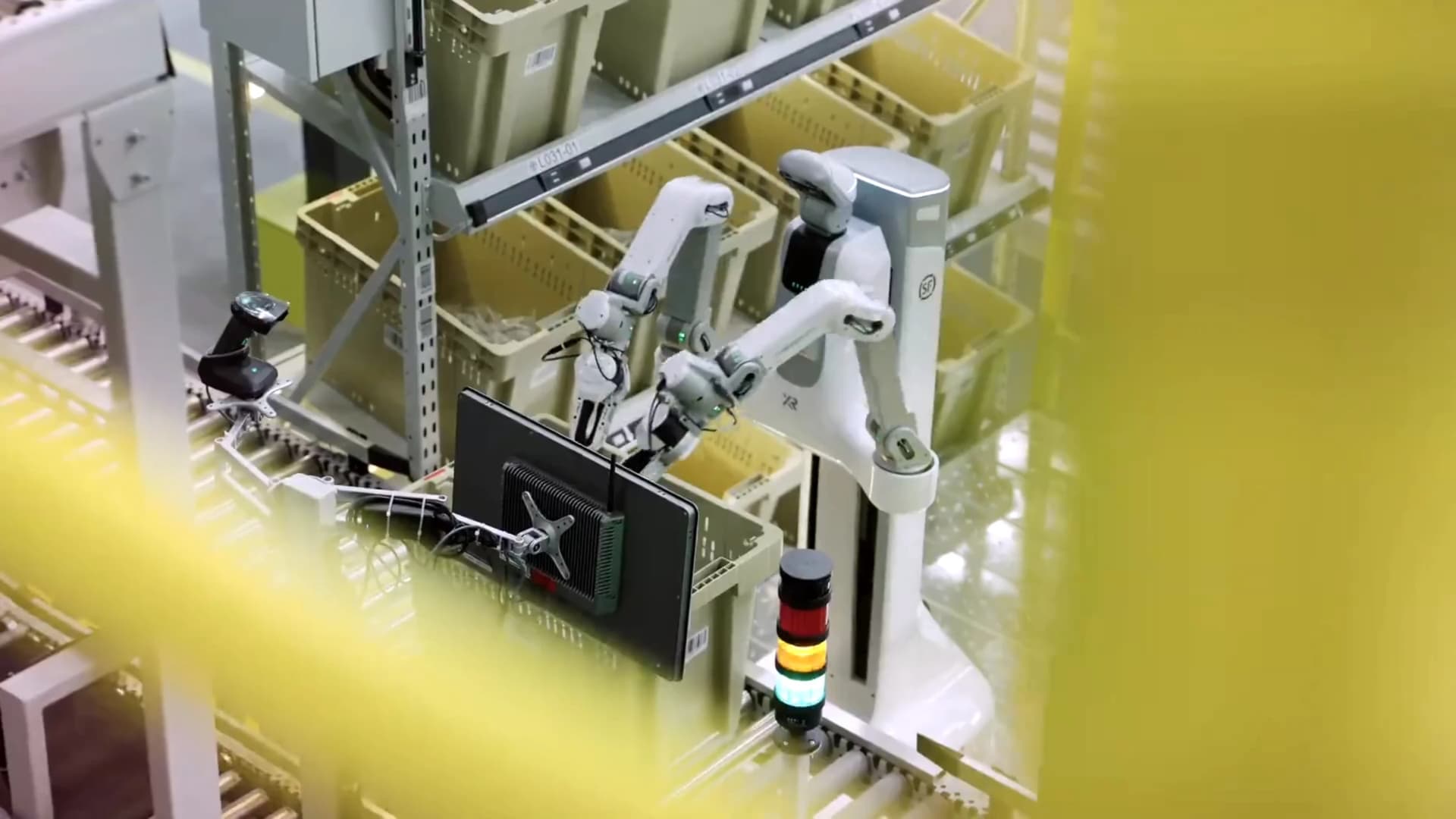
No Fingers, No Problem: X Square Robot’s 1,816-Parcel-Per-Hour Livestream Challenges Figure
- Published on
- Reading time
- 5 min read
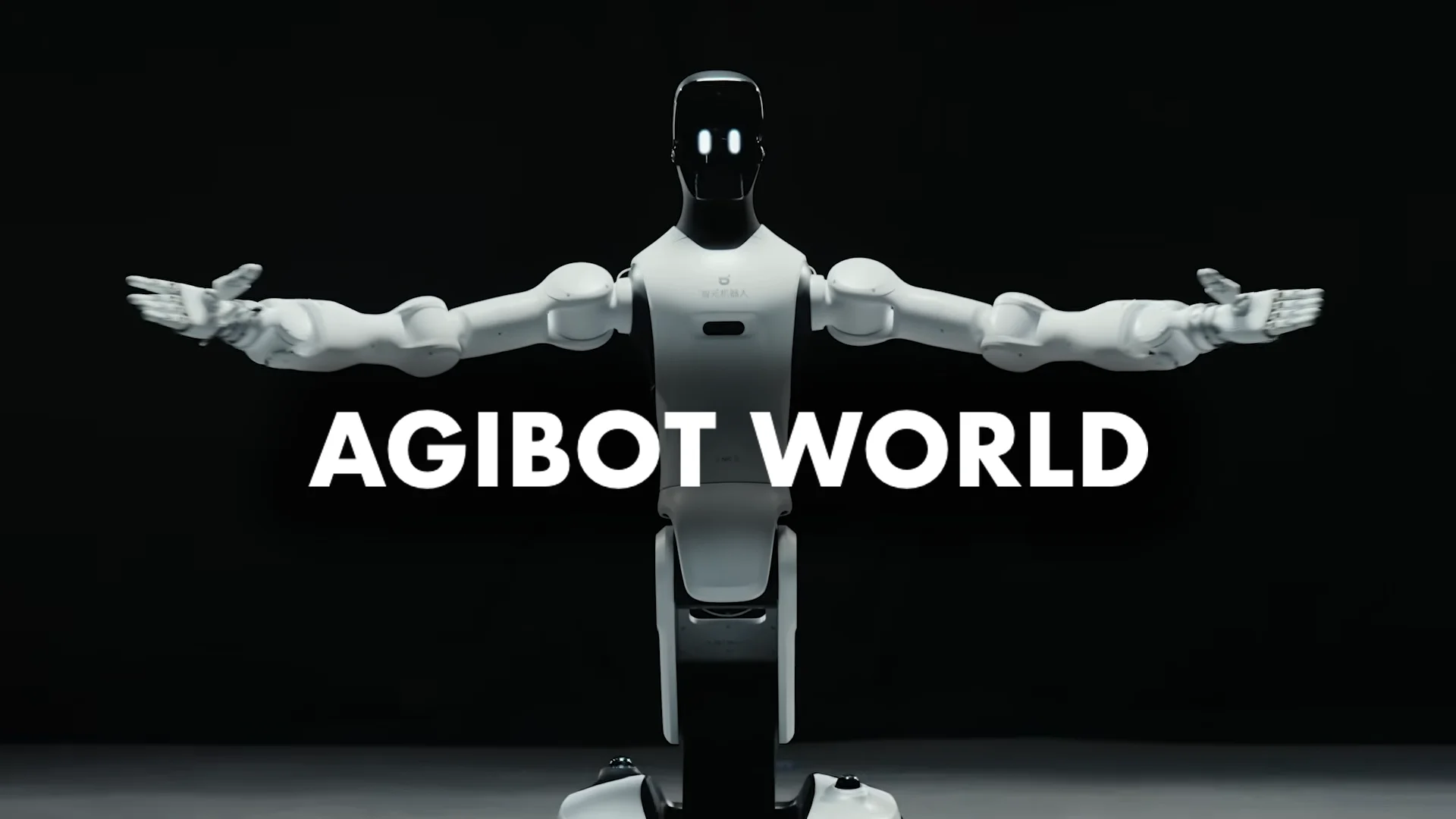
The Data Bottleneck: Why AGIBOT is Open-Sourcing its Real-World Training Library
- Published on
- Reading time
- 3 min read
X Square’s Robot Starts Work at Lululemon’s Wuhan Warehouse
- Published on
- Reading time
- 3 min read
Tesla Looks to Berlin Factory Workers to Help Train Optimus
- Published on
- Reading time
- 4 min read
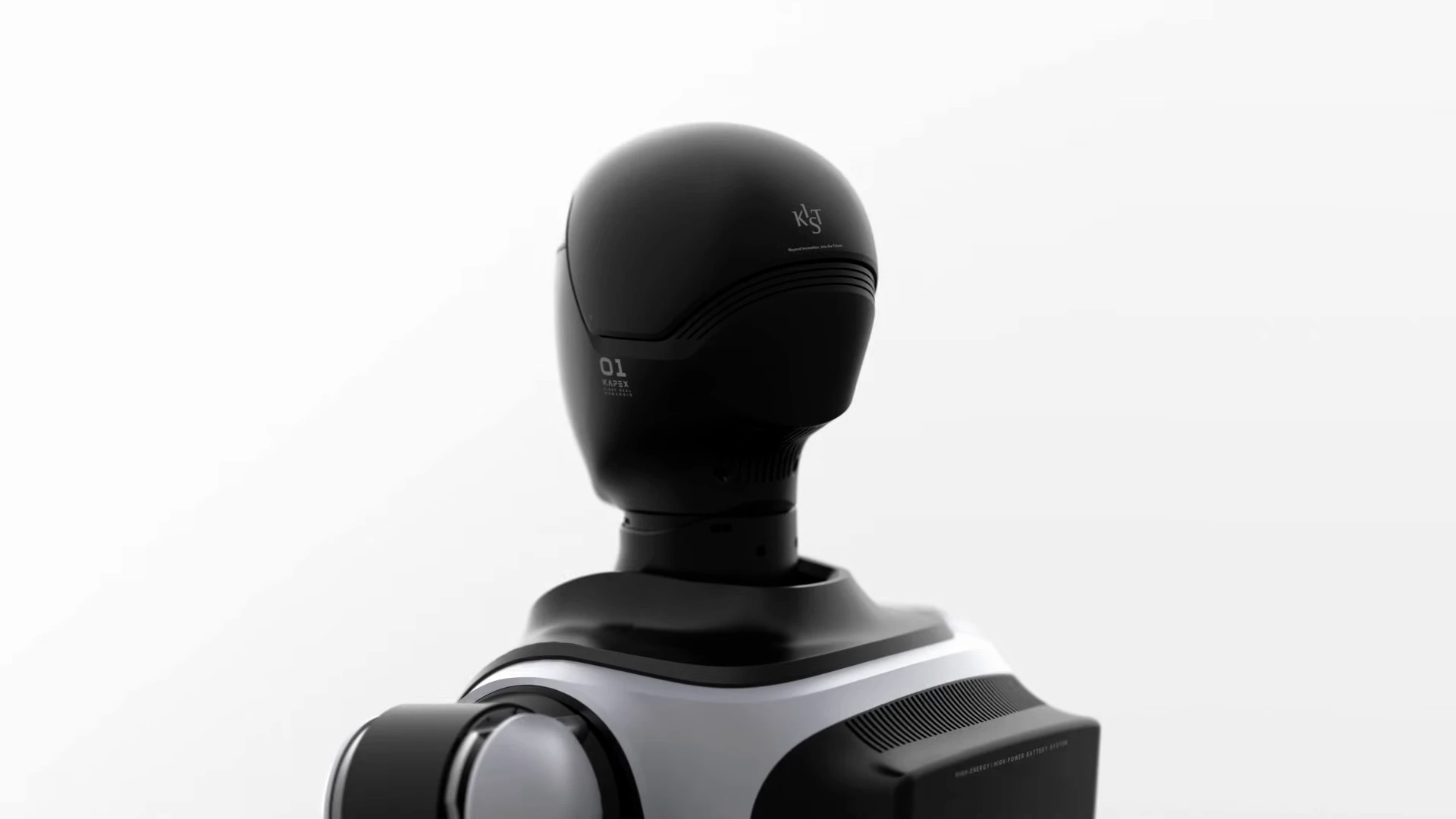
South Korea Plans Robot AI Push in 2027, Starting With Logistics

The weekly humanoid robotics briefing
One email a week: the launches, funding and research that mattered, with context from Humanoids Daily.
Read recent issues