- Published on
Minth Group and AGIBOT Launch Europe’s First Humanoid Mass Production Line in Serbia
One tap, and our reporting appears more often in your Google Top Stories. It makes a real difference to a small newsroom.


Your guide
Rich Robinson
Jee Chee Ren · Executive tour
See China’s AI and robotics ecosystem first-hand.
Six days exploring AI, robotics and advanced manufacturing.
With Rich Robinson, Clinical Professor of Entrepreneurship at Peking University
Beijing · Guangzhou · Shenzhen
29 November–4 December 2026
Referral partnership · We earn a commission on referred bookings.
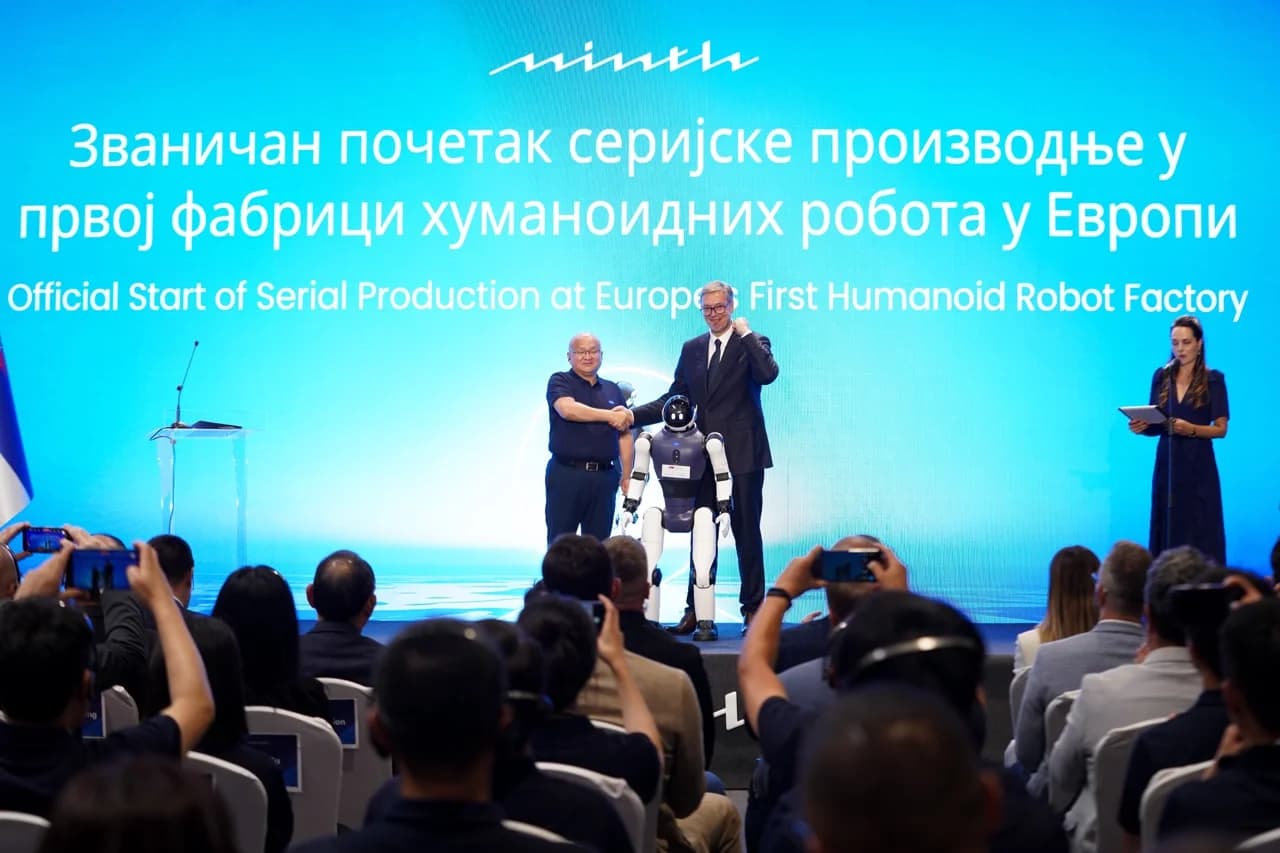
- Minth Group and AGIBOT have officially inaugurated Europe's first mass production base for humanoid robots and robotic dogs at Minth's manufacturing site in Šabac, Serbia.
- The project launches with an initial €20 million investment, with an anticipated €200 million Robotics Industrial Park in Inđija targeting an annual capacity of 20,000 units.
- The move scales up the partnership formed in Munich earlier this year, pivoting from commercial distribution to localized continental manufacturing.
- AGIBOT seeks to reinforce its global shipment lead while establishing an operational foothold outside China amid rising trade restrictions.
ŠABAC, Serbia — In an aggressive expansion of its global footprint, Tier 1 automotive supplier Minth Group and Shanghai-based robotics developer AGIBOT have officially launched Europe’s first mass-production facility for humanoid robots.
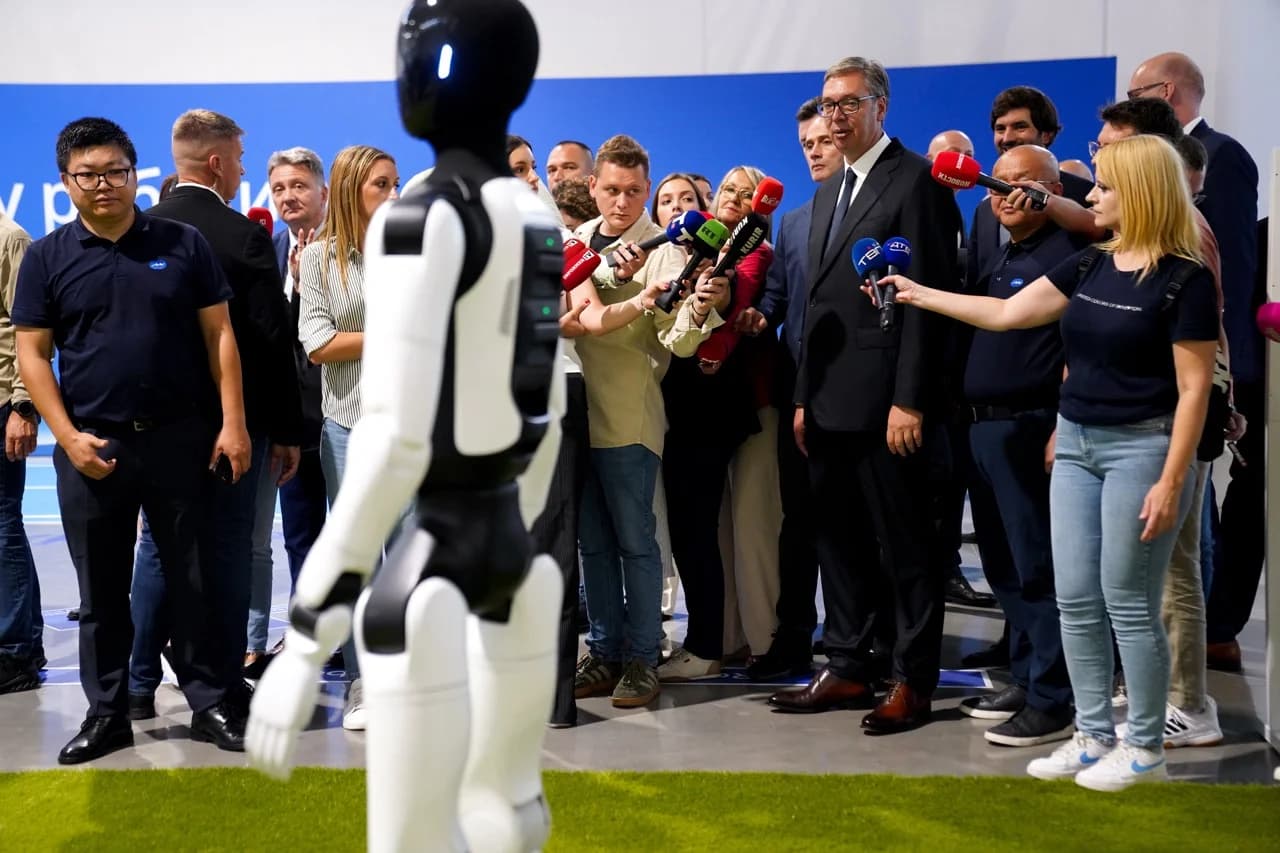
The manufacturing hub, situated within Minth Metal Parts Majur’s existing automotive complex in Šabac, marks a pivotal industrial leap for both companies. Backed by high-ranking state officials—including Serbian President Aleksandar Vučić, Minth Group founder Chin Jong Hwa, and AGIBOT leadership—the opening moves the venture past pilot exhibitions into direct assembly-line hardware output.
Industrial Footprints: From €20 Million to a €200 Million Hub
The inauguration in Šabac represents Phase One of a multi-stage manufacturing strategy, kicking off with an initial investment of €20 million. Minth already maintains a deep operational presence in the region, employing more than 2,000 workers across its automotive supply components infrastructure.
President Vučić noted that initial operational targets aim for the assembly of roughly 5,000 robots at the Šabac plant. However, the broader roadmap extends well beyond the current facility. Minth confirmed plans to break ground in mid-September on an expansive Robotics Industrial Park located in Inđija, projecting a cumulative investment of €200 million.
The weekly humanoid robotics briefing
One email a week: the launches, funding and research that mattered, with context from Humanoids Daily.
Read recent issuesOnce fully completed, the combined initiative is slated to reach an annual production capacity of up to 20,000 humanoid robots and quadrupedal robotic dogs targeted for European and international distribution. The regional technology ecosystem will see parallel support from a complementary framework agreement in Inđija focused on high-performance cylindrical lithium-ion battery cells, designed to supply power units for robotic platforms, electric vehicles, and industrial drones.
Bridging Software Priors and Factory Hardware
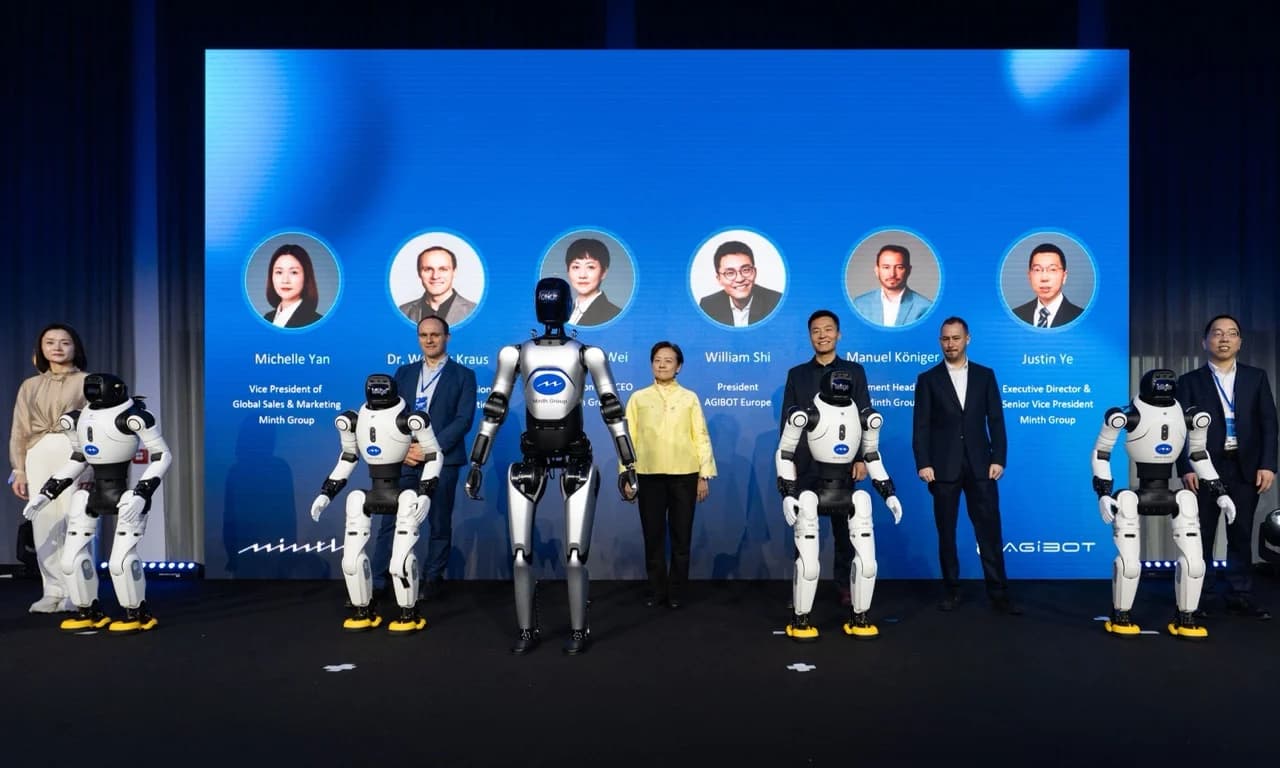
For AGIBOT, the Šabac opening transforms a European entry strategy that began when the two companies first allied in Munich into concrete local manufacturing.
Deploying assembly lines directly inside Minth’s functional automotive parts plant provides AGIBOT with an active, closed-loop industrial environment. Rather than running purely simulated tests, newly minted systems will interface with live production workflows—mirroring the operational validation AGIBOT conducted during its high-throughput deployment with Longcheer Technology.
The units produced in Serbia will run on AGIBOT's core "One Robotic Body, Three Intelligences" architecture, which synchronizes motion foundation models, multi-modal interaction, and physical manipulation. By embedding hardware production inside operational factories, AGIBOT aims to collect the continuous physical interaction data required to further train its embodied AI models.
Navigating Scale, Taxonomy, and Geopolitics
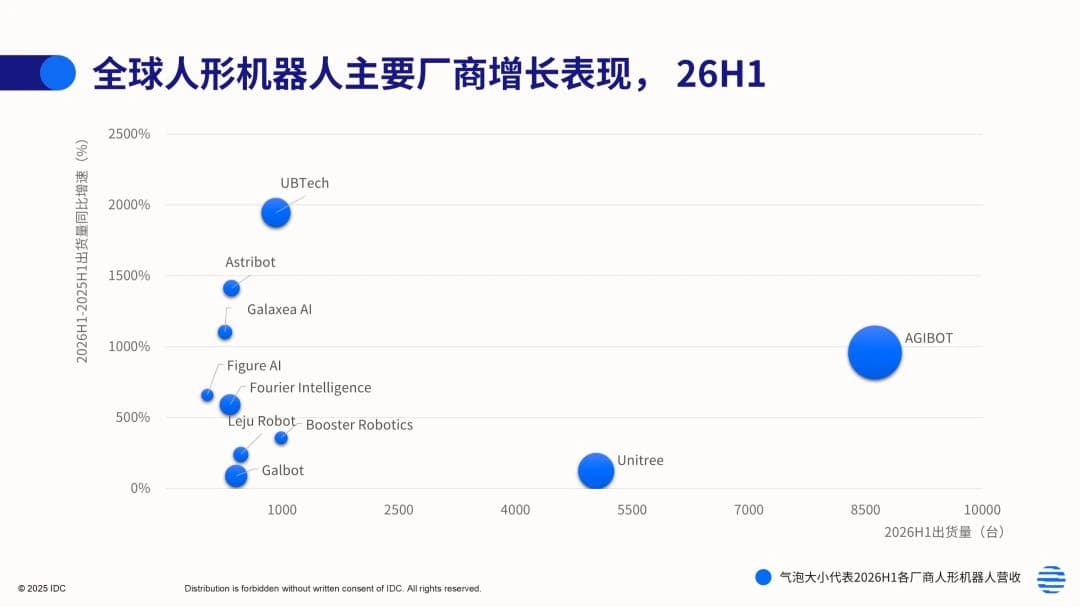
The establishment of a European production hub comes as AGIBOT continues an aggressive volume expansion. After reaching its 15,000th cumulative robot earlier this summer, the company held the dominant market position in the first half of 2026, capturing roughly 43% to 44% of global humanoid shipments.
While domestic rival Unitree has continuously challenged AGIBOT's volume figures over form-factor definitions and wheeled task units, AGIBOT's broader product matrix—combining bipedal humanoids, wheeled G-series task units, and quadrupeds—aligns squarely with the flexible requirements of automotive supply chains.
| Project Metric | Phase 1 (Šabac) | Phase 2 Expansion (Inđija Industrial Park) |
|---|---|---|
| Direct Investment | €20 million | €200 million (Total Planned) |
| Facility Profile | Minth Metal Parts Majur Complex | Dedicated Robotics Industrial Park |
| Output Target | ~5,000 units assembled | Up to 20,000 units annually |
| Product Portfolio | Humanoid robots & robotic dogs | Humanoids, quadrupeds, batteries, UAVs |
Beyond raw numbers, the Serbian manufacturing base provides a vital geographic buffer. As Chinese hardware leaders confront tightening Western regulatory pushback and trade barriers, manufacturing hardware under a European assembly structure allows AGIBOT and Minth to build out domestic European supplier pipelines across mechanical components, electronics, and AI data processing.
The Production Hurdle Ahead
The launch of the Šabac facility signals that the race for humanoid commercialization is entering a capital-intensive manufacturing era. Yet ramping up a new factory outside of China’s dense domestic hardware ecosystem will test both companies.
Establishing a resilient component supply chain, managing strict industrial quality controls, and proving that these European-assembled units can reliably perform 24/7 industrial labor remain critical milestones. Whether the Inđija park ultimately hits its 20,000-unit ceiling or not, Minth and AGIBOT have officially thrown down the gauntlet: the humanoid mass-production race is no longer confined to East Asia.
Share this article
Read next
- Published on
- Reading time
- 4 min read
AgiBot Enters Europe: Shanghai Giant Partners with Minth Group for Munich Launch
- Published on
- Reading time
- 5 min read
AGIBOT Deepens European Push at IFA 2026 with TÜV Rheinland Certification and Tekpoint Retail Alliance
- Published on
- Reading time
- 3 min read
IDC Puts H1 Humanoid Shipments Near 25,000, With AGIBOT Leading
- Published on
- Reading time
- 3 min read
AGIBOT Says A3 Ultra Is Going to Work in Hotels, Shops and Metro Inspection
- Published on
- Reading time
- 5 min read
AGILINK Hits Unicorn Status: AGIBOT’s Dexterous Hand Spin-off Raises Hundreds of Millions
- Published on
- Reading time
- 4 min read
State Grid’s $995 Million Bet: 8,500 Robots to Spearhead "Deployment Year One" in Energy
The weekly humanoid robotics briefing
One email a week: the launches, funding and research that mattered, with context from Humanoids Daily.
Read recent issues