- Published on
The "No Bot of Theseus" Challenge: Scott Walter Proposes a Strict Decathlon Benchmark for Humanoids
One tap, and our reporting appears more often in your Google Top Stories. It makes a real difference to a small newsroom.


Your guide
Rich Robinson
Jee Chee Ren · Executive tour
See China’s AI and robotics ecosystem first-hand.
Six days exploring AI, robotics and advanced manufacturing.
With Rich Robinson, Clinical Professor of Entrepreneurship at Peking University
Beijing · Guangzhou · Shenzhen
29 November–4 December 2026
Referral partnership · We earn a commission on referred bookings.
- Industrial automation veteran Dr. Scott Walter has released a draft rule book for a humanoid decathlon challenge aimed at testing generalized physical capability across ten track-and-field events with a single, unmodified robot.
- The framework introduces the "No Bot of Theseus" rule, prohibiting any actuator, limb, end-effector, or software weight swaps throughout the competition.
- Competing robots must adhere to strict anthropomorphic constraints—including five-fingered hands, actuated ankles (no running blades), and human-proportional sizing—while also dressing and folding their own uniforms.
- The rules enforce complete stadium autonomy, requiring continuous onboard logging and treating prompt injections or hidden control phrases as "Performance Enhancing Instructions" (PEIs) akin to athletic doping.
- Walter argues that while recent spectacles have seen robots shatter human sprint records, no existing humanoid possesses the integrated grip strength, dynamic durability, and dexterity to complete the decathlon.
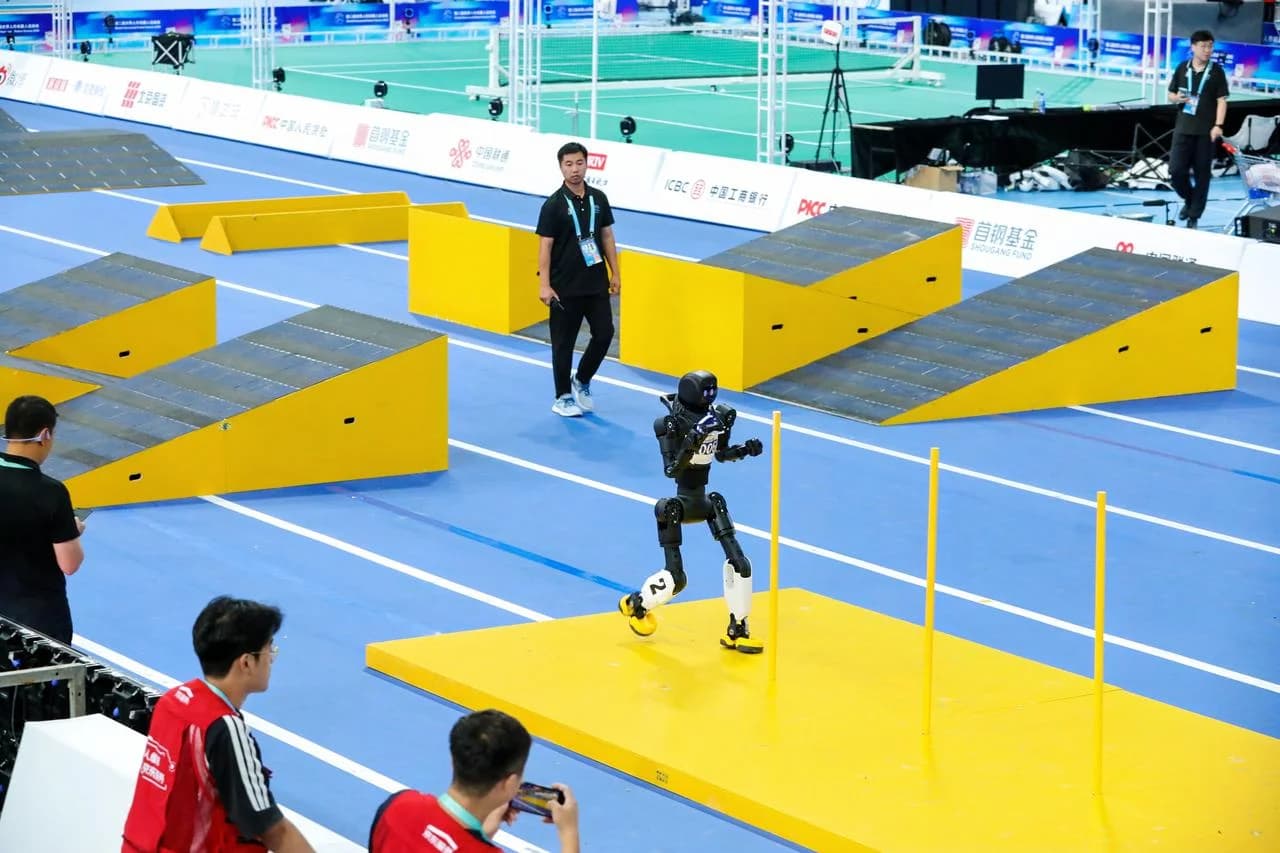
Over the past month, the robotics sector has indulged in a flurry of athletic benchmarks. At Beijing’s National Speed Skating Oval, humanoid sprinters eclipsed Usain Bolt’s 100-meter record, Unitree previewed a prototype vaulting two meters from a standing leap, and Galbot staged over 100 consecutive tennis rallies. Yet, almost all of these milestones have relied on narrow, single-purpose optimization—or specialized configurations designed for isolated tasks.
To counter what he views as fragmented performance metrics, simulation pioneer and robotics analyst Dr. Scott Walter has proposed a new standard: the Humanoid Decathlon Challenge.
Published via a comprehensive draft rule book, Walter’s proposal challenges developers to field a single bipedal robot capable of completing all ten events of the traditional men's decathlon under official World Athletics rules, operating fully autonomously with zero hardware alterations. The ultimate goal: become the first machine to beat the human world record total score.
The "No Bot of Theseus" Rule
At the core of Walter’s decathlon proposal is an uncompromising constraint designed to eliminate modular engineering shortcuts: the No Bot of Theseus rule.
The weekly humanoid robotics briefing
One email a week: the launches, funding and research that mattered, with context from Humanoids Daily.
Read recent issuesIn conventional robotics demonstrations and multi-event tournaments like the World Humanoid Robot Games, engineering teams frequently swap end effectors, reinforce specialized joints, or deploy entirely different robot models between athletic and manipulation disciplines. Under Walter’s framework, the identical physical platform must execute every event—from the 100-meter sprint and shot put to the high jump and 1500-meter run—without swapping actuators, limbs, feet, grippers, or sensors.
Field repairs are restricted to the robotic equivalent of human first aid: tightening loose fasteners, taping, or reseating loose cables. If an actuator burns out or a primary structural link fails, the machine must withdraw from the competition.
Crucially, the rule extends into the software domain. Robots cannot download new model weights, skills, or specialized policy networks between events. Every kinematic and control competency must reside locally on the machine before entering the stadium.
Enforcing Human Morphology
To ensure a direct, equivalent comparison against biological athletes, Walter’s rule book explicitly outlaws specialized mechanical appendages:
- Morphology and Scale: The robot must fall within the 5th to 95th percentile range for adult human height and weight, maintaining a standard bipedal body plan with two arms, two legs, and a head.
- Ankles and Feet: The platform must feature actuated ankles capable of full human ranges of motion (plantarflexion, dorsiflexion, inversion, and eversion). Spring-loaded prosthetic blades, carbon-fiber running leaves, or passive-spring feet are strictly banned.
- Five-Digit Hands: Competing platforms must use anthropomorphic five-digit hands with an opposable thumb. Specialized grippers, pneumatic claws, or customized fixtures for holding javelins, discuses, or vaulting poles are prohibited. The same five-digit hand that grips a pole vault must manipulate delicate objects.
As a baseline test of general dexterity, Walter adds an unusual prerequisite: self-dressing. Before competing, the robot must independently put on its athletic uniform (shirt, shorts, and optional World Athletics-compliant footwear), remove the uniform when required, and fold its own clothing afterward without external assistance.
Full Autonomy and "Performance Enhancing Instructions"
The autonomy requirements in Walter’s framework are markedly stricter than existing exhibition circuits. Remote operation, teleoperation, or external wireless communication must cease the moment the robot crosses the stadium perimeter. The machine must walk into the arena under onboard power, navigate ramps and stairs, interpret verbal cues from human event officials, and start races independently from starting blocks.
While human coaches may offer natural verbal or gestural advice between attempts, the rules introduce a novel anti-cheating clause: the prohibition of Performance Enhancing Instructions (PEIs).
To prevent teams from exploiting coaching windows to transmit disguised control commands, prompt injections, or jailbreaks that override core safety limits, all robots must maintain tamper-evident onboard flight logs recording external audio, referee commands, and internal state transitions. Refusal to supply these logs to technical inspectors results in immediate disqualification.
Power management follows a similar ethos of parity. Complete battery swaps are barred; machines must operate across the entire decathlon on a single internal battery pack, relying only on intermediate boost charging in holding pens between events while remaining awake and responsive throughout the day.
The Gap Between Sprints and Generalism
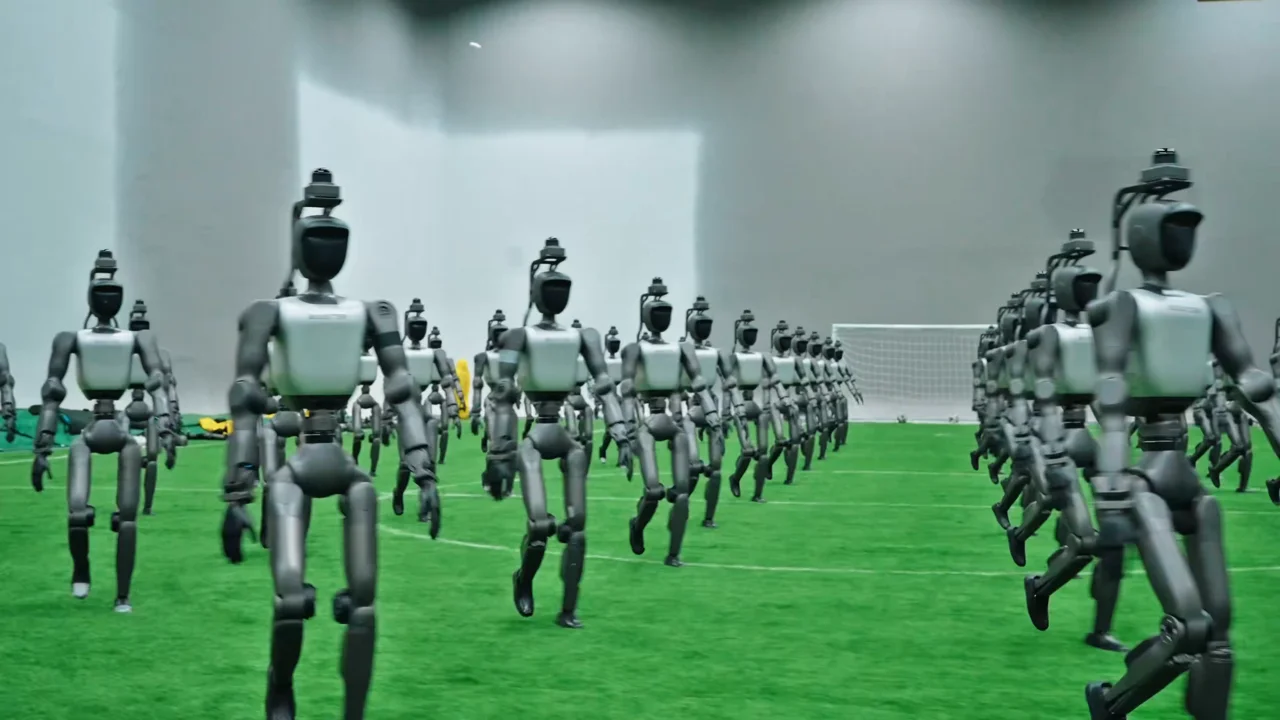
Walter’s proposal arrives at a moment when industry leaders are openly debating the limits of current hardware and software architectures. While developers like AGIBOT have successfully demonstrated balanced medal-winning sweeps across manipulation and mobility, others, such as Unitree CEO Wang Xingxing, have noted that humanoids still struggle to generalize beyond narrow, retrained routines.
"No humanoid on Earth can do this today, not close," Walter noted in his accompanying commentary, pointing out that technical hurdles like the pole vault demand combined grip strength, upper-body torque density, and high-impact landing recovery that no commercial platform currently matches.
By packaging these disparate challenges into a unified athletic test, the Decathlon Challenge shifts the benchmark away from viral single-task demonstrations. Whether commercial manufacturers will embrace a ruleset that deliberately risks catastrophic hardware failures on live landing mats remains to be seen—but as a thought experiment, it establishes an exacting target for general-purpose physical intelligence.
Share this article
Read next
- Published on
- Reading time
- 4 min read
AGIBOT Tops Medal Table at 2nd World Humanoid Robot Games as Beijing Showdown Concludes
- Published on
- Reading time
- 5 min read
From Marathons to the Factory Floor: Beijing’s World Humanoid Robot Games Pivot to Real-World Utility
- Published on
- Reading time
- 4 min read
’We’ll Do It Live’: Brett Adcock Promises Livestream After Endurance Challenge from Scott Walter
- Published on
- Reading time
- 5 min read
The Gearbox Trap: Origami Robotics and 1X Clash Over the Future of Manipulation
- Published on
- Reading time
- 5 min read
Design Around the Data: Sunday Robotics Reveals Why They Built 100 Gloves Before One Robot
- Published on
- Reading time
- 25 min read
Scott Walter: Why Humanoid Robots Just Need to Be "Good Enough"


The weekly humanoid robotics briefing
One email a week: the launches, funding and research that mattered, with context from Humanoids Daily.
Read recent issues