- Published on
Weave Robotics Unveils Isaac 1: A Mobile, Friendly Bet on the Messy Reality of Tidying Up
One tap, and our reporting appears more often in your Google Top Stories. It makes a real difference to a small newsroom.

- Weave Robotics publicly showcased "Isaac 1" in San Francisco, introducing a fully mobile platform that follows the company's previous stationary model.
- Early footage demonstrates the robot autonomously tidying up objects, utilizing a friendly, refined design that signals a shift toward a consumer-ready aesthetic.
- The launch aligns with co-founder Kaan Doğrusöz's stated philosophy of avoiding "scope creep" by iterating rapidly and shipping functional hardware.
- While the previous model tackled the highly scoped task of folding laundry, Isaac 1 faces the notoriously unbounded challenge of general household tidying.
- This release positions Weave as a distinct, appliance-first alternative to full humanoid developers like 1X Technologies.
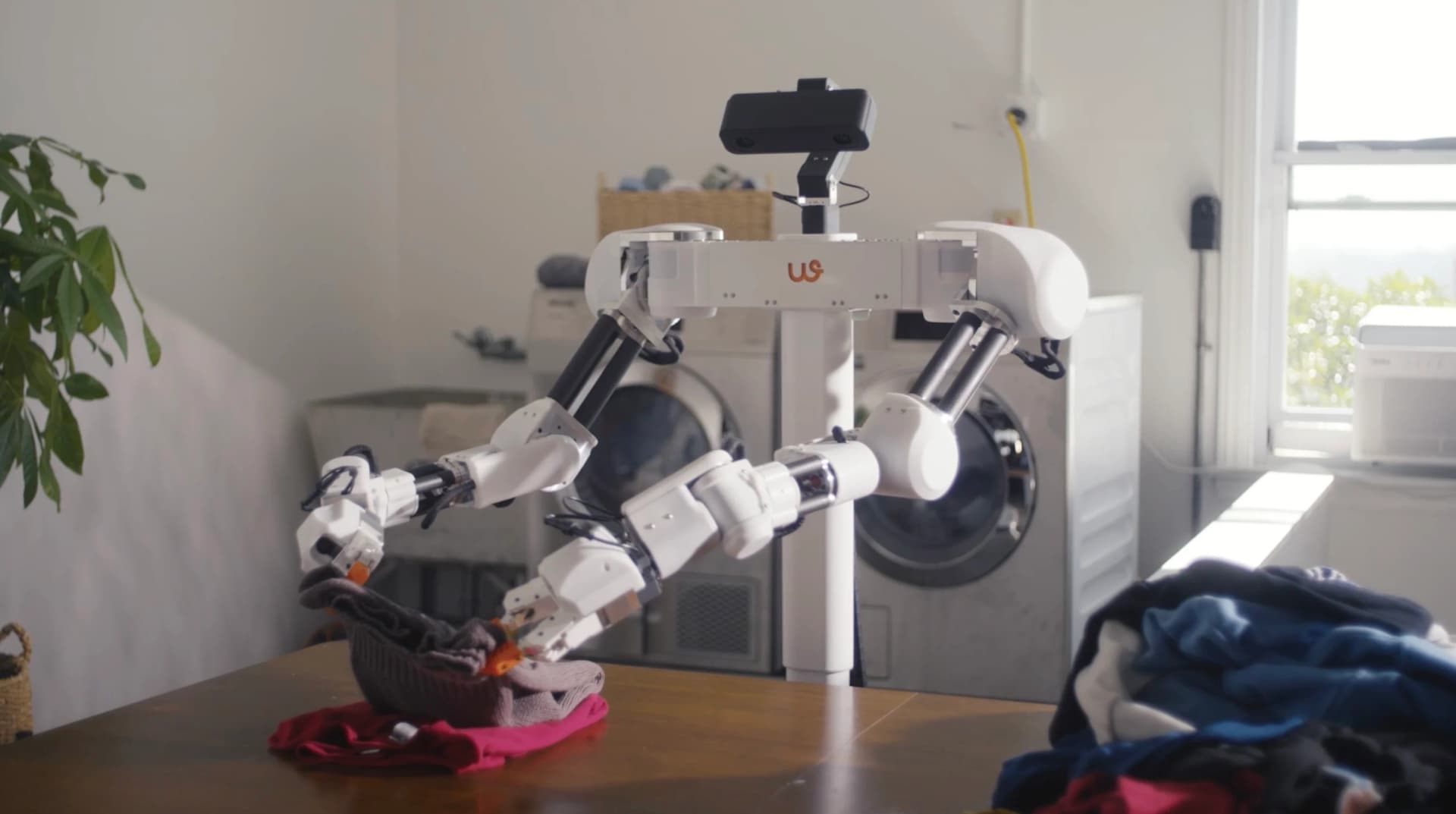
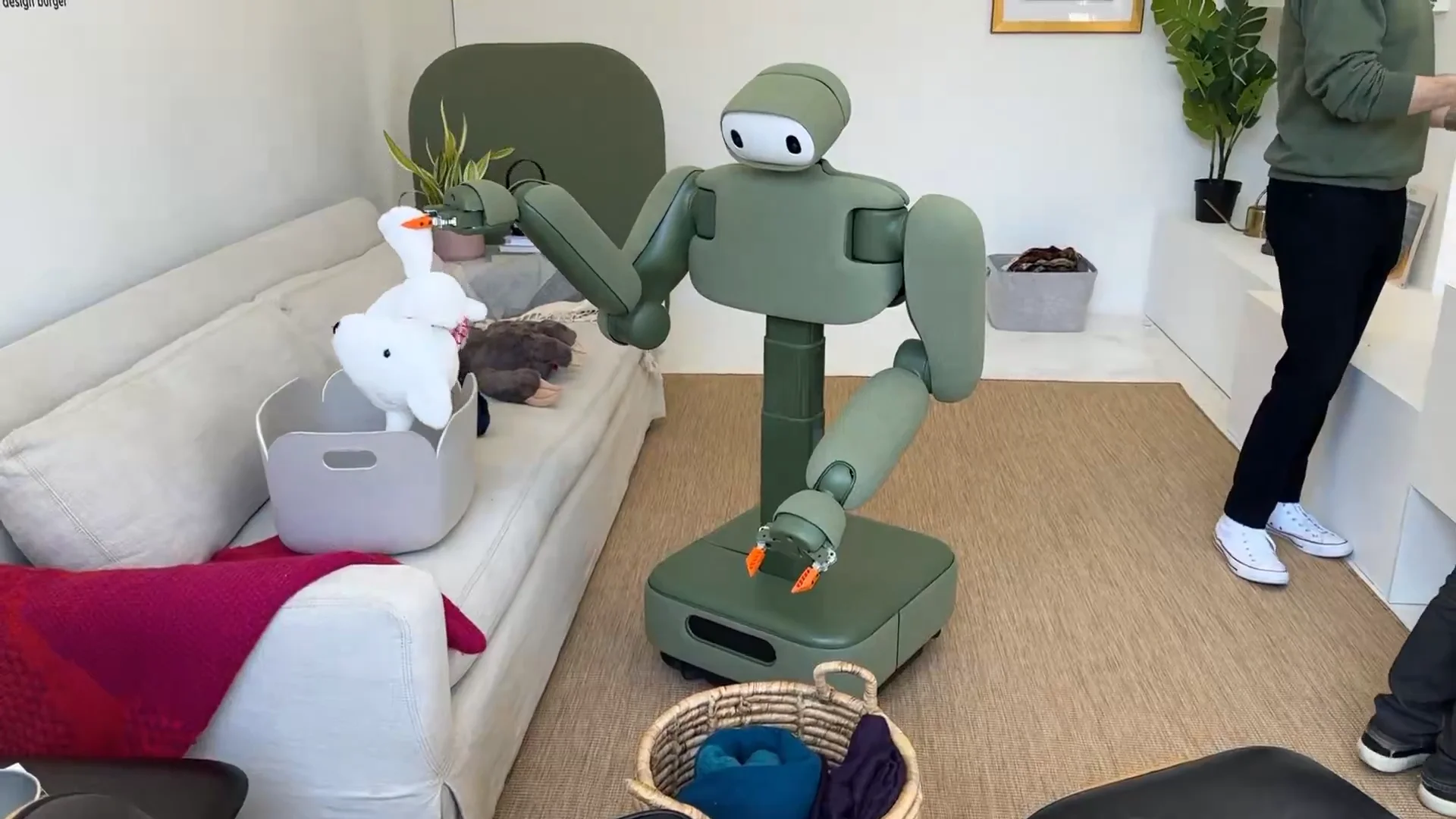
On June 11, San Francisco-based Weave Robotics revealed its next hardware iteration, Isaac 1, during a public showcase at its 7th Street headquarters. The event marks a significant evolution for the company, founded in 2024 by former Apple and Carnegie Mellon engineers Kaan Doğrusöz and Evan Wineland. Unlike its predecessor, the stationary Isaac 0 , Isaac 1 returns to the company's original vision of a mobile, wheel-based assistant designed to combat domestic clutter.
Footage circulating from the event reveals a machine that looks decidedly more like a finished consumer electronics product than a research prototype. Isaac 1 features a soft green chassis, a friendly face, and simplified two-finger grippers with orange tips. In demonstration videos, the robot can be seen approaching a sofa, identifying scattered objects like stuffed animals, and placing them neatly into a basket. This represents a direct engagement with "tidying up," a core use case the company has been developing since its inception.
The swift transition from Isaac 0 to Isaac 1 highlights Weave's aggressive "ship-now" mentality. In a June 8 statement on X, Doğrusöz emphasized the danger of lingering in the prototyping phase: "It’s easy to keep delaying, it’s easy to keep running design changes and scope creeping. Many companies stay in this phase for 5-10 years." He noted that Isaac 0 evolved from concept to shipment in just six months, setting a functional baseline for the company. "Isaac 0 is our first product, our first embodiment tackling our first use case," he added. "When there’s a 0 there’s a 1."
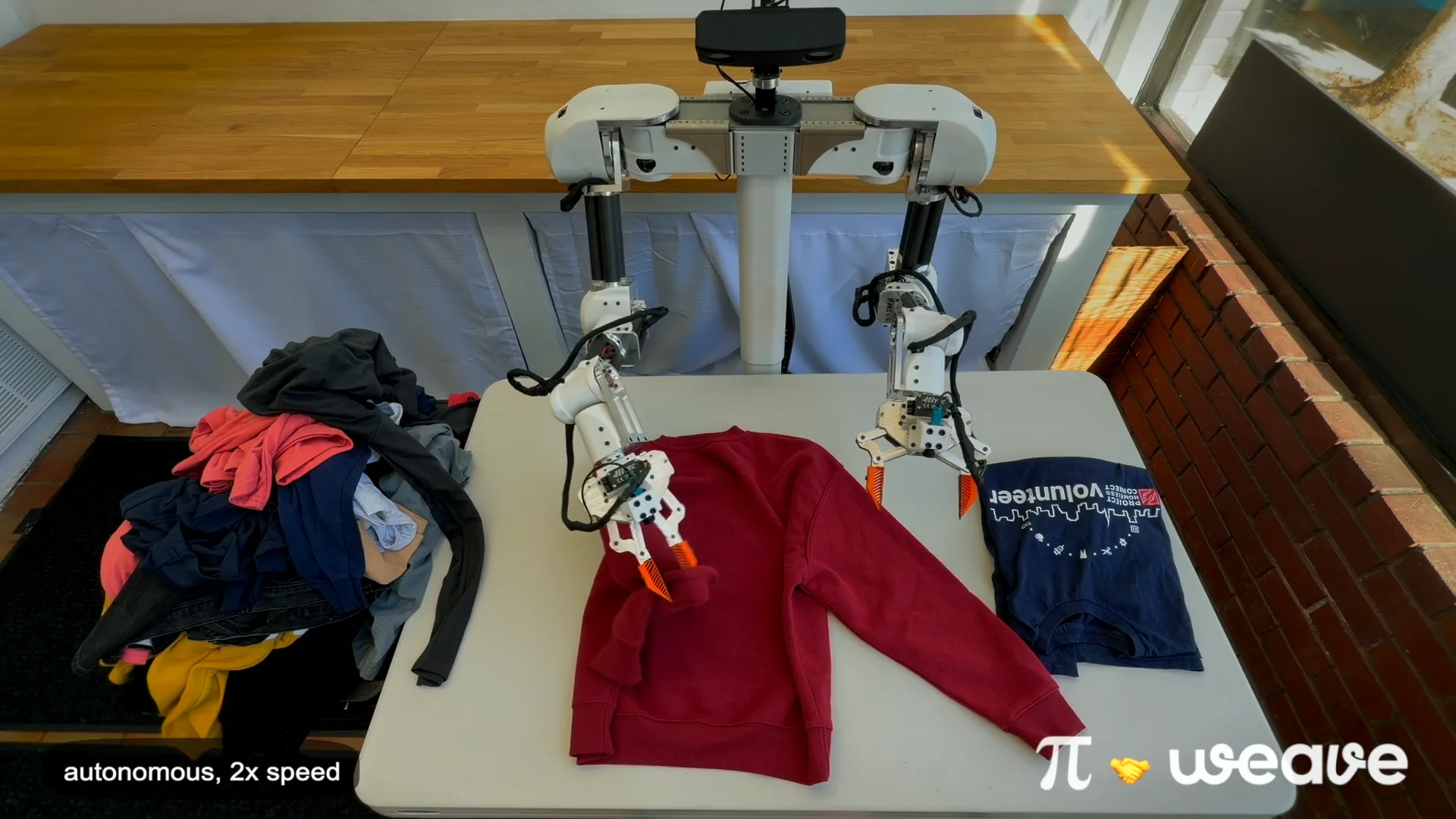
Tidying a living room introduces exponential complexity compared to folding clothes on a static table. During an April appearance on the RoboPapers podcast, Doğrusöz acknowledged that tidying is a "not well-defined task." While laundry can be scoped into predictable protocols—a necessity for the reliable performance Weave achieved using Physical Intelligence's foundation models —tidying requires a robot to handle a massive tree of possibilities regarding object location, identification, and user preference.
Weave's strategy appears to be a direct counterpoint to companies attempting to build universal, general-purpose humanoids from day one. Competitors like 1X are targeting similar home environments with their $20,000 NEO humanoid designed for whole-body tasks, while Sunday Robotics is also developing wheeled domestic models. However, Weave has effectively utilized its stationary laundry robots as Trojan horses for data collection, stress-testing its software stack in commercial environments like Tumble Laundry. With Isaac 1, the company is now betting that this foundation of reliability will scale to the much messier reality of navigating a human living room.
Share this article
Follow humanoid robotics without following every announcement.
Get the week’s most important launches, funding and research—and why they matter—in one email from Humanoids Daily.
Once a week. Unsubscribe anytime.
Read recent issuesRead next
- Published on
- Reading time
- 5 min read
Weave Robotics Launches "Isaac 0": A $9,999 Stationary Bet on the Future of Laundry
- Published on
- Reading time
- 5 min read
The API-fication of Robotics: Physical Intelligence Unveils Real-World Performance Data with Weave and Ultra
- Published on
- Reading time
- 4 min read
DeepMind Pairs Genie 4 With Gemini Argon to Simulate Apollo Playing Checkers
- Published on
- Reading time
- 2 min read
This Week’s Newsletter: Voxel, Unitree H2-X and Europe’s Humanoid Push
- Published on
- Reading time
- 4 min read
Luxonis Launches OAK 4 FFC to Put Five Robot Cameras on One Vision Computer
- Published on
- Reading time
- 4 min read
Machenta Raises $40 Million to Teach Robots New Tasks From One Demonstration