- Published on
Genesis AI Unveils Eno: The Minimalist Robot Making an "Opposite Bet" on Humanoid Design
One tap, and our reporting appears more often in your Google Top Stories. It makes a real difference to a small newsroom.

Supported by RoboStrategySupport for Humanoids Daily comes from RoboStrategy
Sponsored

Investing involves risk, including possible loss of principal. Read the prospectus before investing.
- Genesis AI has unveiled Eno, a minimalist, general-purpose robot designed to prioritize utility and integration over human-mimicking aesthetics.
- Powered by the GENE foundation model, Eno operates as a physical agent capable of managing multi-step workflows rather than executing isolated commands.
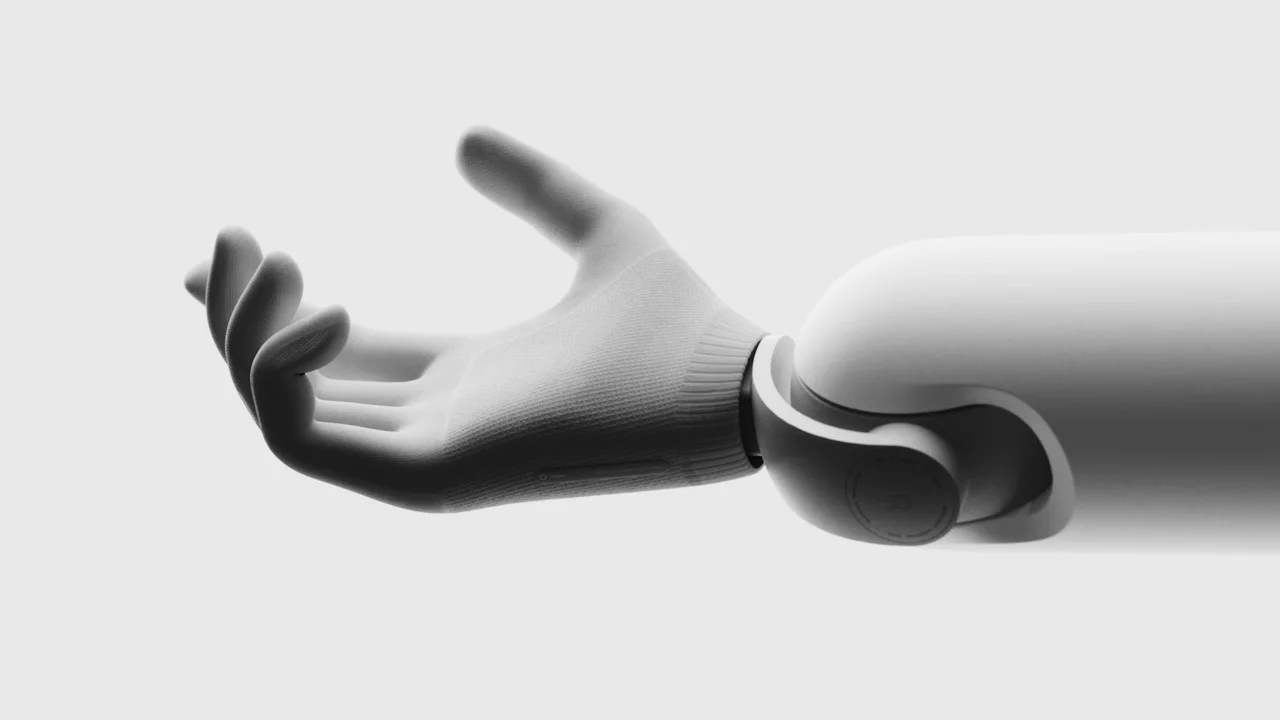
- The robot features a wheeled base, an optional "cognitive interface" screen in place of a head, and highly dexterous, human-scale hands for precise manipulation.
- Genesis AI also announced a strategic partnership with LG CNS to pilot and scale the deployment of Eno across manufacturing and logistics environments starting in 2026.
Genesis AI has officially taken the wraps off its first general-purpose robot, Eno. After initially emerging from stealth to showcase its AI software capabilities, the $105 million seed-funded company is placing a unique bet on what physical automation should look like. Instead of building a bipedal machine that mirrors the human form, Genesis AI has designed Eno to be an ultra-minimalist helper that extends human capability without attempting to resemble a human being.
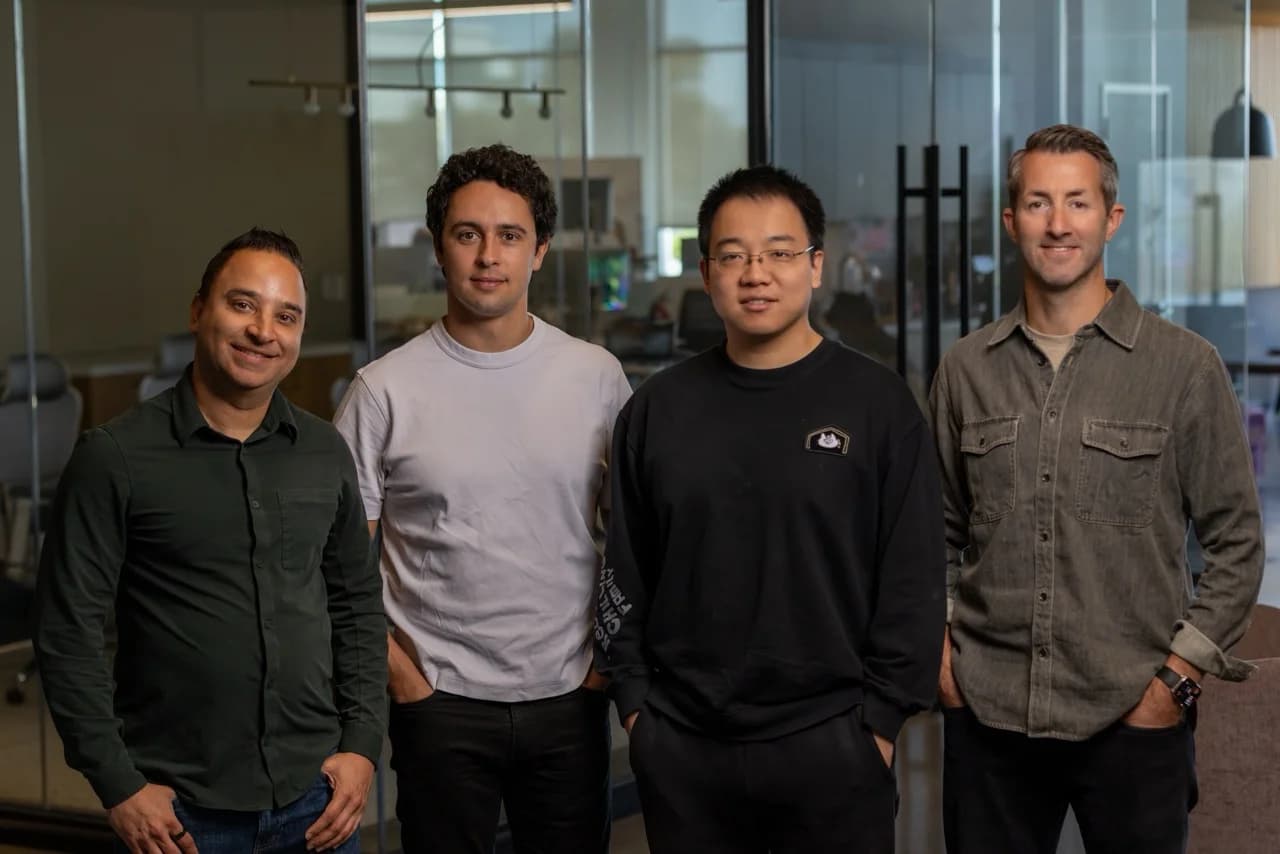
According to CEO Zhou Xian, the path to a truly valuable robot requires intentional design combined with a comprehensive, integrated system. This approach has resulted in a machine that looks more like a high-end appliance than a science-fiction android.
Form Meets Function: Ditching "Terminator Chic"
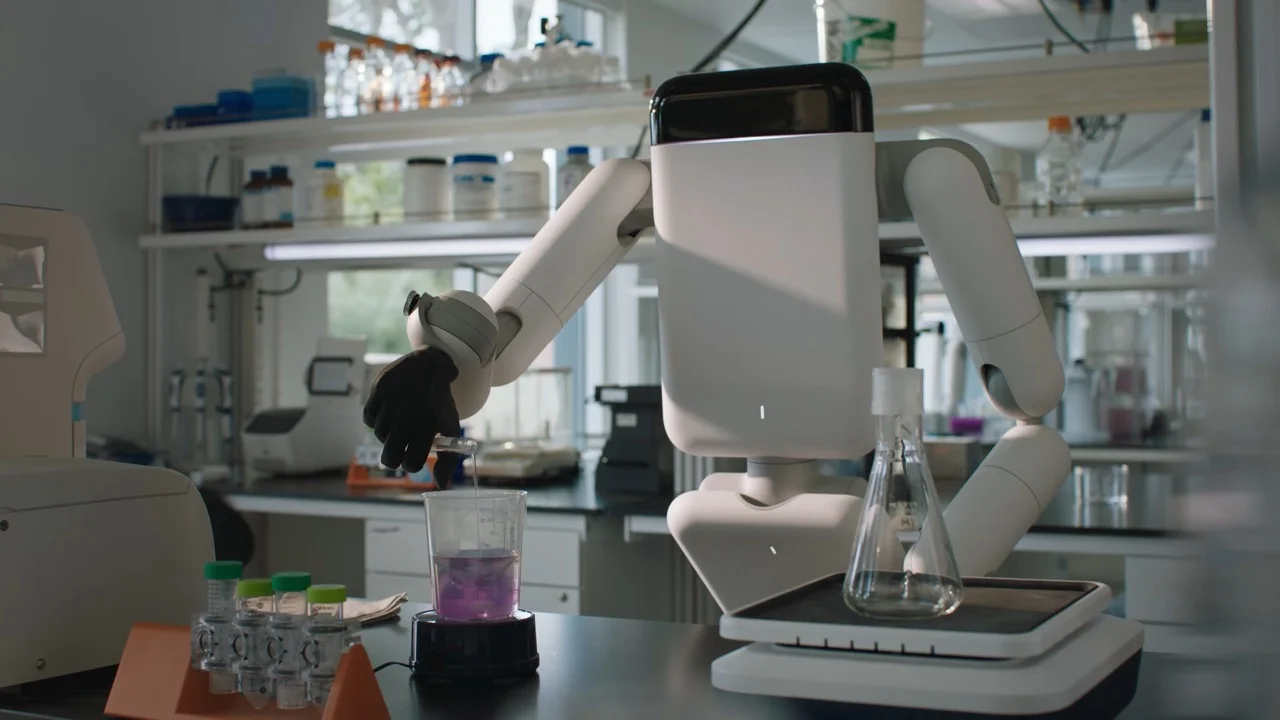
In a crowded field of humanoid robots characterized by exposed motors, heavy metal frames, and rigid, walking legs, Eno stands out for its subdued, Scandinavian-inspired design.
Built on a wheeled base, Eno features a central tower of articulated panels. This architecture allows the robot to adjust its height and reach dynamically in real-time, and fold down for compact, out-of-the-way storage when not in use.
The weekly humanoid robotics briefing
One email a week: the launches, funding and research that mattered, with context from Humanoids Daily.
Read recent issues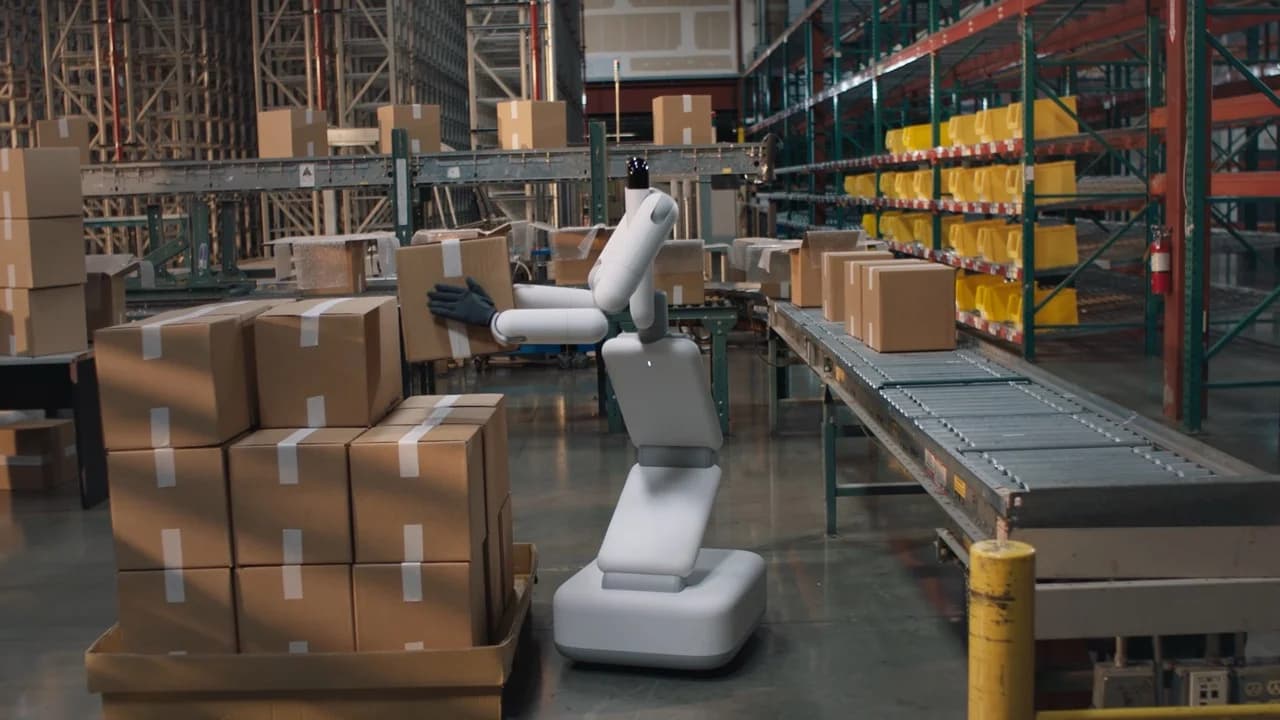
Eno does not have a traditional head. Instead, Genesis AI is offering an optional chest-mounted "cognitive interface". This screen acts as a transparent window into the robot's underlying AI, displaying its intent, reasoning, and operational state in real-time to foster trust with the humans working alongside it.
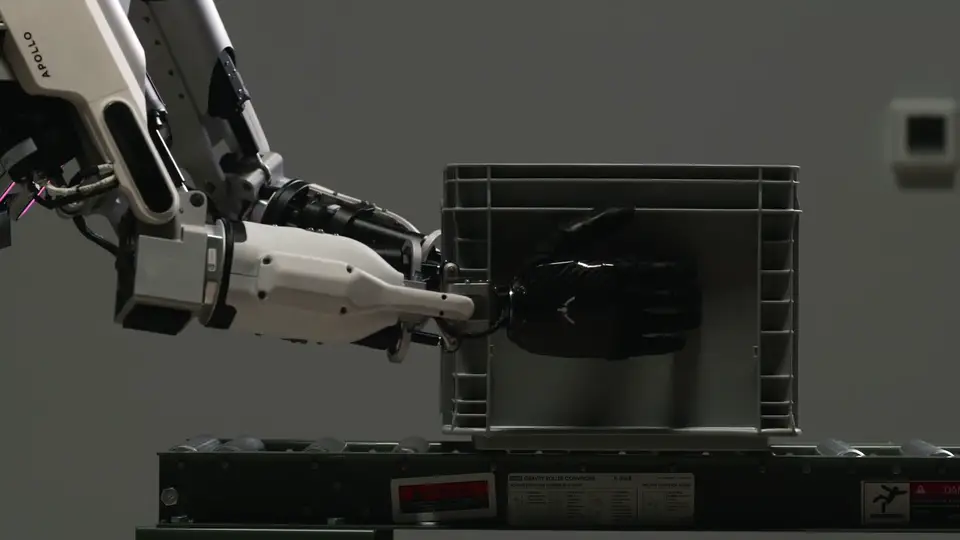
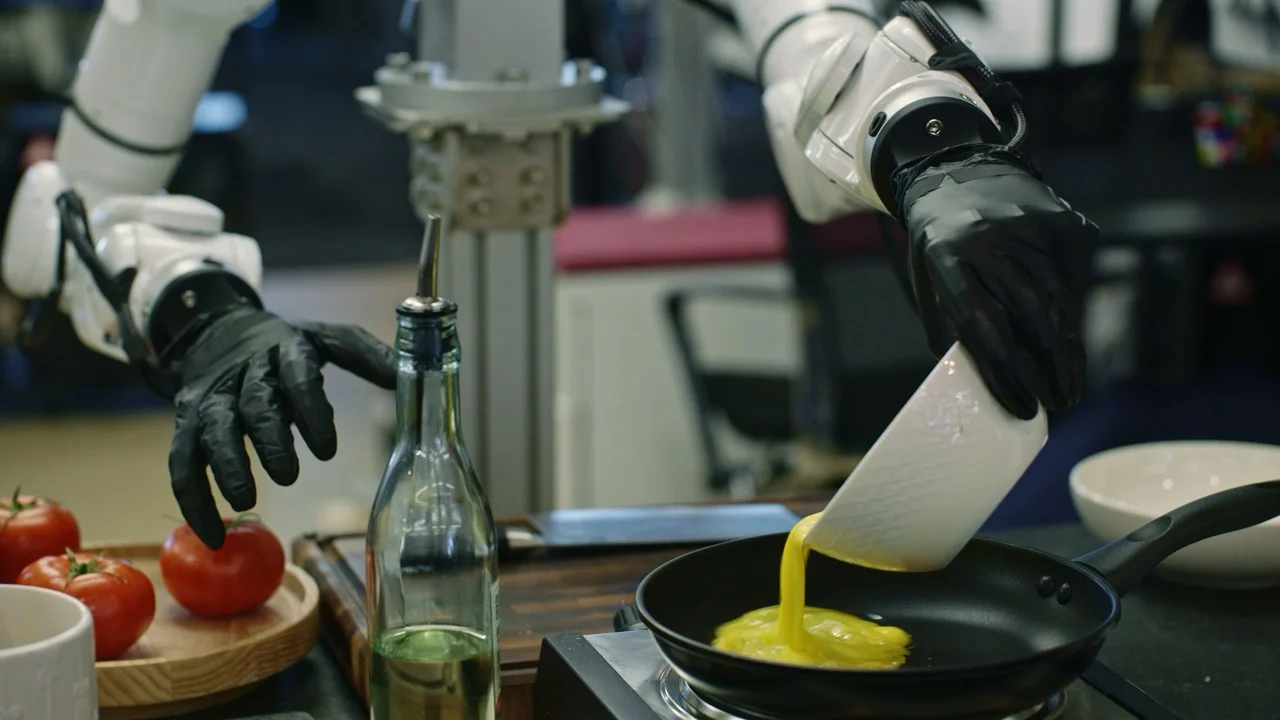
The company’s focus on utility culminates in the robot's arms, which are equipped with Genesis AI’s proprietary dexterous hands. These end-effectors—which the company previously co-developed with hardware partner Wuji Tech—exactly match the form and function of human hands. Early hands-on previews note they boast 22 degrees of freedom, different-sized fingers, and are entirely back-drivable, making them safe to operate in close proximity to people.
Powered by GENE
Hardware is only half of the equation. Eno serves as the physical vessel for GENE, Genesis AI's robotics-native foundation model.
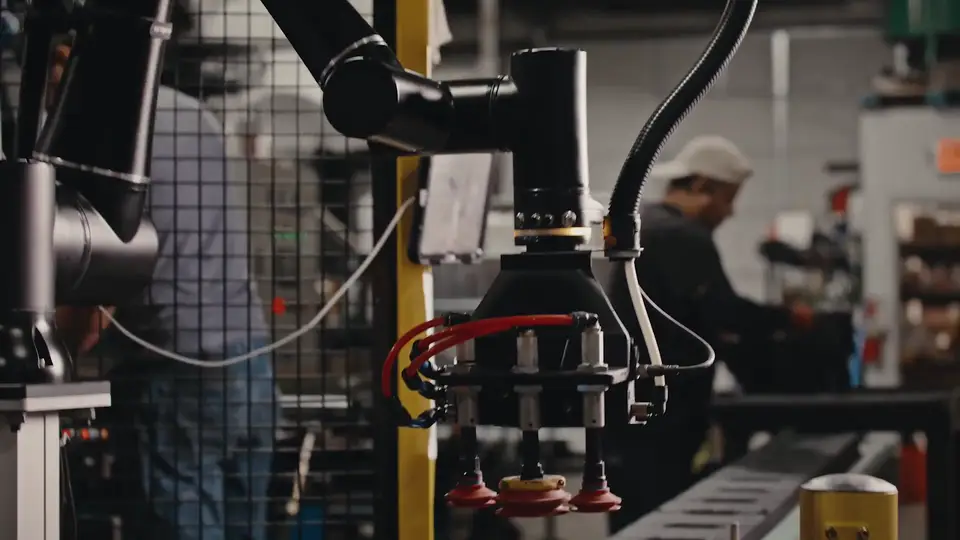
Unlike traditional industrial robots that loop through pre-programmed, isolated motions, GENE empowers Eno to operate as a "true physical agent". The system is designed to understand high-level objectives, retain memory, adapt to changing environmental conditions, and dynamically plan multi-step tasks. By managing entire workflows—such as keeping production lines stocked or preparing facilities for a shift change—Eno functions as an active participant rather than a static tool.
Genesis AI has been actively accelerating this intelligence using its Genesis World 1.0 simulation platform, which uses complex rendering to close the sim-to-real gap and evaluate the AI at scale.
Scaling with LG CNS
To transition from the lab to the real world, Genesis AI plans to begin production and targeted customer deployments of Eno by the end of 2026. The initial rollout will target industrial sectors, including manufacturing, logistics, and laboratories, before eventually expanding into service industries and the home.
Accelerating this timeline is a newly announced multi-phase strategic partnership with LG CNS, the AI transformation and consulting arm of South Korea's LG. The two companies will collaborate to evaluate and deploy Eno at LG operations in the U.S., leveraging LG CNS's deep systems integration expertise to slot the robots into existing enterprise workflows.
According to LG CNS CTO Sangyeob Park, integrating Genesis AI's hardware-plus-AI platform will unlock new levels of automation in labor-intensive environments that traditional robotics have historically failed to address. As Eno learns new tasks in these environments, the GENE model's ability to generalize is expected to reduce the data and time required for future deployments, compounding deployment velocity.
While competitors like Tesla and Figure chase the dream of a walking, bipedal worker, Genesis AI is asking the industry to consider a different path. By prioritizing a calm, highly capable, and wheeled design, Eno suggests that the future of robotics might look less like us, and more like a tool engineered simply to get the job done.
Share this article
Read next
- Published on
- Reading time
- 5 min read
Physical AI Arms Race Accelerates: Generalist AI Secures $400M to Scale Robot Learning
- Published on
- Reading time
- 4 min read
The Death of the Label: Generalist AI Rejects 'World Models' in Favor of First-Class Physical Foundation
- Published on
- Reading time
- 4 min read
Generalist AI Unveils GEN-1: The Quest for Robot Mastery and “Intelligent Improvisation”
- Published on
- Reading time
- 5 min read
Genesis AI Launches Genesis World 1.0, Turning the "Sim-to-Real" Gap into a Compute Problem
- Published on
- Reading time
- 4 min read
Genesis AI Bolsters Leadership with Former X and Tesla Execs Ahead of Hardware Reveal
- Published on
- Reading time
- 4 min read
Wuji Tech Confirmed as Hardware Partner for Genesis AI’s Human-Level Dexterity Breakthrough

The weekly humanoid robotics briefing
One email a week: the launches, funding and research that mattered, with context from Humanoids Daily.
Read recent issues